Event Date: Thursday, December 17, 2020 at
12:00 pm
Speaker: Dr. Stephen Jay Gould
Dr. Stephen Jay Gould is one of the most well-known and highly decorated scientists of our age. Gould delivers a remarkable lecture filled with wit, charm, and historical anecdote. He traces the history of western culture’s uneasy relationship with the pedestal-shattering discoveries of science. This is one of the best lectures in the history of the Skeptics Society’s Distinguished Science Lecture Series!
After an A.B. from Antioch College and a Ph.D. from Columbia, Gould began his teaching career at Harvard. He won the MacArthur Foundation “Genius” Fellowship, was named “Scientist of the Year” by Discover magazine for the theory of punctuated equilibrium, was named Humanist Laureate by the Academy of Humanism, was awarded 41 honorary degrees, was voted a member of the National Academy of Science, and he most recently served a term as President of the AAAS. He has written 22 books (receiving a National Book Critics Circle Award and the Phi Beta Kappa Book Award) and over 900 articles and essays. Given Gould’s admiration for Joe DiMaggio’s 56-game hitting streak, perhaps Gould’s most significant accomplishment is writing 300 consecutive monthly essays in Natural History magazine. He retires from his essay streak just in time to celebrate the second (and actual) end of the millennium which, according to Gould in his Questioning the Millennium, is a precisely arbitrary date. Our congratulations to Gould on his remarkable and DiMagical feat.
This lecture was recorded on October 7, 2000 as part of the Distinguished Science Lecture Series hosted by Michael Shermer and presented by The Skeptics Society in California (1992–2015).
We offer this lecture to you freely, and greatly appreciate your support.
The world’s greatest lightning calculator, Arthur Benjamin, entertains the audience with a dazzling display of mental math, and along the way shows how anyone can learn the techniques he employs to improve their math literacy. This is one of the most entertaining performances ever given at Caltech.
Arthur Benjamin is considered to be the world’s greatest living lightning calculator. If you have never seen him perform, you are in for a treat! Bring your calculators and challenge the master! Dr. Benjamin will not only demonstrate how he does calculations in his head faster than you can with a calculator, he will reveal his secrets and teach you how to do it yourself. Not only will he reveal his own secrets, he will demonstrate how the great lightning calculators of the past did it. Dr. Benjamin is the Smallwood Family Professor of Mathematics at Harvey Mudd College. He has received numerous awards for his writing and teaching, and served as editor of Math Horizons magazine for the Mathematical Association of America. He has given three TED talks, which have been viewed over 10 million times. Reader’s Digest calls him “America’s best math whiz.” His newest book, out this Fall, is called The Magic of Math: Solving for x and Figuring out Why.
This lecture was recorded on May 30, 2015 at a conference called “In the Year 2525: Big Science, Big History, and the Far Future of Humanity” (May 29–31, 2015) as part of the Distinguished Science Lecture Series hosted by Michael Shermer and presented by The Skeptics Society in California (1992–2015).
The renowned computer analyst, journalist, philanthropist, and entrepreneur discusses her latest project called HICCup and its Way to Wellville in which five places over five years will be measured with five metrics related to the production of the health of people living there, and considers how what they’ve learned may be applied elsewhere.
This lecture was recorded on May 30, 2015 at a conference called “In the Year 2525: Big Science, Big History, and the Far Future of Humanity” (May 29–31, 2015) as part of the Distinguished Science Lecture Series hosted by Michael Shermer and presented by The Skeptics Society in California (1992–2015).
UCLA Professor of Geography Jared Diamond, author of the the Pulitzer Prize winning book Guns, Germs, and Steel, along with The Third Chimpanzee, Collapse, and The World Until Yesterday, considers the risks and mistakes that people and nations make. Based on his extensive research on and experience with the human condition Dr. Diamond considers the future based on what we know about the past — historically and personally.
Jared Diamond began his scientific career in physiology and expanded into evolutionary biology and biogeography. He has been elected to the National Academy of Sciences, the American Academy of Arts and Sciences, and the American Philosophical society. Among his many awards are the National Medal of Science, the Tyler Prize for Environmental Achievement, Japan’s Cosmo Prize, a MacArthur Foundation Fellowship, and the Lewis Thomas Prize Honoring the Scientist as Poet. He has published more than 600 articles and his book, Guns, Germs, and Steel, was awarded the Pulitzer Prize.
This lecture was recorded on May 30, 2015 at a conference called “In the Year 2525: Big Science, Big History, and the Far Future of Humanity” (May 29–31, 2015) as part of the Distinguished Science Lecture Series hosted by Michael Shermer and presented by The Skeptics Society in California (1992–2015).
Looking over the past 10,000 years historian and archaeologist Ian Morris reveals patterns in the past related to energy consumption and resources, and how our age of fossil fuels will likely be a temporary one as we transition to renewables, and how this transition may lead to new human values, including the value of peace in a long human history filled with war.
Ian Morris is Professor of History at Stanford University and a Fellow of the Stanford Archaeology Center. His book Why the West Rules — For Now traces the patterns of history and what they reveal about the future. His latest book is Foragers, Farmers, and Fossil Fuels: How Human Values Evolve, a compelling new argument about the evolution of human values, one that has far-reaching implications for how we understand the past — and for what might happen next. Fundamental long-term changes in values, Morris argues, are driven by the most basic force of all: energy. Humans have found three main ways to get the energy they need — from foraging, farming, and fossil fuels. Each energy source sets strict limits on what kinds of societies can succeed, and each kind of society rewards specific values. But if our fossil-fuel world favors democratic, open societies, the ongoing revolution in energy capture means that our most cherished values are very likely to turn out not to be useful any more.
This lecture was recorded on May 30, 2015 at a conference called “In the Year 2525: Big Science, Big History, and the Far Future of Humanity” (May 29–31, 2015) as part of the Distinguished Science Lecture Series hosted by Michael Shermer and presented by The Skeptics Society in California (1992–2015).
The geologist and paleontologist who is expert in ancient climates turns his acumen to current environmental problems that must be solved before our civilization can move forward. The obstacles are considerable but not insurmountable. First and foremost we must deal with climate change and its consequences for our immediate future as the earth’s population approaches 10 billion by 2050. Prothero offers some solutions as well as outlining the problems.
Donald R. Prothero is Senior Paleontologist at ArchaeoPaleo Environmental Management, Inc., and Research Associate in Vertebrate Paleontology at the Natural History Museum of Los Angeles County. He taught for 35 years at Columbia, Knox, Pierce, Vassar, Occidental, and Caltech. He is the author, co-author, editor, or co-editor of 34 books and over 250 scientific papers, including five leading geology textbooks. He is a Fellow of the Geological Society of America, the Paleontological Society, and the Linnaean Society of London, and has also received fellowships from the Guggenheim Foundation and the National Science Foundation. In 2013, he received the James Shea Award of the National Association of Geology Teachers for outstanding writing and editing in the geological sciences. He has also been featured on many television documentaries, including episodes of Paleoworld (BBC), Prehistoric Monsters Revealed (History Channel), Entelodon and Hyaenodon (National Geographic Channel) and Walking with Prehistoric Beasts (BBC).
This lecture was recorded on May 30, 2015 at a conference called “In the Year 2525: Big Science, Big History, and the Far Future of Humanity” (May 29–31, 2015) as part of the Distinguished Science Lecture Series hosted by Michael Shermer and presented by The Skeptics Society in California (1992–2015).
From the best-selling author of The Drunkard’s Walk and Subliminal, and coauthor of The Grand Design (with Stephen Hawking): an account of scientific discovery from the invention of stone tools to theories of quantum physics. In this fascinating and illuminating work, Leonard Mlodinow guides us through the critical eras and events in the development of science, all of which were propelled forward by humankind’s collective struggle to know. From the birth of reasoning and culture to the formation of the studies of physics, chemistry, biology, and modern-day quantum physics, we come to see that much of our progress can be attributed to simple questions—why? how?—bravely asked. Mlodinow shows that just as science has played a key role in shaping the patterns of human thought, human subjectivity has played a key role in the evolution of science. At once authoritative and accessible, and infused with the author’s trademark wit, this deeply insightful book is a stunning tribute to humanity’s intellectual curiosity.
COULD EXTINCT SPECIES, like mammoths and passenger pigeons, be brought back to life? According to evolutionary biologist Beth Shapiro, the science says yes. From deciding which species should be restored, to sequencing their genomes, to anticipating how revived populations might be overseen in the wild, Shapiro vividly explores the extraordinary cutting-edge science that is being used to resurrect the past. Journeying to far-flung Siberian locales in search of ice age bones and delving into her own research and that of others, Shapiro considers de-extinction’s practical benefits and ethical challenges. Would de-extinction change the way we live? Is this really cloning? What are the costs and risks? And what is the ultimate goal?
OVER THE LAST 25 YEARS, “no religion” has become the fastest-growing religion in America. Around the world, hundreds of millions of people have turned away from the traditional faiths of the past and embraced a moral yet nonreligious—or secular—life, generating societies vastly less religious than at any other time in human history. Drawing on innovative sociological research, Dr. Zuckerman—a Pitzer College professor who founded a Department of Secular Studies, the first of its kind—illuminates this demographic shift with the moral convictions that govern secular individuals, offering crucial information for the religious and nonreligious alike. Living the Secular Life reveals that, despite opinions to the contrary, nonreligious Americans possess a unique moral code that allows them to effectively navigate the complexities of modern life. Zuckerman discovered that despite the entrenched negative beliefs about nonreligious people, American secular culture is grounded in deep morality and proactive citizenship—indeed, some of the very best that the country has to offer. Order the book from Amazon.
What will people look like centuries from now? How will they act? What race and gender roles that we take as natural today will be the same or different in the far future? In this insightful look into the future Carol Tavris, one of today’s most prominent social scientists and psychologists, considers how blinded we all are to the influences of the times in which we live.
Carol Tavris is a social psychologist, writer, teacher, and lecturer. Her book, Mistakes Were Made (But Not by ME), was coauthored with Elliot Aronson and applies cognitive dissonance theory to a wide variety of topics, including politics, conflicts of interest, memory (everyday and “recovered”), the criminal justice system, police interrogation, the daycare sex-abuse epidemic, family quarrels, international conflicts, and business. She is a Fellow of the American Psychological Association as well as a Charter Fellow of the Association for Psychological Science. Her honors and awards include the Distinguished Media Contribution Award from the American Association of Applied and Preventive Psychology (for her book The Mismeasure of Woman), the Media Achievement Award from the Society for Personality and Social Psychology, the Distinguished Contribution to Women’s Health Award from the APA Conference on Women’s Health, and an award from the Center for Inquiry for contributions to skepticism and science.
This lecture was recorded on May 30, 2015 at a conference called “In the Year 2525: Big Science, Big History, and the Far Future of Humanity” (May 29–31, 2015) as part of the Distinguished Science Lecture Series hosted by Michael Shermer and presented by The Skeptics Society in California (1992–2015).
IN THIS ENTERTAINING AND PERSUASIVE LECTURE based on her new book, psychologist Susan Pinker shows how face-to-face contact is crucial for learning, happiness, resilience, and longevity. From birth to death, human beings are hardwired to connect to other human beings. Face-to-face contact matters: tight bonds of friendship and love heal us, help children learn, extend our lives, and make us happy. Looser in-person bonds matter, too, combining with our close relationships to form a personal “village” around us. Not just any social networks will do: we need the real, in-the-flesh encounters that tie human families, groups of friends, and communities together. Marrying the findings of the new field of social neuroscience with gripping human stories, Susan Pinker explores the impact of face-to-face contact from cradle to grave, from city to Sardinian mountain village, from classroom to workplace, from love to marriage to divorce. Creating our own “village effect” makes us happier. It can also save our lives. Order The Village Effect online.
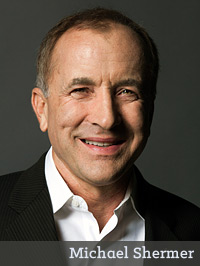
WE ARE LIVING in the most moral period of our species’ history. Ever since the Enlightenment, thinkers have consciously applied the methods of science to solve social and moral problems, and in the process created the modern world of liberal democracies, civil rights, equal justice, open political and economic borders, and prosperity the likes of which no human society in history has ever enjoyed. More people in more places have greater rights, freedoms, liberties, literacy, education, and prosperity—the likes of which no human society in history has ever enjoyed. In this provocative and compelling talk—that includes brief histories of freedom rights, women’s rights, gay rights, and animal rights, along with considerations of the nature of evil and moral regress—Shermer explains how scientific ways of thinking have moved us ever closer to a more just world.
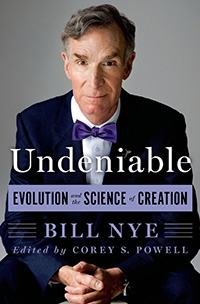
Speaker: Bill Nye, The Science Guy, in Conversation with Michael Shermer
SPARKED BY A CONTROVERSIAL DEBATE in February 2014, Bill Nye has set off on an energetic campaign to spread awareness of evolution and the powerful way it shapes our lives. In Undeniable: Evolution and the Science of Creation, he explains why race does not really exist; evaluates the true promise and peril of genetically modified food; reveals how new species are born, in a dog kennel and in a London subway; takes a stroll through 4.5 billion years of time; and explores the new search for alien life, including aliens right here on Earth. With infectious enthusiasm, Bill Nye shows that evolution is much more than a rebuttal to creationism; it is an essential way to understand how nature works—and to change the world. Don’t miss this enlightening “In Conversation” with Bill Nye, hosted by Michael Shermer.
A book signing followed the lecture. Order Undeniable from Amazon.
It is only a slight exaggeration to say that the British mathematician Alan Turing (1912–1954) saved the Allies from the Nazis, invented the computer and artificial intelligence, and anticipated gay liberation by decades—all before his suicide at age 41. In November a major motion picture starring Benedict Cumberbatch as Turing will be released, based on the classic biography by Dr. Andrew Hodges, who teaches mathematics at Wadham College, University of Oxford (he is also an active contributor to the mathematics of fundamental physics).
Hodges tells how Turing’s revolutionary idea of 1936—the concept of a universal machine—laid the foundation for the modern computer and how Turing brought the idea to practical realization in 1945 with his electronic design. Hodges also tells how this work was directly related to Turing’s leading role in breaking the German Enigma ciphers during World War II, a scientific triumph that was critical to Allied victory in the Atlantic. At the same time, this is the tragic story of a man who, despite his wartime service, was eventually arrested, stripped of his security clearance, and forced to undergo a humiliating treatment program—all for trying to live honestly in a society that defined homosexuality as a crime.
You play a vital part in our commitment to promote science and reason. If you enjoyed this Distinguished Science Lecture, please show your support by making a donation.
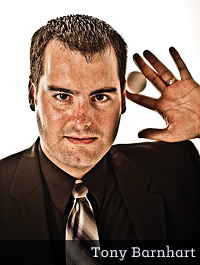
IN THIS DELIGHTFUL SHOW of mind and magic Dr. Tony Barnhart, a cognitive scientist and part-time professional magician (with over 20 years of performing experience), shows how magicians are informal cognitive scientists with their own hypotheses about the mind. His work on the science of magic has been featured in Science News for Kids as well as in national television shows, and he teaches a course on the Psychology of Magic at Northern Arizona University where he teaches students the principles of cognitive science through the art of magic. Don’t miss this entertaining and enlightening show and bring the kids!
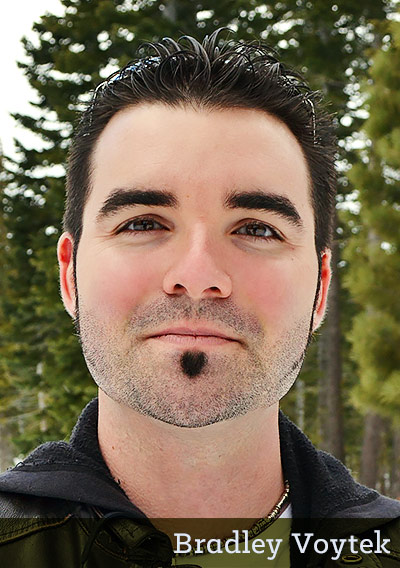
With their endless wandering, lumbering gait, insatiable hunger, antisocial behavior, and apparently memory-less existence, zombies are the walking nightmares of our deepest fears. What do these characteristic behaviors reveal about the inner workings of the zombie mind? Could we diagnose zombism as a neurological condition by studying their behavior? In Do Zombies Dream of Undead Sheep?, Dr. Bradley Voytek, a professor of computational cognitive science and neuroscience at the University of California, San Diego, applies neuro-know-how to dissect the puzzle of what has happened to the zombie brain to make the undead act differently than their human prey. Combining tongue-in-cheek analysis with modern neuroscientific principles, Voytek shows how zombism can be understood in terms of current knowledge regarding how the brain works. Voytek draws on zombie popular culture and identifies a characteristic zombie behavior that can be explained using neuroanatomy, neurophysiology, and brain-behavior relationships. Through this exploration he sheds light on fundamental neuroscientific questions such as: How does the brain function during sleeping and waking? What neural systems control movement? What is the nature of sensory perception? Order Do Zombies Dream of Undead Sheep? from Amazon. A book signing will follow the lecture.
You play a vital part in our commitment to promote science and reason. If you enjoyed this Distinguished Science Lecture, please show your support by making a donation.
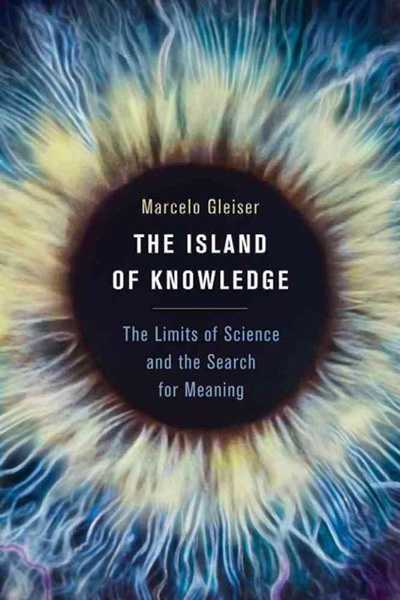
Do all questions have answers? How much can we know about the world? Is there such a thing as an ultimate truth? To be human is to want to know, but what we are able to observe is only a tiny portion of what’s “out there.” In The Island of Knowledge, Dartmouth College astronomer and physicist Dr. Marcelo Gleiser traces our search for answers to the most fundamental questions of existence. In so doing, he reaches a provocative conclusion: science, the main tool we use to find answers, is fundamentally limited. These limits to our knowledge arise both from our tools of exploration and from the nature of physical reality: the speed of light, the uncertainty principle, the impossibility of seeing beyond the cosmic horizon, the incompleteness theorem, and our own limitations as an intelligent species. Recognizing limits in this way, Gleiser argues, is not a deterrent to progress or a surrendering to religion. Rather, it frees us to question the meaning and nature of the universe while affirming the central role of life and ourselves in it. Science can and must go on, but recognizing its limits reveals its true mission: to know the universe is to know ourselves. Order The Island of Knowledge from Amazon. A book signing will follow the lecture.
You play a vital part in our commitment to promote science and reason. If you enjoyed this Distinguished Science Lecture, please show your support by making a donation.
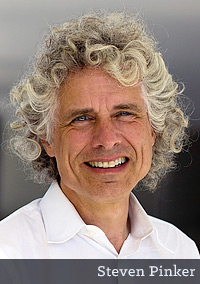
WHY IS SO MUCH WRITING SO BAD, and how can we make it better? Is the English language being corrupted by texting and social media? Do people write badly on purpose, to obfuscate and impress? Have dictionaries abandoned their responsibility to safeguard correct usage? Do kids today even care about good writing? In his latest book the Harvard linguist, cognitive scientist, bestselling author (The Language Instinct, How the Mind Works, The Blank Slate, and The Better Angels of Our Nature) and chair of the Usage Panel of The American Heritage Dictionary, Dr. Steven Pinker, answers these questions and more. Pinker applies insights from the sciences of language and mind to the challenge of crafting clear, coherent, and stylish prose. Filled with examples of great and gruesome modern prose, The Sense of Style shows how the art of writing can be a form of pleasurable mastery and a fascinating intellectual topic in its own right, that is also informed by science. Order The Sense of Style from Amazon. A book signing will follow the lecture.
In this myth-busting talk based on his new book, U.C. Irvine cognitive scientist Dr. Gregory Hickok calls for an essential reconsideration of one of the most far-reaching theories in modern neuroscience and psychology. Ever since the discovery of mirror neurons in macaque monkeys in 1992 there has been a stream of scientific studies implicating mirror neurons in everything from schizophrenia and drug abuse to sexual orientation and contagious yawning. Drawing on a broad range of observations from work on animal behavior, modern neuroimaging, neurological disorders, and more, Dr. Hickok argues that the foundational assumptions fall flat in light of the facts. He then explores alternative explanations of mirror neuron function while illuminating crucial questions about human cognition and brain function: Why do humans imitate so prodigiously? How different are the left and right hemispheres of the brain? Why do we have two visual systems? Do we need to be able to talk to understand speech? What’s going wrong in autism? Dr. Hickok provides deep insights into the organization and function of the human brain and the nature of communication and cognition.
You play a vital part in our commitment to promote science and reason. If you enjoyed this Distinguished Science Lecture, please show your support by making a donation.
The ordinary atoms that make up the known universe constitute only 5% of all matter and energy in the cosmos. The rest is known as dark matter and dark energy, because their precise identities are unknown. The Cosmic Cocktail is the inside story of the epic quest to solve one of the most compelling enigmas of modern science—what is the universe made of?—told by one of today’s foremost pioneers in the study of dark matter, acclaimed University of Michigan theoretical physicist Katherine Freese. Theorists contend that dark matter consists of fundamental particles known as WIMPs, or weakly interacting massive particles. Billions of them pass through our bodies every second without us even realizing it, yet their gravitational pull is capable of whirling stars and gas at breakneck speeds around the centers of galaxies, and bending light from distant bright objects. Dr. Freese describes the larger-than-life characters and clashing personalities behind the race to identify these elusive particles. Order The Cosmic Cocktail from Amazon. A book signing will follow the lecture.
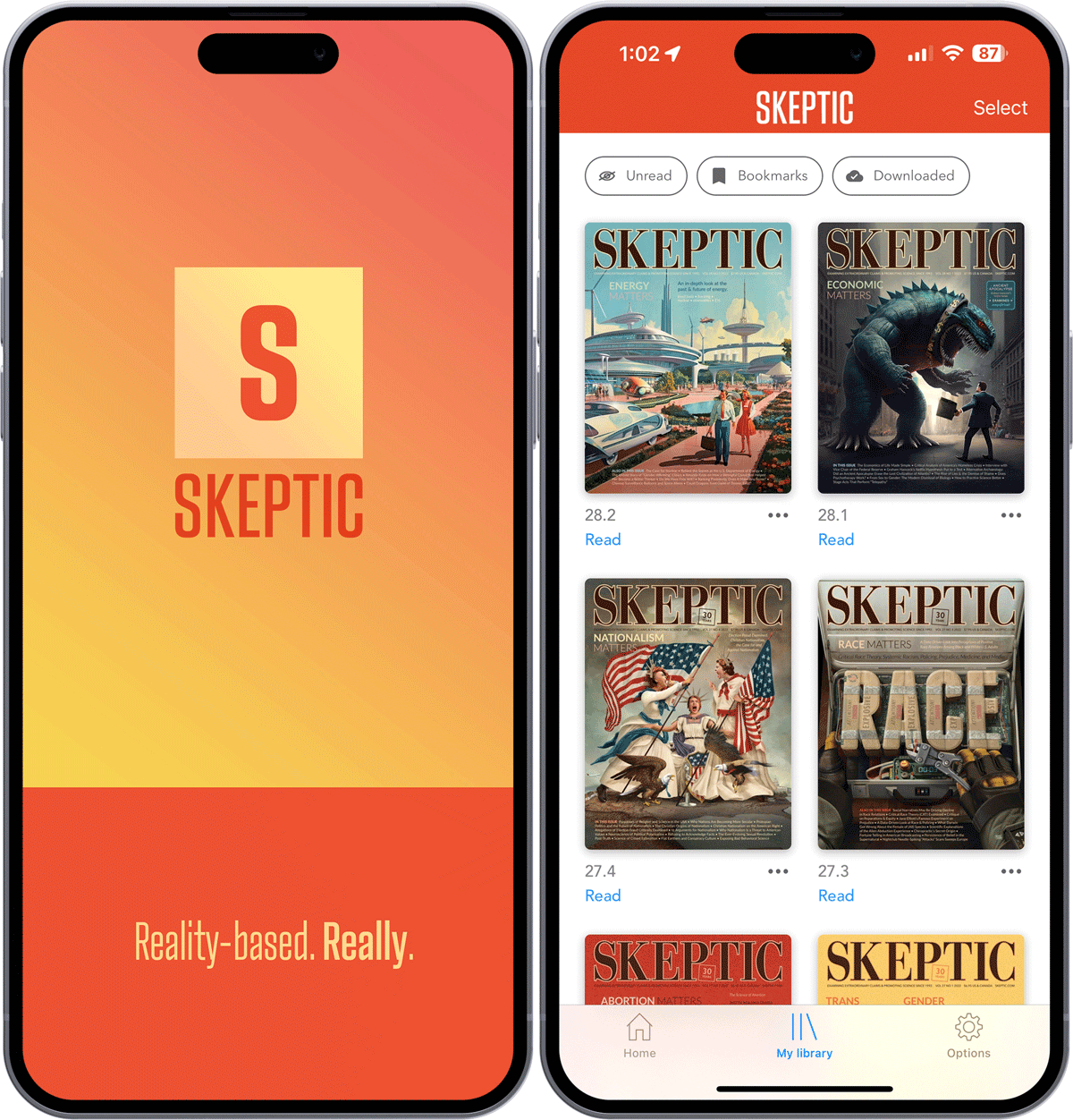
Whether at home or on the go, the SKEPTIC App is the easiest way to read your favorite articles. Within the app, users can purchase the current issue and back issues. Download the app today and get a 30-day free trial subscription.