Follow Us on Facebook, Twitter, and YouTube

Skeptic: Examining Extraordinary Claims and Promoting Science

top navigation:

Wednesday, November 19th, 2008 | ISSN 1556-5696

eSkeptic: the email newsletter of the Skeptics Society

Got something to say about this week’s eSkeptic? Leave your comments at the bottom of this page. If you enjoy the content we deliver each week in this free newsletter, show your support by making a tax-deductible donation to the Skeptics Society and subscribe to Skeptic magazine.


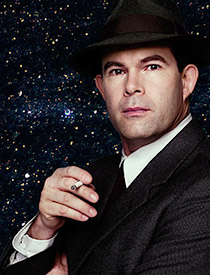
Gerald Finley as J. Robert Oppenheimer (photo credit: Metropolitan Opera)

Shermer’s First Opera Review

Oppenheimer the Opera
A Review of Doctor Atomic

Read Michael Shermer’s review of the Metropolitan Opera’s new production of Doctor Atomic, the story of the building of the atomic bomb and the brilliant but enigmatic J. Robert Oppenheimer, at Scientific American:

READ the review >


The Long Tail of Skepticism

What can regular skeptics actually do to enhance the appreciation of science and skeptical inquiry?

This question has been an ongoing theme for Skepticality, and this week’s guest has one answer to propose. In his audio essay, “Raising Our Game: The Rationale to Embrace Skepticamp,” software architect Reed Esau argues that “Skepticamps” (self-organizing peer conferences of intimate scale) can harness the potential of the “long tail” of the skeptical movement — offering a voice to all of us who have passion and expertise to share but who cannot take on the role of a “professional” skeptic.

These meetings are an experiment in the structure of a movement, and they are capturing the imagination of many new skeptics. What are the true implications for skeptical organizing? Is the advent of social networking technologies really the moment when everything changed?

Skepticality presents the essay in audio format, followed by Swoopy’s feature interview with Reed. Rounding out the discussion, Swoopy talks with Whatstheharm.net creator Tim Farley about his role in encouraging Skepticamp.

DOWNLOAD the text version of the essay (719 KB PDF) >

SUBSCRIBE to Skepticality
within iTunes

DOWNLOAD Episode #90
(26MB MP3)

SUBSCRIBE to the Skeptic RSS feed


new this week on MichaelShermer.com

This week at SkepticBlog.org, Michael Shermer presents Part 2 of his Chronicles of Skeptica about his trip to the big science conference in Puebla, Mexico called “City of Ideas,” in which he and Dan Dennett debated Dinesh D’Souza and John Esposito on “Is Religion a Force for Good or Evil in the World?”

While you’re there be sure to read the blogs posts of the other Skepticbloggers: Brian Dunning, Kirsten Sanford, Mark Edward, Phil Plait, Ryan Johnson, Steven Novella, and Yau-Man Chan.


Leave a comment

get eSkeptic
our free newsletter

Science in your inbox every Wednesday!


eSkeptic is our free email newsletter. Delivered once a week, you’ll receive fascinating articles, announcements, podcasts, book reviews, and more…

Watch Live Broadcasts from Caltech for free!

Lectures Live Streamed from Caltech

Can’t make it to Caltech for a Skeptics Distinguished Science Lecture? Watch the live stream of our lectures for free online, right here, broadcast live from Caltech!

Popular Articles
on skeptic.com

Here are the articles that people have been sharing over the last few days.

Help the
Skeptics Society
at no cost to you!

Planning on shopping at Amazon.com? Start your shopping by clicking the button below, and the Skeptics Society will receive a commission. Your prices for all Amazon products will remain exactly the same, yet you’ll provide essential financial support for the work of the nonprofit Skeptics Society.

amazon.com

See our affiliate links page for Amazon.ca, Amazon.co.uk, Amazon.de, and iTunes links.

Tweets from Shermer

The Believing Brain
(now in paperback)

The Believing Brain (paperback cover)

Get the autographed paperback

In this, his magnum opus, Dr. Michael Shermer presents his comprehensive theory on how beliefs are born, formed, nourished, reinforced, challenged, changed, and extinguished. Sam Harris calls The Believing Brain “a wonderfully lucid, accessible, and wide-ranging account of the boundary between justified and unjustified belief.” Leonard Mlodinow calls it “a tour de force integrating neuroscience and the social sciences.”

FREE PDF Download

Top 10 Myths About Evolution

Top 10 Myths About Evolution (and how we know it really happened)

This concise pamphlet provides answers to common objections to evolution, such as: If humans came from apes, why aren’t apes evolving into humans?; Only an intelligent designer could have made something as complex as an eye; The second law of thermo-dynamics proves that evolution is impossible; Evolution can’t account for morality; and more…

FREE PDF Download

Top 10 Things You Should Know About Alternative Medicine

Top 10 Things You Should Know About Alternative Medicine

Harriet Hall, MD (aka the SkepDoc), shares her wit and wisdom about alternative medicine including: chiropractic, the placebo effect, homeopathy, acupuncture, and the questionable benefits of organic food, detoxification, and ‘natural’ remedies.

FREE PDF Download

Learn to be a Psychic in 10 Easy Lessons

Learn to be a Psychic in 10
Easy Lessons

Psychic readings and fortunetelling are an ancient art — a combination of acting and psychological manipulation. While some psychics are known to cheat and acquire information ahead of time, these ten tips focus on what is known as “cold reading” — reading someone “cold” without any prior knowledge about them.

Copyright © 1992–2013 Skeptic and its contributors. For general enquiries regarding the Skeptics Society or Skeptic magazine, email skepticssociety@skeptic.com or call 1-626-794-3119. Website-related matters: webmaster@skeptic.com. Enquiries about online store orders: orders@skeptic.com. To update your subscription address: subscriptions@skeptic.com.
See our Contact Information page for more details. This website uses Google Analytics, Google AdWords, and AddThis tracking software.