Follow Us on Facebook, Twitter, and YouTube

Skeptic: Examining Extraordinary Claims and Promoting Science

top navigation:

Wednesday, February 6th, 2013 | ISSN 1556-5696

eSkeptic: the email newsletter of the Skeptics Society

Got something to say about this week’s eSkeptic? Leave your comments at the bottom of this page. If you enjoy the content we deliver each week in this free newsletter, show your support by making a tax-deductible donation to the Skeptics Society and subscribe to Skeptic magazine.


Announcing the Spring 2013 Season
of Our Distinguished Lectures at Caltech

MARK YOUR CALENDAR! The Skeptics Society is pleased to announce another season of our Distinguished Lecture Series at Caltech. All lectures will take place in Baxter Lecture Hall on a Sunday at 2 pm. Events include an author book signing. First up…
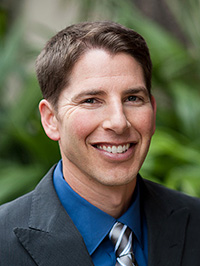
Benjamin Bergen (photo by Keegan Uhl)
Louder Than Words:
The New Science of How
the Mind Makes Meaning

with Dr. Benjamin K. Bergen
Sunday, February 10, 2013 at 2 pm

IN THIS LECTURE, based on his book, U.C. San Diego cognitive psychologist Benjamin K. Bergen draws together research in psychology, linguistics, and neuroscience to offer a new theory of how our minds make meaning. When we hear words and sentences, we engage the parts of our brain that we use for perception and action—repurposing evolutionarily older networks—to create mental simulations. Embodied simulation, as it’s called, is the reason why it takes time to travel over distance, even in our mind’s eye; why it’s possible for us to become better baseball players by imagining a well-executed swing; and why it’s so hard to talk on cell phones while we’re driving on the highway. Rather than merely calling up abstract ideas to understand language, as others previously argued, our brains engage in a creative act to construct rich mental worlds in which we see, hear, and feel.

Order the book from Amazon

Followed by…
  • To Boldly Go…Well, You Know:
    NASA’s Dawn Mission to the Asteroid Belt

    with Dr. Marc Rayman
    Sunday, March 17, 2013 at 2 pm
  • Give and Take: A Revolutionary Approach to Success
    with Dr. Adam Grant
    Sunday, April 28, 2013 at 2 pm
  • Odd Couples: Extraordinary Differences between the Sexes
    in the Animal Kingdom

    with Dr. Daphne J. Fairbairn
    Sunday, May 19, 2013 at 2 pm
New Admission Policy and Prices

Please note there are important policy and pricing changes for this season of lectures at Caltech. Please review these changes now.
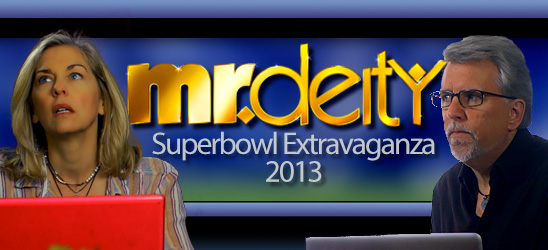

Mr. Deity Superbowl Extravaganza 2013

The Latest Episode of Mr. Deity: Mr. Deity Superbowl Extravaganza 2013

WATCH THIS EPISODE | DONATE | NEWSLETTER | FACEBOOK | MrDeity.com

MonsterTalk logo
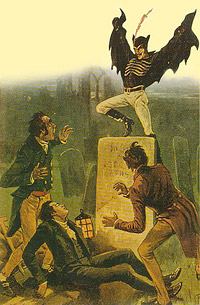
Spring Heeled Jack (http://images1.wikia.nocookie.net/__cb20100302110138/pdsh/images/0/0c/Springheeled-jack.jpg)
Hop Springs Eternal

London of the 1830s was terrorized by an astonishing figure—a caped man with long sharp metallic claws who spouted blue fire from his mouth and leaped over rooftops. Surely such a creature could be no more than myth, right? Or was there a mysterious aristocrat playing tricks on the working class? In this week’s episode of MonsterTalk, we talk with historian Mike Dash about the legendary figure known as Spring Heeled Jack.

LISTEN to this episode

READ the episode notes

Get the MonsterTalk Podcast App
for Apple and Android Devices!

MonsterTalk Podcast App (presented by Skeptic Magazine) is available on the App Store
MonsterTalk Podcast App (presented by Skeptic Magazine) is available on the Android Market

Get the MonsterTalk Podcast App (presented by Skeptic Magazine) and enjoy the science show about monsters on your handheld devices! Available for Android, iPhone, iPad, and iPod Touch. To get the app for iOS devices, download the free Podcast Box App on iTunes and then search for MonsterTalk within the Podcast Box app to listen to Monstertalk on your iPhone, iPad or iPod. For Android devices, simply install the stand-alone app. MonsterTalk was the 2012 Parsec Award winner for Best “Fact Behind The Fiction” Podcast.

SUBSCRIBE ON iTUNES

FOLLOW THE RSS FEED


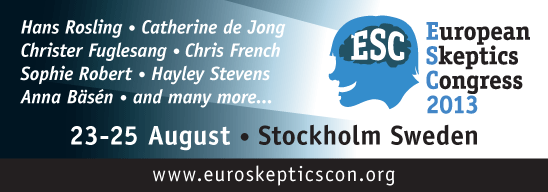
The 15th European Skeptics Congress
August 23–25, 2013 in Stockholm, Sweden

The Swedish Skeptics Association (Föreningen Vetenskap och Folkbildning) invites science-friendly people worldwide to the 15th European Skeptics Congress, 23–25 August 2013, in Stockholm, Sweden. The conference is one in the series supported by the European Council of Skeptical Organisations. Learn more about the speakers. Visit euroskepticscon.org for more information. Online registration opens March 15, 2013.

LEARN MORE


Feature Article

Share this article with friends online.
Click the + for more options.

Why Is There A Skeptical Movement?

For over twenty years, the Skeptics Society and Skeptic magazine have labored at the forefront of the skeptical movement—constantly experimenting, often pushing the boundaries, but always circling back to the heart of the skeptical tradition.

Scientific skepticism is rare and precious, a thing of beauty and value. We’re proud to specialize in the subtle and difficult work of studying testable paranormal and fringe science claims through the lens of science and critical scholarship, and then telling the public what we have learned. It’s work that matters in the lives of real people, every day—an ancient and noble public service tradition. We’re proud to have your help in carrying that tradition forward.

But when did the tradition of scientific skepticism begin? How did it blossom into a modern movement? What happened before there was a Skeptics Society—before any of us were even born? When top hats or Roman togas were the latest fashions, who spoke then for the victims of paranormal fraud?

This week, we’re pleased to present Daniel Loxton’s challenging and provocative new project, “Why Is There a Skeptical Movement?” (PDF). Almost two years in the writing, these two meticulously-researched chapter-length explorations dig deeply into the roots, founding principles, and purpose of scientific skepticism. Arguing that it is essential for skeptics to “appreciate that we’re caretakers for the work of those who have come before,” Loxton carries forward the discussion about the scope and limits of scientific skepticism that has been raised again in recent days, and which Loxton addressed previously in his 2007 op-ed “Where Do We Go From Here?

What ought the skeptical movement to become? According to Loxton, the more important question is why it exists in the first place.

DOWNLOAD “Why Is There a Skeptical Movement?” (PDF)

Share this eSkeptic with friends online.
Click the + for more sharing options.

get eSkeptic
our free newsletter

Science in your inbox every Wednesday!


eSkeptic is our free email newsletter. Delivered once a week, you’ll receive fascinating articles, announcements, podcasts, book reviews, and more…

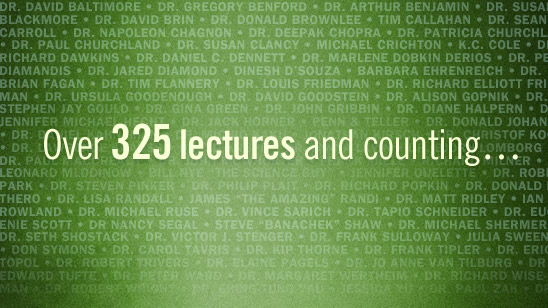
Watch Live Broadcasts from Caltech for free!

Lectures Live Streamed from Caltech

Can’t make it to Caltech for a Skeptics Distinguished Science Lecture? Watch the live stream of our lectures for free online, right here, broadcast live from Caltech!

Popular Articles
on skeptic.com

Here are the articles that people have been sharing over the last few days.

Help the
Skeptics Society
at no cost to you!

Planning on shopping at Amazon.com? Start your shopping by clicking the button below, and the Skeptics Society will receive a commission. Your prices for all Amazon products will remain exactly the same, yet you’ll provide essential financial support for the work of the nonprofit Skeptics Society.

amazon.com

See our affiliate links page for Amazon.ca, Amazon.co.uk, Amazon.de, and iTunes links.

Tweets from Shermer

The Believing Brain
(now in paperback)

The Believing Brain (paperback cover)

Get the autographed paperback

In this, his magnum opus, Dr. Michael Shermer presents his comprehensive theory on how beliefs are born, formed, nourished, reinforced, challenged, changed, and extinguished. Sam Harris calls The Believing Brain “a wonderfully lucid, accessible, and wide-ranging account of the boundary between justified and unjustified belief.” Leonard Mlodinow calls it “a tour de force integrating neuroscience and the social sciences.”

FREE PDF Download

Top 10 Myths About Evolution

Top 10 Myths About Evolution (and how we know it really happened)

This concise pamphlet provides answers to common objections to evolution, such as: If humans came from apes, why aren’t apes evolving into humans?; Only an intelligent designer could have made something as complex as an eye; The second law of thermo-dynamics proves that evolution is impossible; Evolution can’t account for morality; and more…

FREE PDF Download

Top 10 Things You Should Know About Alternative Medicine

Top 10 Things You Should Know About Alternative Medicine

Harriet Hall, MD (aka the SkepDoc), shares her wit and wisdom about alternative medicine including: chiropractic, the placebo effect, homeopathy, acupuncture, and the questionable benefits of organic food, detoxification, and ‘natural’ remedies.

FREE PDF Download

Learn to be a Psychic in 10 Easy Lessons

Learn to be a Psychic in 10
Easy Lessons

Psychic readings and fortunetelling are an ancient art — a combination of acting and psychological manipulation. While some psychics are known to cheat and acquire information ahead of time, these ten tips focus on what is known as “cold reading” — reading someone “cold” without any prior knowledge about them.

Copyright © 1992–2013 Skeptic and its contributors. For general enquiries regarding the Skeptics Society or Skeptic magazine, email skepticssociety@skeptic.com or call 1-626-794-3119. Website-related matters: webmaster@skeptic.com. Enquiries about online store orders: orders@skeptic.com. To update your subscription address: subscriptions@skeptic.com.
See our Contact Information page for more details. This website uses Google Analytics, Google AdWords, and AddThis tracking software.