Martian Astronomers
A review of Parallel Lives of Astronomers. Percival Lowell and Edward Emerson Barnard by William Sheehan. (Cham, Switzerland: Springer, 2024. Hardcover, 687 pages)
Of the two astronomers whose lives and accomplishments are chronicled in William Sheehan’s Parallel Lives of Astronomers, Percival Lowell was far better known than Edward Barnard. Lowell is famous for having championed the idea that the canals on Mars were built by intelligent beings. The origins of the idea that there were canals on Mars lay in the Italian astronomer Schiaparelli’s report of “canali” on the red planet in 1877. The word is best translated as “channels” but was popularly mistranslated as “canals.” Since in the latter part of the 19th century canals were being built all over the world by intelligent humans, the implication was that the “canals” on Mars were built by intelligent aliens.
A major theme of the book is that Barnard and Lowell in many ways were opposites of each other. Barnard grew up in poverty in Nashville, Tennessee. He became interested in astronomy as a nine-year old working in a photography studio. He received some academic training in astronomy and was a superb and objective observer. Unlike Lowell, his mathematical skills were comparatively weak. Lowell came from an extremely wealthy Boston family and his interest in astronomy began in college. He graduated from Harvard in 1876 with honors in mathematics. The topic of his graduation speech was the nebular hypothesis of how solar systems came together from collections of gas and dust around a sun. These contrasts (and others) between Lowell and Barnard provide an intimate view not only of the two men, but of much of the history of astronomy of the late 19th and early 20th centuries, especially regarding Mars because the two men were at opposite ends of a raging debate among astronomers and the general public on the matter of the nature of the canals.
From a skeptical point of view, the most interesting organizational concept that Sheehan uses is the distinction between top-down and bottom-up processing. He uses this to contrast the approaches used by Lowell and Barnard in their interpretations of what they saw through their telescopes and later in photographs. Lowell was a largely top-down man, starting with an idea and then searching for evidence to support it. Barnard continued to make observations until he believed he had enough data to come to a conclusion. Lowell focused his astronomical interests largely on the canal debate, while Barnard was one of the most productive observational astronomers of his day. The top-down versus bottom-up distinction allows Sheehan to use basic concepts in perception to explain the differences between the two men in their position on the reality of the canals.
Perception is a function of two very different processes that together usually lead to an accurate perceptual experience of the world. Bottom-up processing refers to the incoming sensory inputs from the various sensory systems. These, alone, are not sufficient to specify what is actually out there in the world. Top-down processing refers to the expectations, beliefs, and knowledge that we all have about the perceptual world. These are needed for the brain to interpret and make sense of the information that is brought in by bottom-up mechanisms. Almost always these two sources are in accord and the world is perceived accurately.
Between the series of fleeting images hitting the retina of the observer and the final drawing or description of what the observer saw, the constructive nature of perception has ample room to create perceptual experiences of structures that were not there in reality.
However, sometimes expectations, beliefs, and knowledge can be wrong, and the incoming sensory input may be distorted or incomplete. Under these rare circumstances, people can and do actually perceive things that are not there even though they are not intoxicated or psychologically impaired. Thus flying saucers, sea monsters, Big Foot, and the like, are perceived when the sensory input is minimal, often seen in fleeting glimpses at night and in the distance. The Loch Ness Monster never swims up the Inverness River through downtown Inverness at high noon on a pleasant sunny day for vacationers to witness. Final perceptual experiences are a function of the sensory inputs as well as expectations and beliefs. Thus, perception is said to be a constructive process and one that can produce incorrect experiences. The canals of Mars fall directly into this perceptual cognitive model.
Before reading the book, I had the mistaken impression that when looking through a telescope, one saw a fairly stable image of whatever object the instrument was focused on. Nothing could be further from the truth. The image of a planet as seen through a telescope is just a tiny disc of light. To make matters worse, that image is far from stable, especially for the telescopes in use in Lowell and Barnard’s time. The book makes clear how unstable those images could be. Momentary changes in the characteristics of the air above a telescope would make the image waver, fade in and out of focus, and change in other characteristics from moment to moment.
Even when “seeing” was excellent, all one saw were successive glimpses of the target object. Then those glimpses had to be constructed by the brain into a coherent impression of what the target was. Between the series of fleeting images hitting the retina of the observer and the final drawing or description of what the observer saw, the constructive nature of perception has ample room to create perceptual experiences of structures (i.e., canals) that were not there in reality.
Sometimes expectations, beliefs, and knowledge can be wrong, and the incoming sensory input may be distorted or incomplete.
Astronomers had known since the early 19th century that such non-sensory factors could influence perceptual judgments in their observations. Thus, different observers reported different times at which a planet or star crossed a line in a telescope reticule. These differences were recognized by the term “personal equation.” But the idea that perception was constructive in the sense that honest observers could perceive structures that were not present had to wait until at least the start of the 20th century before it was recognized.
Following his Harvard graduation, Lowell was expected to go into his family business of highly profitable textile mills. As an intelligent, curious young man he found that prospect stultifying. To make matters worse, he was involved in a serious scandal. He had proposed marriage to a daughter from the sniffy Boston upper crust, but then withdrew the proposal, something that just wasn’t done in that time and place. As a result, Lowell was effectively banned from that elite circle, so in response in the early 1880s he travelled to Japan and Korea and wrote several books on Asian culture and became part of the Korean government delegation to the United States (in 1883). He continued to live in Asia until 1893.
That Lowell continued his interest in astronomy before actively pursuing the mystery of Mars was demonstrated by the “astronomical references and imagery [that] are scattered throughout the Far Eastern books and if gathered together would make a long list” (p. 97). That interest turned into a lifelong obsession in 1892 when he read French astronomer Camille Flammarion’s book La Planete Mars et ses Conditions d’habitabilite, in which the author argued that the “canals” were evidence of an advanced civilization. Lowell was wealthy enough to fund the creation of the Lowell Observatory in Flagstaff, Arizona, which opened in 1894.
In his autobiographical writings, Barnard noted that he became interested in the stars while walking home from work in the dark. One star “seemed to be slowly moving eastward among the other stars.” This struck him as unusual because the other stars “seemed all to keep to their same relative positions,” (p. 121) while this one did not. This was clear evidence of an early careful observer who had, unknowingly, seen not just another star but the planet Saturn. When he was 19 years old, Barnard was given a book written by the Reverend Thomas Dick, who believed that all the planets of the solar system were inhabited. The book included simple star charts that Barnard “rushed to compare with what he could make out in the small patch of sky visible from the open window of his apartment” (p. 126). The book, a later fellow astronomer and friend wrote, “awakened a thirst for astronomical knowledge which … never ceased to be controlling” (p. 126). Around 1880 or 1881, Barnard was given a simple telescope by an older friend at the photography studio where he was still working. He later received a scholarship to Vanderbilt University, but never finished his degree. Such things were less important in the late 19th century, and in 1887 he obtained a position at the Lick Observatory outside of San Jose, California, one of the earliest mountain-top observatories so positioned to rise above atmospheric turbulence and local city lights.
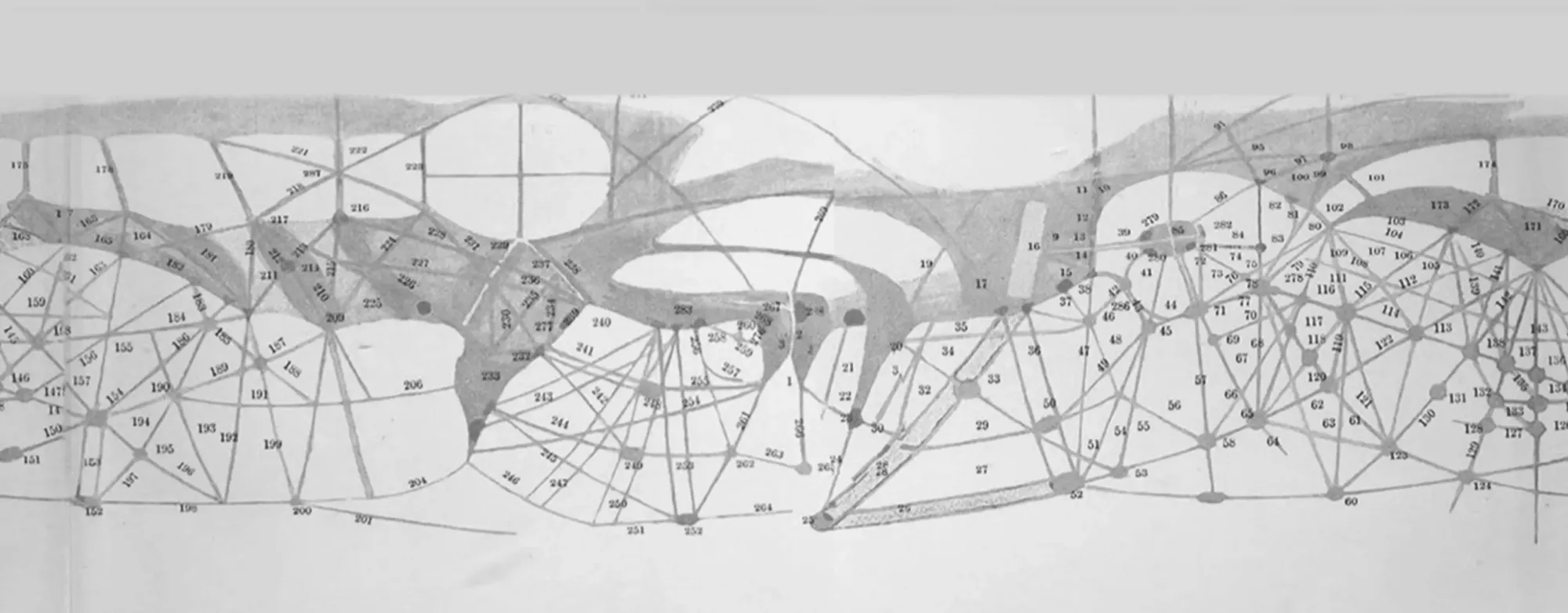
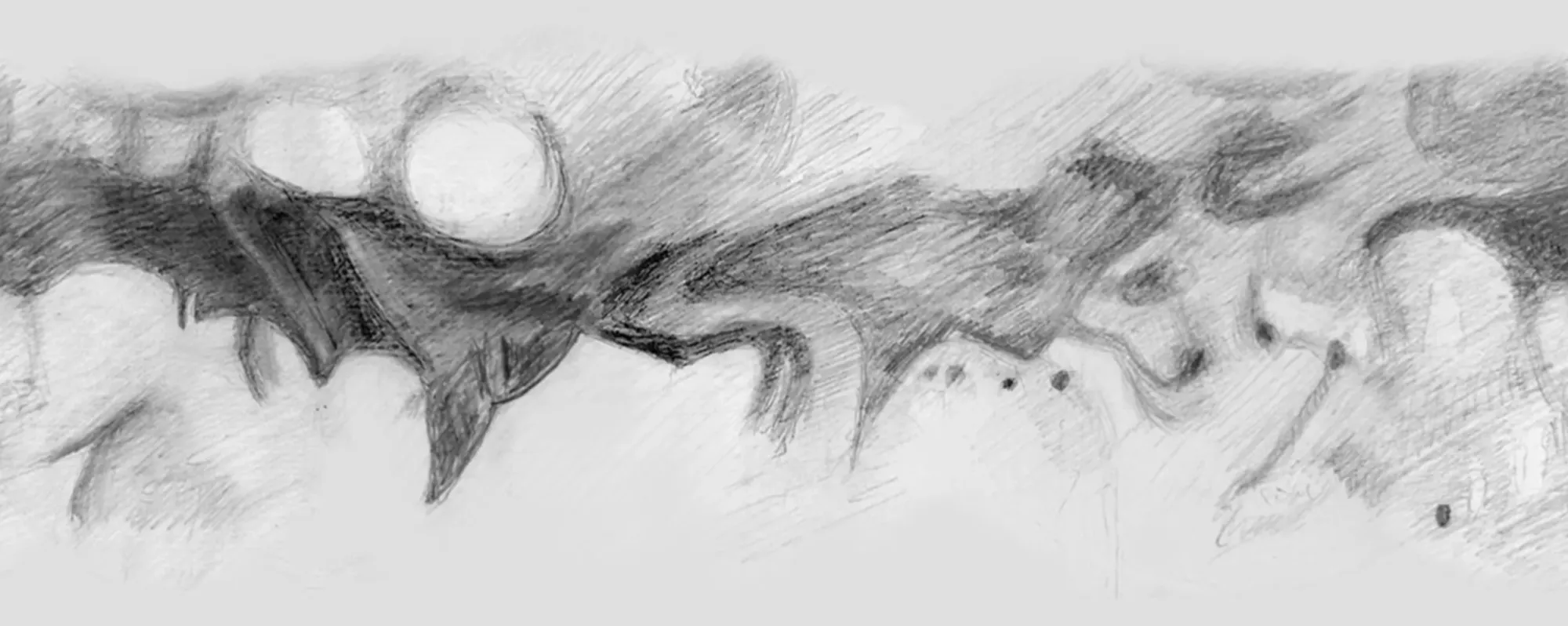
During their long careers, both Lowell and Barnard observed Mars. Their different approaches—top-down versus bottom-up—permeated how they interpreted and represented the image that fell on their respective retinas. Figure 1 (from page 291 in the book) shows this difference beautifully. On top is Lowell’s version of what he saw in 1894, while Barnard’s representation from the same year is below. Overall, the images are similar in general outline. However, Lowell has added to his drawing numerous lines, which he contended were the canals, and details not present in Barnard’s. This is a classic example of constructive perception. Lowell saw similar geometric patterns on Mercury and Venus, although he apparently did not attribute them to intelligent design.
While Lowell was seeing things that didn’t exist, Barnard was busy with more fruitful astronomical activities. In 1895 he became a professor of astronomy at the University of Chicago, which gave him access to the Yerkes Observatory in Wisconsin. It was there that he spent the rest of his life and professional career. Wisconsin is not known for warm winters and the observing platform of telescope at Yerkes was not heated. Nonetheless, Barnard would observe almost compulsively, night after night, even in the bitter cold. He was famous for having extremely good eyesight, which made him an excellent observer. During his long career he was an active member of the astronomical community. He made numerous important discoveries including over 15 comets and the fifth moon of Jupiter. Barnard’s Star, whose motion relative to the sun he determined in 1916, was named after him in 2017, although it had been recorded photographically in the 1880s. It is a red dwarf that is one of the four stars closest to Earth.
Perhaps Barnard’s most important contribution is the explanation for what are known as dark nebula, sometimes called “Barnard objects.” When the Milky Way is looked at through a telescope, there are large dark areas that appear to contain no stars. Why certain areas of the galaxy didn’t contain any stars was a mystery. In fact, these areas do contain stars, but their light is blocked by huge clouds of interstellar dust. The understanding of the nature of the dark nebula provided an important insight into the evolution of stars and planets. Another major accomplishment was his photographic atlas of portions of the Milky Way. The work, which is stunningly beautiful, took years to compile and wasn’t published until 1927, four years after his death in 1923.
During his active career Barnard did not ignore the controversial issue of the canals on Mars. He photographed Mars through the great telescope at the Yerkes Observatory in 1909, when Mars was “in opposition” to the Earth—as close as it would be for many years in the future, and was an ideal time for observation and photography. These photographs showed no canals. Barnard was not as vocal in the great canal debate as some other astronomers. It was the brilliant Greek-French astronomer Eugene Antoniadi (1870–1944) who became Lowell’s most serious detractor. Sheehan includes the often acrimonious debates between Lowell and Antoniadi in the story of the contrasts between Lowell and Barnard.
Final perceptual experiences are a function of the sensory inputs as well as expectations and beliefs … perception is said to be a constructive process and one that can produce incorrect experiences.
During the time that Barnard was active in astronomical research and writing, Lowell was not inactive. However, his activities and interests were heavily focused on the issue of the canals. He lectured frequently and wrote widely defending his view that the canals were real. He, too, took photographs of Mars through the telescopes at the Lowell Observatory in Flagstaff. But constructive perception works just as well with photographs as it does with images seen through a telescope.
Both Lowell and Barnard made contributions to astronomy; Barnard as a careful scientist and Lowell as a popularizer who inspired many to an interest in astronomy, including Robert Goddard and Carl Sagan. In terms of fiction, Lowell’s argument that the canals were the products of intelligent Martians led to the writings of H.G. Wells and Edgar Rice Burroughs. Sheehan’s book goes into great, but never boring, detail about the lives and work of both men. The book is beautifully illustrated. There are pictures not only of the protagonists as they, to paraphrase Shakespeare, “strut and fret their hour upon the stage” but of their drawings and photographs of Mars and important locations in their stories. It is beautifully produced with copious references and notes. Unfortunately, the publisher did not provide an index, but with the 150th anniversary of Schiaparelli’s observation in 2027, Sheehan’s book is especially resonant.