Selling Fear and Half-Truths: The Latest 60 Minutes ‘Exposé’ on Havana Syndrome

“A brain biased toward seeing meaning rather than randomness is one of our greatest assets. The price we pay is occasionally connecting dots that don’t really belong together.”1 –Rob Brotherton
For nearly a decade, a mysterious ailment known as “Havana Syndrome” has been portrayed as proof that American diplomats and intelligence officers have been attacked by a foreign adversary using a secret energy weapon. Few outlets have promoted this narrative more forcefully than the CBS television News Magazine 60 Minutes, which has presented the saga as a chilling geopolitical mystery. Yet after years of investigation, the U.S. intelligence community has concluded that such attacks are “highly unlikely.” So how did one of America’s most respected news programs become so invested in a story that the evidence increasingly contradicts? The answer tells us less about the shadowy world of spycraft and secret weapons, and more about the psychology of belief, the power of social contagion, and the media’s enduring fascination with invisible enemies.
60 Minutes is widely regarded as one of the most prestigious and successful news programs in American television history. For decades it has been the gold standard in investigative reporting and has won every major award in broadcast journalism since its inception in 1968.2 Over the past decade the program has aired four exposés on “Havana Syndrome,” a mysterious clustering of health complaints first noticed by U.S. government officials in Havana, Cuba in 2016 (hence the name).3 However, for the past three years its reputation has been tarnished by two separate intelligence assessments that have challenged and discredited key elements of their investigations.4
Immediately after their third report aired in March 2024, which claimed that an elite Russian military unit was targeting Americans with an energy weapon, the segment prompted calls for a renewed congressional investigation.5 Yet the CIA Director in the Biden Administration, William Burns, responded to the broadcast by issuing a firm assurance that the claims had been thoroughly investigated and were unfounded.6 This conclusion was reaffirmed in an updated intelligence assessment that was issued in 2025.7
On Sunday March 8, 2026, 60 Minutes aired its fourth investigation into “Havana Syndrome” in nine years, once again making dramatic claims that American spies, diplomats, and military personnel have been targeted by a mysterious weapon, first in Havana, and later around the world.8 The three previous segments were critiqued in the pages of Skeptic as they relied heavily on speculation with limited physical evidence, while largely excluding skeptical perspectives.9 The latest chapter in this saga is no different, repeating old, discredited claims and introducing a striking new allegation that the government purchased a Havana Syndrome-type device on the Russian black market.10
The “Attacks” on Chris and Heidi
In the latest segment, narrator Scott Pelley interviews Chris (last name withheld) who worked on top secret spy satellites near Washington DC, and claimed to have been attacked several times between August and December 2020. Pelley implies that Chris had been targeted with an energy weapon, describing him as having been “struck by an unseen force.” He said the first incident felt like someone punched him in the throat, his left ear was clogged, and a sharp pain shot down his left arm. During the second incident, in the kitchen of his Virginia home, he suddenly felt like a vice was squeezing his head, and he became disoriented, confused, and dizzy. A third episode occurred in his living room when he was stricken with a cramping of his back muscles “like a charley horse,” accompanied by a hot, sharp pain. In the final episode, he woke up feeling like a vice was gripping his brainstem and he experienced “a full body convulsion.”
While the segment frames Chris’s experience as a targeted strike, his clinical presentation is consistent with common neurological and psychological conditions such as migraines and anxiety disorder. Migraines often cluster over several months and grow progressively worse before resolving. His description of vice-like pressure is commonly reported by migraine sufferers. Symptoms typically involve head pressure and pain, dizziness, confusion, disorientation, muscle spasms, and throat sensations. They often include unilateral symptoms (affecting one side of the body) such as the clogging of his left ear and the shooting pain down his left arm.
That he experienced several distinct episodes with differing symptoms raises further questions about the likelihood of an attack. Why would the same weapon produce such different effects? Chris’s other symptoms such as throat tightness (globus) and muscle spasms that grew progressively worse, may reflect anxiety from someone who was working in an extreme stress environment (a classified spy satellite program). The least likely explanation for his symptoms is an attack by a directed energy weapon.
The 60 Minutes narrative survives primarily through a strategic omission of key facts.
His partner Heidi described waking up with joint pain that was concentrated in her left shoulder. Pelley said that “bones in her shoulder were dissolving,” and she was diagnosed with osteolysis, which required an operation. The implication was that she too had been struck with the same mysterious weapon. But osteolysis of the shoulder is a well-known condition that is becoming increasingly diagnosed in women. It is associated with repetitive strain injuries, weightlifting, trauma, and inflammation, not mysterious external agents.11 Heidi’s shoulder condition is an entirely different pathology from that of Chris. It is far more probable that two people living together simply developed two unrelated conditions.
Pelley then mentions several other victims who supposedly had similar symptoms: an FBI agent who experienced a drilling sensation in her right ear; a Commerce Department official who reported severe head pressure and ear pain; and the wife of an official who felt a piercing pain and pressure in her left ear and a headache. He asserts that a striking aspect of these stories is that “people who never met tell it the same way.” A more plausible explanation is that they were suffering from vestibular disorders: conditions that affect the inner ear and parts of the brain that regulate balance and spatial awareness. The symptoms described in the 60 Minutes interviews include ear pain and pressure, headaches and head pressure, and unusual sounds and sensations in the ear. The descriptions of the victims would be familiar to any vestibular neurologist treating migraines and inner ear conditions including unusual ear sensations, stabbing pains, or a perception of drilling, pulsation, or vibrations.12 It is estimated that one-third of adults over 40 will experience vestibular dysfunction.13
The Omission of Key Information
The 60 Minutes narrative survives primarily through a strategic omission of key facts. It fails to mention that the foundational studies in the Journal of the American Medical Association (JAMA) that gave rise to the belief that a mysterious weapon had injured American personnel in Cuba, were mired in controversy. This included internal ethics complaints, the withdrawal of authors, and accusations of scientific misconduct. In doing so, the program presents a house of cards as a fortress of settled science. The first study appeared in JAMA in February 2018, and caused a sensation with claims that the patients suffered brain damage.14 Prior to its publication, UCLA neurologist Dr. Robert Baloh, who developed some of the tests that were used in the study, was asked by the editors to review the findings. He found the manuscript to be laden with inconsistencies, described the claims as “science fiction,” and recommended against acceptance.15
Three of the study’s original authors removed their names just prior to publication as they were refused access to the data or earlier revisions of the manuscript. One of them—Dr. Carey Balaban, an ear, nose and throat specialist at the University of Pittsburgh, was so disturbed by this that he filed an ethics complaint over what he described as potential scientific misconduct.16 When the study appeared, there were calls by neurologists for their methods to be clarified or the study retracted.17 A later attempt to clarify the study’s findings was described by University of Edinburgh neurologist Sergio Della Sala as incomprehensible.18 Prior to its publication, information had been leaked to the media that several of the patients suffered white matter tract changes in their brains, prompting dramatic headlines about brain damage. However, when the study appeared, the prevalence of white matter changes fell within a normal range.19
A second JAMA study in 2019, was equally controversial. It found brain anomalies in a small group of victims, once again prompting sensational headlines about brain damage. The study’s lead author, Dr. Ragini Verma, even described the differences in brain images of “Havana Syndrome” victims and a control group as “jaw-dropping.”20 Yet such findings are common in small cohorts and are consistent with what one would expect to see in a group of people under prolonged stress. The authors even admitted that the anomalies were so minor that they could have been caused by individual variation.21 Another problem was that 12 of the Havana Syndrome patients had pre-existing histories of concussion compared to none in the control group. Despite this, many media outlets had a field day citing a few rogue scientists who proclaimed that it was clear evidence of an attack by a microwave weapon.
Dubious Beginnings
The 60 Minutes segment also failed to mention that social contagion may have played a role in the initial spread of “Havana Syndrome.” CIA analyst Fulton Armstrong would later reveal that the undercover intelligence agent in Havana who first reported the mysterious sounds and believed they were responsible for his health issues, had engaged in a vigorous campaign to persuade colleagues that the sounds were significant. “He was lobbying, if not coercing, people to report symptoms and connect the dots,” Armstrong said.22 The man, who has since been dubbed “patient zero,” later attended a gathering of embassy personnel and played the recording of his “attack,” encouraging them to report their symptoms as he was convinced that they too had been targeted. His recording was analyzed by government scientists and identified as crickets.23 In fact, eight of the first group of victims in Cuba who reported feeling unwell and hearing sounds, recorded their “attacks.” They were later identified as the mating call of the Indies short-tailed cricket.24
Soon American and Canadian diplomats stationed in Havana were on the lookout for strange sounds and health complaints. Eventually the U.S. government alerted all of its active military personnel and embassy staff around the world to be vigilant for mysterious sounds and “anomalous health incidents.” In response, there were over 1,500 reports of possible attacks. The problem with these alerts is that “Havana Syndrome” symptoms are common in the general population and include headaches, nausea, dizziness, forgetfulness, difficulty concentrating, tinnitus, fatigue, facial pressure, hearing loss, ear pain, trouble walking, depression, irritability, and even nose bleeds.
One study found that the average person experiences five different symptoms in any given week. Thirty-six percent noted fatigue; 35 percent reported headaches. Nearly 30 percent said they had insomnia, while 15 percent had difficulty concentrating, 13 percent reported memory problems; roughly 8 percent noted nausea and dizziness.25 These symptoms overlap with those attributed to “Havana Syndrome.” When one eliminates claims of brain damage and hearing loss (which were never demonstrated), one is left with an array of exceedingly common symptoms.
A Fixation on David Relman
The 60 Minutes segment includes extensive interviews with Stanford University microbiologist David Relman who headed two panels that both concluded that pulsed microwave radiation was likely involved in some cases. As with the earlier 60 Minutes investigations, the government intelligence assessments on “Havana Syndrome” have rejected his conclusions. One of Relman’s panels said it was not possible to assess the involvement of social contagion as there was no data on the early spread.26 Yet, the spread from “patient zero” to fellow spies and diplomats in Havana has been well-documented and was widely known over a year before the panel issued their findings in December 2020.27 The same panel interviewed fringe figures such as Dr. Beatrice Golomb, a researcher at the University of California, San Diego, known for her extreme views on mass psychogenic illness, which she believes does not exist.28 His 2022 panel concluded that social contagion could not have affected spies and diplomats operating in Havana because they were highly educated and trained to deal with stress.29 This is a common fallacy.30 These conclusions may not be surprising given that Relman’s panels failed to interview a single prominent skeptic.
The enduring lesson of “Havana Syndrome” is not secret weapons but the psychology of belief.
Scott Pelley complains that the panels’ conclusions have been ignored by the intelligence community. Relman told Pelley that it was embarrassing and insulting that the victims have been “dismissed as malingerers or people who are manufacturing things.” Pelley concurred by saying that the American government “has doubted their stories” and they have been labelled as “delusional.” These claims are misleading. In 2023, the Office of the Director of National Intelligence stated unequivocally that it was the consensus of the intelligence community that the symptoms exhibited by “Havana Syndrome” sufferers are real, but it was “highly unlikely” the stimulus was a directed energy weapon from a foreign adversary. Instead, they attributed the complaints to an array of factors including pre-existing conditions, conventional illnesses, environmental causes, and social factors (a clear reference to mass suggestion and social contagion). The intelligence assessment explicitly states that their findings “do not call into question the very real experiences and symptoms that our colleagues and their family members have reported.”31 A second intelligence assessment issued in 2025 reached a similar conclusion,32 while a recent study by the National Institutes of Health found no evidence of brain damage.33
The Portable Microwave Device
The 60 Minutes segment also reported that in 2024 undercover U.S. government agents obtained a portable microwave weapon from a Russian criminal network and have tested it on animals. They said that the Pentagon-funded mission to obtain the weapon cost about $15 million. For being the centerpiece of this story, they provide few details. Pelley said “Our confidential sources tell us the still classified weapon has been tested in a U.S. military lab for more than a year. Tests on rats and sheep show injuries consistent with those seen in humans.” The problem with this claim is that there is no credible evidence that the victims of “Havana Syndrome” were injured by a weapon. 60 Minutes didn’t break this story; that distinction goes to CNN, who this year reported on their investigation into the same device, but their perspective was in sharp contrast to the 60 Minutes claims. The CNN sources said there was an ongoing debate and skepticism over attempts to link the device to “Havana Syndrome.”34
The claims by 60 Minutes are based on anonymous sources rather than technical reports, there are no test results, and they did not even obtain a picture of the device! Even after the device was acquired, the updated assessment on “Havana Syndrome” that was published in 2025 continued to maintain that the involvement of an adversarial weapon was highly unlikely. The U.S. and foreign governments have long conducted research on potential new weapons, so the existence of the Russian device should come as no surprise. Yet there is a big difference between testing, and producing an effective, practical weapon, with a major impediment being the laws of physics. The details surrounding the device and who created it, are nebulous. For instance, how could a Russian criminal syndicate obtain such a highly classified device and offer it for sale on the black market, without the knowledge of Russian intelligence, or U.S. intelligence for that matter?
A Media Zombie That Won’t Die
This is not the first claim of its kind. In February 2026, the Washington Post reported that a Norwegian government researcher had built a device that was purportedly behind the Havana Syndrome “attacks.”35 Unnamed sources claimed that after exposing himself to pulsed microwave radiation, he developed neurological symptoms consistent with the victims. The report stated that after the Norwegian government informed the CIA, officials from both the White House and Pentagon visited Norway on two occasions to learn more. However, the Norwegian government says they know nothing about it. An investigation by one of the country’s leading newspapers was unable to identify any such researcher, while a microwave expert at the Norwegian University of Science and Technology, Trym Holter, said any such study would have required ethics approval and been carried out in a controlled fashion with test subjects. He said for someone to have conducted such an experiment on themselves would have been “completely crazy” and he questioned whether any such experiment had ever occurred.36
Perhaps the most troubling reason for this one-sided reporting is a glaring conflict of interest: the producers behind all four 60 Minutes segments, are marketing a book on the subject.
This pattern of credulous reporting is not limited to CBS News or the Post. Recently British journalist Nicky Woolf wrote a sensational article in the Sunday Times claiming that the evidence for a directed energy weapon is now overwhelming, while omitting the US intelligence community’s own conclusions to the contrary.37 He stated (falsely) that “many of the early cases didn’t know about each other,” and repeated the debunked claim that during the recent US raid in Venezuela, the American military used a directed energy weapon to incapacitate enemy soldiers.38
Historical Precedents
Unfortunately, 60 Minutes has repeatedly focused on one side of the story instead of presenting competing perspectives. A key problem when evaluating controversial claims is that once investigators become convinced that a hidden adversary exists, the belief itself can shape how evidence is interpreted. History is replete with examples. During the Salem witch-hunts of 1692, an idea spread that witches were attacking members of the community. Before long, over 200 residents were accused of consorting with the devil. During the “Red Scare” of the 1950s, a belief spread that communist sympathizers had infiltrated communities across the United States. In response, scores of innocent people were blacklisted, often on the flimsiest of evidence.
The enduring lesson of “Havana Syndrome” is not secret weapons but the psychology of belief. The producers at 60 Minutes continue to focus on exotic explanations while ignoring mundane ones. The colloquial term for this is “doubling down”—the stubborn persistence of clinging to a discredited hypothesis in the face of compelling evidence to the contrary. In the case of CBS News, it may be a subconscious attempt to avoid the embarrassment of having to correct the record after having been mistaken. The continued advocacy by David Relman and Scott Pelley for the microwave weapon hypothesis despite intelligence assessments to the contrary, exemplifies what psychologists refer to as “belief perseverance.” This is the well-documented tendency to maintain deeply held beliefs in the face of contrary evidence.
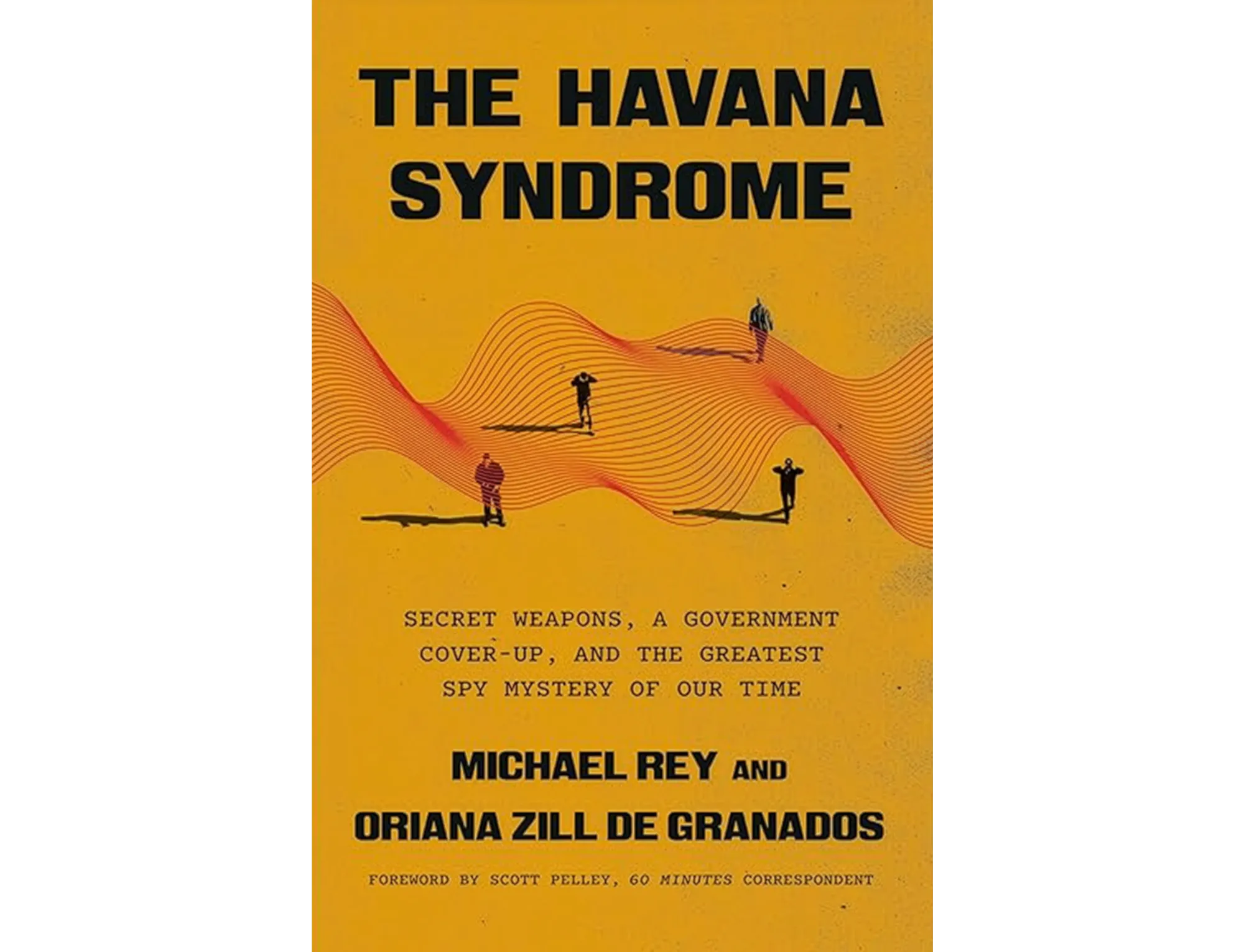
Perhaps the most troubling reason for this one-sided reporting is a glaring conflict of interest: the producers behind all four 60 Minutes segments, are marketing a book on the subject. The Havana Syndrome: Secret Weapons, a Government cover-up, and the Greatest Spy Mystery of Our Time, is scheduled to be published this fall, with an introduction by none other than Scott Pelley himself.39 By continuing to air these “exposés,” CBS News is effectively providing a multi-million-dollar infomercial for a product that relies on a spy mystery narrative to drive sales. The authors say their reason for writing the book is “to tell the whole story” including “the cover-up.” This is ironic given that their reports have consistently left out key parts of the narrative.40
Chasing Shadows
The history of science and journalism are replete with examples of how institutions can cling to persuasive stories long after the evidence begins to unravel. In the 1840s Hungarian physician Ignaz Semmelweis produced strong empirical evidence that handwashing among midwives dramatically reduced the deaths of mothers from childbed fever, yet his findings were resisted for decades by the medical establishment.41 More recently, in the lead-up to the Iraq War many media outlets published erroneous stories that Saddam Hussein had obtained weapons of mass destruction (WMDs) even though United Nations weapons inspectors in the field insisted they had found no clear evidence.42 This led to an apology by The New York Times for publishing claims that were never independently verified, and the Washington Post acknowledging that skeptical stories were frequently “pushed to the back of the paper” while pro-WMD claims dominated the front pages.43
This pursuit of unicorns over horses is a cautionary tale of how fear, expectation, and sensational storytelling can create a phantom menace where there is no concrete evidence that one exists.
When investigators become convinced of the existence of a hidden adversary, ambiguous evidence can take on new meaning and be seen as patterns in a grand conspiracy. Anonymous sources become credible witnesses. Coincidences can appear to be coordinated acts of aggression, and mundane symptoms are redefined as signs of an attack. As physicist Richard Feynman famously warned: “The first principle is that you must not fool yourself—and you are the easiest person to fool.”44 Throughout history, when a seductive explanation takes root—whether in the form of germs, hidden arsenals, or mysterious attacks—ambiguous signs are reinterpreted as confirmation rather than treated with skepticism.
The promotion of ghostly enemies while omitting key facts is a dangerous game because it expends valuable resources at a time of confirmed threats to our homeland. This pursuit of unicorns over horses is a cautionary tale of how fear, expectation, and sensational storytelling can create a phantom menace where there is no concrete evidence that one exists.
Beliefs Have Consequences
Unfounded beliefs and pseudoscientific ideas can have serious consequences by distorting scientific understanding, propagating myths, and shaping public policy.
Shortly after the airing of the 60 Minutes episode, the House Intelligence Committee met on March 19th with its chair, Republican Rick Crawford, asserting that the 2023 and 2025 assessments about that the involvement of an energy weapon was “highly unlikely,” were influenced by members of the Biden administration who have been covering up the ‘real’ cause – attacks by a foreign adversary.
National Intelligence Director Tulsi Gabbard, FBI Director Kash Patel, and National Security Agency acting director William Hartman all agreed that there was an urgent need to retract the current assessment.
The last major hearing on ‘Havana Syndrome’ was conducted by the House Committee on Homeland Security on March 8, 2024. The hearing was titled: “Silent Weapons: Examining Foreign Anomalous Health Incidents Targeting Americans in the Homeland and Abroad.”
The title reflects the biased nature of the hearing. Not surprisingly, the witnesses were all supporters of the energy weapon hypothesis.
I was originally asked if I would be willing to testify at this hearing, only to be later told my testimony was no longer required.