How Real Is the Nocebo Effect?
A review of This Book May Cause Side Effects: Why Our Minds Are Making Us Sick by Helen Pilcher.
In the early years of Viagra, “the little blue pill” that generated such excitement about its sexual effects on men, I read an account by a woman who decided to try it herself, because isn’t what’s good for the gander good for the goose? (Answer: Not always.) She took that little blue pill and described the exhilarating night of lovemaking that ensued. The best sex she’d ever had! Rapture divine! When she awoke in the morning, she saw that the blue pill she had swallowed was an Aleve (naproxen). At least she didn’t get a headache.
Most people know about the placebo, the inert “sugar pill” given to a control group in a clinical trial when the experimental group gets the active medication. This method allows researchers to rule out the effects of expectations on a new drug’s medical benefits, if any. (Placebo-controlled tests of Viagra for women found that women did slightly better on the placebo, which ended Pfizer’s efforts to double their market.) Expectations can be powerful: the bigger the biologically inactive placebo—a larger pill, a bigger injection—or the more complex the intervention, even a sham surgery, the greater its benefits. Placebos have been used in many settings, most dramatically on the battlefield, where suffering, dying soldiers plead for morphine that has long run out of supply. Given a saline solution but told it is that powerful pain-killer, their pain vanishes.
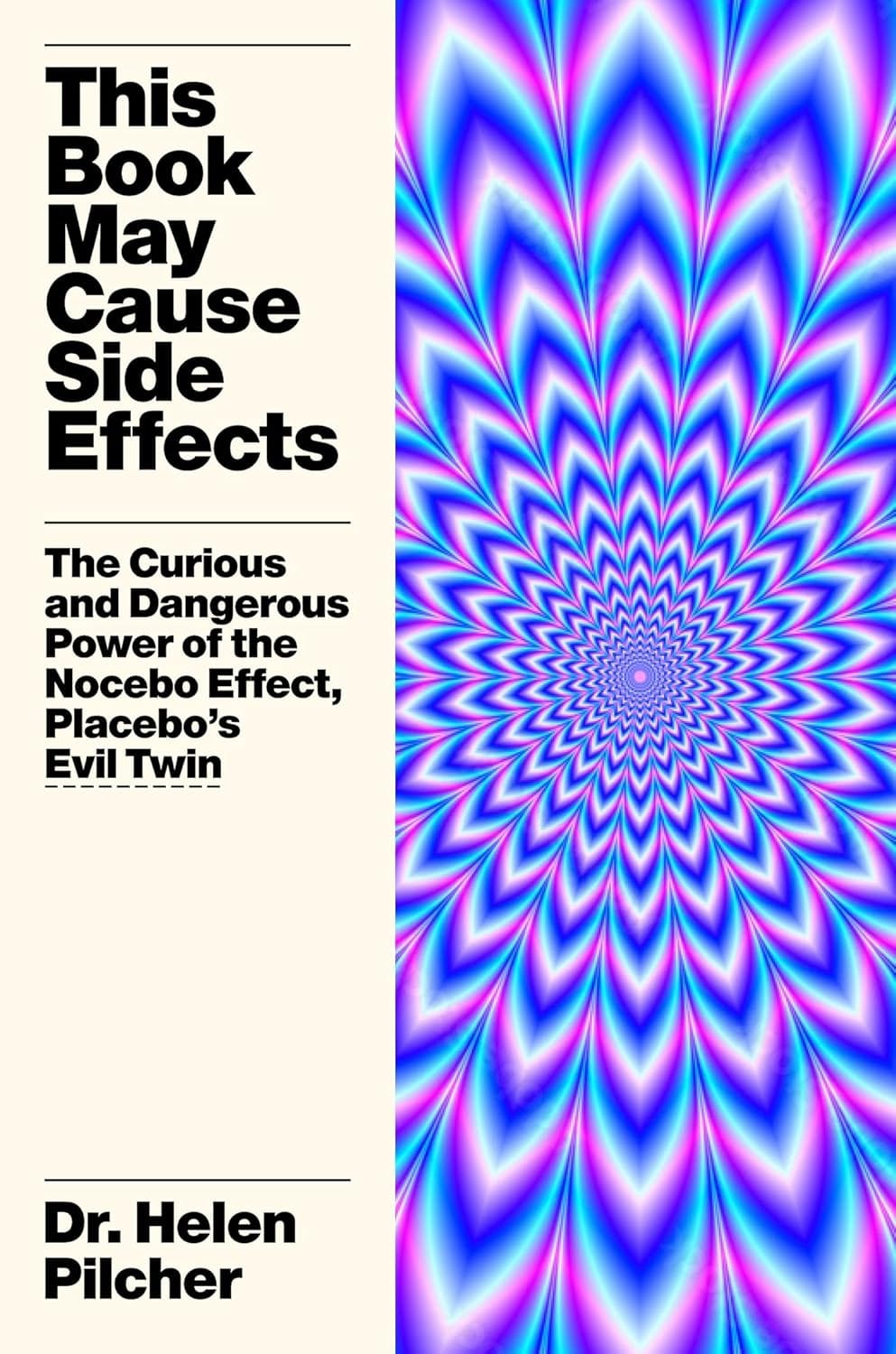
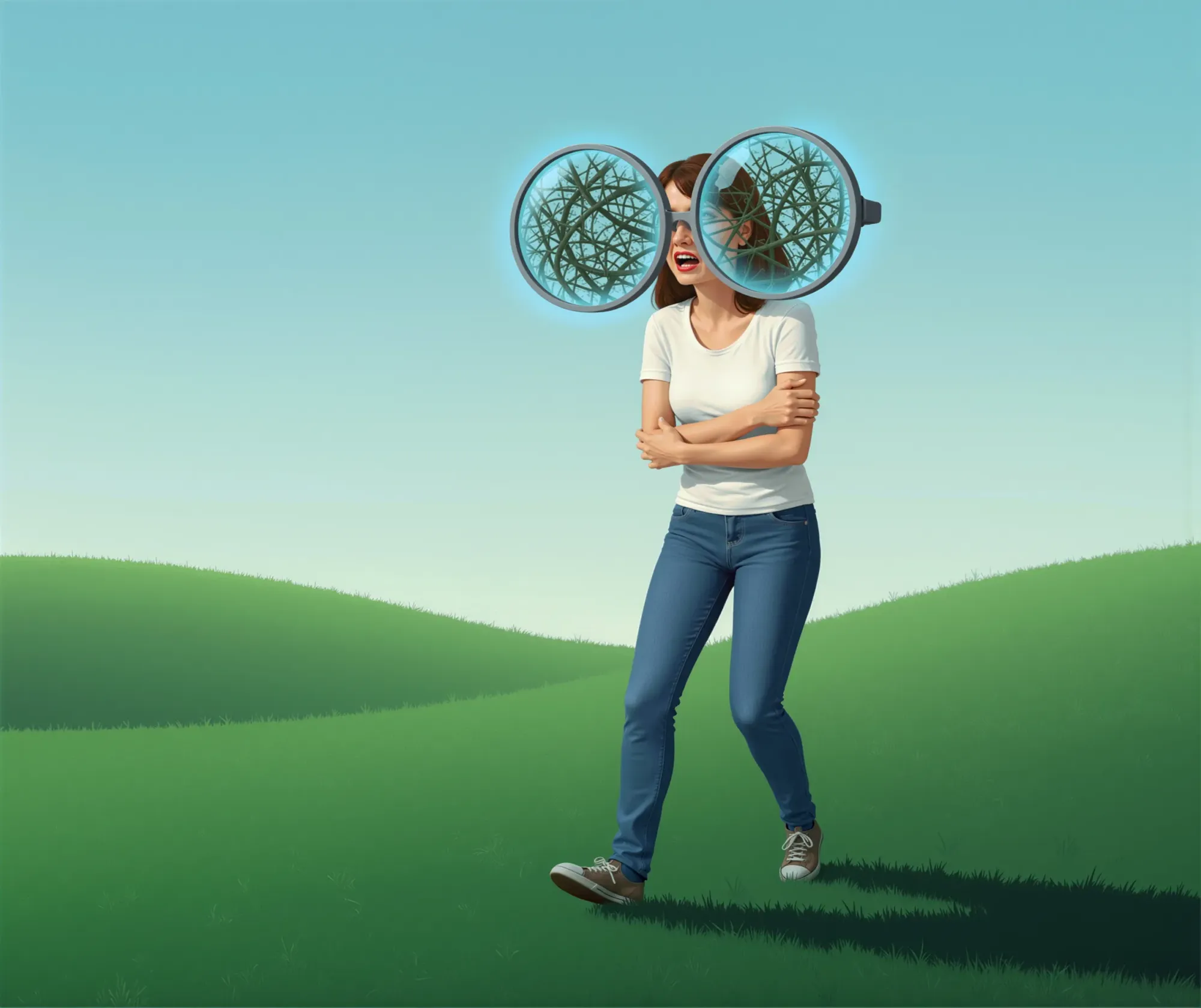
Where the placebo goes, can the nocebo be far behind? In This Book May Cause Side Effects, Helen Pilcher, a science writer and TV presenter with a PhD in cell biology, delves into the placebo’s “evil twin”—the myriad ways that our negative expectations affect us. If you had chills, fatigue, or headaches after getting a COVID shot, she writes, they were likely due to your being told those are frequent “side effects.” If you read the list of symptoms that your newly prescribed drug “might” produce, chances are you will experience one or more of them—and possibly decide not to take that drug after all. “If just the thought of eating a certain food makes you feel sick,” she writes, “it’s highly likely that placebo’s evil twin has struck again. Indeed, many of those who believe they have intolerances to certain ingredients, such as lactose or gluten, may well owe their misery to psychological rather than physical processes.” When self-reported “gluten intolerant” people are given gluten-free bread but told that the bread contains gluten, very often they develop gastrointestinal symptoms. “And when some gluten-intolerant people are covertly fed regular bread but told that it’s gluten-free, they don’t get symptoms,” Pilcher writes. “It’s the idea of gluten that they are intolerant to, rather than theprotein itself.”
The combination of “sometimes” with dramatic anecdotes weakens her case that the nocebo affects all illness.
Pilcher makes her case for the nocebo’s malevolent antics in 12 chapters, starting with deaths from hexes to “psychogenic” deaths that have no apparent physiological cause to the downsides of labelling mental and physical illnesses and thereby creating more cases of them. “The nocebo effect can conjure blindness and paralysis, seizures, vomiting and asthma attacks. With no brain injury in sight, it can trigger the symptoms of concussion … With no allergen present, it can induce features of an allergic reaction—watery eyes, runny nose and an itchy rash—that are indistinguishable from the more common, pollen-triggered alternative.”
There is really no scientific reason to distinguish placebos from nocebos, since both terms describe the way that beliefs, expectations, and apprehensions affect our bodies. But the nocebo is hot; “the nocebo effect has been promoted from academic footnote to nerdy hot potato,” she notes, and Pilcher makes the most of that hotness. The nocebo “is far more pervasive and potent than most people had realized,” she writes. “All symptoms, all illness and all disease has [sic] the potential to be negatively impacted by the thoughts that swirl around inside our heads.” All disease? Yes: “Hiding in plain sight, the phenomenon is part of all illness and all disease, where it makes us more unwell than we need to be.” Does she literally mean “all” or do all diseases merely have the “potential” to be impacted?
That fuzziness undermines her reporting. To be sure, giving us details of every one of the many studies she describes could become stultifying; yet, by not providing actual numbers and percentages of people in an experiment who were affected by a nocebo, and by speaking vaguely of “most” people or “some” people who have the “potential” to succumb, we cannot assess the strength of the finding. For example, she writes that in one study, “people who were falsely ‘diagnosed’ with the ‘bad’ version [of a fictitious gene that allegedly influences their response to exercise] did much worse. They had less endurance and their lung capacity was reduced.” “People”? All of them? One tenth? How many people? 3? 30? Lung capacity “reduced” by how much? How long did that reduction last after they went home? Or, in noting that “some” people die from the stress of bereavement or surviving a plane crash, she adds “that’s certainly not to imply that intense stress is going to kill us all. These deaths are rare. You are far more likely to muddle your way through life’s major stressors than you are to die from them, but sometimes it happens.” The combination of “sometimes” with dramatic anecdotes (Johnny Cash died four months after his wife June) weakens her case that the nocebo affects all illness. Did he die of a broken heart? Or complications from diabetes, respiratory failure, autonomic neuropathy, and pneumonia?
90 percent of the symptoms that people reported when on statins were also what they experienced when on the placebo.
More worrisome is Pilcher’s enthusiastic endorsement of experiments long discredited and unreplicated, such as Robert Rosenthal’s “Pygmalion” study, in which teachers allegedly raised the IQs of the randomly chosen students they had been told would intellectually bloom that year, simply by the power of their expectations. And because Pilcher so enjoyed meeting Ellen Langer, the Harvard psychology professor who became famous for her decades-old “chambermaid” and “counterclockwise” studies, she suspended scepticism, not even doing a quick google search that would have revealed what was wrong with those studies. In the former, hotel maids were said to have lost weight and lowered their blood pressure simply by being told their activities were “exercise” rather than “work.” But the experimenters relied on the women’s subjective self-reports, so they could not rule out whether the women actually—consciously or subconsciously—increased their activity level or changed their diet. And the 1979 “counterclockwise” study, which supposedly showed that having eight men in their 70s live in a simulated 1959 environment for a week would physically reverse their frailty and other signs of aging, was never published in a peer-reviewed journal or replicated. (It later became a made-for-TV stunt with celebrities.) Langer actually said to the participants, "we have good reason to believe that if you are successful at this, you will feel as you did in 1959." No bias there.
Although these lapses give one pause, Pilcher provides the details in other studies that rise to a “wow” level. In one, 60 patients who had stopped taking statins because they couldn’t stand the side effects were persuaded to try again. They were given 12 bottles of pills: four containing statins; four containing identical-looking placebo pills; and four empty bottles. The patients used one bottle per month, in a randomly prescribed order, over one year, recording their symptoms daily on their smartphones. The study was double blinded, so neither patients nor doctors knew which tablets the participants were taking (or none). The researchers found that 90 percent of the symptoms that people reported when on statins were also what they experienced when on the placebo. This means that most of the side effects of statins are caused by expectations, not the tablet’s content.
You’ve nothing to lose and possibly a world of delicious bread to gain.
In her final chapter, Pilcher offers ways of countering, if not overcoming, the nocebo’s influence. Reframe the aftereffects of an injection not as painful “side effects” but as evidence the medication is working; if you need a medication, cautioning that 20 percent of the people taking it get headaches, focus on the 80 percent who don’t; and if you have been diagnosed with a serious disease, you can ask your doctor for “personalized informed consent:” telling you about possibly serious symptoms that would require medical attention, but none of the milder symptoms were more likely to be evoked by the nocebo. And if you are one of the thousands of people who think they are allergic to gluten—unlike those with celiac disease, who most definitely are—why not ask a friend or partner to subject you to a nice double-blind experiment? You’ve nothing to lose and possibly a world of delicious bread to gain.