Where Have All the UFOs, Yeti, Demons, and Ghosts Gone?
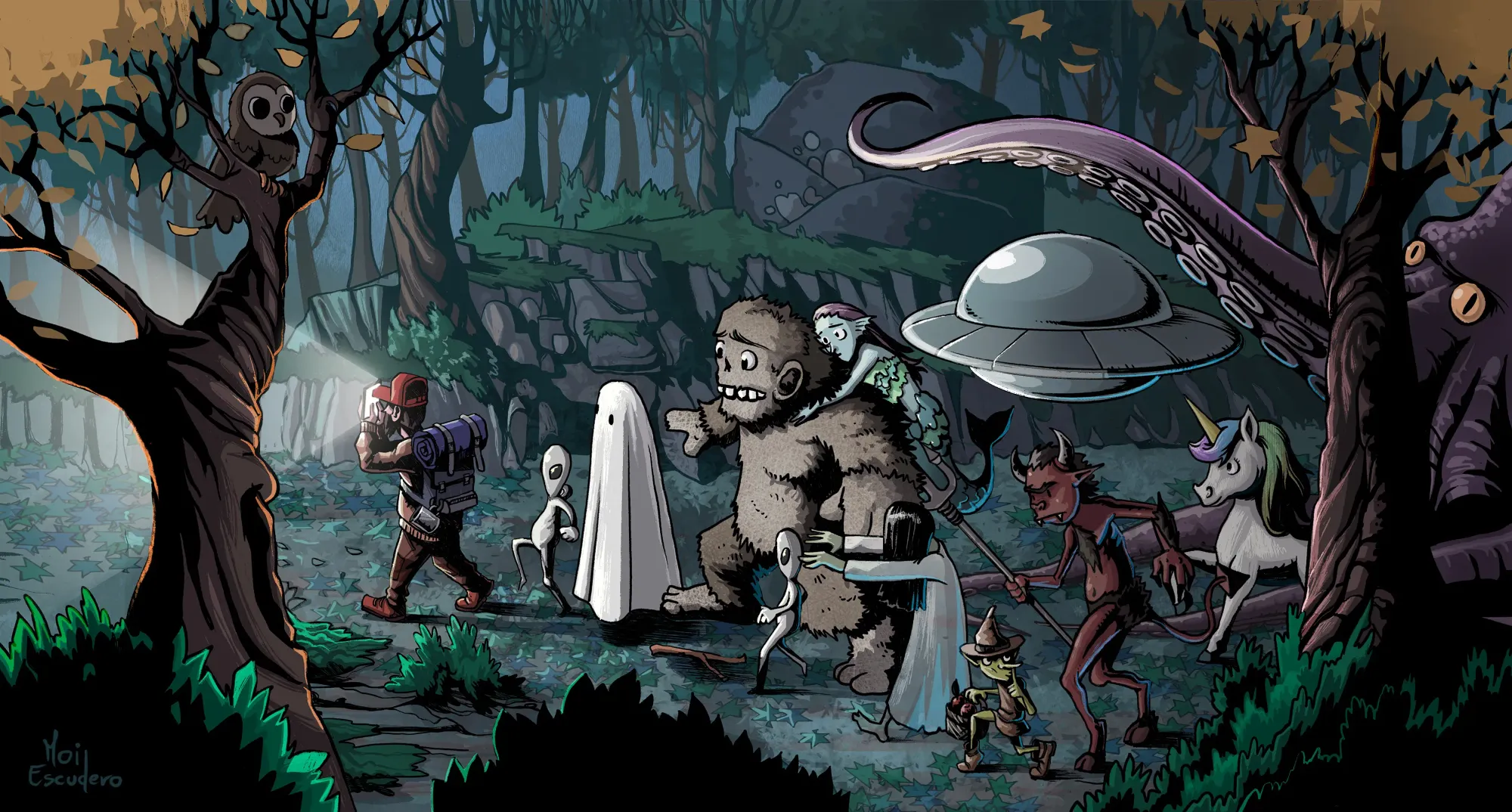
Smartphones, High-Definition Cameras, and the Disappearance of Paranormal and Supernatural Phenomena—a Skeptical Analysis
Over the past decades, we have witnessed a quiet yet decisive transformation in the history of human beliefs: the apparent disappearance of major paranormal phenomena that for millennia fueled mythologies, religions, folklore, and countless reports of supposed extraordinary manifestations. UFOs hovered over mountains and deserts;1 colossal creatures such as Bigfoot, the Yeti, or the Sasquatch roamed remote forests;2 spirits, apparitions, and ectoplasmic entities materialized in abandoned mansions;3 miracles occurred before the eyes of the devout;4 demonic possessions defied rational explanation.5 Today, all these phenomena seem to have taken permanent leave, an intriguing coincidence emerging precisely at the moment humanity begins to carry in its pockets (or better yet, in its hands) ultra-high-definition cameras capable of recording every detail of daily life, or any anomaly, with unprecedented precision.6
Before examining the role of smartphones, it is important to distinguish beliefs from manifestations. National opinion polls show that belief in paranormal phenomena remains high. A 2005 Gallup survey indicated that roughly three in four Americans believed in at least one type of paranormal experience, including haunted houses, communication with the dead, and astrology.7 Trend analyses aggregating data from Gallup, Harris, Pew, and other institutes show that, despite recent technological advances, these beliefs have remained remarkably stable, with only small declines in some items and even increases in specific beliefs such as ghosts and haunted houses.8 A more recent Gallup synthesis, from 2025, shows that 48 percent of American adults believe in psychic or spiritual healing and 39 percent in ghosts, while between 24 percent and 29 percent endorse six other supernatural beliefs; compared to 2001, variations are modest, with declines of only 6 to 7 percentage points in phenomena such as telepathy and clairvoyance.9 Literature reviews indicate that, in different countries, beliefs in spirits, UFOs, and other extraordinary phenomena remain widely disseminated among modern populations.10, 11, 12, 13
In other words, beliefs persist and remain widespread, but the supposed phenomena that should generate clear and reproducible evidence seem increasingly absent precisely at a moment when we possess technology capable of recording them with great clarity.14, 15 This shift invites a skeptical exercise: Why have paranormal and supernatural apparitions disappeared exactly when it became possible to document them unequivocally? For centuries, human testimony was the primary source of such accounts. However, scientific literature consistently demonstrates that testimony, even when sincere, constitutes extremely weak evidence: It is susceptible to perceptual illusions, cognitive biases, cultural expectations, and reconstructed (and often false) memories.16, 17, 18
They systematically avoid sharp, high-resolution cameras while tolerating grainy footage captured with old cameras or shaky amateur recordings.
In recent decades, quantitative studies on spontaneous reports of “anomalous” experiences also reveal a telling pattern: Although belief remains high, the number of people claiming to have personally experienced paranormal and supernatural phenomena tends to decline or stabilize at low levels compared with previous decades. Population surveys in the United Kingdom, for example, indicate that around 25 percent of adults report having seen a ghost, a number smaller than the prevalence of belief in ghosts, which remains above 40 percent.19, 20, 21 The discrepancy between the high prevalence of belief and the lower prevalence of reported experiences suggests that direct accounts do not accompany the persistence of belief, a pattern compatible with the growing impact of recording technology.
Recent experimental evidence reinforces this fragility. Contemporary studies show that up to 30 percent of participants incorporate false details into memories of extraordinary events after minimal suggestions or exposure to ambiguous images.22, 23 This type of cognitive vulnerability helps explain why, even before photography, reports of supernatural phenomena were so abundant despite the absence of reliable physical documentation.
With the popularization of photography in the late nineteenth century, the first “records” of ghosts, materializations, and spiritualist phenomena emerged, almost always blurred, overexposed, composite, or manipulated.24 The skeptical science of the time, from Darwin25 to Houdini,26 had already warned of fraud, lighting tricks, and honest mistakes. Even so, these images fueled a fertile social imagination that was poorly equipped for the kind of critical analysis we now consider trivial.
Yet something fundamental changed when next-generation smartphones became ubiquitously available. Never in human history has there been a moment when billions of people possessed cameras with optical stabilization, precise sensors, 4K recording capacity, and the ability to capture phenomena instantaneously and share them within seconds.
Paradoxically, this same technological infrastructure has fueled an entire subculture of “ghost hunters” and smartphone-based spirit-detection apps. Ethnographic research on ghost-hunting communities shows the intensive use of high-definition cameras, motion sensors, and apps that simulate paranormal measurements, but despite millions of recordings, no verifiable fact regarding the existence of ghosts has been established in a robust manner.27, 28 Independent assessments of these groups further show that most of the supposed evidence, shadows, electromagnetic noise, or video distortions, corresponds to optical or acoustic artifacts already extensively described in the technical literature and often replicable under controlled conditions.29 Even more rigorous investigative protocols, such as controlled-environment monitoring with multiple cameras, have never produced replicable or consistent results. In other words, the capacity to search for evidence has increased exponentially, but the quality of the “proof” remains trapped in artifacts, ambiguities, and wishful interpretations.
Curiously, alleged extraterrestrials seem to prefer deserted roads, swamps, or isolated campgrounds, and maintain a distinctly selective shyness.
At the same time, astronomers equipped with powerful, high-definition telescopes that observe the sky 24 hours a day have never recorded a single robust piece of evidence for objects of nonhuman origin. By contrast, systematic surveys conducted by professional astronomers estimate that more than 95 percent of investigated UFO reports correspond to satellites, rocket re-entries, aircraft, balloons, or common atmospheric phenomena.30, 31 This pattern was already known before the widespread adoption of smartphones, but it has become even more evident as observational instruments have grown more precise. Curiously, alleged extraterrestrials seem to prefer deserted roads, swamps, or isolated campgrounds, and maintain a distinctly selective shyness: They systematically avoid sharp, high-resolution cameras while tolerating grainy footage captured with old cameras or shaky amateur recordings.
The same inexplicable selectivity affects the great mythical creatures. Bigfoot, whose existence contradicts all biological logic, since no hominid species could survive in absolute isolation for hundreds of thousands of years without leaving fossils, consistent tracks, feces, or reproductive communities, vanished abruptly with the advent of modern smartphones. Recent research in ecology and environmental DNA biomonitoring, now used to track rare species, has likewise detected no genetic trace compatible with large unknown primates in North America, even in extensively sampled regions.32, 33 This kind of negative evidence reinforces the biological implausibility of a hidden large-bodied hominid. Hunters, hikers, mountaineers, and rural residents, all equipped with sophisticated cameras, have ceased to report sightings of the once-elusive primate. What remains alive is only the echo of old stories, always sustained by isolated footprints or shaky video footage.
Ghosts and spirits, likewise, seem to have adapted poorly to technological advancement. For centuries, claims of apparitions spread globally, reinforcing the sense that the supernatural was a universal feature of human experience. However, the more we improved our ability to record images, the more these ectoplasmic entities retreated into the invisible, or into the past. Today, there are no sharp, verifiable, or even minimally convincing records. It is as if the very ontology of such beings were incompatible with high-precision sensors, as if the supernatural had vanished precisely when it could finally prove its existence to skeptics.
From a methodological standpoint, this persistent absence of records is consistent with analyses in the philosophy of science applied to paranormal claims: If a phenomenon supposedly interacts with the physical world, it should be detectable by physical instruments; if it never is, despite the exponential growth in instrument sensitivity, then its existence becomes an increasingly implausible hypothesis.34
The same decline affects miracles and exorcisms. Although religious videos showing supposed instantaneous healings still circulate, such recordings never exhibit high-definition imagery, verifiable continuity, or transparent documentation. Sociological research on healing rituals also shows that, although millions of people report subjective experiences of “spiritual healing,” there is no video documentation of instantaneous, verifiable cures that meet minimal clinical criteria, such as independent pre- and post-examinations or transparent medical history.35 Medical literature likewise documents that many such claims can be explained by imprecise diagnoses, spontaneous remissions, or confirmation biases.36 The more sophisticated our recording technology becomes, the more rarefied extraordinary events appear to be.
Demons, once so present in cultural narratives, seem to have developed a profound aversion to high-resolution equipment. Beings allegedly so powerful, capable of opposing gods, tormenting humans across civilizations, making people speak extinct languages and levitate, now seem terrified of ordinary individuals armed with devices that could finally reveal their true face.
Some may argue that these phenomena still occur, but people have simply stopped recording them, even while carrying cameras virtually 24 hours a day. However, such a hypothesis runs entirely counter to contemporary behavior: We live in an era in which trivial dance trends accumulate millions of views, minor accidents are filmed from multiple angles, and any unusual animal becomes viral within minutes. Studies on the psychology of digital sharing show that unusual, threatening, or extraordinary content is significantly more likely to go viral, especially when it includes clear visual elements.37 This pattern makes it even more improbable that supposedly extraordinary phenomena would occur without sharp recordings, or that someone would deliberately refrain from filming or disseminating them.
Just when these phenomena could finally verify themselves before omnipresent cameras, they remain invisible.
Within this context, suggesting that people witness aliens, mythical primates, miracles, ghosts, or demons and simply “forget” to record them is, at the very least, an exercise in involuntary humor. In a world so deeply connected and driven by the banal as well as the exceptional, a video that confirmed, and definitively proved, any one of these phenomena would generate an almost infinite number of likes and would instantly elevate its creators to the category of highly profitable, widely recognized influencers.
The pattern that emerges is clear and epistemologically eloquent: The massive availability of recording devices has not reduced the prevalence of paranormal beliefs, but it has made the absence of robust evidence even more striking. Opinion surveys indicate that beliefs in ghosts, haunted houses, UFOs, or astrology remain widespread and, in many cases, have been stable for decades.38, 39, 40 However, when everyone can document the world with near-forensic precision, the territory of the supernatural does not expand toward clear evidence; it remains confined to ambiguous accounts, grainy videos, and testimonies vulnerable to perceptual illusions and cognitive biases.41, 42 New cameras do more than capture reality: They make it increasingly difficult to sustain, without embarrassment, that which depends on shadows and low verifiability.
In this context, it makes little sense to speak of the “end” of paranormal beliefs; what we observe is a growing mismatch between persistent beliefs and absent evidence. On a planet where much of the population carries in their pockets, holds in their hands, or mounts on the dashboards of their cars, high-resolution cameras with immediate access to social media, one would reasonably expect an explosion of sharp recordings of ghosts, demons, intervening deities, UFOs, or mythical primates, if such entities truly interacted with the physical world in any minimally recurrent or plausible way.43, 44
Instead, what accumulates are decades of opinion inquiries showing stable beliefs and a colossal volume of “evidence” that collapses under the first skeptical examination. The coincidence remains striking: Just when these phenomena could finally verify themselves before omnipresent cameras, they remain invisible.
The most parsimonious explanation continues to be the same one skeptics have long articulated: It is not that the phenomena have decided to retire or hide themselves; rather, there were never any paranormal phenomena to be recorded, only human interpretations of natural events, illusions, and frauds.