skepticism
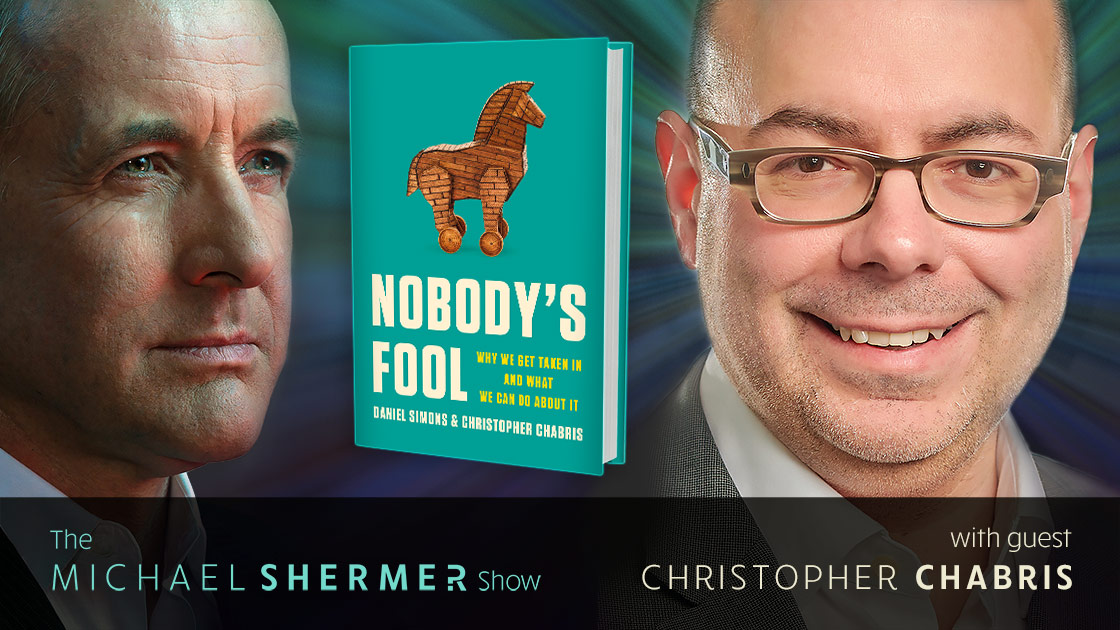
Shermer, Simons, and Chabris discuss: • How rational vs. irrational are humans? (Daniel Kahneman vs. Gerd Gingerenzer) • Truth Default Theory, or Truth Bias • deception vs. deception detection • social proof and the influence of others on our beliefs • cults • Bernie Madoff • Harvey Weinstein • Elizabeth Holmes and Theranos • Nigerian spam scam • cheating in chess • habits of thought that can be exploited • information hooks we find especially enticing instead of triggering skepticism…
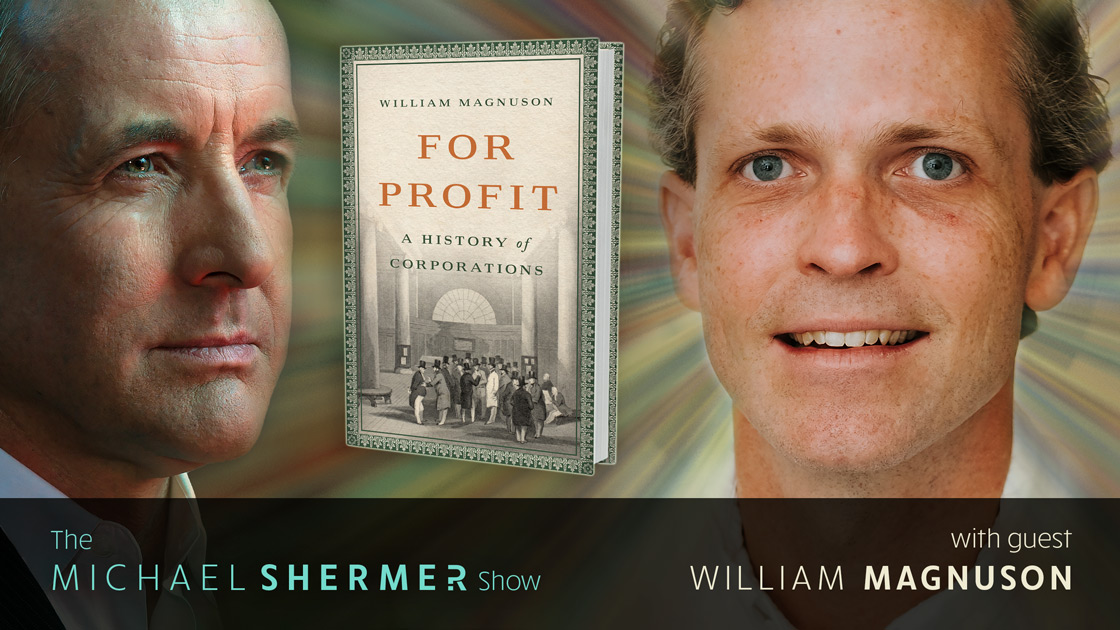
Shermer and Magnuson discuss: corporations and what they are for • LLCs • Roman corporations • medieval economics • banks • guilds • Credit Mobilier scandal • Dutch and British East India Companies • stocks, bonds, joint stock companies • monopolies, duopolies • assembly lines • multinationals • raiders • private equity firms • start-ups • antitrust, trustbusting • bankruptcy • bitcoin, cryptocurrency • Adam Smith’s critique of corporations • profit and market efficiency • slavery and economics • unions.
Shermer and Hassan discuss: types of cults, their characteristics • cult leader profiles • the influence continuum • mind control • brainwashing • Project MK-ULTRA • Scientology • NXIVM • strip search hoax • social media mind control • neuroscience of mind control • authoritarian mindset • Trump’s mind-control techniques • breaking free of cults.
Shermer and Dirks discuss: vaccine hesitancy • why antibiotics do not generate the same distrust • vaccines and autism • COVID-19 and its differential effects on people • the lab-leak hypothesis vs. the zoonomic hypothesis for the origin of SARS CoV-2 • Anthony Fauci and the CDC • climate denial • how trust in science has changed over the past century • the politicization of science • how to talk to someone who doesn’t trust science or scientists.
In episode # 207, Michael Shermer speaks with experimental social psychologist and Professor of Psychology at Wake Forest University, John Petrocelli about his research that examines the causes and consequences of bullshit and bullshitting in the way of better understanding and improving bullshit detection and disposal.
In episode # 207, Michael Shermer speaks with experimental social psychologist and Professor of Psychology at Wake Forest University, John Petrocelli about his research that examines the causes and consequences of bullshit and bullshitting in the way of better understanding and improving bullshit detection and disposal. PLUS, the newest issue of Skeptic magazine (26.3: UFOs and UAPs) is now available in print and digital formats.

In episode 195, Michael speaks with internationally acclaimed sleight-of-hand artist and 35-year activist for scientific skepticism, Jamy Ian Swiss, about his lively, personal book, The Conjuror’s Conundrum, that takes readers on a magical mystery tour of the longstanding connection between magic and skepticism.
In episode 195, Michael speaks with internationally acclaimed sleight-of-hand artist and 35-year activist for scientific skepticism, Jamy Ian Swiss, about his lively, personal book, The Conjuror’s Conundrum, that takes readers on a magical mystery tour of the longstanding connection between magic and skepticism.

Everyone has heard of the term “pseudoscience,” typically used to describe something that looks like science, but is somehow false, misleading, or unproven. In episode 191, Michael explores with Michael Gordin the philosophical and historical attempts to address the problem of scientific demarcation.
Everyone has heard of the term “pseudoscience,” typically used to describe something that looks like science, but is somehow false, misleading, or unproven. In episode 191, Michael explores with Michael Gordin the philosophical and historical attempts to address the problem of scientific demarcation.

In episode 189, Michael speaks with Nobel Prize winning psychologist and economist Daniel Kahneman about the detrimental effects of noise and what we can do to reduce both noise and bias, and make better decisions in: medicine, law, economic forecasting, forensic science, bail, child protection, strategy, performance reviews, and personnel selection.
In episode 189, Michael speaks with Nobel Prize winning psychologist and economist Daniel Kahneman about the detrimental effects of noise and what we can do to reduce both noise and bias, and make better decisions in: medicine, law, economic forecasting, forensic science, bail, child protection, strategy, performance reviews, and personnel selection. PLUS: We present a review by Dr. Harriet Hall of Abigail Shrier’s 2020 book Irreversible Damage: The Transgender Craze Seducing Our Daughters was originally published on Science-Based Medicine’s website…
From our Distinguished Science Lecture Series Archives from February 2010, we present Jared Diamond, author of the Pulitzer-prize winning Guns, Germs, and Steel and the bestselling work in environmental history Collapse, revealing for the first time his methodology in the applied use of natural experiments and the comparative method.

2020 has been one of the most momentous years of the past half century. In this conversation based on the book Threats: Intimidation and its Discontents, Shermer and Barash discuss: the evolutionary logic of nuclear deterrence, threat strategy and motive behind nuking, close calls with nuclear weapons, why they are not a sustainable strategy, the arms race within the U.S. between the Army, Navy, and Airforce, and more…
2020 has been one of the most momentous years of the past half century. In this conversation based on the book Threats: Intimidation and its Discontents, Shermer and Barash discuss: the evolutionary logic of nuclear deterrence, threat strategy and motive behind nuking, close calls with nuclear weapons, why they are not a sustainable strategy, the arms race within the U.S. between the Army, Navy, and Airforce, and more…
In loving memory of our friend James Randi who passed away at the age of 92 on October 20, 2020 we present a classic lecture on skepticism given at Caltech by James Randi on March 22, 1992 at the inaugural session of the Distinguished Science Lecture Series hosted by Michael Shermer and presented by The Skeptics Society in California (1992–2015). With wit and wonderfully illustrative examples, Randi teaches us several lessons on the scientific investigation of unusual claims.
A classic lecture on skepticism was given by James Randi on March 22, 1992 at the inaugural session of the Distinguished Science Lecture Series hosted by Michael Shermer and presented by The Skeptics Society in California (1992–2015). With wit and wonderfully illustrative examples, Randi teaches us several lessons on the scientific investigation of unusual claims.
More than half a century since Roswell, UFOs have been making headlines once again. In Science Salon # 126 Michael Shermer speaks with Sarah Scoles about her new book They Are Already Here: UFO Culture and Why We See Saucers.

More than half a century since Roswell, UFOs have been making headlines once again. Scoles ventured to dark, conspiracy-filled corners of the internet, to a former paranormal research center in Utah, and to the hallways of the Pentagon to meet the bigwigs, the scrappy upstarts, the field investigators, the rational people, and the unhinged kooks of this sprawling UFO community.
In Science Salon # 125 Michael Shermer speaks Bjorn Lomborg about his new book False Alarm: How Climate Change Panic Costs Us Trillions, Hurts the Poor, and Fails to Fix the Planet.
NEXT →