From Sisterhood to Mean Girls: Evolutionary Insights Into Friendship and Fiendship

“Gretchen, I’m sorry I laughed at you that time you got diarrhea at Barnes & Noble. And I’m sorry for telling everyone about it. And I’m sorry for repeating it now.”
—Karen Smith in Mean Girls 1
Popular culture, including literature and film, often extols the value of friendship and the important emotional role it plays in the lives of women and girls. From The Divine Secrets of the Ya-Ya Sisterhood, Memoirs of a Geisha, and Anne of Green Gables to films such as Steel Magnolias, Thelma and Louise, and Bend It Like Beckham we see portrayals of female friendship that highlight social and emotional support as it occurs across the lifespan. Such tales are often centered on self-discovery, and the value of generous and loyal friends. And yet, popular culture has also given us products that focus on the dark side of female relationships in films such as Mean Girls (the theatrical release poster had the tag line “Watch Your Back”), the television show Gossip Girl, and numerous songs from artists like Taylor Swift with Better Than Revenge and Katseye with Mean Girls. These works emphasize the competition that can occur between women, even those who appear to be friends, over sexual partners and social status in one’s peer group. The ubiquitous nature of social media today has also raised concerns about this type of aggression between females. While there are substantial benefits to friendship,2, 3 there can also be significant costs.4 Our friends can be our most trusted allies but they can also betray us in the name of competition. Before delving into the depths of female friendship and fiendship, it is important to understand evolutionary forces that shaped same-sex friendships in general as well as how natural selection may have differentially influenced male versus female same-sex friendships.
In general, across our evolutionary past, same-sex friends would have played a crucial role in our survival and fitness. For example, potential benefits of friends would have included protection against rivals or other threats to survival, enhancing one’s status and access to mates or resources, transmission and development of culturally important skills, social support in raising children as well as navigating other relationships, and emotional support to help manage stress and social challenges.5 The number and quality of these same-sex relationships are associated with better mental well-being and physical health for both men and women.6 However, since men’s and women’s same-sex friendships evolved in different contexts to solve somewhat different adaptive problems, there are significant differences in their same-sex relationships.7, 8 Friendships between men evolved in a side-by-side group context. Historically, this would have been men forming alliances with one another for purposes of hunting, protection, and warfare. As such, they tend to center around a shared activity (e.g., sports in modern society). In addition, these friendships tend to be hierarchical in nature and often involve direct competition (including physical contests of strength, skill, or both). In contrast, women’s same-sex friendships evolved in a face-to-face, one-on-one context in which women formed alliances with one another for purposes of alloparenting (that is, the care of offspring by individuals who are not their biological parents, from feeding and grooming to protection and socialization), emotional support, and sharing of resources and social information. Historically, upon marriage, women typically left their own kin behind and relocated to their husband’s community.9 Therefore, in the absence of others who would be invested in their well-being, these social alliances between women would have played an important role in their own survival as well as that of their offspring (and therefore of the group they had joined). Today, friendships between women are more intimate than friendships between men and tend to center around mutual disclosure, trust, and empathy. Even in contexts where there is an activity involved (the popular “Stitch-n-Bitch” groups, for example), the shared activity typically tends to come second to the emotional bonding between the women. Compared to their male counterparts, competition between female friends tends to be more indirect and involves reputation-damaging gossip, social exclusion, and subtle undermining of each other’s interests.
In addition to differences in friendship interaction style, the structure of male and female same-sex friendships also influences how men and women react to interlopers who may threaten these friendships.10 Male same-sex friendships evolved in a context that historically included banding together to defend their group against threats from other groups. Consistent with this, men (compared to women) report greater feelings of friendship jealousy when primed with a threat of intergroup conflict. Furthermore, since a larger coalition of same-sex friends would mean greater benefits accrued from those relationships, men report greater friendship jealousy (compared to women) over the prospect of losing acquaintances. Women, on the other hand, tend to engage in one-on-one interactions with their same-sex friends, and report experiencing greater loss and friendship jealousy over the prospect of losing a best friend (compared to men). This loss is compounded by the fact that, compared to men, women invest more time and energy to develop their close, intimate relationships, thus making it harder to replace their close friends. The greater self-disclosure between female close friends also makes the dissolution of such close friendships potentially more damaging to one’s reputation if the ex-friend spreads rumors about them or shares their secrets. These features motivate women to protect their friendships.
The shift from friendship to fiendship comes into play when jealousy is triggered by the friend themselves versus an interloper. As indicated above, women tend to use indirect competition strategies. Specifically, while men are more likely to engage in direct physical aggression with their competitors, women are more likely to engage in relational aggression,11 which involves attempts to harm others by damaging their social ties.12 Often done covertly, this social sabotage involves behaviors such as excluding the so-called friend (e.g., giving them the silent treatment or intentionally leaving them out of some interaction), gossiping or spreading rumors about them (e.g., sharing their secrets), and attempting to turn others against them through public embarrassment. Relational aggression in female same-sex friendships seems to peak in adolescence.13 Since this aggression occurs between friends, not just rivals, it is often perceived as a personal betrayal. Relational aggression can also be subtle, though, making it hard for the so-called friend to detect. It could include backhanded compliments or manipulating the “friend” and setting them up for failure. One example would be setting them up for failure or public embarrassment by encouraging them to wear an unflattering outfit or approach a potential romantic interest knowing they’ll be turned down. Since intimacy and emotional closeness is prioritized in female same-sex friendships, being betrayed or excluded by someone one considers to be a close friend can be especially hurtful. Research suggests that this type of betrayal in adolescence is often associated with negative academic and psychosocial outcomes, including feelings of depression, anxiety, poor self-image, suicidal ideation, and social withdrawal as they find it hard to trust others.14, 15 Prospective longitudinal studies have found that girls’ peer victimization experiences of relational aggression between ages 7 and 10 were associated with an increased risk of self-harm behaviors in late adolescence.16 The observed self-harm behaviors included cutting themselves as well as swallowing pills, with roughly 27 percent of adolescents reporting they engaged in those behaviors with suicidal intent. In addition, other longitudinal studies suggest that girls who experience peer victimization in middle childhood are more likely to develop eating disorders by early adolescence.17
While it is clear that women engage in aggression, albeit commonly in a different form than men, it’s important to understand the motivation behind it as well as the forms it takes. In general, greater female aversion to risk of physical injury promotes the pursuit of low risk and indirect strategies of same-sex competition. What are the drivers behind such competition between women and girls? They are largely intrasexual competition for social status and mates. For the majority of human history, women have lacked direct access to resources, relying on male provisioning and protection for themselves and for their children. As a result, same-sex peers are primary rivals for acquiring and retaining partners willing and able to invest and protect. We see echoes of this in the behavior of modern women, who dislike and work actively against rivals who threaten their romantic prospects, often directing their animosity toward physically attractive and sexually unrestricted peers. Cross-cultural research has demonstrated that men have a preference for physically attractive youthful women as sexual partners18 and studies examining female behavior with regard to online dating profiles to trends in cosmetic aesthetics suggest that women compete with other women over their attractiveness to men, aiming to look more youthful and attractive than their competitors.19, 20, 21 It is worth pointing out that beautification can be seen as a tactic in competing for male attention22 but also a vehicle for pursuing social status in social and workplace spaces.23 High status can also influence access to resources and valuable allies. High status individuals are in demand as friends. It is also worth noting that high status girls bully lower status ones, though they do so using less overt strategies than boys, sometimes taking on an authority or maternal role for the group, and enforcing equality among the rest at the risk of social exclusion.24 A number of studies suggest that high social status in adolescent girls, especially when indexed by peer perceptions, is linked to dating success, sexual activity, and the use of indirect aggression. It is somewhat less clear whether the status leads to increased aggression (due to lower costs) or that the covert aggression leads to increased popularity. However, some evidence suggests that physical attractiveness results in greater social status, which can be defended through indirect aggression—by keeping attractive rivals from one’s own social circle.25

A wide range of studies have examined aspects of intrasexual competition in women and how they play out in terms of friendship. Across several studies, April Bleske-Rechek and colleagues found that women are less willing to be friends with a woman who is sexually promiscuous; women perceive sexual promiscuity as undesirable in a same-sex friend, they deceive their friends about their own engagement in mate poaching, and they are more likely to be upset by imagined scenarios of a same-sex friend acting sexually available toward their partner, as well as attractiveness enhancement by friends.26 The researchers also found that attractiveness plays a role in the perceptions of rivalry within friendship dyads with pairs both agreeing on who was the more attractive woman (outside judges agreed as well), and the less attractive women seeing more rivalry in the friendship than their more attractive friend.27 Interestingly, at least one study has also shown that these competitive tactics are sensitive to costs in that women are more likely to engage in clothing-based enhancement when with an acquaintance than with a close friend, but even then only when there was a desired male present. This again suggests that intrasexual competition mechanisms are sensitive to possible friend relationship costs and are more likely to be activated when a rival is seen as a legitimate threat (such as being more attractive).28 Despite being in possible conflict over mates or status, women rely on their cooperative friendships and there is a cost to jeopardizing them.
The underlying reason is that women rely on same-sex friends for help, information, and other forms of social support. As previously described, ancestral mating and residence patterns often created an environment where women needed to build close social relationships with other biologically unrelated women. As a result, women may not only be averse to open competition but also have strong friendship preferences that encourage them to avoid other women who are highly competitive or highly status driven in favor of those who show indications of being kind, committed allies in order to develop valuable cooperative supportive friendships. Our ancestral adaptations for forming friendship ties likely shaped preferences designed to acquire same-sex friends able to help women accomplish evolutionarily recurrent tasks such as competing for status among peers, access to social information and resources, as well as caring for offspring. Recent studies of friend preferences suggest that women (particularly in comparison to men) highly value female friends who provide emotional support, intimacy, and social information.29 And even though women may report that their friends compete with them for attention from desirable men, they also report substantial emotional support as well as mating advice and companionship in mating contexts (bars, clubs, etc.).30
However, success may be best achieved by pursuing both cooperative and competitive goals at the same time. Researchers such as the late Anne Campbell and more recently Tania Reynolds have highlighted how women can pursue both by cloaking their intrasexual competition in prosocial gossip or other relatively low risk tactics that can do reputational damage to a rival while preserving own reputation and avoiding damage to status in their peer group. As discussed previously, the indirect aggression favored by women and girls focuses on social manipulation. In some cases, the victim would never know who the primary aggressor was if the tactics concentrated on social ostracization, stigmatization, and gossip. Rumors can be easily spread without the original source being singled out, protecting their reputation while damaging their target (through accusations of sexual promiscuity, disloyalty, and so on), and shielding them from retaliation. Women utilize their friends to gather and disseminate social information, including gossip about rivals, particularly when those rivals are perceived as a legitimate threat to their status or romantic opportunities. Experimental studies suggest that more attractive rivals wearing more provocative clothing increase women’s tendency to spread reputation damaging information, even when women report liking the target of their damaging gossip, and more so for highly competitive women.31 Preliminary results seem to confirm what many women may have experienced, namely that reputation damaging social information does cause harm to the target, in terms of how men and women may view and interact with them. Further, not all women are as likely to inflict such reputational harms, highlighting why less competitive women and those high in loyalty are seen as more valuable friends.
This also highlights the possible costs of being seen as someone who engages in overtly malicious gossip. If women prefer friends who are kind and loyal, those who are seen as malicious gossips are less likely to be preferred as friends and may also be seen negatively by desirable romantic partners. The problem then is how to engage in damaging gossip without being seen as malicious. How can sharing such information perhaps be seen in a prosocial light? There are at least two different strategies that may achieve this, perhaps involving a degree of self-deception or lack of awareness of one’s own motivations. The first is to disclose one’s own victimization, which may not be perceived as gossip but rather as sharing a painful experience and request for emotional support. There is evidence that women are more sensitive than men to friendship violations that suggest the friend is not a loyal and kind friend as well as being more likely to disclose such treatment to others. In addition, research has found that first person disclosures of mistreatment were more trusted than third party reports, and female perpetrators of that mistreatment did suffer reputational damage as a result of the victim sharing that narrative.32 These covert victimization narratives can effectively damage the same-sex peers that are targeted for their perceived misdeeds in terms of desirability as a friend and social status. In addition, a number of women articulate that they are sharing this information out of concern—not malevolent intent—for the target of their gossip. Researchers have also explored such concern-based gossip, demonstrating that women endorse more concern versus harm-based motivations for engaging in gossip and that concerned gossipers were viewed more positively by social and romantic partners than were malicious gossipers. Interestingly, concerned gossip harmed perceptions of the target as much as did malicious gossip, indicating that negative commentary on an individual that is framed with concern harms the targets reputation and insulates gossipers from reputation damage (due to lower perceptions of maliciousness).33 The tendency to engage in these forms of gossip may explain the fact that many women report being targeted by gossip while relatively few report spreading negative rumors. There is a degree of self-deception about one’s motivations that makes these effective tactics for covert female intrasexual competition.
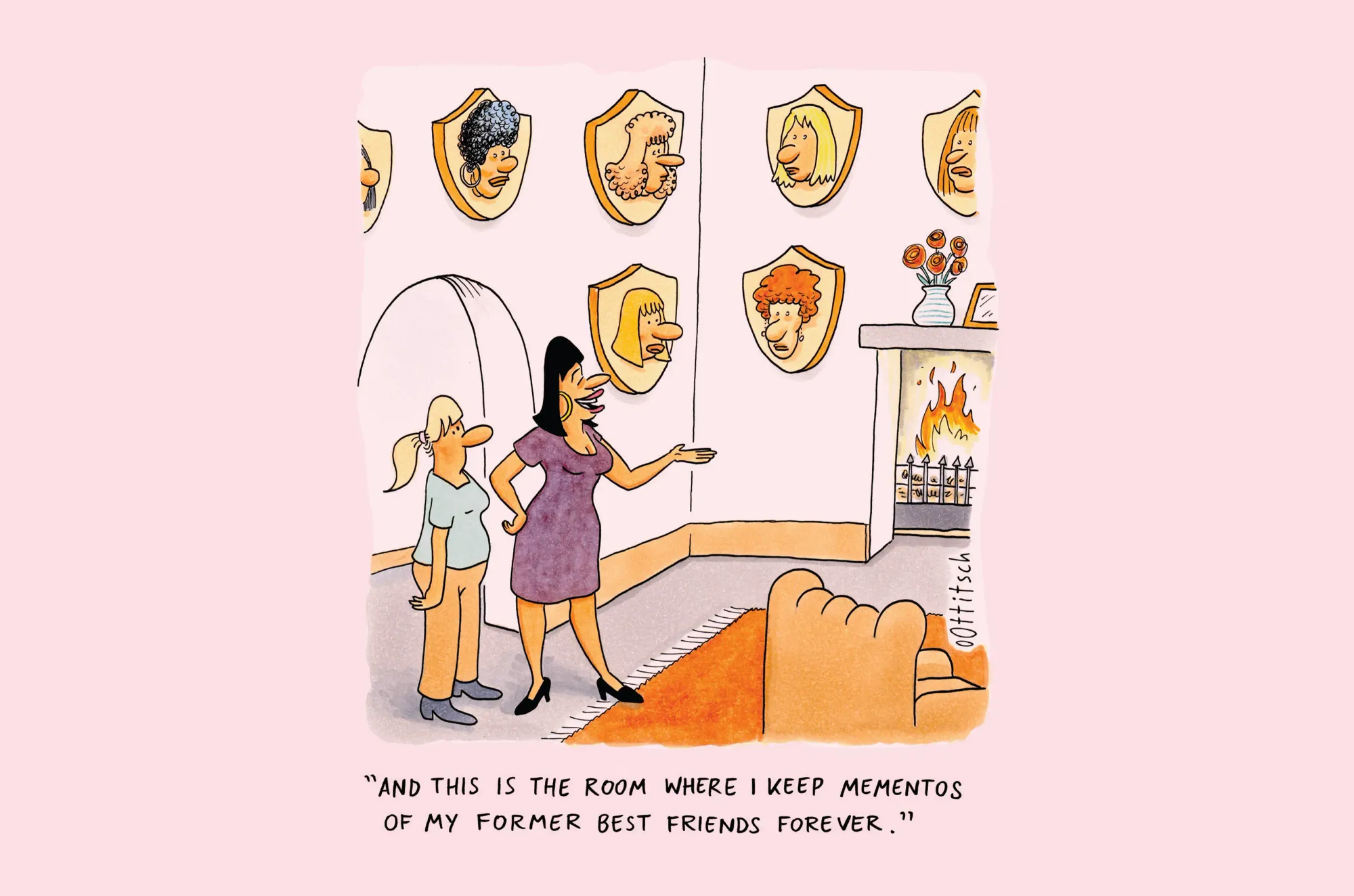
The popular neologism for this type of close friend is “frenemy.” The term “frenemy” has become popularized in the last twenty years or so and is defined as a “person with whom we outwardly show characteristics of friendship because of certain benefits that come with the façade.”34 Studies suggest that people maintain such “frenemyships” because there are relational benefits such as shared social networks, status, and information sharing that may outweigh the cost of terminating the relationship—though there may be high levels of covert competition and social manipulation.35 It is clear that same-sex friendships can be some of our most valued and rewarding relationships, ones that are lifelong and help us navigate the challenges of life. Yet, they can also be damaging, with frenemies causing harm in the pursuit of their own goals. As a result, choosing same-sex friends wisely is an essential skill as is the ability to engage in covert competition. In other words … keep your friends close but your frenemies closer.
“It is better to have an enemy who honestly says they hate you than a friend who’s putting you down secretly.”—Unknown