Hazards of Herbal Medicine: Lessons from Aristolochia
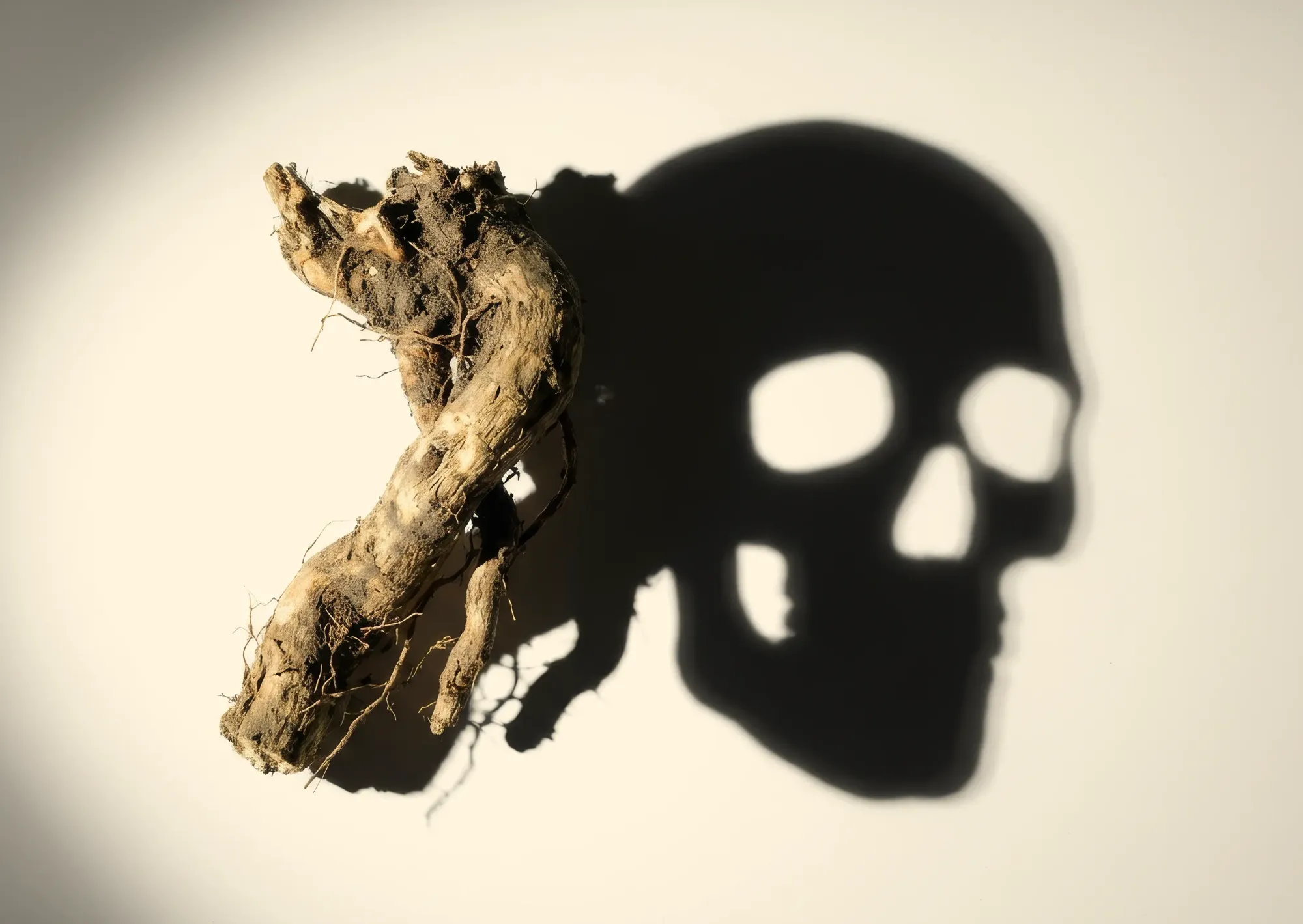
This “Brief History of Medicine” has been circulating on the Internet:
- 2000 B.C.: Here, eat this root.
- 1000 A.D.: That herb is heathen. Here, say this prayer.
- 1850 A.D.: That prayer is superstition. Here, drink this potion.
- 1940 A.D.: That potion is snake oil. Here, swallow this pill.
- 1985 A.D.: That pill is ineffective. Here, take this antibiotic.
- 2000 A.D.: That antibiotic is artificial. Here, eat this root.
It seems we have come full circle. The only medicines our ancestors had were herbal medicines. By the 19th century, doctors only had a handful of truly effective medicines that remain in use today, like opium derivatives and quinine. Most of the remedies they prescribed were either useless or poisonous. As scientific pharmacology developed, medical treatment was revolutionized. Today we have antibiotics, anesthetics, birth control pills, insulin, and a wealth of other drugs that our ancestors never dreamed of. But recently it has become popular in some circles to denigrate Big Pharma and call for a return to “Natural” (with a capital N) herbal remedies, in the belief that they are uniformly milder and safer than prescription drugs and just as effective. Sorry, but that belief is demonstrably wrong.
A Mystery Solved
In 1993 The Lancet reported several cases of a kidney disease called fibrosing interstitial nephritis among young women in Belgium. It progressed rapidly to kidney failure requiring dialysis or kidney transplant. The authors investigated and discovered that all these women had attended the same weight loss clinic. The clinic had recently added two Chinese herbs to its slimming regimen. Further investigation determined that the herbal pills contained aristolochic acid (found in Aristolochiaspecies). Apparently Aristolochia had been accidentally substituted for one of the intended herbs. In all, 1,800 women got those herbs at that clinic and 5 percent of them developed kidney failure, and about half of those went on to develop urinary tract cancers. Those are not very good odds.
Aristolochia was thought to be useful in childbirth because it resembles the uterus (classic magical thinking). It has been used for centuries for various conditions including kidney stones, snakebites, head wounds, weight loss, and joint pain, despite the absence of any reliable evidence that it works for any of those conditions. Advocates of natural medicine rely on the “appeal to antiquity” (a logical fallacy). They think our ancestors’ “ancient wisdom” was superior to today’s scientific knowledge, and they argue that history proves herbal remedies must be safe and effective, because people have been using them for centuries and they wouldn’t still be using them if they were ineffective or unsafe. In this case, ancient wisdom turned out to be ancient folly. There was a latent period of 20 to 30 years after taking the herb before the symptoms of kidney failure or cancer developed, so herbalists failed to recognize the connection.
Aristolochic acid is a kidney toxin and a carcinogen. Pathologists can distinguish the characteristic lesions it causes in the kidneys of humans. When mice are poisoned with aristolochic acid they develop the same lesions. In a triumph of molecular science and DNA analysis, scientists found a mutation in the tumor-suppressing gene p53 in mice with kidney damage from Aristolochia. Patients who reacted to the toxin had the same mutation. A complex of aristolactam and DNA forms which mutates the gene so cancer development is not suppressed.
A condition called Balkan endemic nephropathy had been causing an unusual number of kidney failure and cancer cases in Croatia, Bulgaria, and Romania, where the wheat flour had been contaminated with Aristolochia seeds. The same mutation was found in those patients.
It gets worse. In Taiwan, 12 percent of the population has chronic kidney disease, 1 in 3 patients are prescribed Aristolochia, and 55.6 percent of urinary tract cancer patients have that same p53 mutation. The patients in Belgium, the Balkans, and Taiwan all had the same disease: aristolochic acid nephropathy (AAN). Roughly 5 percent of people have a hereditary susceptibility to the formation of the aristolactam/DNA complex that mutates the cancer suppressor gene.
Approximately 8 million people were exposed to these toxic herbs in Taiwan alone over a six-year period. It was banned in Taiwan but is still widely used there and throughout Asia. Since it may take 20 to 30 years for cancer to develop, millions more cases of cancer can be expected. AAN is a long-overlooked disease and a significant public health problem.
Herbalism, Pharmacognosy, and the Birth of Pharmacology
Herbalism is an unscientific practice that relies on anecdotal reports and assumptions. Pharmacognosy is the scientific study of the pharmacological effects of plants. About half of today’s pharmaceuticals have been derived from plants. The history of the heart medicine Digoxin is illustrative.
In 1785 William Withering published an account of the medicinal use of the foxglove plant. He had heard that folk herbalists used it to treat dropsy (an early name for congestive heart failure). He tested various parts of the plant on his patients. Withering published detailed case reports, but did no controlled studies. It turned out that the leaf contained digitalis that was effective in treating heart failure; but it was difficult to control the dosage, and the dose that helped was perilously close to the dose that killed. Chemists isolated the active ingredient and improved on it, eventually developing the prescription drug Digoxin. This synthetic version allowed a precisely controlled dose of a pure product. It was possible to measure the level of drug in the blood, and an antibody was developed that could be used as an antidote in cases of poisoning or overdosage. And many clinical studies were done to guide doctors in how to use the drug. With that degree of knowledge and control, it would be insane to go back to using foxglove leaf as an herbal medicine.
Today, pharmacologists test every new drug extensively. They study the pharmacokinetics: how the drug is released from its vehicle, how it is absorbed, how it is distributed through the body, and how it is metabolized and excreted. They quantify the therapeutic amounts and toxic levels and the time course of how long the therapeutic level is maintained after a dose and when another dose is needed. There is no comparable testing of herbal medicines: there couldn’t be, because if the active ingredient hasn’t been identified, its pharmacokinetics can’t be studied.
Herbal Myths
There are three myths of herbal medicine:
- Herbs are natural and therefore must be good for us. (No, plants produce chemicals for their own protection, not for human benefit. Many plant chemicals are poisonous, for example cyanide and aristolochic acid.)
- If they have been used for centuries we can assume they are effective and safe. (The Aristolochia case demonstrates how false that assumption is.)
- The mixtures of chemicals in the plant make it more effective because they act together in a synergistic fashion. (Research does not bear that out. When tested, an extract of the whole plant doesn’t outperform the purified active ingredient. The other compounds in the plant are just as likely to decrease the effect as to enhance it.)

Snake Oil Protection
The Dietary Supplement Health and Education Act of 1994 (DSHEA) has been called the Snake Oil Protection Act. It allows the sale of herbal medicines and other supplements without the kind of proof of safety or effectiveness that is required for pharmaceuticals. Herbs can be marketed if they are generally recognized as safe (GRAS) because they have stood the test of time. But they aren’t necessarily safe. For example, 20 percent of cases of acute liver failure in the U.S. are associated with dietary supplements, and the FDA estimates that dietary supplements cause 50,000 adverse events a year.
Quality Control Concerns
The FDA has identified over 500 products that have been represented as dietary supplements, but contain concealed active and potentially harmful ingredients, including prescription drugs like appetite suppressants, steroids, and erectile dysfunction drugs.
No less than 20 percent of Ayurvedic herbal supplements are contaminated with heavy metals, often in toxic amounts.
A recent study in Australia found that 92 percent of Traditional Chinese Medicine (TCM) products were contaminated. It found DNA from a variety of animals, including the endangered snow leopard; carcinogens and poisons, including the neurotoxin strychnine; heavy metals, etc. Only two of 26 products contained no undeclared substances.
Studies have found that herbal products sometimes contain none of the herb on the label or up to 700% of the amount listed.
Conclusion
Remember the lessons from Aristolochia. For centuries herbalists assumed it was effective and safe; but there was no reliable evidence that it was effective for anything, and it was actually deadly for 5 percent of the population. And because of poor regulation, doctors believed they were giving a different herb.
Drugs are drugs, whether they come from a plant or a pharmaceutical laboratory. Remember that herbal medicines are adulterated drugs and have not been as well studied as pharmaceutical drugs. Taking herbal medicines is taking a gamble.