The Pope and Mussolini—A Parable for Our Time
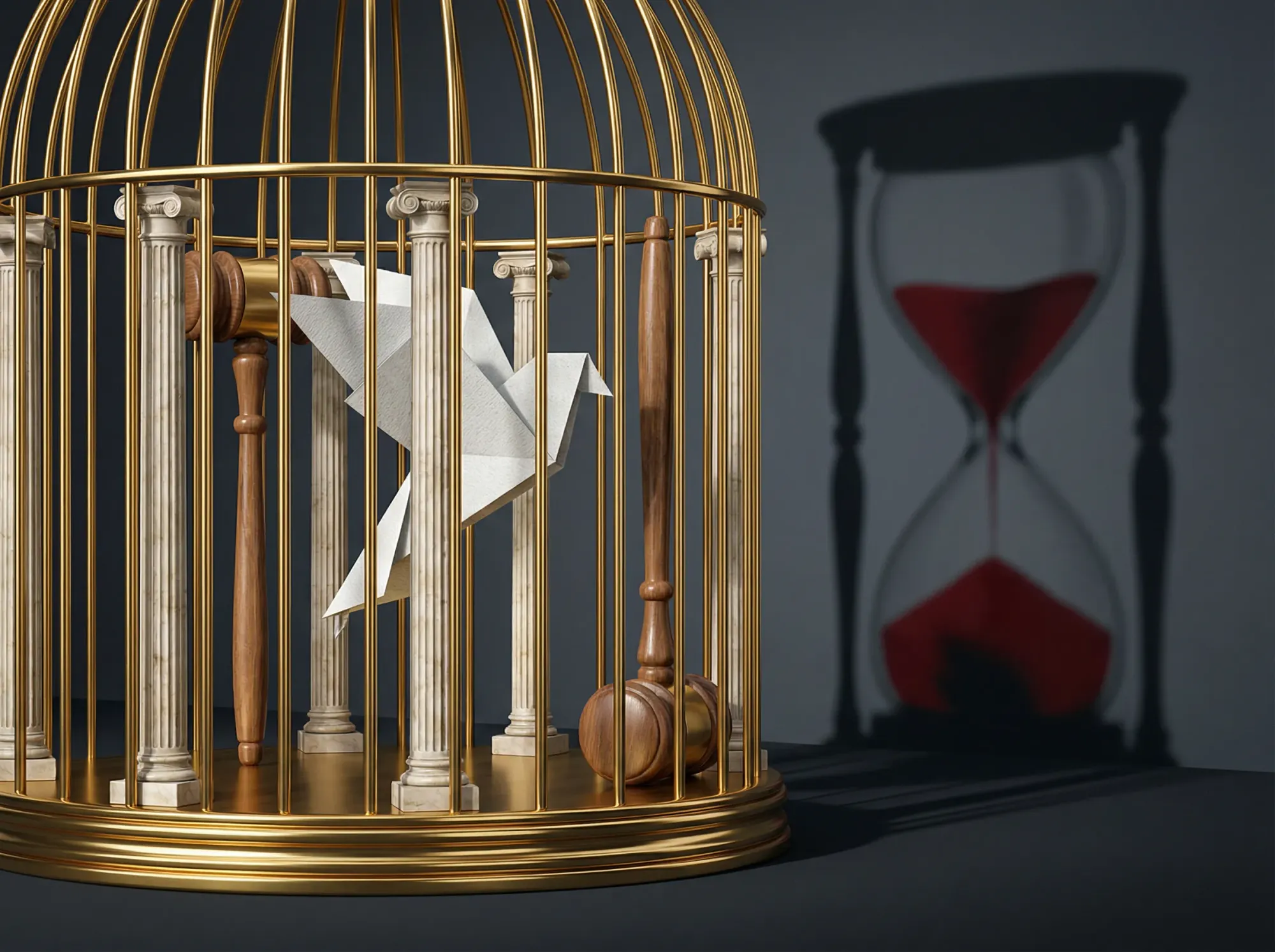
Here’s a story from history that may serve as a parable for our troubled times. It is the tale of a basically decent man who, with the best of intentions, agreed to endorse the political excesses of a powerful leader in order to achieve the humane ends he sought. How could that decision go wrong? But it did. One step at a time.
Most people know about Pope Pius XII and his collaboration with the Nazis during World War II. Fewer know about the connection between his predecessor Pope Pius XI, who was elected pope in 1922, and Benito Mussolini, who became the Italian prime minister that same year. Pius XI and Mussolini had little in common other than a pervasive Italian Catholic anti-Semitism, and they met only once in the 17 years between the pope’s election and his death. Mussolini was no friend of the Catholic Church; as a young man he was called mangiaprete (priest-eater), and later his Fascist squads regularly attacked priests and terrorized members of Catholic Action, a network of religious youth clubs. Ever since Italy’s creation as a nation-state, in 1861, the country had emphasized liberal and secular values, and the pope feared that Mussolini would continue his assaults on the Church. Pius XI was not a Fascist, however; in 1926, he instituted a ban on Catholic participation in the right-wing, proto-Fascist Action Française, led by France’s foremost anti-Semite.
In his Pulitzer Prize-winning history The Pope and Mussolini, David Kertzer details the tactics Mussolini used to triumph over the Church. Mussolini, knowing that the Vatican’s approval would play a major role in legitimizing his violent Fascist regime, began systematically wooing the pope to his side as soon as he became prime minister. In his first speech to his new parliament, he pledged to build a Catholic state befitting a Catholic nation and asked for God’s help—something no leader had done since the nation’s founding. Pius XI was somewhat reassured, but still apprehensive. “Never under any illusion that Mussolini personally embraced Catholic values or cared for anything other than his own aggrandizement,” Kertzer writes, “the pope would be willing to consider a pragmatic deal if he could be convinced that Mussolini would deliver on his promises.”1
Mussolini set about proving that he was a good Catholic. He ordered his cabinet to kneel in prayer at the altar of the Unknown Soldier in Rome. He had his children and his wife (who despised the Catholic Church) baptized. He required crucifixes to be placed in courts, hospitals, and classrooms. He, the former mangiaprete, made it a crime to insult a priest. He decreed that all elementary schools must teach the Catholic religion. He accommodated the pope’s war on “heresy,” banning Protestant books, a biography of Cesare Borgia, and journals that the Vatican found offensive. Mussolini assured Pius XI that he would do nothing to the Jews that the Church had not already done. And so the pope, pleased to achieve the religious ends that the Vatican wanted, stifled any concerns about Mussolini’s Fascist means of asserting power. Pius XI was hooked.
All the while, Mussolini continued to unofficially endorse violence committed by his supporters against Catholic Action. These youth groups were dear to Pius XI’s heart, for he saw them, as Kertzer puts it, as “ground troops for re-Christianizing Italian society.” The pope was outraged by these attacks, but Mussolini “proved adept at using the violence to his benefit, convincing the pope that he was the only man in Italy who could keep the rowdies under control.” The culprits were rarely even arrested, let alone punished.
In 1929, the Vatican and the Italian state signed official accords. Pius XI was happy because, among other gifts to the Church, the accords specified that the Catholic religion was “the only religion of the state.” Mussolini was happy because the accords silenced any Catholics who believed or hoped that the pope opposed the Fascist regime. Mussolini now lacked any significant opposition, and his craving for adulation ballooned. Before long, he was demanding that schoolchildren pray to him, Il Duce, and offer their lives to him rather than to God—an act of true heresy from the Church’s perspective, but the pope did not protest. Priests and bishops were summoned from all over the country to celebrate Mussolini’s agricultural policy, and, fearing to offend him, off they went, marching through Rome to lay wreaths not at Catholic shrines but Fascist monuments.
The pope struggled to justify the benefits the Church was getting from Mussolini despite his growing alarm about the rise of Nazism and its virulent anti-Semitism.
In 1935, Mussolini even induced Pius XI to bless his genocidal invasion of Abyssinia (now Ethiopia) by calling it a “holy war”; one hundred thousand Italian soldiers were sent into battle as a distraction from Italy’s economic woes. Throughout the 1930s, the pope struggled to justify the benefits the Church was getting from Mussolini despite his growing alarm about the rise of Nazism and its virulent anti-Semitism. He began distinguishing between “good Fascism,” which recognized the Church’s rights, and “bad Fascism,” which did not. In 1937, Kertzer writes, Mussolini bragged to the German foreign minister about how easy it had been to manipulate the Church. Just allow religious education in the schools, he advised. True, there had been a little trouble with the Catholic Action groups, but he had quickly brought the Vatican in line. All it took was doing “small favors for the higher clergy,” such as giving them a few tax concessions and free railway tickets.
By the mid-1930s, the pope could no longer live with the precarious balance between means and ends that he had created for himself. As Peter Eisner, author of The Pope’s Last Crusade, put it, “The pope realized that today it was the Jews, but then it would be the Catholics and finally the world. He could see in the day’s news that the Nazis would stop at nothing less than world domination.”2 Pius XI enlisted the support of an American Jesuit who had written about racism, asking him to draft a papal encyclical that would publicly condemn Hitler, Mussolini, and their goal to exterminate all Jews. On his deathbed, the pope prayed to live a few more days so that he could deliver a truly Christian speech, with the message that eventually “all peoples, all the nations, all the races, all joined together and all of the same blood in the common link of the great human family,” would be united by faith. The pope also planned to condemn “the prohibition of marriages between Aryans and non-Aryans.” It was too late. He died the next day, without giving the speech.
His successor Eugenio Pacelli, who would shortly become Pope Pius XII, ordered the pope’s secretary to gather all notes pertaining to the speech, and he instructed the Vatican’s printer, who had the text ready for distribution, to destroy every copy. This the printer did, assuring Pacelli that “not a comma” remained. (Twenty years later, after Pope Pius XII died, Pope John XXIII released excerpts of the speech, excising passages critical of the Fascist regime. The full text was not released until 2006.) The new pope, his nuncio reported to Mussolini, spoke “with much sympathy for Fascism and with sincere admiration for the Duce.” Almost immediately, Pius XII lifted the ban on Catholics joining the Action Française.
Demagogues thrive and flourish on the reasoning and self-justifications of those willing to push aside their moral objections in exchange for political advantage.
Donald Trump is not Benito Mussolini, but the two men exhibit all the classic characteristics of a demagogue, starting with the qualities of grandiosity and an unquenchable need for praise. Both wooed their natural adversaries—Catholics for Mussolini, evangelicals for Trump—with blandishments, rewards, and a few sops to achieve their goals. Each offered himself as the only leader who could solve the nation’s problems—”Nobody knows the system better than me,” Trump said in accepting his party’s nomination, “which is why I alone can fix it.”3 Demagogues thrive and flourish on the reasoning and self-justifications of those willing to push aside their moral objections in exchange for political advantage. And, above all, demagogues exploit public prejudices and ignorance, fomenting anger and hatred at the expense of reasoned argument.
Americans are well aware of the deadliest demagogues of the twentieth century—Hitler, Stalin, Mussolini—but we have long endured our share of homegrown examples, notably Louisiana governor Huey Long in the 1930s, Wisconsin senator Joseph McCarthy in the 1950s, and Alabama governor George Wallace in the 1960s. But none, until Trump, attained the highest office in the land. Many millions voted for him with full-throated enthusiasm, enjoying and endorsing his vulgarities and bigotries. Most of the others who voted for him, however, held their noses and said “the ends justify the means”—cutting taxes and appointing conservative justices more than justified his lies, corruption, incompetence—and his decidedly un-Christian behavior.
Indeed, Trump made the same deal with evangelicals that Mussolini offered the Pope. In 2016, Trump promised, in a speech at a Christian college, “Christianity will have power. If I’m there, you’re going to have plenty of power, you don’t need anybody else … Remember that.”4 They did. At a 2019 meeting of the Faith and Freedom Coalition, Ralph Reed told the cheering crowd: “We have had some great leaders. There has never been anyone who has defended us and fought for us, who we have loved more than Donald J. Trump.”5 A love not entirely reciprocated. In an echo of Mussolini’s boast to the German foreign minister about how easy it had been to win the Vatican’s support, Trump, talking to GOP lawmakers, once referred to “those fucking evangelicals” while smiling and shaking his head.6
Republicans, Democrats, and independents—and skeptics of all political persuasions—who are fearful of what Trump has done to this country will not find the way forward clear or easy.
As we face the fall election, Donald Trump will present an ends-and-means choice for his supporters. But liberals and conservatives alike have observed that in breaking the rules and norms of democracy and simple civility—with flagrant arrogance, Trump has forced us to pay heed to the fragility of our institutions and determine what kind of a country we want to be.
From the left, David Remnick, editor of The New Yorker, wrote, “It’s entirely possible that Donald Trump, who has been such a ruinous figure on the public scene, has at least done the country an unintended service by clarifying some of our deepest flaws and looming dangers in his uniquely lurid light.” And from the right, General Jim Mattis, Trump’s former secretary of defense, wrote that “all Americans need to recognize that our democracy is an experiment and one that can be reversed. We all know that we’re better than our current politics. Tribalism must not be allowed to destroy our experiment.”7
Donald Trump does not learn from his mistakes, but perhaps our nation can.
In the final analysis, Republicans, Democrats, and independents—and skeptics of all political persuasions—who are fearful of what Trump has done to this country will not find the way forward clear or easy. People are tired of arguing with their brothers-in-law, and many are tired, period. But there is too much at stake to turn away, even if it means voting for a candidate we regard as the lesser of two evils rather than our number-one purely pristine perfect preference. Donald Trump does not learn from his mistakes, but perhaps our nation can. Pius XI did, but it was too late for him.
Excerpted in part from “Dissonance, Democracy, and the Demagogue,” in Carol Tavris and Elliot Aronson, Mistakes Were Made (but not by ME), third edition (Mariner, 2020). Reprinted by permission.