Robert Trivers (1943–2026) Reflects on His Life and Work
This article, presented here in abridged form, was originally published in Skeptic magazine Vol. 20 No. 4
For a scientist there is the act of studying life and the process of living it, and I have never wanted the one to overwhelm the other. Yet that is exactly what a life devoted to science will tempt you into—a life of studying and, otherwise, not much living. Yes, you may have a family and a few good friends, but most scientists embrace a sedentary life, often solitary and intensely internal. You concentrate on experiments and theory and perpetual reading. Your small area of study is the focus of your life and it is a focus you share with only a few others.
This kind of life never appealed to me. I was an out-breeder by nature, raised in a diplomat’s home. Foreign countries and languages were part of my upbringing. Since my father served in Europe, I walked through more cathedrals, museums, and art galleries than was healthy for any child. I had no interest whatsoever in European culture, nor in the academic disciplines based on them, but I did know five foreign languages and enjoyed meeting people in their own land, speaking their language, learning about their area of expertise.
When I finally found my intellectual home in evolutionary biology, it offered me exactly the right kind of foreign travel—in the rural, the bush, the exotic, and the wild. Evolutionary biology would take me around the world. And it would show me how to carve knowledge from everything I experienced in these travels with a single, very general logic—what would natural selection favor? How would one best survive and reproduce in these conditions? In short, I signed on to a system of thought that allowed me to study life and live it, sometimes very intensively.
Early Scientific Stirrings
When I was 12 years old I knew I wanted to be a scientist because it was obvious upon inspection (this was 1955) that none of the other intellectual areas—history, religion, English literature, or the social so-called sciences—provided much hope of actual, sustained intellectual advance. Initially I was attracted to astronomy, with the vastness and beauty of space and the billions of years it had been forming. I got a telescope, read Hoyle’s standard Astronomy text, and came up with the bi-stellar hypothesis for the origin of the solar system.
I liked that astronomy was a science. These people were not fooling around. They measured things and did so carefully. They tested assertions against data, and were capable of changing either, and they continually attempted to improve the precision of their measurements. When Einstein’s theory that gravity bent light was tested by the apparent change in place of a background star during an eclipse we had dramatic evidence, measured with great precision, of exactly how much that bend was. But astronomy was not a discipline you could pursue in the 8th grade, so I soon turned to mathematics.
My father happened to have a large number of math books and out of sheer boredom one day I picked out one entitled Differential Calculus. I was 13 and it took me two months to master the book. It then took me two more to master the book next to it, Integral Calculus. It was a thrill to see that the algebra I knew could generate fields with real predictive and analytic power. That was only part of the beauty of mathematics, and its scientific twin: you could learn the whole thing from the bottom up. That is, if you were willing to put in the necessary concentration and time. The methodology was strictly anti-self-deception. Everything was explicit. Experiments, for example, were described so that others could attempt to replicate them exactly to see if duplicate results were achieved. Mathematical proofs were entirely explicit, every variable and every transformation exactly described.
Harvard and Psychosis
I mastered other corners of mathematics, mainly number theory, infinite, irrational, limit theory, and so on. I entered Harvard as a sophomore in pure mathematics but halfway through the year I saw the end of the whole enterprise and it was nowhere I wanted to be—at best, producing work with solid utility but far delayed, perhaps by the year 2250, but of no immediate use. Physics was for me no better, because, for one thing, I had no physical intuition at all. When they raised an object off the ground and told us they had thereby given it “negative energy” I headed for the door. And of chemistry and biology I knew nothing, having never taken a course in either at any level.
So I decided to give up truth for justice and become a lawyer. I would fight the good fights—early 1960s civil rights, poverty law, criminal law where you hoped the criminal was not too guilty, and so on. I asked people what you studied if you wished to pursue law and they said there was no such thing as “pre-law” at Harvard, so I should study the history of the United States. I declared that as my major and spent the next years learning about The Federalist Papers, the Constitution, Supreme Court decisions, and the like.
I developed an almost immediate distaste for the subject because it was obvious from the outset that U.S. history, as it was studied then, was not so much an intellectual discipline as an exercise in self-deception. The major question U.S. historians were tackling at that time was: why are we the greatest society ever created and the greatest people ever to stride the face of the earth? The major competing theories were answers to this question. The benefits of having a society designed by upper-class Englishmen was one such theory, as were the benefits of an ever-receding frontier—that is, the increasing extermination of Amerindians from East Coast to West. The larger field of history was somewhat more interesting but still consisted of stories from the past, inevitably biased and lacking critical information—and I saw little hope of correcting either defect.
In April of 1964—my junior year at Harvard—I suffered a mental breakdown and was hospitalized for two and a half months. Prior to the breakdown I went through a five week manic phase, with increasing mental excitation, decreasing sleep, and near-certainty that I was the first person to understand what Ludwig Wittgenstein was actually saying in the Tractatus, even though I was enrolled in my first-ever philosophy course. (Luckily, I was not taking it for credit.) I remember very little else from the manic phase except that I tried self-hypnosis to put myself to sleep. It did not work and lack of sleep is what brings on a full breakdown. Finally, one night my friends, who had become increasingly concerned, deposited me at the Harvard Infirmary where I could not answer the elementary question, “Who are you?” “A pregnant woman?” “A new-born baby?” But not, “A thoroughly confused Harvard Junior.”

Then came eleven weeks of self-admitted incarceration at three hospitals for treatment of my psychosis. Incarceration—even when voluntary and in a hospital—is never fun. You are locked in, no longer permitted to move about as you like. But by that time biochemists had come up with compounds that would knock the psychosis right out of you, and then hold it down afterwards to give you time to sleep and recover. After my final release in mid-June I spent the summer reading novels, one a day, and I have always blessed novelists since that summer. As a scientist, I scarcely even read the science I am supposed to, never mind a novel, but that summer novels allowed me to leave my own life and dwell in the lives of others, while my own self relaxed and repaired.
It soon became apparent that psychology was not yet a science, but rather a set of competing guesses.
Harvard readmitted me in the fall. I spent most of that semester playing gin rummy all night long—in other words, still resting my brain. But I also decided to take a course in psychology, since my mental breakdown suggested it might be a useful subject to know. It soon became apparent that psychology was not yet a science, but rather a set of competing guesses about what was important in human development—stimulus-response learning, the Freudian system, or social psychology. None were integrated with each other and none could form the basis for an actual science of psychology, so I paid no attention to this subject.
The two law schools I had applied to—alleged to be among the most progressive—turned me down so I graduated with a degree in a field I had little respect for and no intention of pursuing. I returned home to live with my parents, unemployed, and with only vague hope of finding a job.
The Man Who Taught Me How to Think
I did get a job soon enough upon graduating, and in Cambridge, MA, at that. The company itself was a Harvard off-shoot—Education Services Incorporated—set up to attract funding from the National Science Foundation for the purpose of developing new courses for school children. Just as there would be the “new math” so there would be the “new social sciences.” We would teach five million 5th graders about hunter-gatherers, baboon behavior, the social life of herring gulls, and evolutionary logic, or so we thought.
“Do you know anything about animals?” No. “In that case, you are going to work on animals.”
For the first six weeks my employers had me read in various subjects and attend meetings. One day they called me in and asked me if I knew anything about humans, by which they meant anthropology, sociology, or psychology. I assured them I did not. “Do you know anything about animals?” No indeed. “In that case, you are going to work on animals.” This was because they cared less about the animal material. On such minor, chance events, one’s entire life may turn. I might have discovered biology later in life, but I doubt it and I doubt I would have ever again been in as good a position to exploit its many benefits.
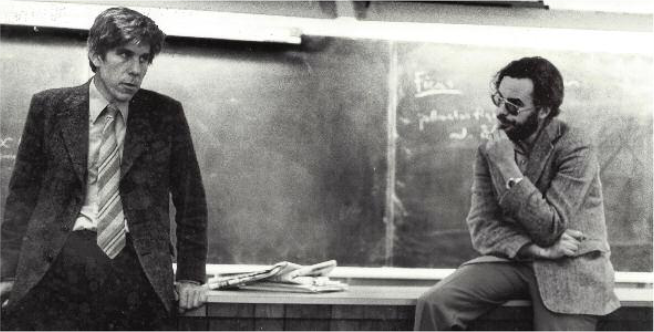
They assigned me a biologist to guide my reading and sign off on my work. His name was William Drury, the research director at the Massachusetts Audubon Society. For two years, my employer paid him to be my private tutor in biology. It was perhaps the greatest stroke of luck in my life. Before Bill Drury, I knew no biology. After working with him for two years, I knew its very core. He introduced me to animal behavior and taught me many facts about the social and psychological lives of other creatures. More to the point, he taught me how to interact with them as equals, as fellow living organisms. But he could have taught me all of that and still I could have left his charge without becoming a biologist. The key to my future, which he alone could supply, was his insight that natural selection referred to individual reproductive success, that it applied to every living thing and trait, and that thinking along the lines of species advantage and group selection—the then-popular vogue—had little or nothing going for it. From then on I was a theoretical biologist. I had wanted to be a scientist since age 13. Now at age 22, I had discovered my discipline—evolutionary biology.
The thrill I felt when I first learned the whole system of evolutionary logic at the individual level, applied to all of life, was similar to the feeling I’d had when I first fell in love with astronomy as a twelve-year-old. Astronomy gave you inorganic creation and evolution over a 15-billion-year period. Evolutionary logic gave you the comparable story over 4 billion years. Astronomy spoke of the vastness of time and space, while evolutionary biology did the same thing for the vast variety of living creatures. Living creatures have been forming over a 4-billion-year period, with natural selection knitting together adaptive traits all through that time, so living creatures are expected to be organized functionally in exquisite and ever-counterintuitive forms. As I had when I was first discovering astronomy, I felt a sense of religious awe upon encountering this way of viewing the world around me.
This is not to say it was all fun and games. Bill was a hard teacher. When you were wrong, he was sure to point it out—not cruelly, no over-kill, just the simple truth. If you argued back, he was up to the challenge. That was how I learned what natural selection was and was not. Bill wasn’t interested in cradling your self-esteem. He was only interested in teaching you the truth. I liked that. I’ve always preferred knowledge over self-esteem. When I brought him population-advantage arguments for the existence of male antlers in caribou, he gently took me through the entire fallacy and then had me read two short pieces on opposite sides of the issue. Three days later I was a complete convert, willing to stop people on the subway and yell, “Do you know what is wrong with group selection thinking? Do you?”
Never assume the animal you are studying is as stupid as the one studying it.
One day I was watching a herring gull through binoculars side by side with Bill. In those days, a herring gull could not scratch itself without one of us asking why natural selection favored that behavior. In any case, I offered as an explanation for the ongoing gull behavior something that was nonfunctional and suggested that the animal was not capable of acting in its own self-interest. Bill replied, “Never assume the animal you are studying is as stupid as the one studying it.” I remember looking sideways at him and saying to myself “Yes sir! I like this person. I can learn from him.”
Bill taught me to think outside of the mainstream in many areas. You think monotheism is superior to polytheism? Bill would say, what do you know about polytheism, or for that matter monotheism? You assume monotheism is superior because it presumes to have a single order to the world, a single unifying logic and force, but what does this force represent? Bill taught me that polytheistic religions often had a better attitude toward nature than did the monotheistic ones. In Amerindian religions, there were spirits of the forest, of the canopy, of the deep woods, of the gurgling spring, and each captured aspects unique to these ecological zones. For someone like Bill, who had literally lived 15 to 20 years of his life in the woods, these distinctions were so much closer to his own view than that emerging from monotheism, which basically boiled down to a form of species-advantage reasoning.
We are all living organisms—make discriminatory comments about others at your own risk.
On another occasion, Bill and I were discussing racial prejudice and the possible biological components thereof, and he said to me, “Bob, once you’ve learned to think of a herring gull as an equal, the rest is easy.” What a welcome approach to the problem, especially from within biology. We are all living organisms—make discriminatory comments about others at your own risk. In Bill’s view, it was always better to try to see the world from the view of the other creature.
The Greatest American Evolutionist I Ever Met
Ernst Mayr was the greatest U.S. evolutionist I ever met, possessing a very broad and deep knowledge of almost all of biology. He had also perhaps the strongest phenotype of any organism I have ever met. He lived to be 100 and published more books after age 90 than most scientists do in a lifetime, and not trivial ones either. He was strong in character, personality, and mode of expression.
I first met Ernst Mayr in the spring of 1966, in his office at the Museum of Harvard’s Comparative Zoology. I was brought to him by Bill Drury, himself a former student of Mayr’s. The visit with Ernst Mayr was meant to reinforce this conviction and to offer me help along the way. Mayr was a short man, with a clear, piercing gaze and a warm countenance. After an initial discussion, Ernst told me that it was not at all impossible to become a biologist at my age and with my lack of background. “Where would you like to do your graduate work?” Ernst asked. I suggested that it would be nice to work with Konrad Lorenz. “No!” Ernst said. “He’s too Austrian for you, too authoritarian. Who else?” I suggested that it might be a good idea to work with Niko Tinbergen. “No,” Ernst said, less emphatically. “He is only repeating now in the ’60s what he already showed in the ’50s. Where else?” It was clearly time for some fresh input, so I asked him, “What would you suggest?” Ernst then flung his arms in a short arc and said in his German accent, “What about Haaarvard?” Dum-kopf, I thought, striking the side of my head with my hand. Harvard indeed!
Robert Trivers on The Michael Shermer Show, discussing evolutionary theory and human nature.
The first class I ever audited in biology couldn’t have been better. It was a graduate course taught in 1966 by Ernst Mayr and George Gaylord Simpson, the famous vertebrate paleontologist, who was quite a spectacle himself. A short man, but much softer-looking than Mayr, he wore thick glasses and his eyes often seemed to shake, along with his hands. Yet when he stood up to speak, he spoke in clean, clear paragraphs, no editing required. At times one felt there should be someone at his side chiseling his words into stone, so well were they chosen.
They thought that evolutionary biology had all the intellectual excitement of a cross between stamp collecting and the study of dead languages.
I remember one memorable discussion involving Mayr and Simpson and sickle cell anemia. After various parts of the evolutionary story had been reviewed—the frequency of the sickling gene in natural populations being associated with the spread of malaria—they had occasion to refer to the molecular mechanism by which the sickling gene worked. I believe it was Simpson who referred to a paper that had just come out in a cellular/molecular journal showing that the change to a sickle-shaped blood cell literally crushed the malarial parasite within the cell. However that may be, there was a glorious feeling coming from that class that evolutionary biologists at their best were the true biologists, those who mastered biology at all its levels, right down to the molecular details when these became interesting.
What made the moment so special was the use of molecular biology, for molecular biologists treated evolutionary biology with open contempt. They thought that evolutionary biology had all the intellectual excitement of a cross between stamp collecting and the study of dead languages. At their worst, they were insufferably arrogant and ignorant. While they could cow most evolutionists, they could not do so with Ernst Mayr. His expertise was the entire subject— biology itself—and when needed he took it upon himself to master every section and subsection. It did not hurt that he was he was physically and verbally dominant as well. Best way to put it, nobody fucked with Ernst Mayr. That gave us evolutionary graduate students support and backing, the value of which we were only dimly aware.
Jane Goodall and the Meaning of Death
As part of a seven week expedition to East Africa in the summer of 1972, we took a two-hour boat ride across Lake Tanganyika from Kigoma in order to reach the famous Gombe Stream Reserve. The Reserve was a series of base camp buildings on the shore of the lake, and student sleeping quarters dotting the hills, within which roamed chimpanzees, three groups of baboons, and some leopards.
Within minutes of our arrival I was standing next to Jane Goodall and her husband Hugo van Lawick, watching a chimpanzee and her son on the hillside among some trees. This wasn’t just any primate. Flo was the most famous living chimpanzee, having been studied by Jane for more than ten years. She was a matriarch whose clan had formed the backbone of Jane’s writings and films. Flo was far past her prime when I saw her and, in fact, was afflicted with continual diarrhea. As we watched, she took a fruit and tried to smash it against a tree but she missed and struck her own leg. “I have never seen her miss like that,” said Jane. “I don’t give her two weeks to live.” My young postgraduate heart leapt: I had just arrived for a two-week visit and according to Jane I would be witness to history!
Chimpanzees worked themselves into a frenzy in the presence of a waterfall, swinging back and forth on vines, hooting, hair erected, and so on. One can almost see a religious sentiment, on which later might be built something as huge as the Catholic Church.
Jane knew her chimpanzees. Several days later I was watching a “waterfall display,” in which chimpanzees, especially adult males, work themselves into a frenzy in the presence of a waterfall, swinging back and forth on vines, hooting, hair erected, and so on. One can almost see, but not quite define, a religious sentiment, an elemental force on which later might be built something as huge as the Catholic Church. While our chimpanzees were starting to work themselves up, we were interrupted by the arrival of the shocking news that Flo was dead. I was with two graduate students at the time, and we turned, as if one, and padded back down the paths toward the hillside near the base camp. Turning off the main path we went through undergrowth and reached the bank of the small river that flowed down toward camp. Flo lay half in the water. Next to her knelt Jane. And capturing this moment for posterity was one of the largest cameras I had ever seen, on a tripod with Hugo behind the lens, just across the river. Flint, meanwhile, lay depressed in a tree 20 feet above his mother.
Thus began the human drama of Flo’s death. At the beginning, Jane appeared intent upon seeing a chimpanzee funeral. At the very least she hoped that one or more of Flo’s grown children might happen upon the body and give some interesting reaction. In fact, it never happened. Instead, the first night Flo remained where she’d died but Jane sat up the whole night nearby, with many of us for company, in order to deter scavengers such as bush pigs from carting off Flo’s body (one reason one would not expect to see many chimpanzee funerals). Jane was nostalgic, remembering the early days, nearly alone with the chimpanzees, enjoying the quiet beauty of the forest, coming to know Flo almost as well as her own mother.
Parasites can be expected to flee the dead body in search of living tissue—if any are there, they should swarm out of a corpse. This immediately suggests the value of burial.
In her response to the death of a member of a closely related species, Jane Goodall revealed the curious ambivalence we display toward the dead bodies of members of our own species. It is as if the body too sharply erodes the living creature for us to leave it alone. Yet from the standpoint of parasites alone, we surely should: any living creature carries a number of parasites and may have died from an ongoing parasite attack. The parasites can be expected to flee the dead body in search of living tissue—if any are there, they should swarm out of a corpse. This immediately suggests the value of burial. From the archaeological record we know that humans have practiced this custom for at least 75,000 years. But a sentimental component shows up from the beginning, as well, since even in ancient burials the deceased is interred along with various artifacts, such as utensils, weapons ,and other items of value.
The effects of a lingering memory are notoriously strong in various monkey mothers for their recently dead offspring; in some species they carry around the body of an infant in a clinging posture for as long as two days after its death. A much stronger attachment occurs in our own species, as when the exact spot of burial is preserved in memory, often with a marker, so that the desecration of such places by others is taken as an attack on the living relatives. Consider the outrage that recent attacks on Jewish cemeteries have evoked. The attackers, who dug up corpses and assaulted some of these, were regarded as more depraved and anti-Semitic than those who do harm to living Jews, as indeed they may be since if they are that eager to desecrate burial grounds, God knows what else they are eager to do.
Richard Dawkins and the Concorde Fallacy
In 1975 I was in Jamaica on sabbatical when I received a letter from one Richard Dawkins enclosing a paper written by himself and Tamsin Carlisle pointing out that I had committed the Concorde Fallacy in my paper on Parental Investment and Sexual Selection, as indeed I had. The Concorde Fallacy is the notion that because you have wasted $10 billion on a bad idea—the exceedingly expensive supersonic plane Concorde—you owe it to the 10 to throw in another 4 in hopes of making it work. In poker, the rule is, “Don’t throw good money after bad.” Good money is money you still have, bad money is already in the pot; it is no longer yours. Just because you have $300 in a large poker pot (money gone) does not mean that you owe it to that money to lose another $200, with odds stacked against you. Every decision should be rationally calibrated to future pay-offs only, not past sunk costs.
I had argued in my paper that since females almost always begin with greater investment in offspring than do males, this committed them to further investment—they would be less likely to desert their offspring. Simple Concorde Fallacy; only future payoff is relevant. I consoled myself with the thought that there probably was a sex bias similar to the one I’d proposed, but only because past investment had constrained future opportunities. In any case, I wrote back that I agreed with them right down the line.
His actual purpose in writing me was to find out if I might be willing to write the Foreword for a new book he had written called The Selfish Gene.
I soon received a second letter from Richard, saying that his actual purpose in writing me was, in part, to find out if I might be willing to write the Foreword for a new book he had written called The Selfish Gene. This was especially appropriate, he told me, because my work, more than anyone else’s, was featured in his book. What the hell, I thought, and he sent the manuscript along. There were indeed chapters based on individual papers of mine—“Battle of the Generations” (parent-offspring conflict), “Battle of the Sexes” (parental investment and sexual selection), “You Scratch My Back, I’ll Ride on Yours” (reciprocal altruism). I never deluded myself that my work was more fundamental than Bill Hamilton’s, nor did Richard, but we both knew that if you wanted to get some of the fun details filled in on a variety of subjects—not ants, fig wasps, or life under bark, but social topics relevant to ourselves—my work was a better bet than Bill’s.
Better than finding my own work given such a high billing, though, was discovering that Richard had a most pleasing combination of absolute mastery of the material with a wonderful way of expressing it—funny, precise, vivid. Let me give one example. He presented Bill Hamilton’s idea that a gene—or a tightly linked cluster of genes—could evolve if it could spot itself in another individual and then transfer a benefit based on the phenotypic similarity. But Richard added a vivid image, calling this “the green beard effect.” The name soon caught on in the scientific literature, so that everyone today refers to “green beard” genes, thereby summing up a complicated idea in a way that actually makes it easier to think through. The phenotypic trait is obvious: you have a green beard. And the genetic bias is obvious: you favor green-bearded individuals. Genes spread apace. Except what about a mutant that leaves your green beard intact but takes away your bias toward green-bearded individuals? Not at all obvious, yet Richard’s vivid way of writing facilitated thinking through the complexities.
So I said to myself, yes I will write you your Foreword, though I don’t know you from Adam. I wrote a good five paragraph foreword but it consumed about a month of my life, partly because I actually like to think before I write, which does slow down writing.
In any case, once I was finished, I looked at the essay and thought, why not slip in the concept of self-deception, whose function by that time I had linked to deceiving others? This I regarded as the solution to a major puzzle that had bedeviled human minds for millennia. And Dawkins, bless his soul, could hardly have set me up more nicely: “…if [as Dawkins argues] deceit is fundamental to animal communication, then there must be strong selection to spot deception and this ought, in turn, to select for a degree of self-deception, rendering some facts and motives unconscious so as not to betray—by the subtle signs of self-knowledge—the deception being practiced. Thus, the conventional view that natural selection favors nervous systems which produce ever more accurate images of the world must be a very naïve view of mental evolution.” Perfect set-up and not even in a paper of my own but in someone else’s book and an incredible bestseller at that.
Robert Trivers’ lecture for the Skeptics Society: Why does deception play such a prominent role in our everyday lives?
When I learned that Dawkins had taken on religion in the name of science and atheism, I felt he had finally found his true intellectual niche. No way could religion keep up with Richard. One June 13, 2011, I was about to begin delivering the Tinbergen lecture at Oxford, when as usual I misplaced something on the lectern. “Jesus Christ,” I muttered, and the microphone amplified it to the 400 people in attendance. I looked up and said, “I hope Richard Dawkins isn’t here.” Richard raised his hand. Before launching into my lecture I added, “I regard Richard Dawkins as a minor prophet sent from God to torture the credulous and the weak-minded, for which he has a unique talent,” as indeed he does. One nice concept in The God Delusion is that since most people dismiss all religions except one, why not go the final step?
Hanging with Huey and the Panthers
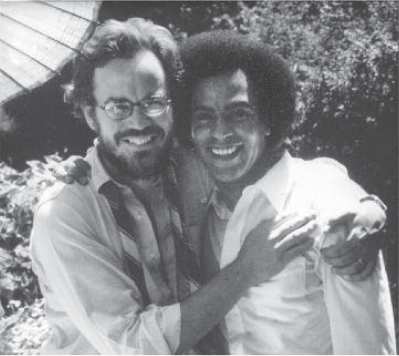
One of the few benefits of moving from Harvard to the University of California at Santa Cruz in 1978 was the chance to meet the legendary founder of the Black Panther Party, Huey Newton. Indeed he was waved in front of me as a reason to come to Santa Cruz. He was a graduate student in “History of Social Consciousness”—roughly equivalent to Western Civilization—who had the wit to see that “social consciousness” started long before the Greeks and, in some form, by the time of the insects. He had gotten his undergraduate degree from Santa Cruz in 1974 and befriended Dr. Burney Le Boeuf, the celebrated student of elephant seals. Burney had been preaching the beauties of evolutionary biology—my own work in particular—to Huey, and so I had the good fortune of meeting him after he had already been well-primed.
The Panthers began with patrolling the police. They would follow police at night or patrol until they came across police-citizen interactions. Huey might then emerge from a car with a law book in his hand and read out in a loud voice that, by law, “excessive” force cannot be used during an arrest. The police would invariably answer, “Our force isn’t excessive.” Huey would read them the legal evidence on that point. They would say, “Get the fuck out of here.” He would answer that a citizen is allowed to remain within a reasonable distance of an arrest. They would say, “Your distance is unreasonable.” He would flip to the relevant page and read the appellate ruling that declared a reasonable distance was ten yards or whatever, and it would go on like this.
Huey was armed. He knew he had the right to be armed and he knew he had the courage. So when he emerged from the car, there was usually a gun beneath the law book so that, should the interaction turn hostile or threatening, he could be ready with a response. All this was legal back then, riding shotgun, in effect, on the police themselves. During the war the Panthers waged between 1967 and 1973, roughly 15 officers died for every 35 Panthers. I believe the Panthers had the largest single effect on integrating police forces in this country. The reasoning being: hey, if Black people are firing at our officers, let’s have some Black officers firing back.
In the fall of 1978 I was informed that Huey, who was then in prison, charged with beating up a tailor in his home for calling him “boy,” wanted to take a reading course from me. I said that was fine but I wanted a paragraph from him on what he wanted to read. Before he could reply he was released from lock-up and traveled to Santa Cruz to meet me. We met.
He fell down, as do we all, when it came to his own self-deception.
We decided to do a reading course on deceit and self-deception, a subject I was eager to develop and on which Huey turned out to be a master. He was a master at propagating deception, at seeing through deception in others, and at beating your self-deception out of you. He fell down, as do we all, when it came to his own self-deception. Huey Newton was certainly one of the five or six brightest human beings I have ever met. Each of them has had a different sort of intelligence, and Huey’s forte was aggressive logic. And he moved his logical sentences as if they were chess pieces meant to trap you and render you impotent. “Oh, so if that is the case, then this must be true.” If you moved away from where he was pushing you, he would say, “Well, if that is true, then surely so-and so must be true.” So he was maneuvering you via logic into an indefensible position. The argument often had a double-or-nothing quality about it where, in effect, he was doubling the stakes for each logical alternative, giving you the unpleasant sensation that you were losing more heavily as the argument wore on, making more and more costly mistakes.
According to Huey, the Black Panther Party started as a simple, old-fashioned robbery, which he was planning with a number of confederates. Problem was he was reading Franz Fanon and becoming politically conscious. So he decided to use the robbery to start a new political party, as radical as its start-up funds. The hard part was selling it to his fellow robbers. They didn’t like the idea. “They almost killed me” Huey told me, but finally he got them to sign off on it, and some of them even became Party members later.
Once, when he and I were driving through West Oakland, near Berkeley, Huey pointed out the site of the Party’s first political act. There was a particularly dangerous street corner at which local African-American children were run over nearly every year while attempting to cross on their way to school. Numerous requests had been submitted for a stop sign and a proper street crossing to protect the children. Nothing had been done. One day the Panthers appeared at the street crossing at the appropriate time, dressed in their leather jackets and berets and each carrying a rifle or shotgun. They proceeded to direct traffic, standing in the highway to permit safe passage for the children. Six weeks later the city put up, not a stop sign, but a stoplight at that very corner. Nothing like armed Black men to stir civic activity.
When the California legislature was meeting to decide whether to pass the “Huey Newton law,” as it was popularly called, which states that you could no longer “ride shotgun” but instead had to keep your loaded gun in your locked trunk, Huey and 35 other Panthers showed up in Sacramento on the day of the vote, most of them carrying rifles. They tried to enter the legislature with their guns, which was allowed by law at the time. Police stopped them from entering, ordered them out of the building, and then shortly thereafter arrested them. Huey told me that many Black people argued against the public display: “Now they’re sure to pass the bill, why don’t you ease up the pressure?” Huey’s response was simple: they were going to pass the bill anyway, and he wanted to show Black people that they had the right to show up in front of the legislature with guns and confront a mass of armed police. That was one of the main points of the Party—to encourage African Americans to use their right to bear arms in self-defense. In 1948, in response to a lynching, President Harry Truman made the first and key decision in favor of equal gun rights for the Black man in the U.S., when he integrated the armed services. Before then, most Black soldiers sliced the carrots and did the dishes.
Many African Americans of more recent times have a strong ambivalence or hostility toward Huey and the Panthers because they believe he helped spawn the culture of Black gun violence among the urban young. There is probably some truth to the charge, but I think harsh drug penalties take a larger part of the blame. With the stakes so high for being caught selling illicit drugs, the chances of internecine war and murder inevitably rise as well.
A final point on Huey’s legacy: though people tend to assume that Huey was anti-police in principle, in fact he saw obvious value to community surveillance and organized protection. That’s why he regarded himself and Party members as on a par with the official police. He used to joke, “I’ve got nothing against the police as long as we are firing in the same direction.”
Looking back and Looking Forward
I am 72 years old now, having devoted 50 years to the study of evolutionary biology, a combination of social theory based on natural selection wedded to genetics—the very backbone of all of life. I have had the good fortune to help lay the foundation for a variety of flourishing subdisciplines, from reciprocal altruism and parent-offspring conflict, to within-individual genetic conflict, and self-deception. Through this work, I have met many extraordinary individuals, several of whom were my teachers. I have also gotten to know up close and personal many non-human animals. I have “enjoyed” an unusual number of near-death experiences—due in part to my tendency toward intense interpersonal disagreements late at night.
Yet when I look back on this show, there is one thing I regret, and it is absence of self-reflection. Yes I would live life and study it, but would I study my own life? Time and time again, the answer comes back “no.” Yet exactly whose life is more important to you: others or your own? “You self-deceptionist” my first wife would sneer. “You talk a lot about parent-offspring conflict, yet you neglect your own son.” Guilty as charged. Too much ambition and too little thought about my family: wife, children, and myself.
Robert Trivers’ lecture for the Skeptics Society, based on a ground-breaking study that examines honor killings, which seem to make no evolutionary sense. Why would a father kill his own daughter and thereby eliminate half of his own genes from propagating into the next generation?
Major decisions, such as where to go when I decided to leave Harvard in 1978 were made without any serious thought at all—how about a name professorship at the University of New Mexico or a major offer from the University of Rochester with its powerful biology department? These were brushed aside with scarcely a glance. Instead I simply trotted off to the University of California at Santa Cruz because my wife and I had enjoyed a pleasant weekend with Burney LeBoeuf, his wife, and his elephant seals. I even remember mumbling to myself at one point, “Oh we’ll let autopilot handle this or that problem.” Auto-pilot? As a means of choosing which of three universities and cities you should live in for the next 15 years? By definition auto-pilot is the opposite of careful conscious introspection and evaluation—it is what you do when the path forward is obvious and no rational reflection is needed.
What is the way forward? There is one obstacle and there is one hope. The obstacle is self-deception, which is a powerful force with immense repetitive power. The hope is that after becoming more deeply conscious of one’s own self-deceptions and of the possible means of ameliorating them, one can make some real progress against this strong negative force.
Very often a spiteful response is not the best one. Then comes a stronger voice, “No, Bob, this time is different.”
A more costly form of self-deception involves my spiteful side. If you say something insulting, I want to strike back. If I fail to because I am slow or inhibited, trust me—whenever the event recurs in my mind, I will torture myself, sometimes for years, with the rant I should have delivered and may do so now at full volume alone in my apartment far away. And yet very often a spiteful response is not the best one. It can easily generate spite in return and down the staircase the two of you descend. Inside me there are two voices. One cries out, “Bob, you have made this mistake 630 times in the past and regretted every single one. Why not forego it this time?” Then comes a stronger voice, “No, Bob, this time is different,” and there goes 631.
It was an eye-opener to me to discover recently the value of friends in breaking this cycle. I was telling a good friend about a nasty message I had gotten and my intended nasty response. He wanted to know why? Because, I said, she said this, that, and the third thing and it hurt. That was the key. He was unmoved by this argument. He’d suffered none of my internal hurt and was indifferent to it. Only three things were relevant to him: the message, my possible response, and its likely consequences. The likeliest consequence would be that she would write back an even nastier note and I would be further estranged for no good reason. Why would I want to do that? Why indeed. The Concorde Fallacy all over again—you owe it to your past spite, despite it being a sunk cost, to double-down. Better, of course, to do nothing.