

The Emergent Mind: From Ant Colonies to Human Thought to Artificial Intelligence

About this episode:
In this episode of The Michael Shermer Show, Michael sits down with two giants of mind and machine science: Jay McClelland, one of the founders of modern neural networks, and Gaurav Suri, computational neuroscientist and director of the RAD Lab.
Drawing from decades of research, they walk us through the revolution from behaviorism to cognitive psychology to modern neuroscience, and why simple interacting units can give rise to astonishingly complex behaviors.
From why we perceive letters differently in context to how memory works, why consciousness remains baffling, and what AI is (and isn’t) actually doing, this episode dives deep into the mechanics of all levels of thought, mind, and even consciousness.
Jay McClelland is a professor of psychology and of computer science and linguistics at Stanford University. He is one of the most influential and well-known cognitive scientists of the past century. He is the founder of the study of artificial neural networks, and his publications have been cited more than 100,000 times. He is a member of the National Academy of Sciences and a Corresponding Fellow of the British Academy.
Gaurav Suri is an associate professor of psychology at San Francisco State University. He is a computational neuroscientist and an experimental psychologist. He is the director of RADLab, where he studies the mechanisms that shape motivated action and decision making. He is the co-author of the prize-winning novel A Certain Ambiguity and several dozen influential research papers.
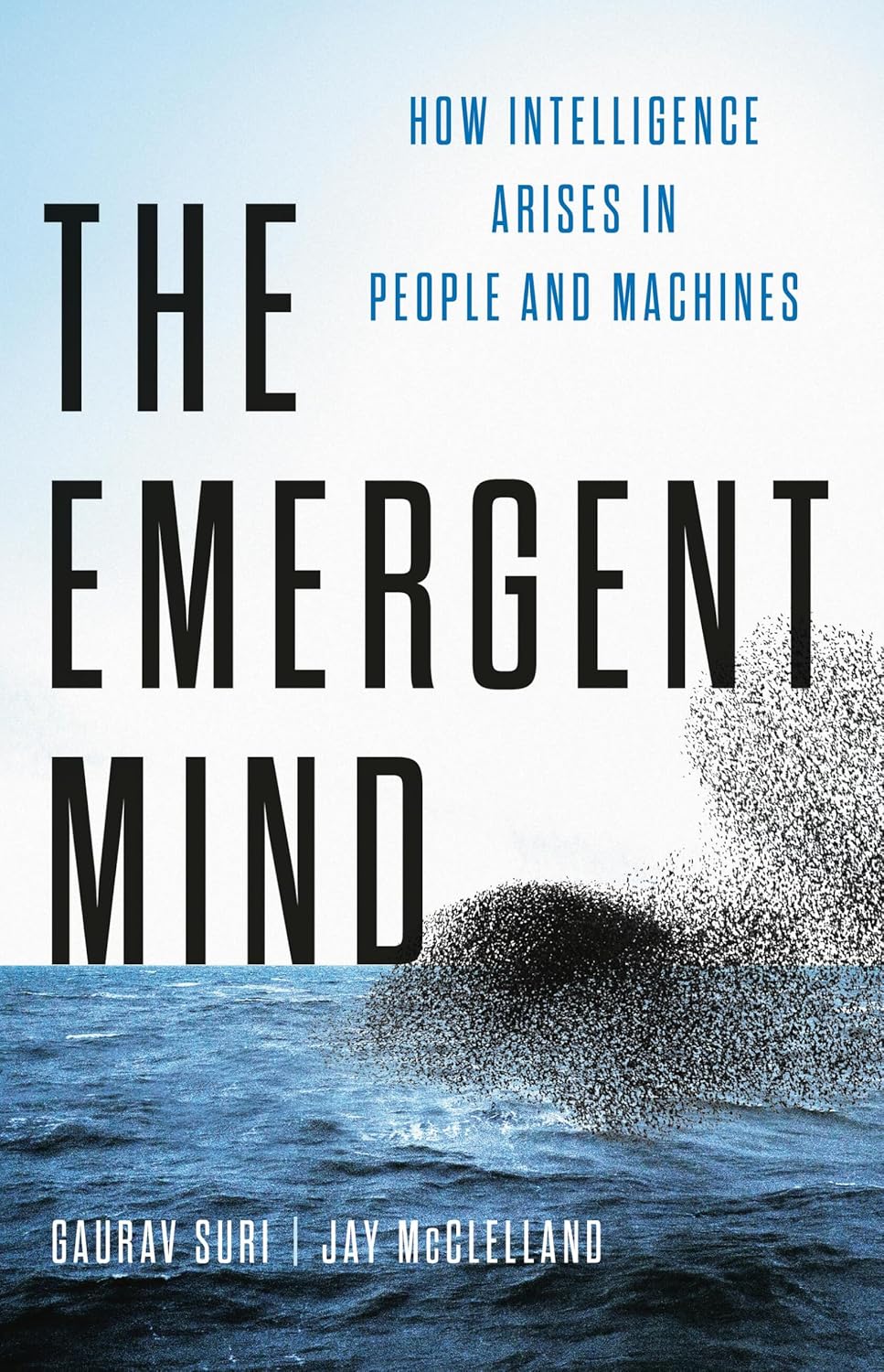
Their new book is The Emergent Mind: How Intelligence Arises in People and Machines.
Support the show
Did you enjoy this episode? Show your support with a tax-deductible donation and share the show with your friends and family. Together, we can make a meaningful difference.
Transcript
Coming soon...