All Our Yesterdays—a Remembrance of Pat Linse
Tomorrow, and tomorrow, and tomorrow,
Creeps in this petty pace from day to day,
To the last syllable of recorded time;
And all our yesterdays have lighted fools
The way to dusty death. Out, out, brief candle!
—Shakespeare, Macbeth, Act 5, Scene 5
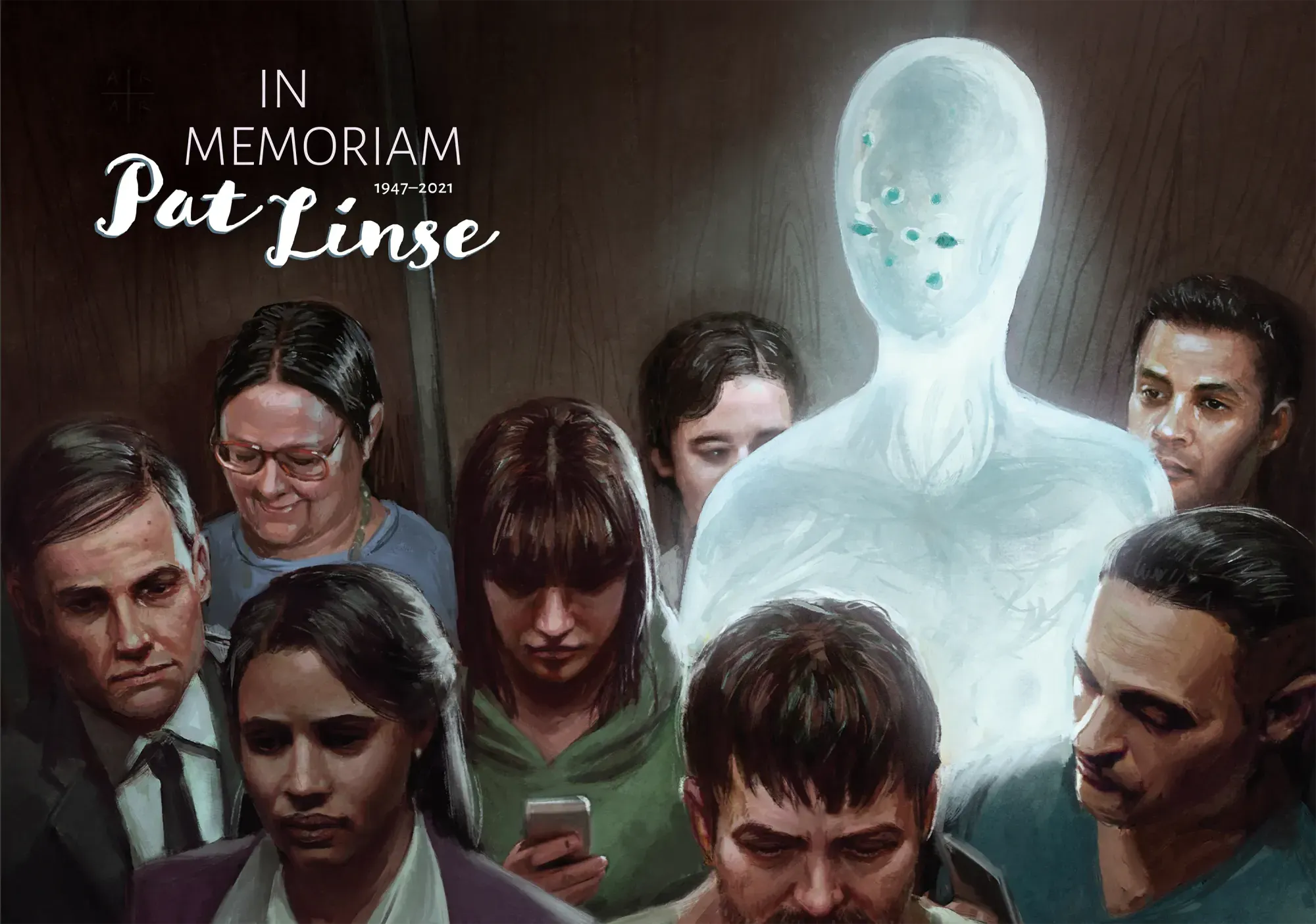
Tomorrow, and tomorrow, and tomorrow Pat Linse would be there at the Skeptic headquarters, an endless future with my business partner and friend of 30 years, until Saturday, July 24 when I learned of her passing to dusty death, her brief candle out. “What?” was my initial response, stuttered in utter disbelief. How can that be? She’d been there all our yesterdays and would be there all our tomorrows. Or so I thought.
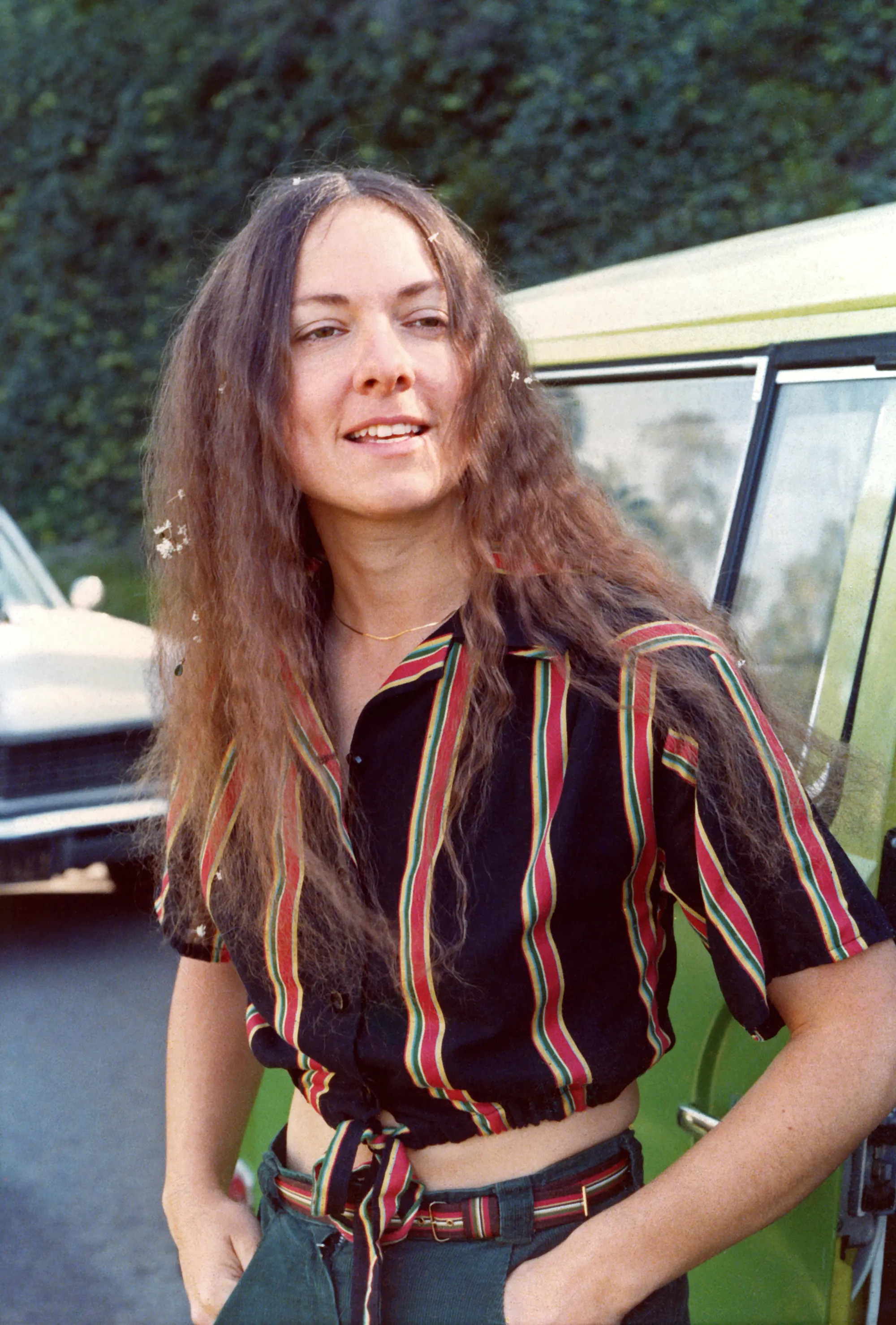
Pat was the backbone of the Skeptics Society and Skeptic magazine. Because I was the public face of the organization—inasmuch as Pat was exceedingly shy, introverted, and disdained public recognition of her work (the quality of the work itself and its impact on people and society was her sole motivation)—many people either underestimated her contributions or were simply unaware of them. That is unfortunate, and one point of this tribute section of the magazine is to make clear how central a role her contribution was not only to the Skeptics Society and Skeptic magazine, but to the entire skeptical movement and its long and rich history. People know of the marquee names—Martin Gardner, James Randi, Stephen Jay Gould, Richard Dawkins, Steven Pinker, Neil deGrasse Tyson, Bill Nye, and the many other giants of skepticism over the past century—but there were many lesser known but no less important people who brought about this movement, and Pat Linse was first among equals on those pedestals. To punctuate the point of skepticism’s central role to a functioning rational society, here is how Stephen Jay Gould explained it in the Foreword to my first book, Why People Believe Weird Things:
Skepticism or debunking often receives the bad rap reserved for activities—like garbage disposal—that absolutely must be done for a safe and sane life, but seem either unglamorous or unworthy of overt celebration. Yet the activity has a noble tradition, from the Greek coinage of “skeptic” (a word meaning “thoughtful”) to Carl Sagan’s last book, The Demon-Haunted World.
Skepticism’s bad rap arises from the impression that, however necessary the activity, it can only be regarded as a negative removal of false claims. Not so. Proper debunking is done in the interest of an alternative model of explanation, not as a nihilistic exercise. The alternate model is rationality itself, tied to moral decency—the most powerful joint instrument for good that our planet has ever known.
Pat was the backbone of the Skeptics Society and Skeptic magazine.
Rationality and moral decency. I cannot conceive of a more noble description of Pat Linse, whose role in that force for good was central and, while understated, was as important as anyone’s. Pat was so much more than the Art Director of Skeptic (her official title), as she also helped me select and edit articles, steered the movement of which we are a part in productive directions, and, personally, helped me develop my own ideas about science and skepticism. It has been my good fortune to meet a great many really smart people in my job—many Ph.D.s and Nobel laureates among them—and Pat was as smart, insightful, wise, and creative as anyone I’ve known. She was truly one of a kind.
♦ ♦ ♦
I met Pat in the Fall of 1991, when she contacted me about a journal article of mine she read on a creationism case that went to the United States Supreme Court. I began that article (“Science Defended, Science Defined”) with a description of an amicus curiae brief on behalf of 72 Nobel laureates in support of the appellees in Edwards v. Aguillard, the case testing the constitutionality of Louisiana’s “Balanced Treatment for Creation-Science and Evolution-Science Act.” That brief was organized, in part, by the Southern California Skeptics, a local group that, along with many others, emerged after the successful growth of CSICOP (Committee for the Scientific Investigation of Claims of the Paranormal—now CSI, Committee for Skeptical Inquiry). Pat had much more to tell me about how that brief came about, and especially the inner workings of the local skeptics group and why it collapsed the previous year because of the personal shenanigans of the organizer. We got together and three hours later I had a much deeper understanding of not only that creationism case, but of the skeptical movement. While I had attended some of the SCS meetings at Caltech (at the behest of the engineer Paul MacCready, whom I knew through racing human-powered vehicles), I was completely in the dark about the goings-on behind the scenes. Shortly after that meeting, Pat and I hatched the idea of relaunching the local group—only we thought we might as well make it a national and even international group and even start our own magazine.
She was truly one of a kind.
At that time I was teaching at Occidental College during the academic year, and in the summer directing the Race Across America, the 3,000-mile nonstop transcontinental bike race, for which I had created a magazine called Ultra Cycling. I had learned about the magazine business from my first job out of college at Bicycle Dealer Showcase (a trade publication), that motivated me to become a bike racer in my 20s. So when Pat and I started discussing producing a skeptic magazine of our own (Skeptical Inquirer was the publication of CSICOP and we admired that magazine), I brought to the table some production knowledge, and Pat had vast experience working in Hollywood producing movie posters, promotional art, marketing materials, and more, working on anything from the animated Smurfs to the cigarette-smoking Joe Camel poster. I suggested the lame title of The Rational Skeptic, but Pat understood marketing better than I and came up with, simply, Skeptic. “The magazine, and the group and whatever has to be named the nickname,” she told an interviewer. “You want the short quick memorable name.”
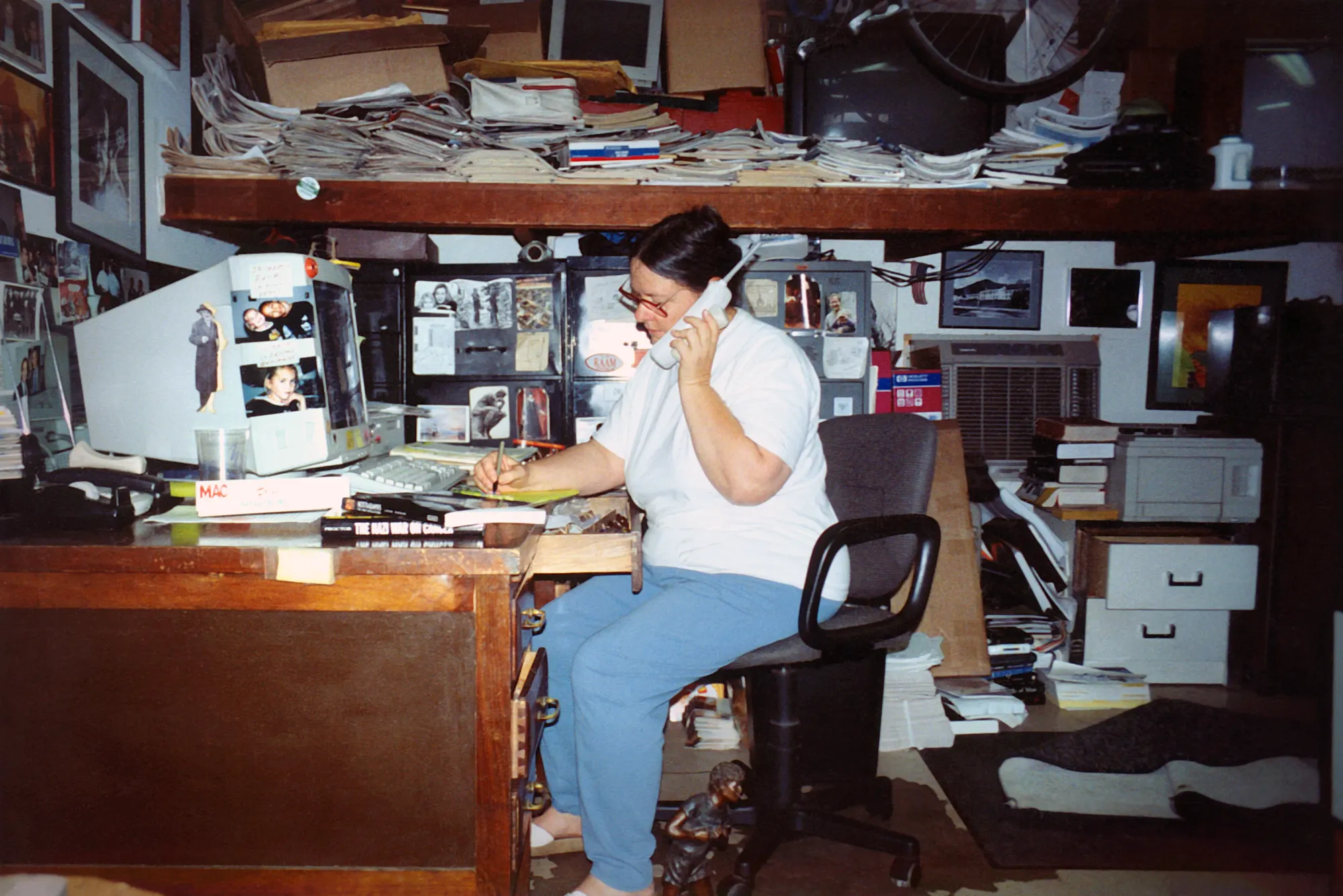
As you can see in the above photo with Pat on the phone taking an order, we started Skeptic in my garage, and in addition to designing covers and writing lead articles, we answered phones, stuffed envelopes, picked up the mail, processed orders, staffed tables at our resurrected Caltech science lecture series, and the like, until we had the funds to hire some staff, which took several years. I love how Pat described those early days in that interview:
When we first started out, we were packed into this little garage, with triple-shelved books and so forth. Big networks would come out to film us. They could not believe that we were in this tiny little garage, rather than some grand building. That’s because of the façade we put out.
By this Pat meant our image, our profile, our reputation. Pat never cared about appearances; she cared about content. Who cares (or even needs to know) what our office is like? The only thing that matters is the work we put out. And for our first five years we published quarterly magazines and hosted monthly lectures out of that space. Still, working and living in the same environment is not sustainable, so in time we needed to expand the office. Fortuitously, a philanthropist friend and supporter of the organization purchased my home and donated it to the Skeptics Society, which by then was a 501(c)(3) nonprofit corporation. We converted the house into an office, and there we remain.
From there we expanded Skeptic by adding Junior Skeptic magazine (bound into the back of every issue), inspired by an episode of the animated television series The Simpsons, in which Homer has an alien abduction experience while his daughter Lisa explains to him, “Dad, according to Junior Skeptic magazine the chances are 175 million to one of another form of life actually coming in contact with ours.” The skeptical researcher, writer, and artist Daniel Loxton took the reins of Junior Skeptic and has produced dozens of classical skeptical investigations. And as the world shifted to digital, we added Skeptic.com and eSkeptic, both artfully and brilliantly produced by William Bull. Together, Daniel and William will henceforth take up the mantle of Pat’s production. On that front, let me highlight a few of the initial Skeptic covers that I find especially emblematic of Pat’s deep insight into the subjects she was illustrating.
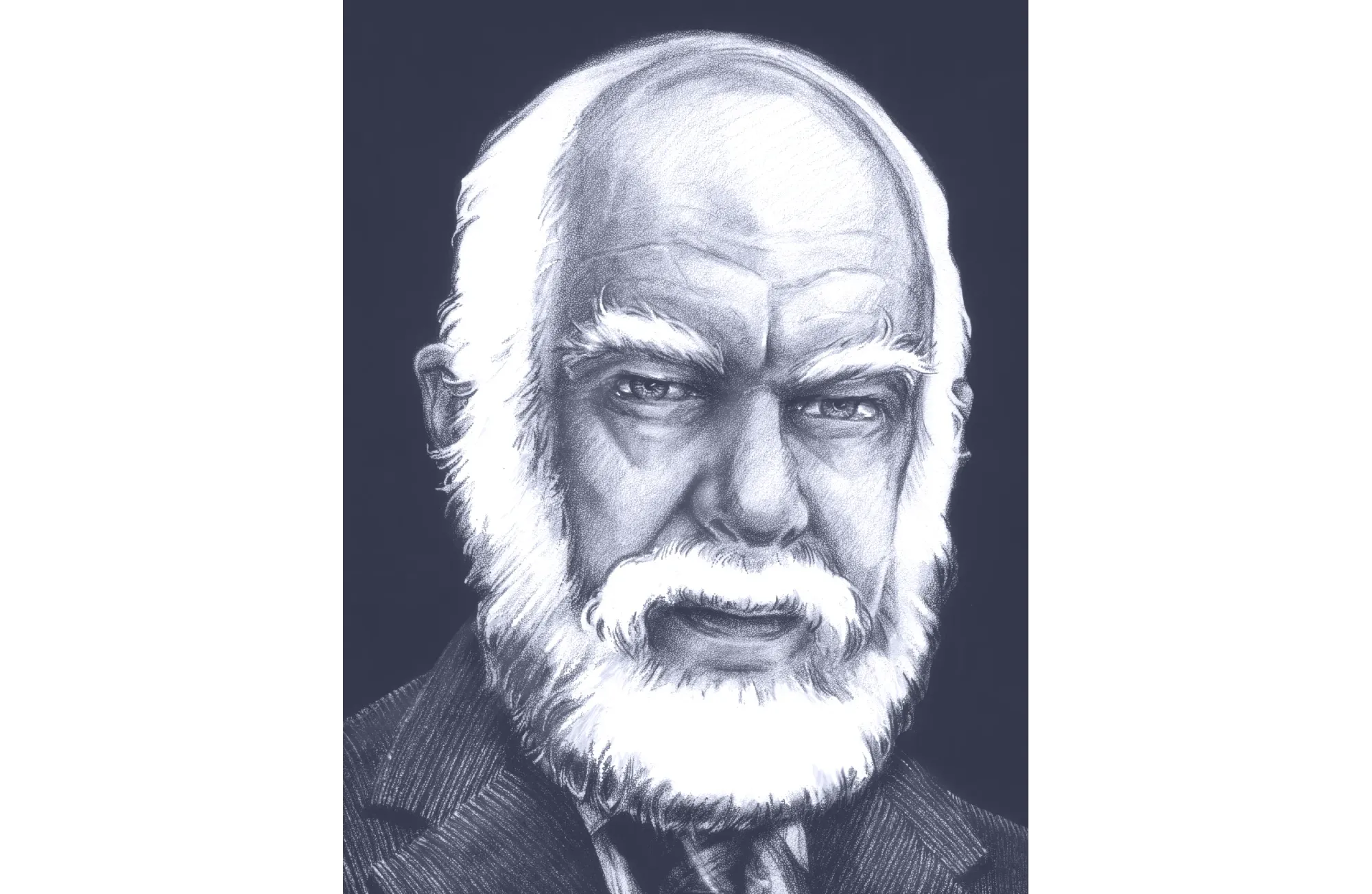
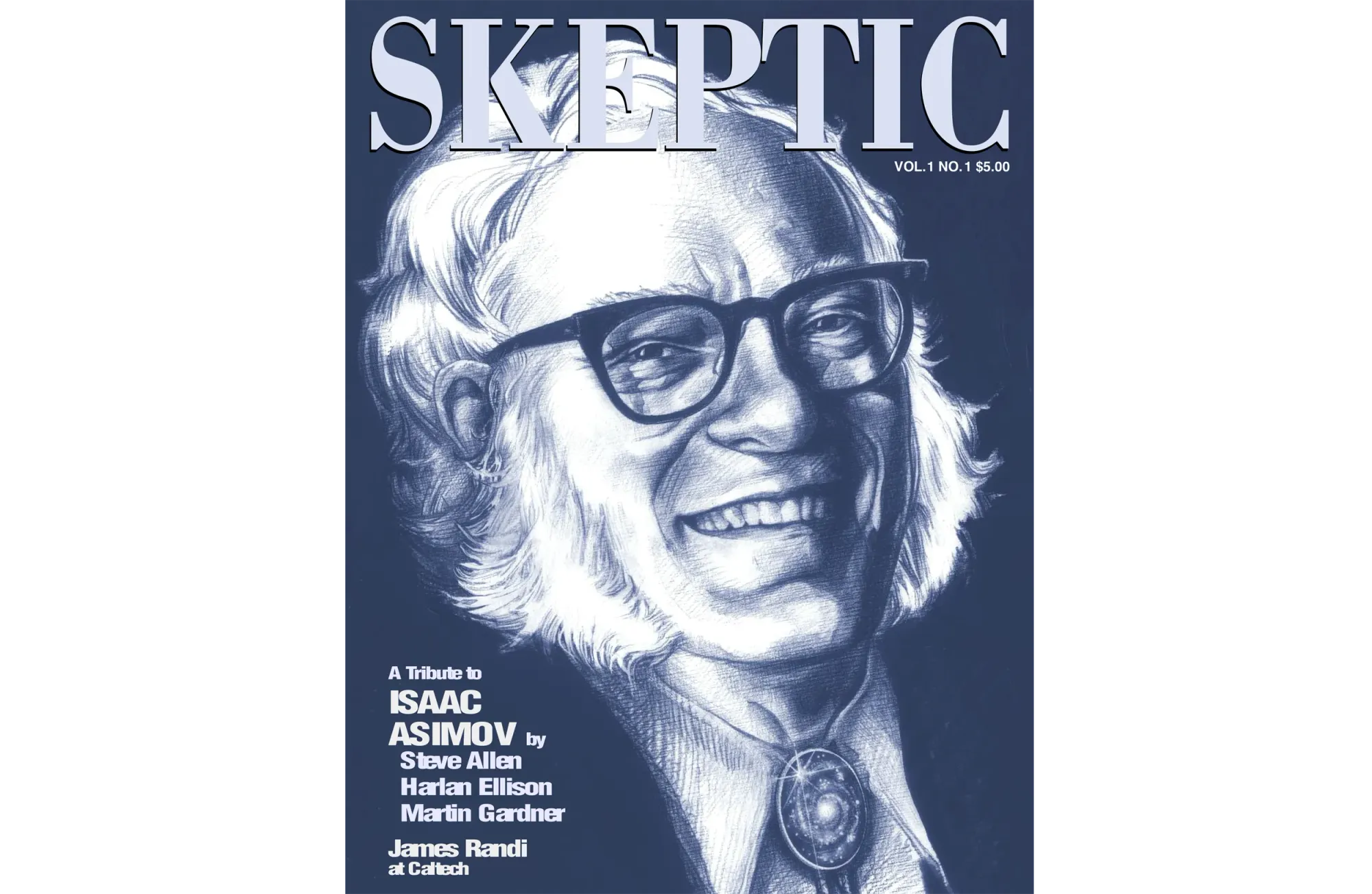
Our very first issue, Vol. 1, No. 1, was originally scheduled to feature a portrait of James “The Amazing” Randi (above), but just before publication Isaac Asimov died, and we felt we should pay tribute to one of the founding fathers of modern skepticism. Pat’s illustration of the great one is masterful.
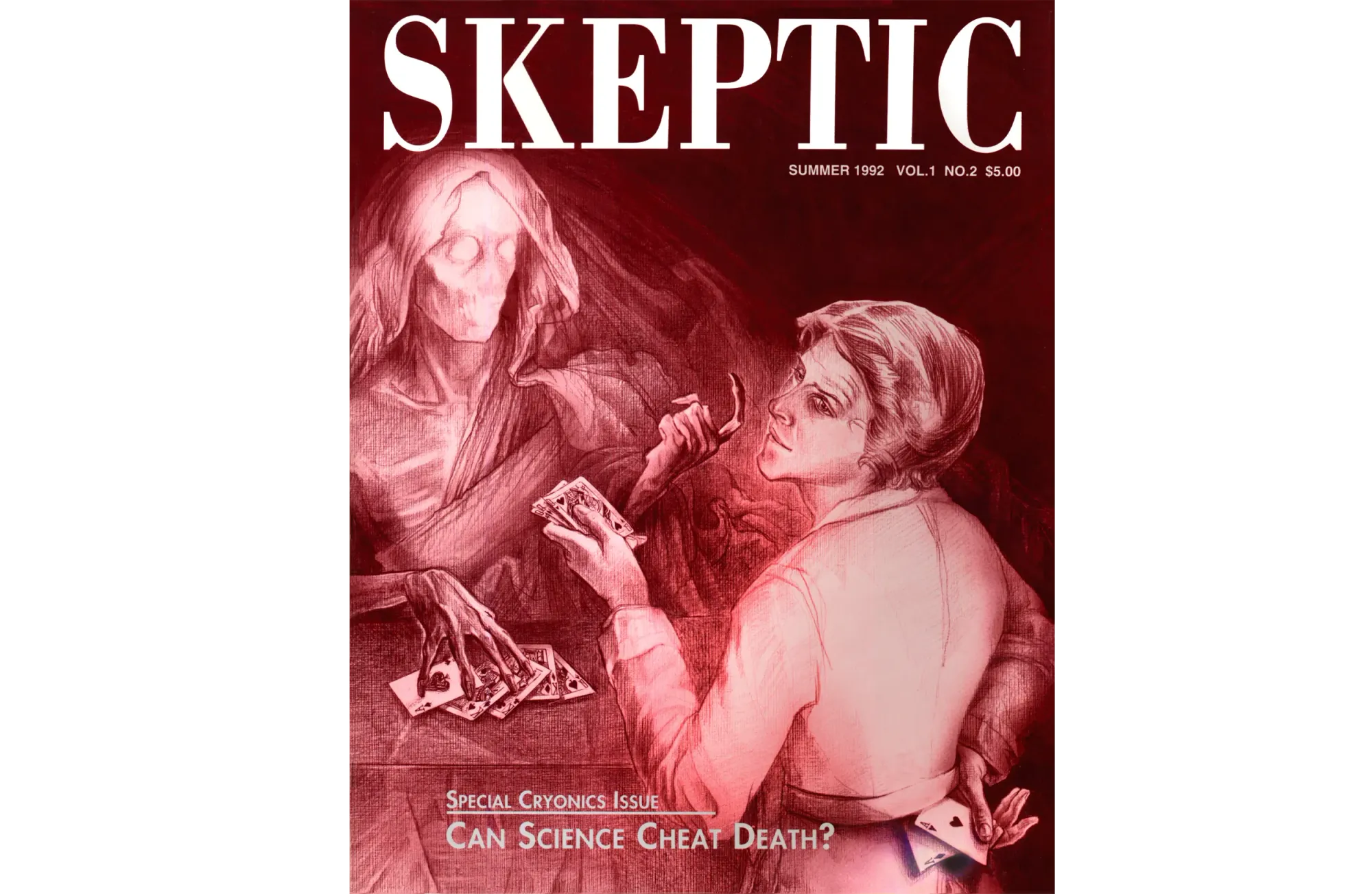
Vol 1, No. 2 was our special issue on the scientific search for immortality: “Can Science Cheat Death?” Here the grim reaper is un-fooled by the pair of aces science is hiding. Nearly 30 years later I’m afraid the prospects for an affirmative response to the cover question remains grim, including and especially for cryonics, mind uploading, and other sci-fi scenarios. This one is especially poignant to me at this moment since Pat did not believe in an afterlife and now she’s gone. I’d like to believe she’s wrong, and that her essence continues on elsewhere in some quantum field or cyberspace cloud, but what I want to believe is true and what is actually true do not necessarily align.
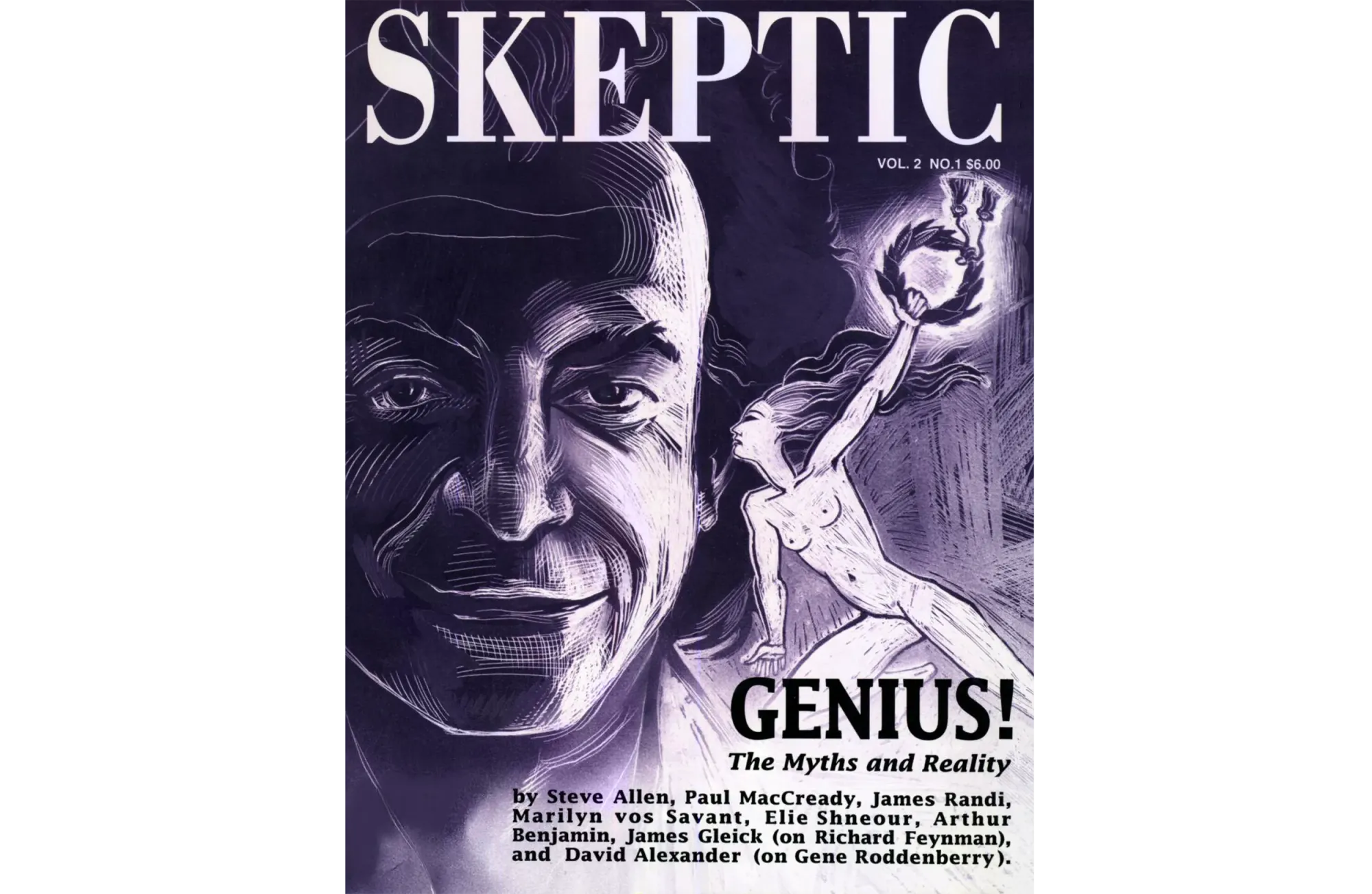
I absolutely loved Pat’s cover for our issue on genius and creativity, Vol 2, No. 1, for which she selected the quintessential genius Richard Feynman to portrait, along with the muse iconography of how most people (wrongly) think of genius.
One of Pat’s greatest gifts as Art Director was her ability to spot and nurture talent.
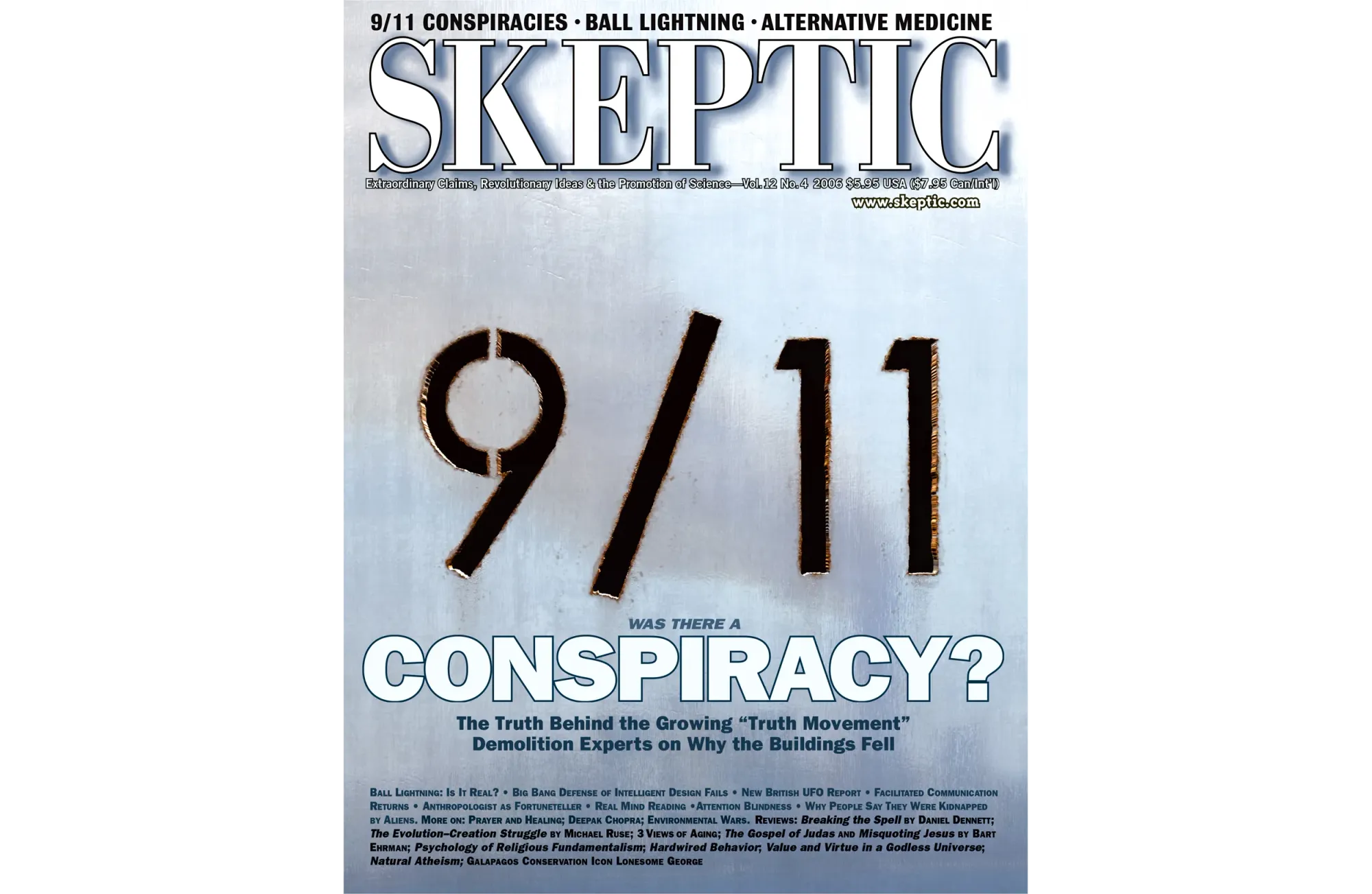
Sometimes Pat aimed to capture a complex phenomena through a minimalist cover, which I think is best captured in Vol. 12, No. 4 in our issue on 9/11 conspiracy theories, illustrated by Daniel Loxton. One of Pat’s greatest gifts as Art Director was her ability to spot and nurture talent, inspiring creativity and personal loyalty in artists all over the world with her generous and heartfelt encouragement and advice.
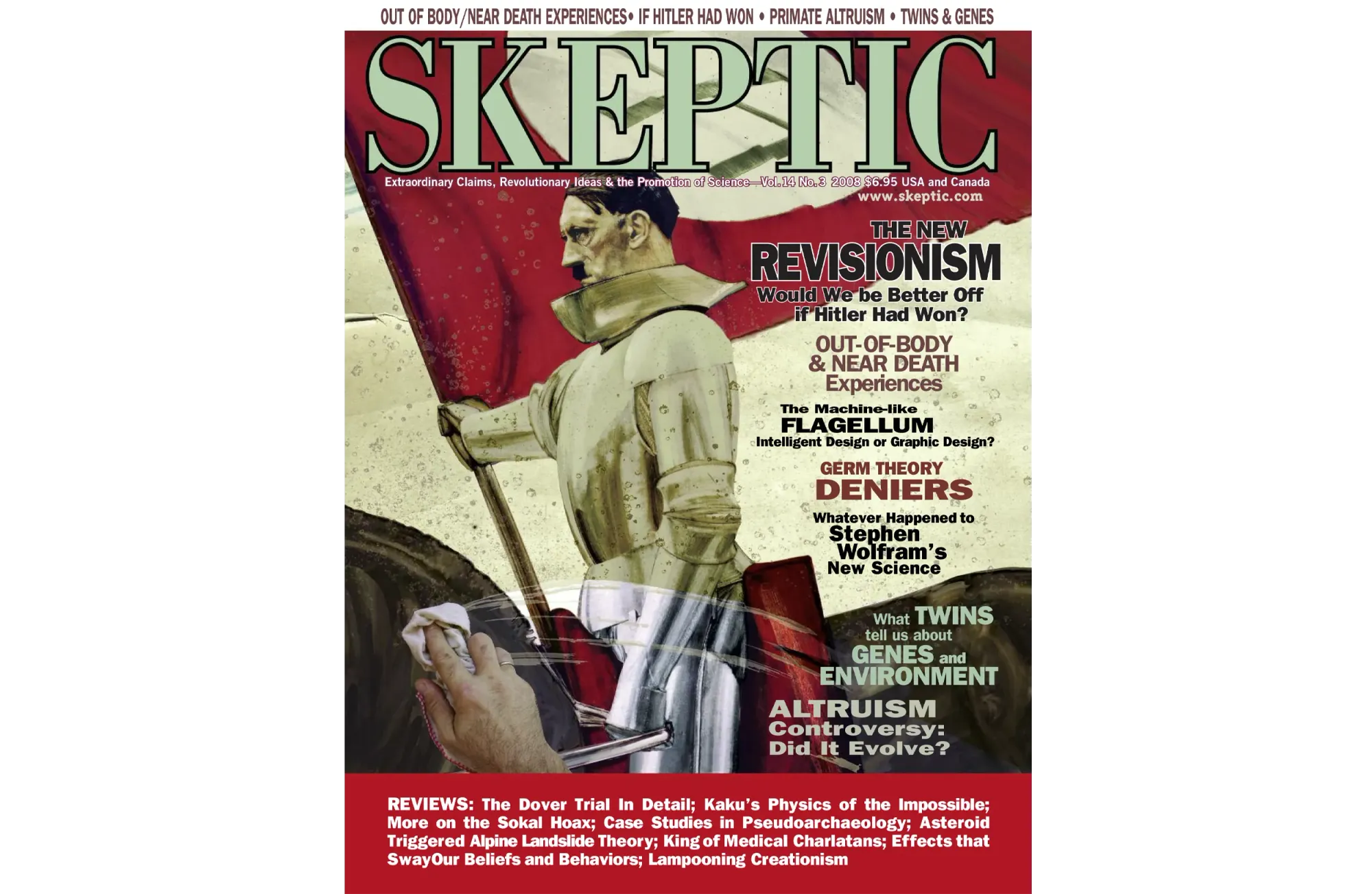
But in general Pat preferred more complex covers with many design features. One in this genre is her cover Vol 14, No. 3 on historical revisionism and the white washing of Hitler and the Nazis (separate from Holocaust denial, the topic of another issue). I think Pat’s cover perfectly captured that theme.
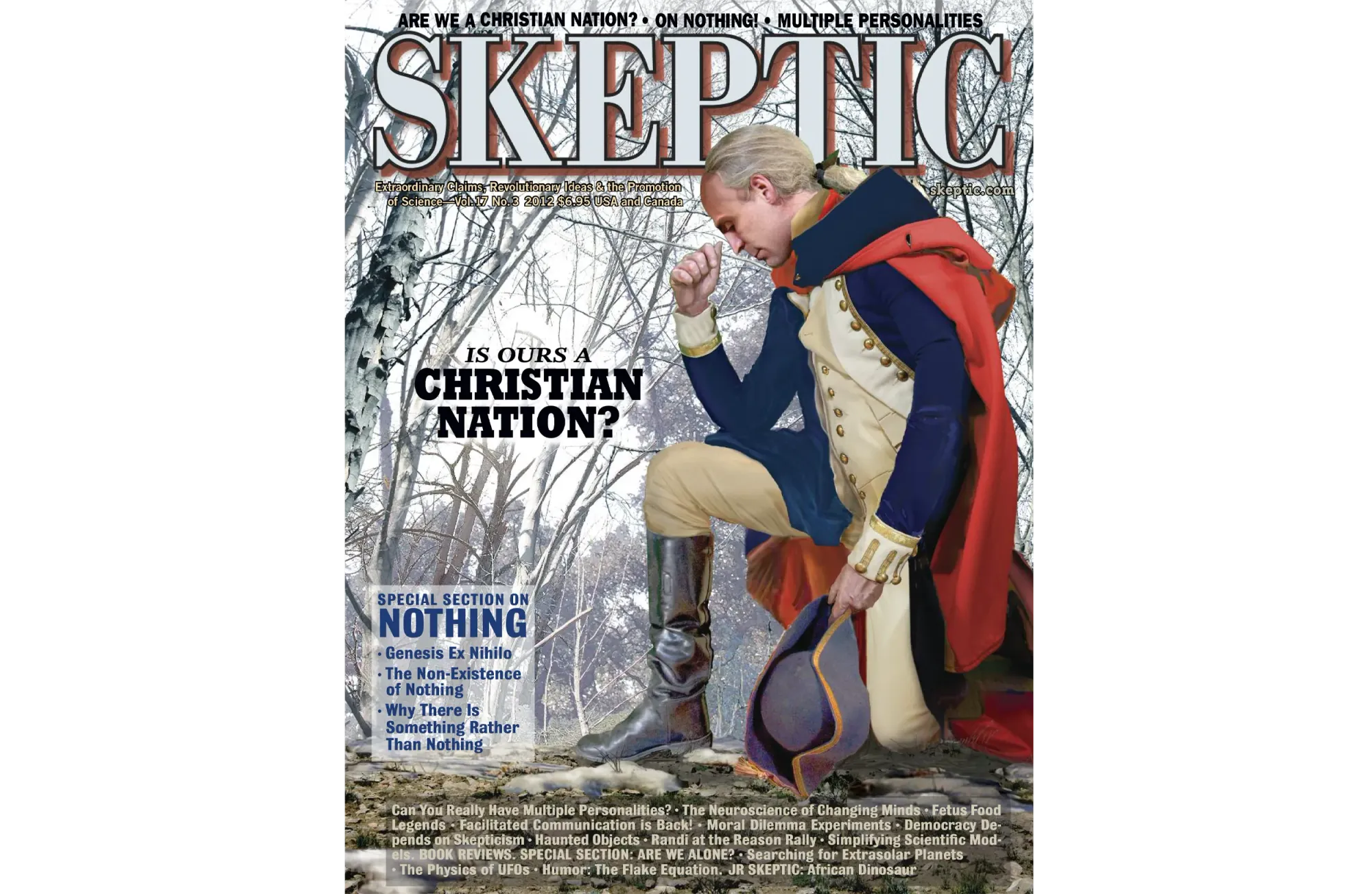
And I know a favorite of Pat’s in this vein was the cover of Vol. 17, No. 3 on whether or not the United States is a “Christian nation.” Here’s how she described that cover in an interview:
The background is a composite of about 20 different tree shots and George Washington is in a completely impossible pose that is actually patterned after a 1930’s Saturday Evening Post cover. You have a problem when you have a monumental figure and they’re in a prayer posture because those are two contradictory things. You do a lot of cheating, fudging, and so forth to keep that monumental, grand figure look and still have them in an attitude of prayer. That’s probably 20 different shots, photo-composed together, But since I can illustrate completely realistically, I don’t have a problem putting stuff together. I used to paint right on photos for the film industry, so I have a pretty solid background there.
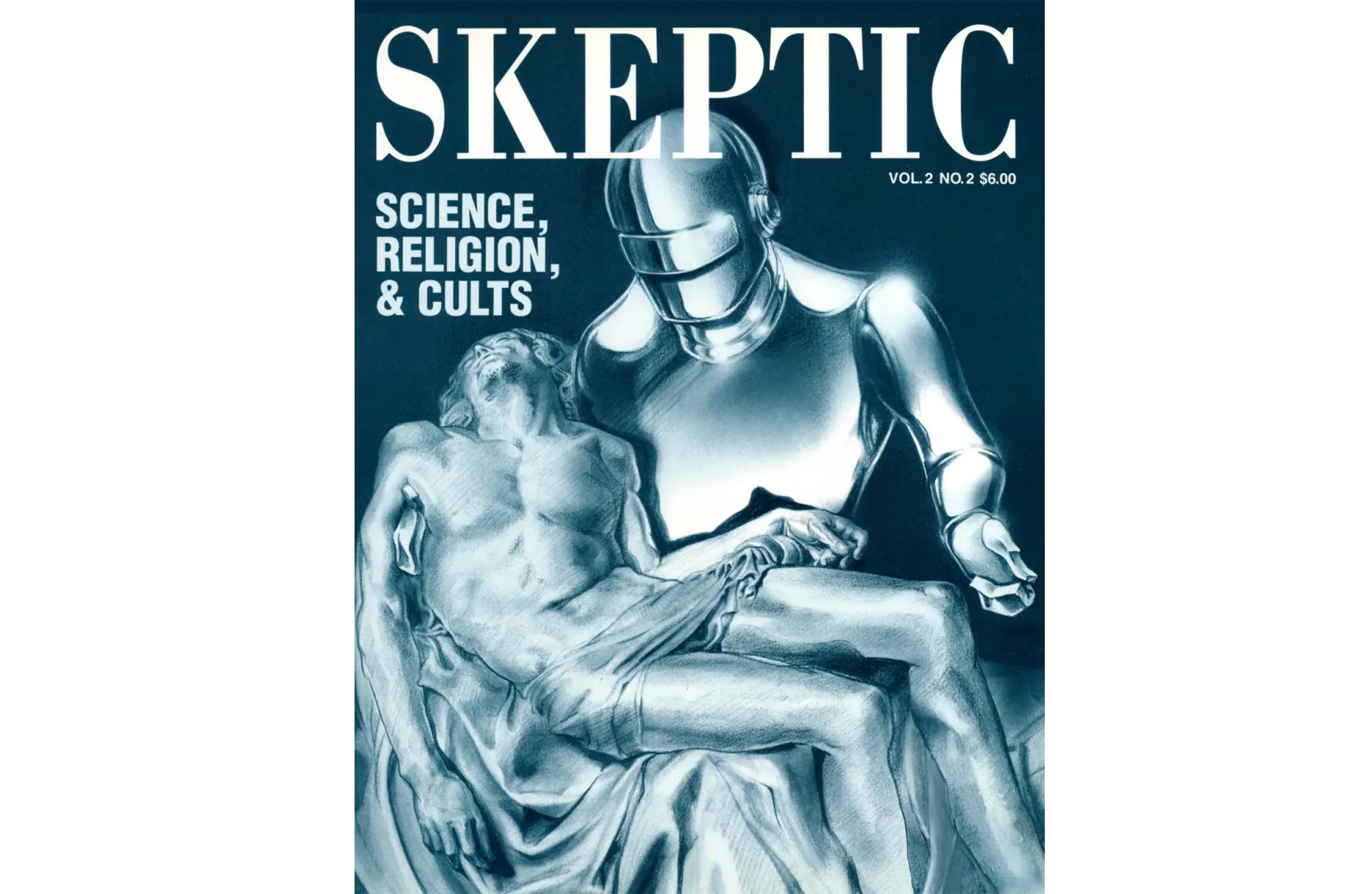
My favorite cover by Pat was that of Vol. 2, No. 2, which she called the “Gort Pietá” (after Michelangelo’s famous marble statue in St. Peter’s Basilica of Mary holding Jesus after the Crucifixion). The issue was on the relationship of science and religion, and we included an article on the theme of resurrection and immortality in science fiction. The author, Steve Smith, discussed Robert Wise’s 1951 film The Day the Earth Stood Still, a Christ allegory in which the alien Klaatu (Michael Rennie) comes to Earth with his killer robot Gort to warn Earthlings about the dangers of nuclear weapons and the arms race. Klaatu tries to meet with authorities but is rejected and (like Jesus) ends up mingling among the common people and takes up residence with a single mother (and her son) named Helen Benson (Patricia Neal), who is Mary Magdalene to Klaatu’s Jesus. (To reinforce the allegory Klaatu’s Earthly name is Mr. Carpenter.) Out of fear and ignorance, government authorities kill Klaatu, so Gort is instructed by Benson (through one of the now classic lines in all science fiction, “Gort: Klaatu barada nikto”) to rescue Klaatu out of the morgue and take him back to the ship to be resurrected.
Klaatu now brought back to life, the astonished Benson exclaims, in reference to the seemingly omnipotent Gort, “You mean, he has the power of life and death?” The original screenplay called for an affirmative answer to this ultimate “how-far-can-science-go?” question, but the Breen Censorship Board (a self-policing committee of the film industry in the 1950s) nixed the line, insisting that Americans might be offended by the implications. In its stead, Klaatu answers, with ecumenical sensitivity: “No, that power is reserved to the almighty spirit.” Klaatu then emerges from the ship to deliver his stern warning to the authorities:
The universe grows smaller every day and the threat of aggression from any group anywhere can no longer be tolerated. There must be security for all or no one is secure. Now, this does not mean giving up any freedom, except the freedom to act irresponsibly. I came here to give you these facts. It is no concern of ours how you run your own planet. But if you threaten to extend your violence, this Earth of yours will be reduced to a burned-out cinder. Your choice is simple. Join us and live in peace or pursue your present course and face obliteration.
Having delivered his message of threatened destruction and potential redemption, Klaatu’s Jesus ascends to the heavens.
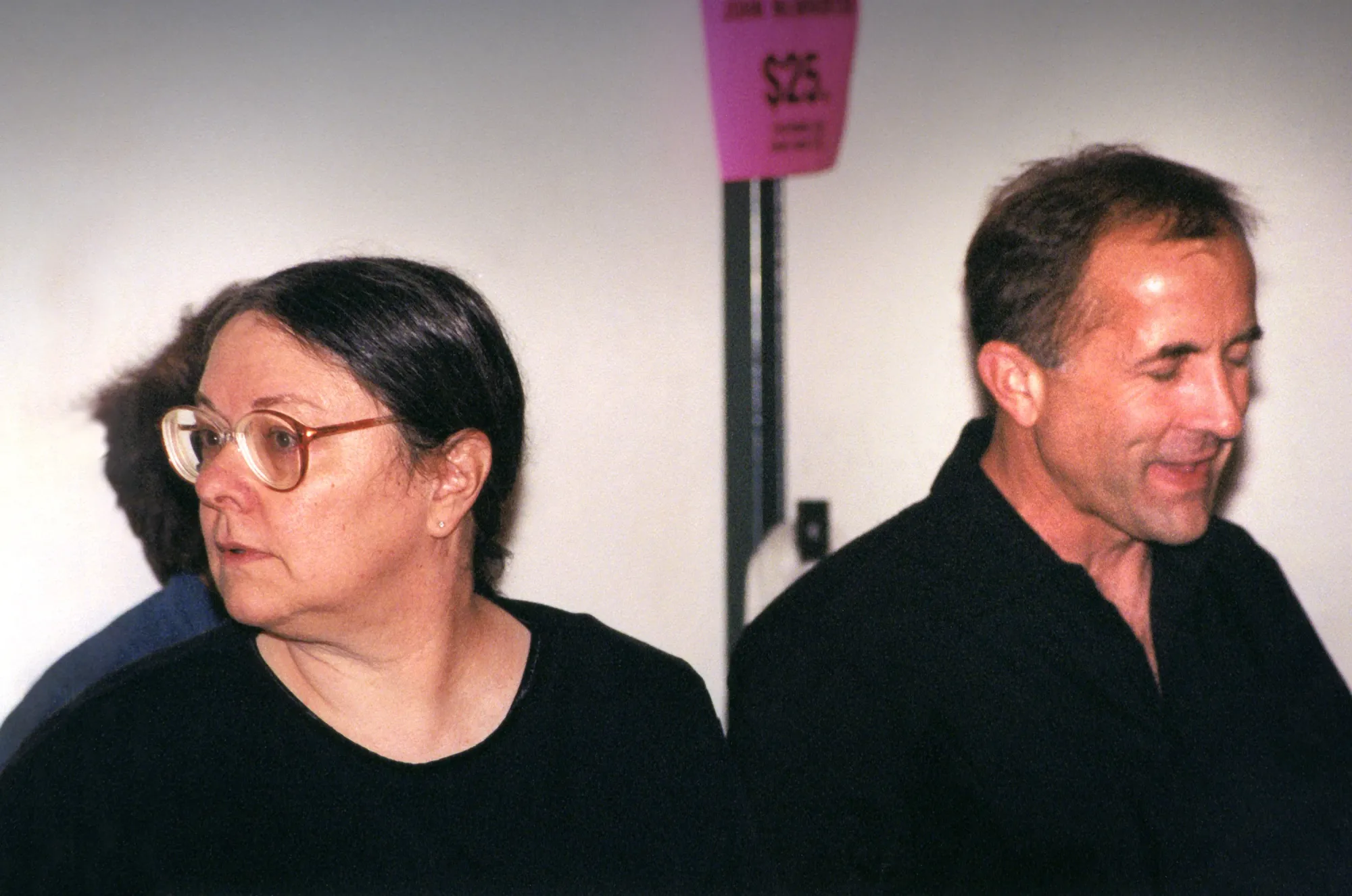
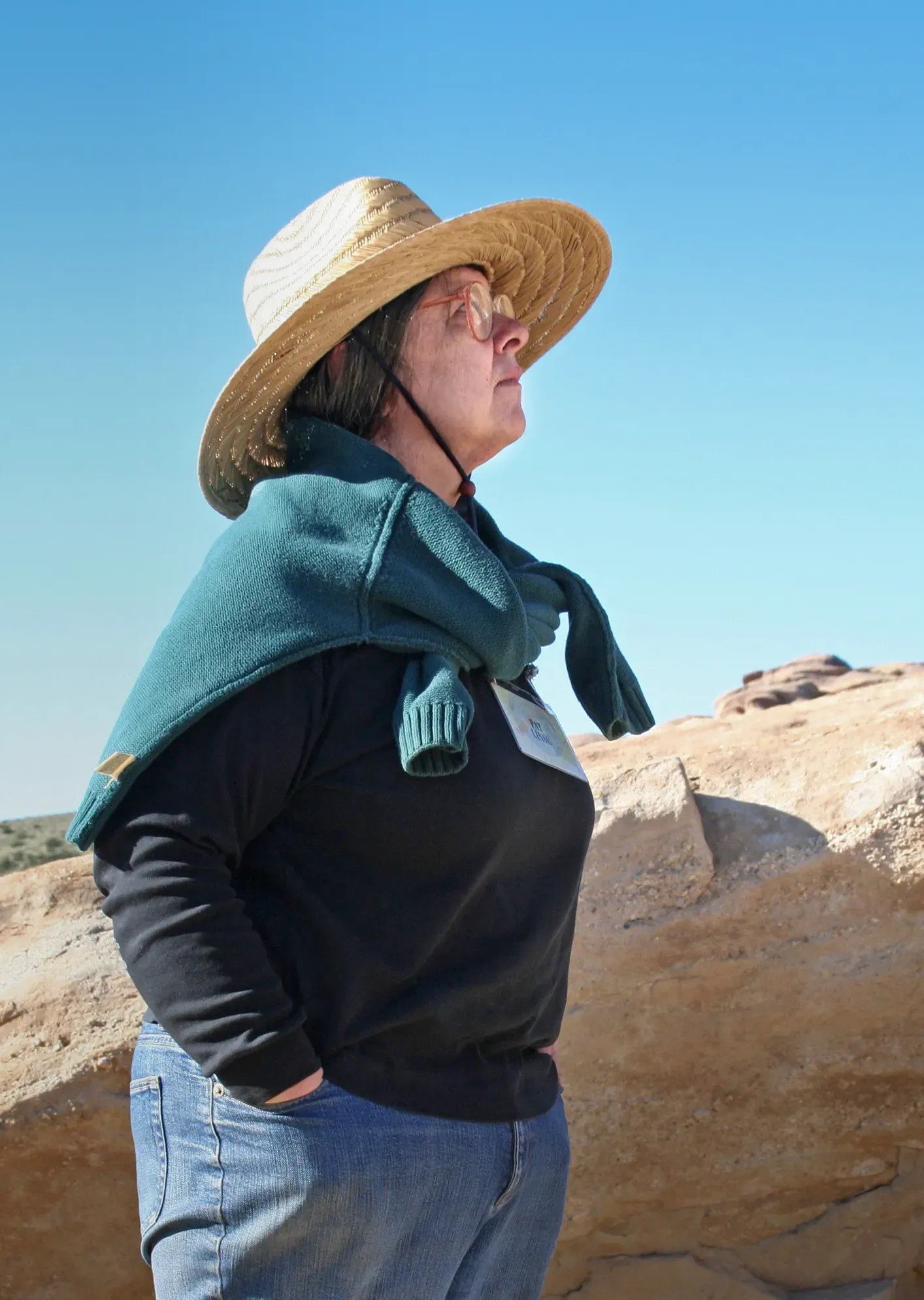
Photos by David Patton
As for what it was like working with Pat, it would be virtually impossible for any two people to work together every day for 30 years without conflict. Of course Pat and I had our differences—professionally, politically, and personally—but in the end we followed Thomas Jefferson’s sage advice, in which the great statesmen recalled, “I never considered a difference of opinion in politics, in religion, in philosophy, as a cause for withdrawing from a friend.” Whenever we had a fight about something professionally, someone always said “I’m sorry” … and Pat always said, “That’s okay.”
We all owe a debt of gratitude to Pat Linse.
Politically, some of our contributors in this issue have commented that Pat’s liberal leaning ideas sometimes conflicted with my own more libertarian preferences—but in Abraham Lincoln’s “team of rivals” model, each side grows through debate and disputation. I would listen carefully to Pat’s reasoning over particular issues and, at some time in the future in the privacy of my thoughts, would course correct my political ship. At least that’s how I remember it in a l’esprit de l’escalier (the wit of the staircase) perspective.
Finally, personally, Pat treated my family as if they were her own. She had no children, so she treated my daughter Devin, and later my son Vincent, with love and respect and the nourishment any mother would give to her own issue. And not just my charges, but those of our other employees and especially the daughter of a friend, Shoshana Cohen, who came of age, along with Devin, at so many Skeptics Society public events at which they worked. Pat’s loving and nurturing essence shone most brightly in those personal connections.
♦ ♦ ♦
There is so much more I have to say about Pat, some of which is well captured by the other voices in this tribute, so allow me an emotional reflection on the absence of my friend and partner, and how the two of us thought about life and death. Namely, we focused on the former and largely ignored the latter, inasmuch as no one knows—or can know—what happens after we die. To ask that question is the equivalent of asking where you were before you were born … nowhere. If Pat lives on anywhere it is in the hearts and minds and memories of her family, friends, colleagues, and co-workers; in her creative art and writing; in her kindness to strangers and her empathy for those less fortunate; and, as we hope to convey in this tribute, in her legacy that will carry on indefinitely into the future. Her work will remain valuable long after my own time comes, and hopefully for many generations more. Inasmuch as skepticism—to close the loop on this reflection from where we began—is a core constituent of a rational and civil society, then we all owe a debt of gratitude to Pat Linse.