Are the Fights Even Real? On Skill, Expertise, and Fixed Boxing Fights
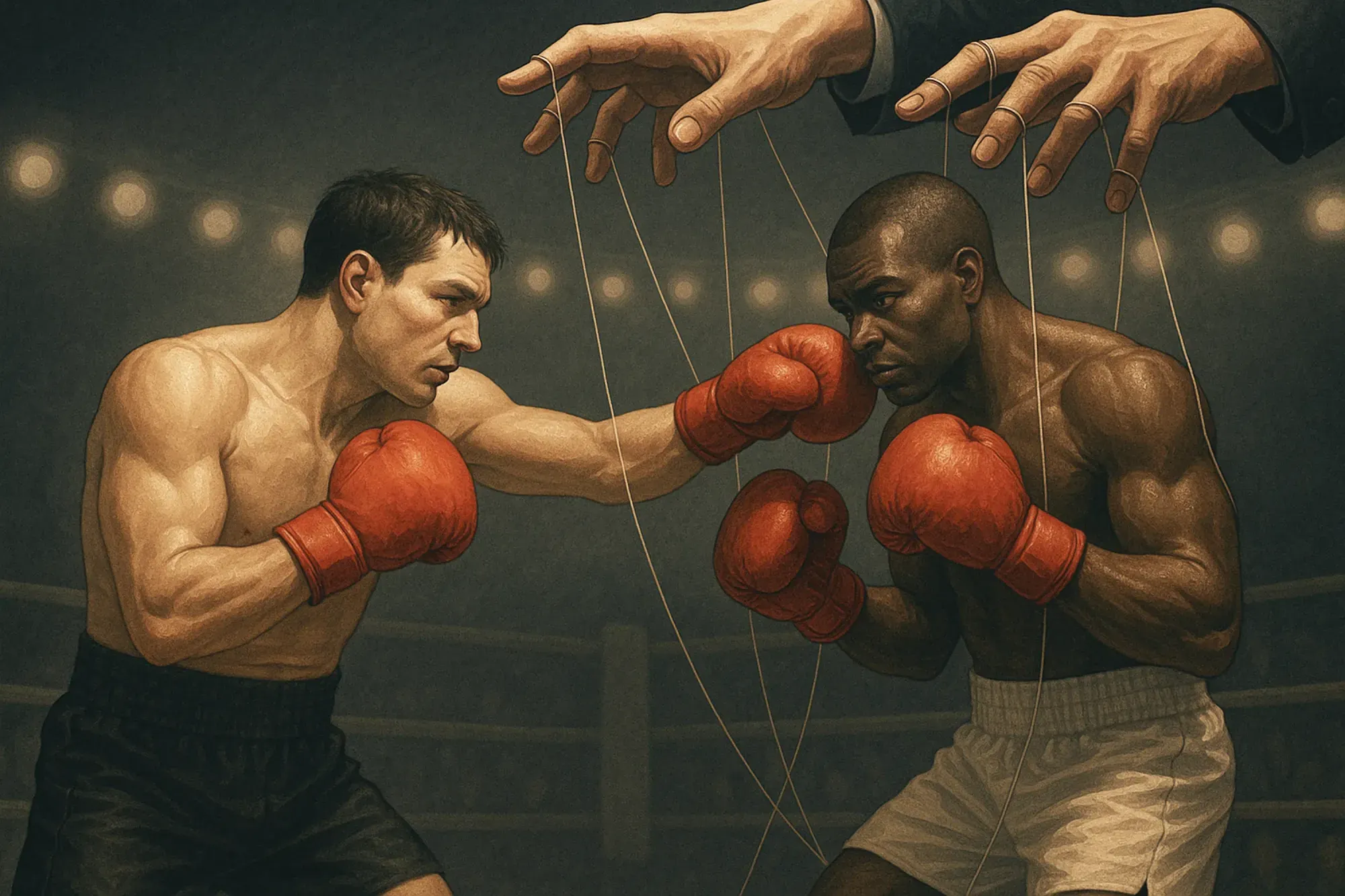
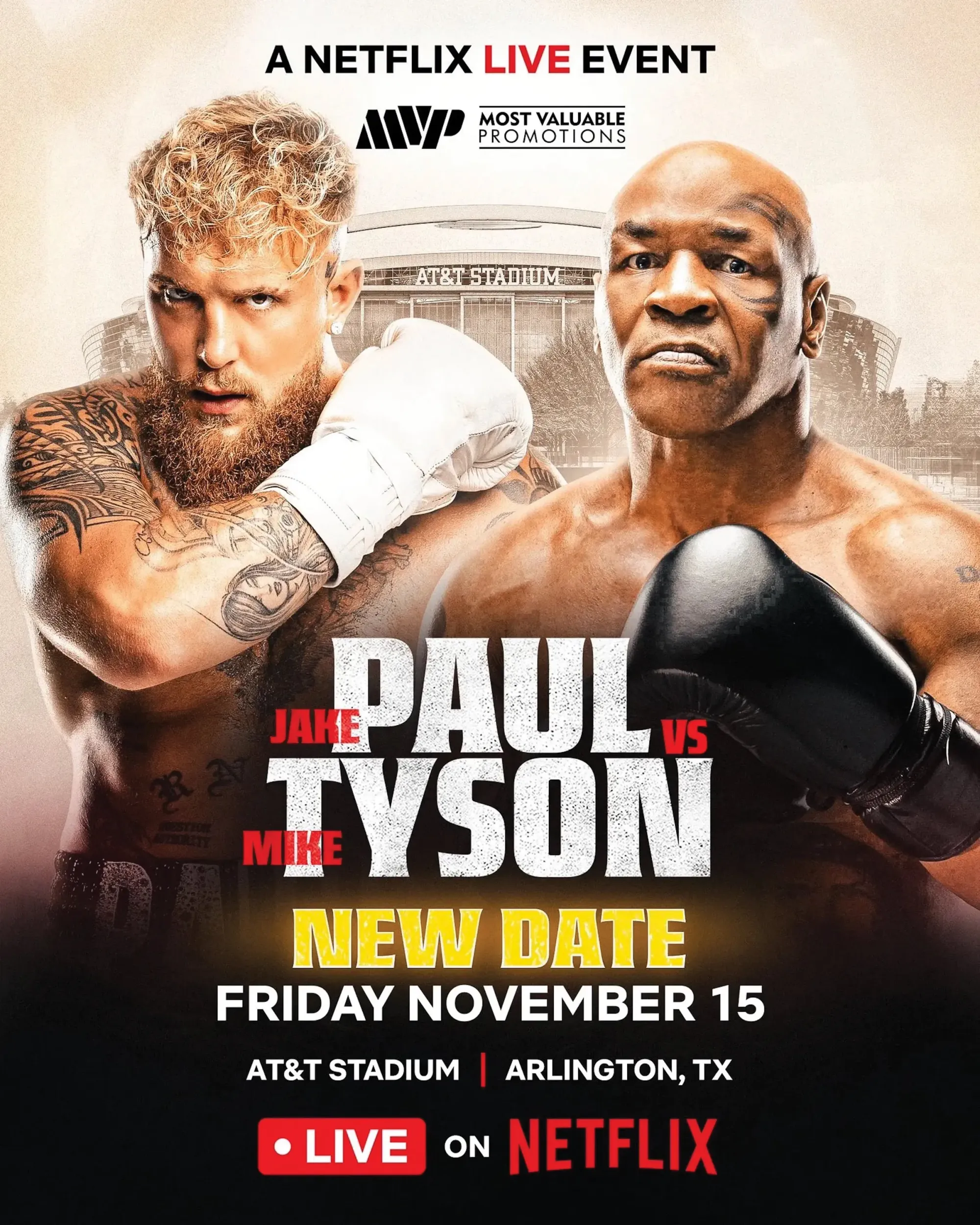
Jake Paul’s unconventional path to stardom in a boxing ring has brought up some questions about the nature of Paul’s matches themselves. After Paul’s November 2024 decision victory against Mike Tyson, video clips showing Tyson appearing to pull his punches led to much speculation about whether Paul and Tyson came to a gentlemen’s agreement before the bout to limit the damage they would inflict on each other. Both fighters deny the accusations, but Paul’s uneventful June decision victory against Julio César Chávez Jr. caused journalist Piers Morgan to allege that Paul’s team put on “staged” fights. Paul and his promoters are reportedly now looking into suing Morgan for defamation. If that case goes to court, there will be much discussion about the definition of a “staged” or “fixed” boxing match.
What does it mean to “fix” a boxing match, and how is it done? Before answering these questions, we need to establish two key principles. First, boxing is not a “sport” in the conventional sense; the more appropriate name for it is “prizefighting.” And the pugilists are not the only ones who get a prize. Second, one need not be a mathematician to intuit the underlying principles of game theory or of Bayesian probability analysis.
Prizefighting, over time, evolved a series of “fight fixing” tactics that, while not guaranteeing outcomes, nonetheless creates conditions that work to the benefit of promoters and savvy gamblers. “Fixing” a fight does not mean to guarantee an outcome for a bout. Rather, it is about developing a certain kind of conditional probability understood only by a few insiders, while most spectators—gamblers, hopefully—pay their money and make their bets using ordinary probabilities (if that).
Thus fights can be “fixed” by:
- making it worth one pugilist’s while to tank;
- providing one with a Bayesian statistical advantage or providing the other with a Bayesian disadvantage; and
- finally, while maybe not a pure fix, setting up a mismatch with the hope (or knowledge) of something the “marks” in the audience and betting parlors won’t cotton on to. Examples from the history of boxing provide a valuable way of understanding these underlying principles.
Defining a Fixed Fight
In the 2005 book Freakonomics: A Rogue Economist Explores the Hidden Side of Everything, the authors described how mathematical analysis uncovered what was likely widespread “match fixing” in Japanese sumo wrestling. Since then, several former champion rikishi have admitted how they often worked out beforehand who would win a match, and how. For reasons described below, a “fixed” prizefight is unlikely to be so choreographed. Simply put, it’s easy to make a predetermined sumo match, where the combatants are simply trying to push each other out of a ring, look real. Prizefighting involves blows to the body and head, and faking a knockout is not as easy as stepping backward out of a sumo circle. “Fixing” a fight, therefore, really means creating a conditional Bayesian probability that favors a small inner circle.
In general, the betting public assumes that both fighters enter the squared circle with the intention of getting the duke and that both have put maximum effort into training. The betting odds are established by the public, acting on assumption and the presumption that the conditions for each fighter will be equal. Under that assumption, the average punter operates using traditional odds. Fighter A might be a 3-to-1 favorite over Fighter B. However, if insiders understand that Fighter A has Plaster of Paris in his hand wraps, or that Fighter B has been drugged before the fight, then those insiders place their bets under the comfort of Bayesian conditional analysis.
What are the odds that Fighter A will win the bout, given that Fighter B will be fighting with gloves stripped of the required padding and loaded with Plaster of Paris? Or, what are the odds that Fighter B will win given that the judges have been “encouraged” to swing close rounds to the favor of Fighter A?
“Fixing” a fight, therefore, really means creating a conditional Bayesian probability that favors a small inner circle.
However, prizefighting is not just about gambling—boxing promoters are looking for fight outcomes that benefit them. Just read what Rock Newman, one-time promoter of former heavyweight champion Riddick Bowe, spilled about the sport:
I can tell you, with absolute certainty, that titles changed hands or didn’t change hands—not as a result as what happened in the ring—but from what happened in dark rooms. I can tell you that with absolute certainty. And, so, I was still in the business—knowing some of the filth—having been a firsthand witness to it.1
Prizefighting is about maximizing the prize for the fight promoters, but the public will lose interest if the fights are too obviously staged. This leads us to the first way to fix a fight.
Incentivizing a Fighter to Lose
On July 14, 1960, former middleweight boxing champion Jake “The Bronx Bull” LaMotta testified before the U.S. Senate about “fixed” boxing matches. LaMotta admitted that, in New York’s Madison Square Garden in November of 1947, he had taken a dive against Billy Fox. That admission established the notion that a “fixed” fight involves one fighter taking a dive. In LaMotta’s case, he agreed to lose a fight because he was promised a shot at the middleweight title only if he did so. The problem, of course, with such an approach is that the dive became so obvious that it provoked a senate inquiry. And, as LaMotta later wrote, “If there was anybody in the Garden who didn’t know what was happening, he must have been dead drunk.”2
A less obvious form of fight fixing can be seen in the James Braddock vs. Joe Louis bout from June 22, 1937. Braddock, who was played by Russell Crowe in the 2005 biopic Cinderella Man, had won the heavyweight title in a suspiciously uneventful bout against Max Baer in June of 1934. Joe Louis had been upset, by knockout, in June of 1936 by the older Max Schmeling. In an interview published in 1973, Braddock explained why Louis got a title shot: “Mike Jacobs, who had control of Joe Louis, wanted a heavyweight championship fight for Joe. Now, my manager … said ‘If you want the fight for Louis, we got to get 10 percent of all the heavyweight championship fights for the next ten years.’ … And he said OK.”3
Prizefighting is about maximizing the prize for the fight promoters.
There is no way of knowing whether Braddock “took a dive” or not, but if you watch the fight on YouTube you can clearly see what happened in the first and seventh rounds. In round one, Braddock caught Louis on the chin with a hard right. As Louis went down, Braddock tried to grab his opponent’s shoulders to keep Louis from falling. In round seven, Louis landed a right hand to Braddock’s jaw, but Braddock then bent his knees, turned around, and leaned on one arm as he was counted out. (Concussed fighters tend to fall stiff-legged.) He would get ten percent of Louis’s earnings for the next decade.
After falling, Braddock laid on the ground much like Charles “Sonny” Liston did in his second fight with Muhammad Ali. That fight, which took place on May 25, 1965, was too controversial for any major sports venue, so it took place in the little burg of Lewiston, Maine. In the first round, Liston, who had once unflinchingly absorbed murderous shots from the heavy-punching contender Cleveland Williams, went down from what has been termed the “phantom punch” midway through the first round. Liston fell gently to the canvas and rolled around theatrically for as long as he could to make it look believable. The referee, former heavyweight champion Jersey Joe Walcott picked up the count late, but then had to wave the contest off after being informed by Nat Fleischer, editor of The Ringmagazine, who was sitting ringside, that Liston had been down for longer than ten seconds. The reasons for the ambiguous ending remain a mystery. The bout, however, highlights the problem with incentivizing a fighter to lose. The knockout looks fake.
Providing a Fighter With a Bayesian Advantage
On November 12, 1982, Aaron “The Hawk” Pryor scored a fourteenth round knockout against Nicaraguan legend Alexis Argüello. The bout had been scintillating from the beginning, with Argüello getting the better of the early rounds. However, Pryor dominated the second half of the fight and increased his pace until, with a burst of renewed energy, violently pounded Argüello, causing the referee to stop the fight. Pryor’s victory was tainted, however, by speculation that he’d been given an unfair advantage. Pryor’s trainer, Panama Lewis kept two “water” bottles in the corner. At one point, cameras caught Lewis telling one of the other cornermen “No, not that one, the one I mixed.”4
The next year, on June 16, 1983, a journeyman welterweight named Luis Resto won a surprise unanimous decision against an undefeated Billy Collins Jr. during a telecast of ABC’s Wide World of Sports. After the fight, with television cameras still recording, Collins’s trainer discovered that the padding had been largely removed from Resto’s gloves. Resto’s trainer, the aforementioned Panama Lewis, became the subject of a criminal inquiry and was eventually banned from boxing and imprisoned. Resto was also sentenced to prison and later admitted that his hand wraps had been soaked in Plaster of Paris so that his punches would land with the force of a fist in a cast. (Resto also stated that Panama Lewis crushed antihistamine tablets and dissolved them in Resto’s water bottle so as to help open Resto’s lungs late in the fight.)5
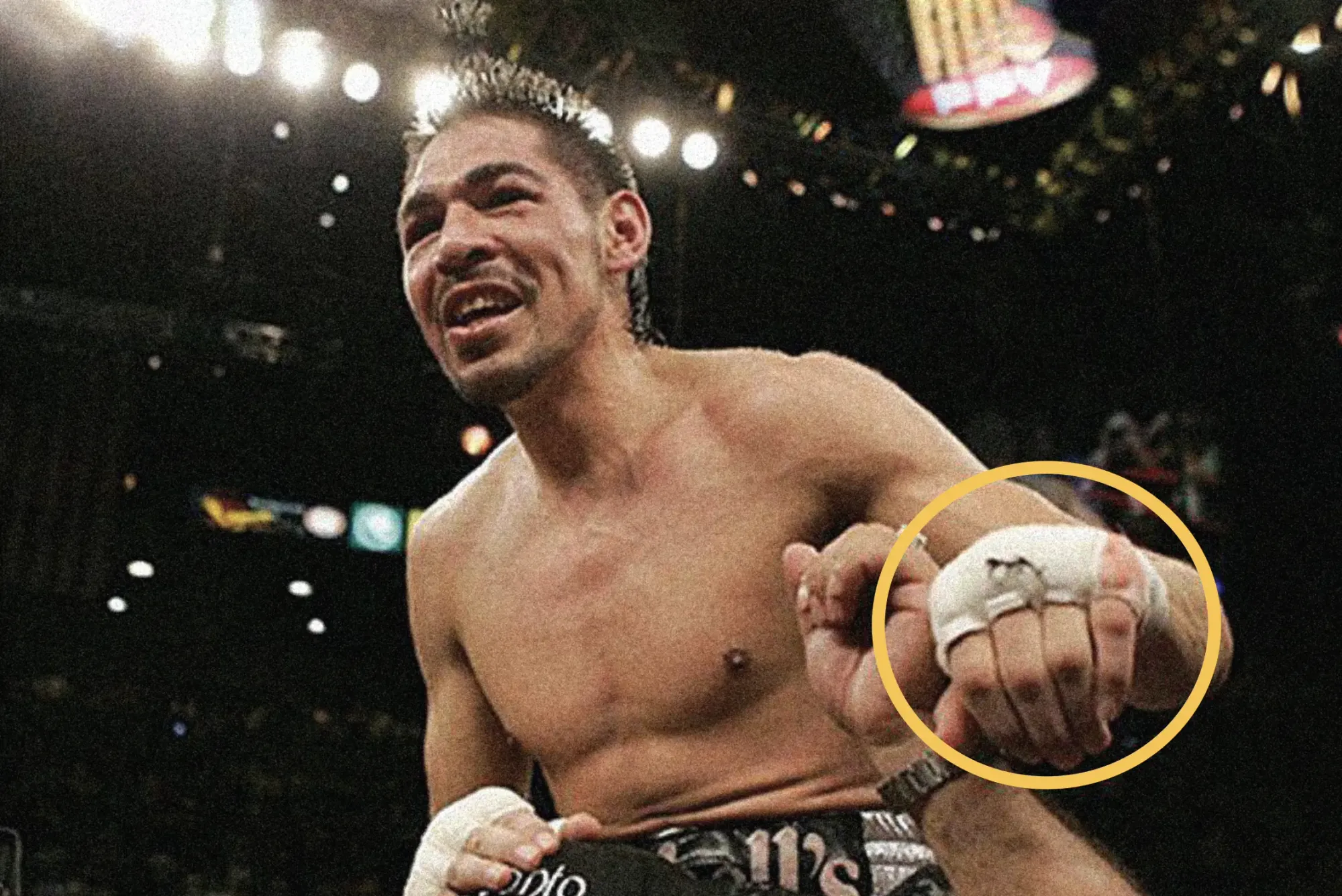
On January 24, 2009, the World Boxing Association welterweight champion, Antonio Margarito, got busted with Plaster of Paris in his hand wraps. Remarkably, Margarito’s fight with his challenger, “Sugar” Shane Mosley, was allowed to go on with new untainted wraps on Margarito’s hands. Mosley treated Margarito to a vicious beating before scoring a ninth round technical knockout to win the title. A subsequent inquiry found that Margarito likely didn’t know about the plaster.6 (Most fighters probably don’t know that they have any Bayesian advantage. Their job is to fight, not enforce the rules and regulations.)
The discovery of the plaster called into question several of Margarito’s previous victories, especially his upset of the tough and talented Miguel Cotto in July of 2008. Cotto handled Margarito easily in the early rounds, but as the fight wore on, Cotto’s face swelled unnaturally, and he was stopped in the eleventh round by Margarito. When the two fought a rematch in 2011, and more attention was paid to the hand wrapping, Margarito was not much competition and quit before the ninth round.
There have been a few other big fights where Plaster of Paris was rumored to have been used. On March 17, 1990, two undefeated junior welterweights named Meldrick Taylor and Julio César Chávez faced off in a fight to determine who prizefighting’s pound-for-pound best was. While no legal accusations about loaded gloves were ever made against Chávez, the speculation stems from the fact that Taylor’s injuries seemed out of alignment with an ordinary boxing match. He had to immediately go to the hospital where it was found that he suffered facial fractures, severe kidney damage, and, obviously, damage to his brain.7 Taylor expressed some concern that Chávez’s gloves possessed some hardened substance, but prizefighting has no language for victimization, and journalists and fans tended to dismiss Taylor’s statements as mere excuses. Chávez denied the accusation. Readers can look up Meldrick Taylor’s current condition for an example of what is called “pugilistic dementia.”
Incidentally, Chávez was promoted by Don King, the man who also promoted the 1974 heavyweight title match between Muhammad Ali and champion George Foreman.
Providing a Fighter With a Bayesian Disadvantage
In his 1995 autobiography, By George, George Foreman wrote about what happened just before his October 30, 1974, title fight with Muhammad Ali. That fight, popularly dubbed the Rumble in the Jungle, took place in Kinshasha, Zaire, at four in the morning local time to accommodate American prime time audiences in different time zones. Foreman’s trainer, Dick Sadler, always advised Foreman to go without water for about 24 hours before a fight. Then, in the locker room just before the bout, Sadler would give George a big glass of water. Foreman writes about what happened:
“Are you ready for your water now?” Sadler asked. “We’d kept Muhammad waiting in the ring long enough.”
“Yep,” I said. Just like always.
I took a big swallow and almost spit it back into the cup. “Man,” I said, “this tastes like medicine. This water have medicine in it?”
“SAME WATER AS ALWAYS,” he yelled.
“All right,” I said. I drank the rest, which tasted just as medicinal.8
Foreman goes on to relate that he felt exhausted after just three rounds of boxing, an unusual occurrence for a 24-year-old athlete in his physical prime. The “medicine” in the water was not the only suspicious occurrence in the fight: the ropes had been loosened so Ali could lay against them and absorb Foreman’s punches. Eventually, Ali knocked Foreman to the canvas in the eighth round and the fight film clearly shows Foreman rising from the knockdown at the count of eight. The referee waved the fight off without ever looking into Foreman’s eyes.
After the Rumble in the Jungle, a narrative formed about the bout. Foreman, being a power puncher, tensed his muscles too much and got worn out punching Ali. Ali, being a pugilistic genius, “rope-a-doped” Foreman by letting the undefeated champion wear himself out throwing hard shots. It’s a narrative some would question. Foreman was an Olympic gold medalist, and had forty fights, two of which went the ten-round distance, before he fought Ali.
Many years later, in April of 1992, Foreman, then in his 40s, fought a top heavyweight named Alex Stewart. By round ten, Foreman’s face turned into a distorted and swollen mass, and blood trickled from his nose. The swelling seemed all out of proportion with the punches that Big George was taking. Foreman survived, nonetheless, and won a split decision.
The ropes had been loosened so Ali could lay against them and absorb Foreman’s punches.
Years later, in 2017, someone posted on the social media platform 𝕏 that Stewart (now deceased) might have fought that bout with loaded gloves. Foreman responded that “he had always thought that.”9
On December 14, 1996, former heavyweight champion Riddick “Big Daddy” Bowe faced off with Polish heavyweight Andrew Golota. In a post-fight interview, Bowe, who had absorbed a frightening number of headshots, exhibited slurred speech. He has consistently claimed that, before the bout, he was given drugs instead of vitamins by a cornerman, and suffered from blurred vision and slowed reaction times before the fight even began.10
The Mismatch
Boxing is a niche sport and has no equivalent of the massive youth programs that nurture talent in basketball, football, soccer, etc., and so it does not weed boxers out by talent level at a young age the way that other sports do. This means that even championship fights often feature a wide enough disparity in the talent level that one fighter can choose when to end a bout. If there is a big enough distance in the talent level of the fighters, as there was in the boxing match between Floyd Mayweather Jr. and MMA champion Conor McGregor in August of 2017, then the more talented fighter can choose the time when the fight ends. This can be a real advantage if money is placed on the round that a knockout occurs.
Sometimes mismatches, perfectly legal, are set up in order to showcase a rising fighter while giving the appearance of real competition. In July of 2019, a then undefeated super middleweight world title holder named Caleb Plant squared off against a top ten contender named Mike Lee. Lee held a record of 21–0. To a casual observer, it must have seemed like a quality matchup between two undefeated fighters.
However, Mike Lee, a Notre Dame graduate who looked like an Abercrombie model and had gained a modicum of fame as a Subway sandwich spokesperson, had never actually had a fight at the 168-pound weight limit. In fact, although he was listed as a light heavyweight throughout his career, he often fought at “catch” weights slightly above the 175-pound limit. The champion, Caleb Plant, had a deep amateur career and legitimate experience against top competition. Mike Lee had mostly fought in basic cable undercard promotions, where he showcased durability, slow feet, and a rudimentary boxing style. After the bell rang, Lee barely landed a punch and either fell down or was knocked down numerous times before the referee stopped the fight in the third round.
Nothing illegal happened in this fight, but how did Lee ever get ranked in the top ten in a division in which he had never fought?

The Final Score Card
Boxing judges can be incentivized to score fights a certain way as well. Likewise, it is hard to imagine that prizefighting is immune to the doping scandals that plague other sports, and testing for Performance Enhancing Drugs is sporadic and often dependent upon specific fight contracts. Nonetheless, numerous fighters have tested positive for elevated testosterone levels in the last thirty years.
Understanding how prizefighting really works can upend many of the “sport’s” most cherished narratives. Mike Tyson, considered a cheater because he bit off a chunk of Evander Holyfield’s ear in their June 1997 rematch, has never faced accusations of steroid use. Evander Holyfield, however, won a bronze medal in the 1984 Olympics at 178 pounds. In the 1997 “bite fight,” both Holyfield and Tyson weighed 218 pounds—Holyfield was 40 pounds heavier than he had been 13 years before and Mike Tyson was at roughly the same weight he had been 13 years before. Holyfield bulked up to heavyweight by working out with eight-time Mr. Olympia Lee Haney. In an interview, Haney said that Holyfield put on twenty pounds of muscle in five weeks.11 While Holyfield consistently denies ever having used steroids, the fact that in 2007 he was linked to a legal case involving a testosterone and human growth hormone supplier called “Applied Pharmacy Services,” might lead observers to question who cheated whom in the notorious “bite fight.”
As for prizefighting’s promoters, one incident can stand for many encounters. In the early 2000s, Don King tried to impress the Klitschko brothers by playing a virtuoso piece on a grand piano. The brothers, thinking that King’s abilities were too good to be true, recorded the incident. As it turned out, King’s fingers danced over the keys of a player piano.12