Art and Skepticism—an Appreciation of Pat Linse
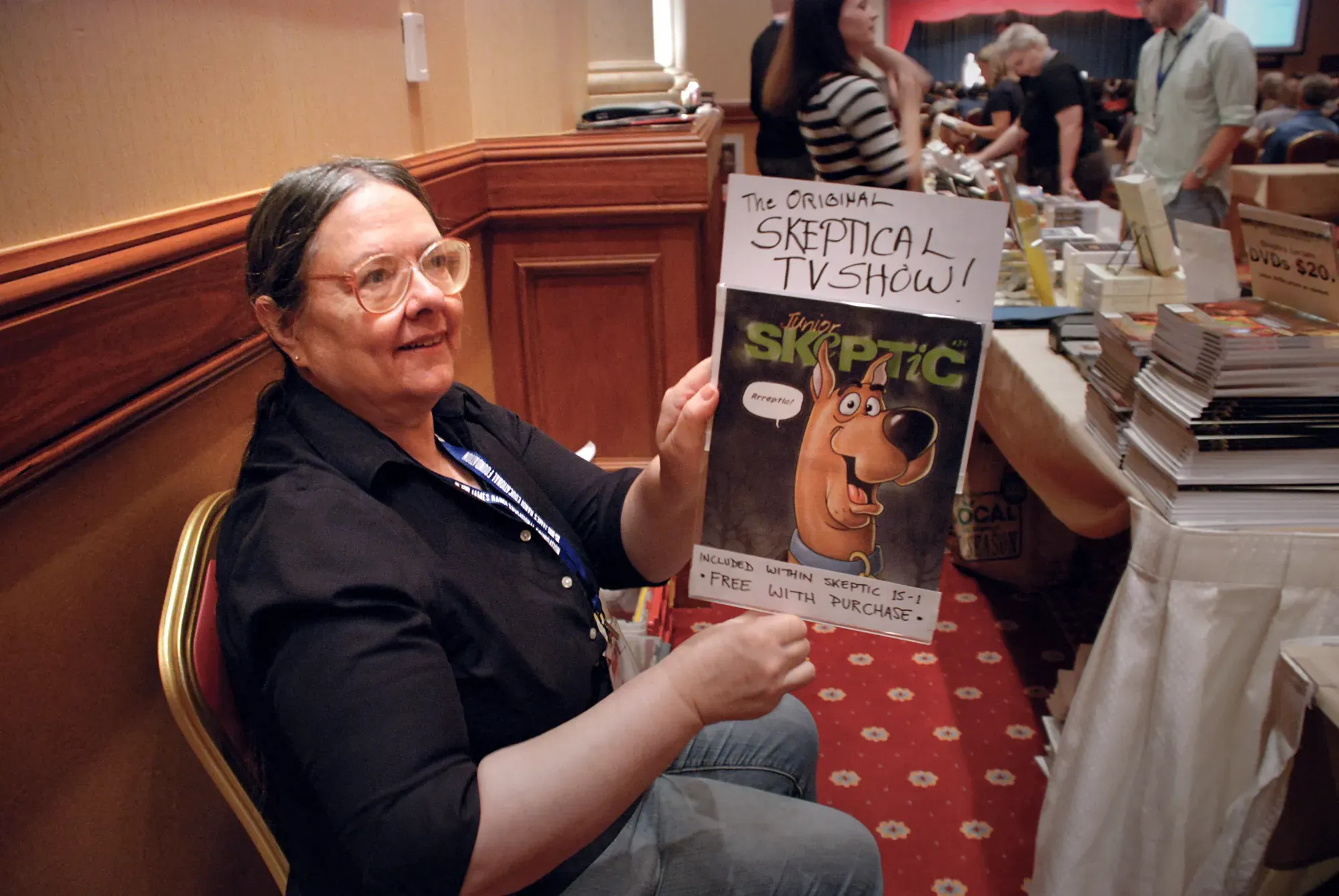
My first email exchange with Pat Linse took place in 2001. We talked about farm animals.
I had sent an unsolicited art submission query email to my favorite magazine, not even knowing if the Art Director was a man or a woman. I’d finished art school a year earlier, and was hoping to move away from the trade that funded my life during my 20s—herding large flocks of 1500 sheep in the wilderness on the Canadian side of the Alaska panhandle. I wasn’t qualified to write for Skeptic, I said, but I’d be honored to volunteer for some illustration.
“Cold call” mailing to publishers and art directors can be a lonely, demoralizing affair for unknown young artists. Often you get nothing back. A good response is a form letter checklist with something ticked off, or perhaps a more generous handful of sentences on what you need to improve.
To my great surprise, Pat emailed back immediately. “You herd sheep?!??” she asked. “How many do you take care of?” She excitedly welcomed me to the “agricultural art club,” naming several skeptics she knew with livestock backgrounds. “I myself won first prize at the international livestock exposition in Chicago judging dairy cattle some years ago,” she said. (Not only can you win prizes for a gorgeously perfect cow—judging the perfection of cows is itself a competitive event.) She threw out several questions related to the sleeping habits of sheep and her personal skeptical sub-specialty, the urban legend of cow-tipping.
“Oh yes, your artwork,” she added as she wrapped up. “I like your style. Send me some stuff.”
And I did.
Twenty years later, I am mourning my friend, boss, and mentor. As I think about who she was, I’m recalling for some reason the postscript she appended to the second email she ever sent me: “P.S. I am a cowgirl, not a cowboy.”
I think that may be the title of the story of her life.
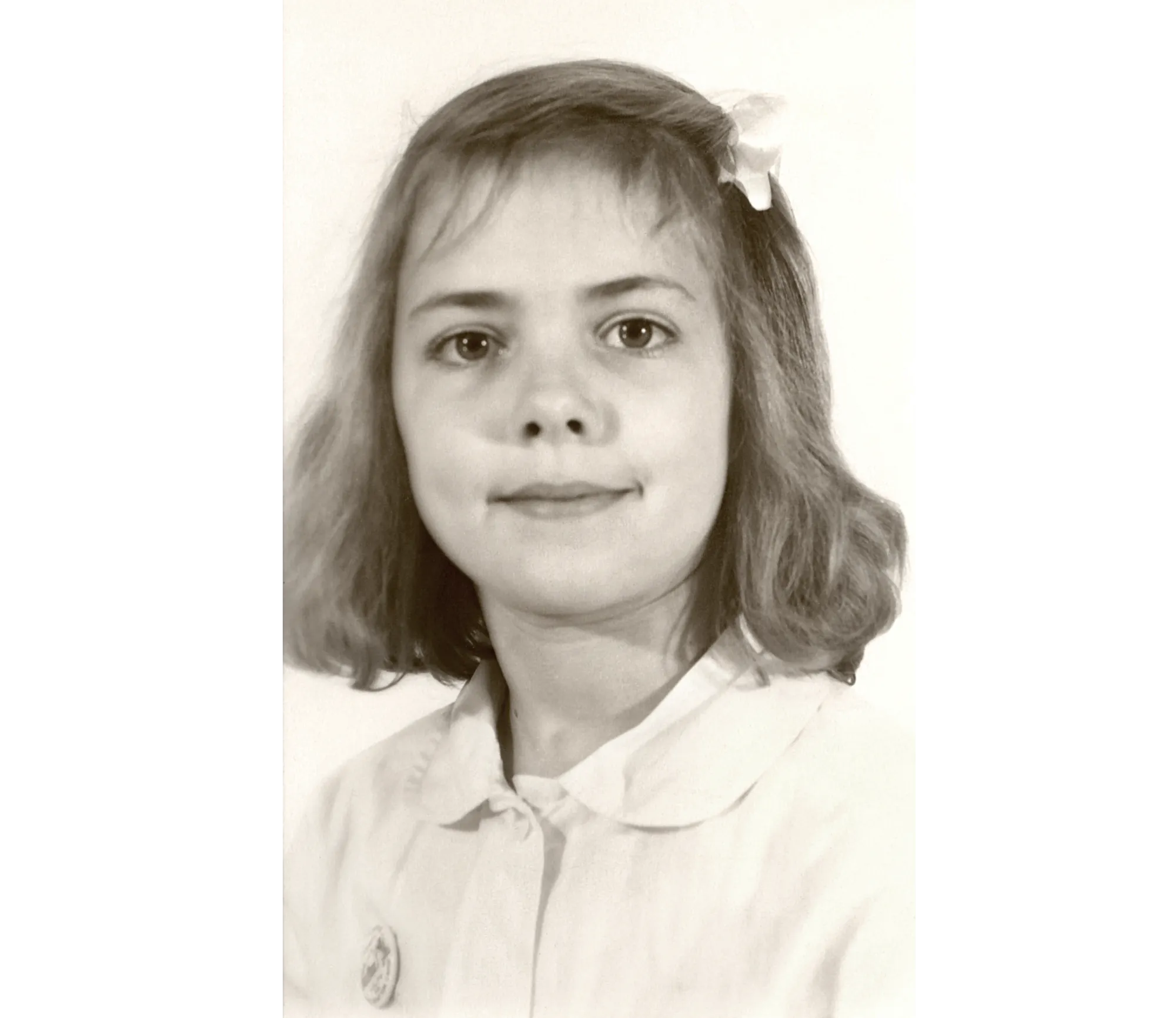
Pat Linse grew up around cows—a 1950s All American 4H farm girl from a big rural Wisconsin family. This photo (above) from her young life moves me so much. Just look at that kid: chin up, eyes bright and curious, full of big questions and the courage to seek answers. It’s right there, clear as day: this country girl is going places.
Getting there wasn’t easy, though. She was the first of her sisters to go to college—one of millions of pioneering young women in a changing world. “Sputnik’s influence on the school system, the pill, the hippie era which made it OK to dress down … all of those things made my escape easier,” she recalled. “Yes I worked my friggin’ tail off, but it wouldn’t have worked without all of those things.”
Throughout her career, Pat was keenly aware of an uncomfortable truth: talent and hard work are rarely enough for success in the arts. Most working artists get where they are through a combination of hustle, unreasonable sacrifice, practice—and blind luck. For many, the deciding factor is that someone in power chose to open a door for them that remained closed for the next hundred hopefuls in line. For others, the deciding factor is even simpler: do their parents have money?
Pat was already a hardened veteran of a decade in the thankless trenches of commercial art when she put herself through her Masters degree at ArtCenter College of Design in Pasadena. She made friends, but generally found her classmates an entitled, privileged lot. Many were merely “upper class kids with no real job experience,” while others were “real rich people”—”sons of Saudi Sheiks” and the “wives of oil barons.” As she recalled, “ArtCenter students are not a rebellious lot. They have been told if they just make it through the school the world will be theirs on a platter.” Perhaps, for them, it would be. But Pat felt their “concept of how the world works is so astronomically out of line that they are practically unemployable until they’ve been knocked about by the real world a bit.”
Pat was “not a cowboy” in the sense that she was deliberate, humble, and soft-spoken by nature. It seems that ArtCenter may have been the exception. By all accounts she swaggered there with the confidence of a young person more skilled than some of her teachers. She laughed to recollect stupid assignments from a woman Pat believed “got her teaching job via some monied connections.” When another teacher assigned his class to draw a group of people reflected in a mirror, Pat made one of her people a vampire, just to be a smartass. “ArtCenter was so humorless,” she said. Pat had little patience for pampered, pretentious people—not when she had to do things the hard way.
“My biggest life regret is that in my 20s and 30s pickings were pretty slim for me to use my talents,” she reflected. For her, these were “basically wasted decades—sitting around begging for work doing production and paste up for grubby newspaper ads, and drawing tennis shoes and basket balls.”
She was a hardcore commercial artist who often worked as the only woman in Mad Men-type advertising environments. She did uncredited, poorly paid, creatively impoverished work advertising cigarettes and laying out the Yellow Pages. She did work for Hustler magazine. She endured the humiliations of wandering hands, stolen ideas, and open sexism for the privilege of doing the one thing she lived to do: making pictures, any way she could.
What kept her going were the too rare occasions when she got to flex her creative muscles: album covers, movie posters, or even packaging for the Smurfs. “The best thing about [the Smurfs] for us artists,” she said, “was that the company grew so fast that nobody was watching the art department and a lot of people created some really great stuff. Until the suits got organized enough to take control again.”
♦ ♦ ♦
“We actually didn’t plan to start Skeptics Society as a big deal,” Pat reflected. “We just wanted to do a good job.” When the magazine started, maverick no-budget work in an unheated garage was old hat to Pat. Everything in her career was a guerilla campaign. But Skeptic was different for Pat in one crucial respect: she got to make the pictures she wanted for a cause she believed in. She never looked back. She devoted the rest of her life to that work.
It wasn’t always picnics and rainbows. She and Michael were very different people. There were lean and chaotic years, staff who didn’t work out, distributors that went bust. The magazine industry took one hammering after another.
Pat stuck it out, year after year, decade after decade. “I always say to myself, ‘Its better than doing Joe Camel,’” Pat said. But it was more than that. The truth is, Pat had a quiet, patient, implacable determination to make the world a little better through her work at the Skeptics Society.
She came to the city with the realism, stoicism, and toughness of life on the farm. She had few illusions about humanity, and absolutely no delusions of grandeur. She was an incrementalist, not a revolutionary. She just believed, truly and deeply, in the value of plugging away.
Meeting Pat made me a better artist almost overnight.
“Do not expect to create a rational Utopia,” Pat cautioned. “You are moving the ball down the field—scoring a victory here, raising your voice against irrational thought there, and lighting the proverbial candle in the dark whenever you can.”
That was a mission I could believe in.
♦ ♦ ♦
Having come up the hard way, Pat delighted in mentoring emerging illustrators. As we struck up an online friendship by email, she insisted on reviewing my portfolio. She gave me frank, generous, real world advice—pitfalls to avoid, pro tips about the industry, and plenty of straight up critiques of my art. Meeting Pat made me a better artist almost overnight.
I don’t quite know how to describe this to non-artists, but Pat’s art was utterly old school. She was a really good illustrator whose practice was oriented in a very specific way.
When we look around our homes or the grocery store, almost every object we see was made by an artist. We don’t know the names of the people who designed that shampoo bottle or the ketchup label or the hood of your car. We never even think of them. Pat was part of that invisible legion.
Her practice was forged in a world where artists are uncredited service workers and clients demand fast, cheap, and good, all at the same time. Her illustration was without frills, without ego, and lightning fast. Most of her work was unsigned. Every piece was exactly what it needed to be—no less, and no more. Commercial artists aren’t there for flair or personal style. They’re there to serve the client’s needs and (hopefully) get paid.
Pat’s command of fundamental drawing skills was phenomenal, but surprisingly easy to overlook. Her illustrations were designed to tell the stories they needed to tell. If “simple” would do the trick, simple is what she would do. None of her work was designed to make us think, “Wow, this artist is really good!” She didn’t care about being seen. In fact, she mostly preferred not to be. She toiled in service. She never showed off. “I do about 10 different styles in Skeptic,” she told me in those earliest emails. “If there is not an artist mentioned in the margin, chances are I did it.”
Her goal was not to be known, but to craft an aura of competence in support of the ideas discussed in the magazine. As she explained in an interview, “People often don’t understand [art’s] purpose, but they know it when they see a good job.” She considered her job done well if Skeptic’s production values gave readers a subconscious impression of professionalism. “They don’t even realize that it’s the design work or the artwork that’s making them think that.”
She genuinely cared about the creative success of the artists she worked with.
You’d better believe I paid attention to Pat’s lessons! I didn’t always follow her exact advice, but I made darn sure I strengthened any weakness she found in my work. One of the first things she taught me was a greater willingness to “kill my darlings.” Let’s say this corner of a piece has the most virtuoso lines, the most perfect detail, and that draws the eye. That’s only a good thing if your eye is meant to go there. If not, that detail’s got to go. Pat was ruthless about painting out beautiful details that didn’t belong. She was precious about nothing. The “read” of the finished piece was the only thing that mattered.
♦ ♦ ♦
I did various volunteer illustrations for Pat for a year or so. We kept up a cheerful correspondence. And then, one day, out of the blue, she unexpectedly became that powerful person who opened a life-changing door of opportunity for me as a young artist.
When Junior Skeptic was first created, nobody quite knew exactly what it was meant to be. Various people tried to make it work in short stints with middling success. The task kept falling back on Pat herself. Problem was, making Junior Skeptic was basically a full time job—and Pat already had one.
There was a need for another person who could take Junior Skeptic and run with it on an ongoing basis without much supervision. The surprising suggestion that I could perhaps be that person arrived as a casual email postscript: “P.S. If you were going to do a whole Junior Skeptic on some major topic—writing and art—what topics might you like to do?”
Me? Really? I had some background in creative writing, but no thoughts at that time about writing professionally. I’d never even considered non-fiction, let alone non-fiction for kids.
As it turned out, I owe my entire career as an author to this bit of blind, dumb luck: veteran artist, skeptic, and cow enthusiast Pat Linse just happened to like the way I wrote emails.
Often about sheep.
“As soon as I noticed you had a knack for simple straightforward writing,” Pat explained, “I thought, ‘I ought to give him a try on Junior Skeptic.’”
I was very nervous going into my first issue, Junior Skeptic #14. I picked a topic that shored up my confidence—the obscure cryptid Cadborosaurus, which I already knew a lot about. Then I threw myself into research and scrambled to learn how to use Skeptic’s layout software and become proficient with Photoshop. Pat guided and encouraged me the whole time. I think I spent five months working on that story for a small honorarium. The cover alone took weeks. It featured a hand-sculpted monster model composited into heavily modified location photography.
Here I’m going to share some absolutely glowing compliments Pat gave me when she saw the finished art for that cover—not for vanity, I hasten to add, but because this so perfectly captures Pat’s expansive generosity as a mentor and boss:
You probably know that it’s a great piece—but if you are like me you are still seeing all the little things that might have been a problem, so you don’t know how really, really, really, really good it is. It’s fabulous. I love it. Great. What I like is it radiates the delight you took in the subject matter.
Thinking back on those comments still fills my heart with love and loyalty for Pat. Here’s the thing: this wasn’t a transaction for her. She genuinely cared about the creative success of the artists she worked with. “I really hope you can work with us a lot,” she said, “so you can continue to work in this area, and produce some more great stuff in an environment that nurtures your talent.”
And so, Junior Skeptic became my baby. Pat and I worked together as a creative team for almost two decades—trusting and supporting one another, griping together, geeking out together. We had each other’s backs. We accepted each other’s quirks. I don’t think a harsh word ever passed between us.
Over the years I had many opportunities to thank Pat for putting her faith in me. She always waved it off, saying she just had good judgement in finding a self-starter she could rely on. The deeper truth is that she did not want to see younger artists squander their talents on “wasted decades” as she was forced to do. As she told me, “just be glad you got into something you could really sink your teeth into before you wasted too much time!”
♦ ♦ ♦
Many of these tributes mention Pat’s shy and private nature. It’s true. She was very private. In some ways, perhaps I never knew her well. Indeed, I worked with her for two or three years before we even spoke on the phone. I had no idea what Pat looked like when I started.
We were work friends. But we were close work friends, for a very long time—and Pat’s work was the vital center of her life. She shared a house with her adult niece, but she spent all her time at the office. She was routinely still at her desk late into the night. She rarely took vacations, weekends, or even sick days off. When she spoke, she spoke about art and skepticism. When she socialized, she socialized with skeptics.
She was never the one on stage, but she was known and respected by the people who were.
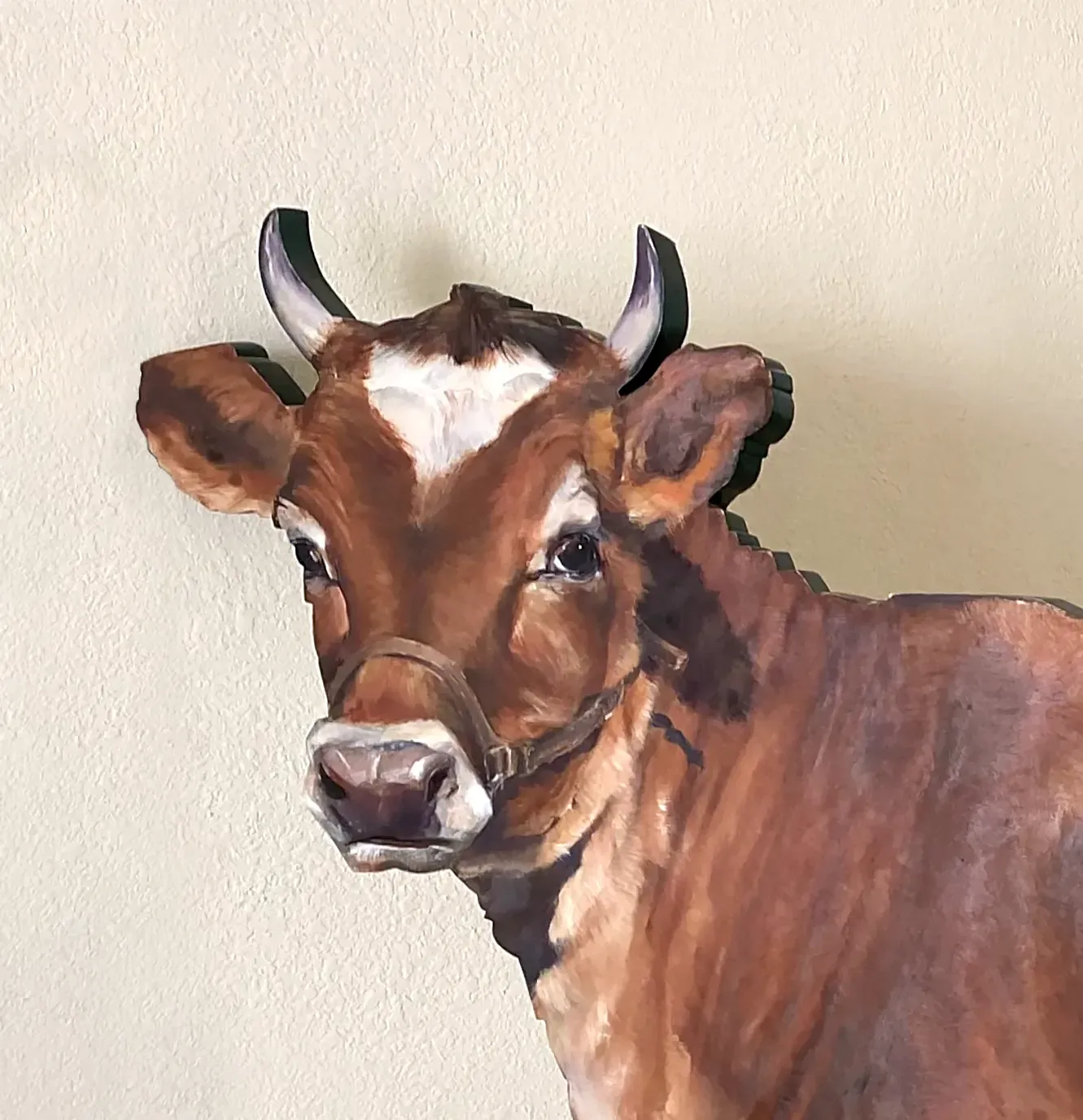
Outside of art and skepticism, her life was positively spartan. When I visited the California office, Pat kindly put me up at her house. I slept on the floor in a room without any furnishings whatsoever. The only object in that room was an almost life-sized cow cutout she painted in art school. The brush strokes on that cow were dazzling.
♦ ♦ ♦
Pat and I were kindred spirits in many ways, but we were hardly clones. She was amazingly set in her ways. I mean, she literally used an AOL email account until the day she died. I was shocked when I first saw her scrunched in her office, peering owlishly through her foggy, scratched, oversized eyeglasses at her old CRT monitor. There was a travelling scan line glitch endlessly scrolling down her screen. “How on Earth are you making art like this?” I exclaimed.
She steadfastly refused to upgrade software or hardware until they simply stopped working. She would not change makeshift kludges she’d discovered decades earlier. If she had a solution that worked for her in the past, that was what she did.
Much has been mentioned about her liberal politics. She was progressive by the standards of her generation, but I regarded her as a bit conservative in some ways. Like some other feminists of her age, she seemed a little suspicious of some newfangled intersectional ideas that I found pretty useful.
But we spoke the same language about art and skepticism. Pat’s vision of skepticism was very practical. She wanted to keep her personal political and religious beliefs out of her work. She wanted skepticism to be a reliable source of science-informed insight and information for anyone who wanted it—not just people like her. She wanted to give every idea a fair shake, too. Paranormal proponents would phone the office all the time, and she was happy to respectfully engage with them.
We were similar in another respect, too. There are people in this world who want to be front and center—metaphorically Harry Potter, King Arthur, or Captain Kirk. Then there are people who want to be Hermione, Merlin, or Mr. Spock. Pat was emphatically one of the latter. She did not want to be famous. She just wanted to get things done.
Her influence on modern skepticism was invisible, yet immense.
At a certain point I reluctantly decided that my ideological priorities were more important to me than my own shyness. I had ideas about skepticism I wanted to share. No one was going to listen to my ideas if they didn’t know who I was. Pat never made that decision. Instead, she deliberately chose to remain in the background—largely unknown to the public, yet a wise and firm leader and den mother to her skeptical friends and colleagues. They could carry Pat’s convictions into the public sphere.
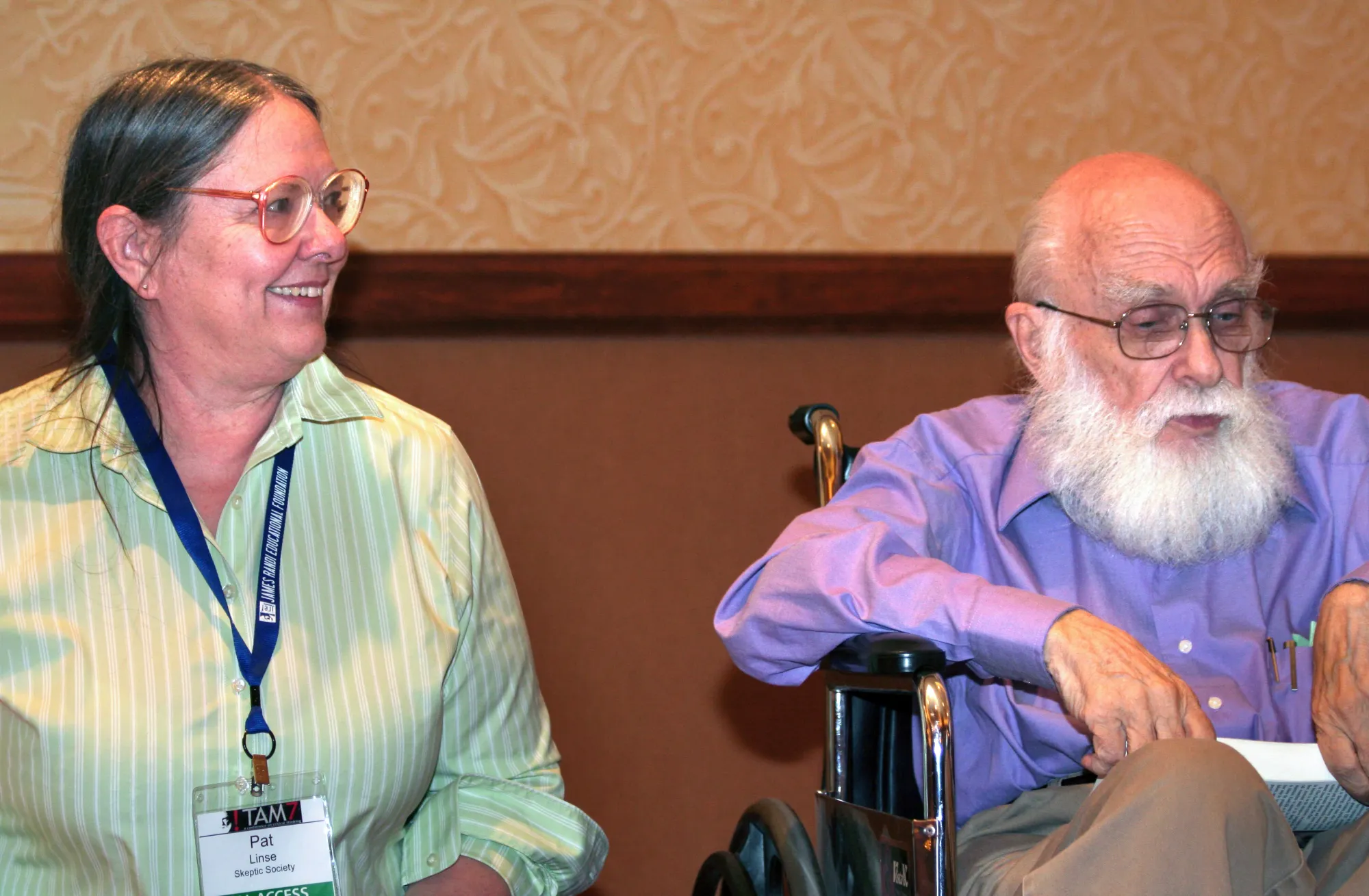
Her influence on modern skepticism was invisible, yet immense. She was never the one on stage, but she was known and respected by the people who were. My friend Barbara Drescher accurately described Pat as “one of the most competent persons I’ve ever met.”
Pat may have preferred a low profile, but it bothered me that she so rarely received the credit she deserved. I promoted her work whenever I could. When I cajoled Pat into contributing written remarks to a large group project in 2009, another organization described the participants collectively as “luminaries.” Pat was tickled by this, chuckling, “Cool—I’m a ‘luminary’!” I responded with fondness and exasperation, “You always were, silly! You just forgot to tell anyone for 20 years.”
But that’s the very thing, isn’t it? Pat lived and died on her own terms. She spent decades digging her way out from under the constraints of small town life, traditional roles, mediocre teachers, sleazy clients, and other people’s expectations. If she had some quirky way she liked to do things, well, she was the boss! We could damn well adapt.
Pat Linse lived as she liked, doing the things she loved, for reasons that mattered to her. She was stubborn as hell, and sharp as a whip. She made her own mold. We will not meet another quite like her.