Can Eating Meat Be Ethical?
A Round Square
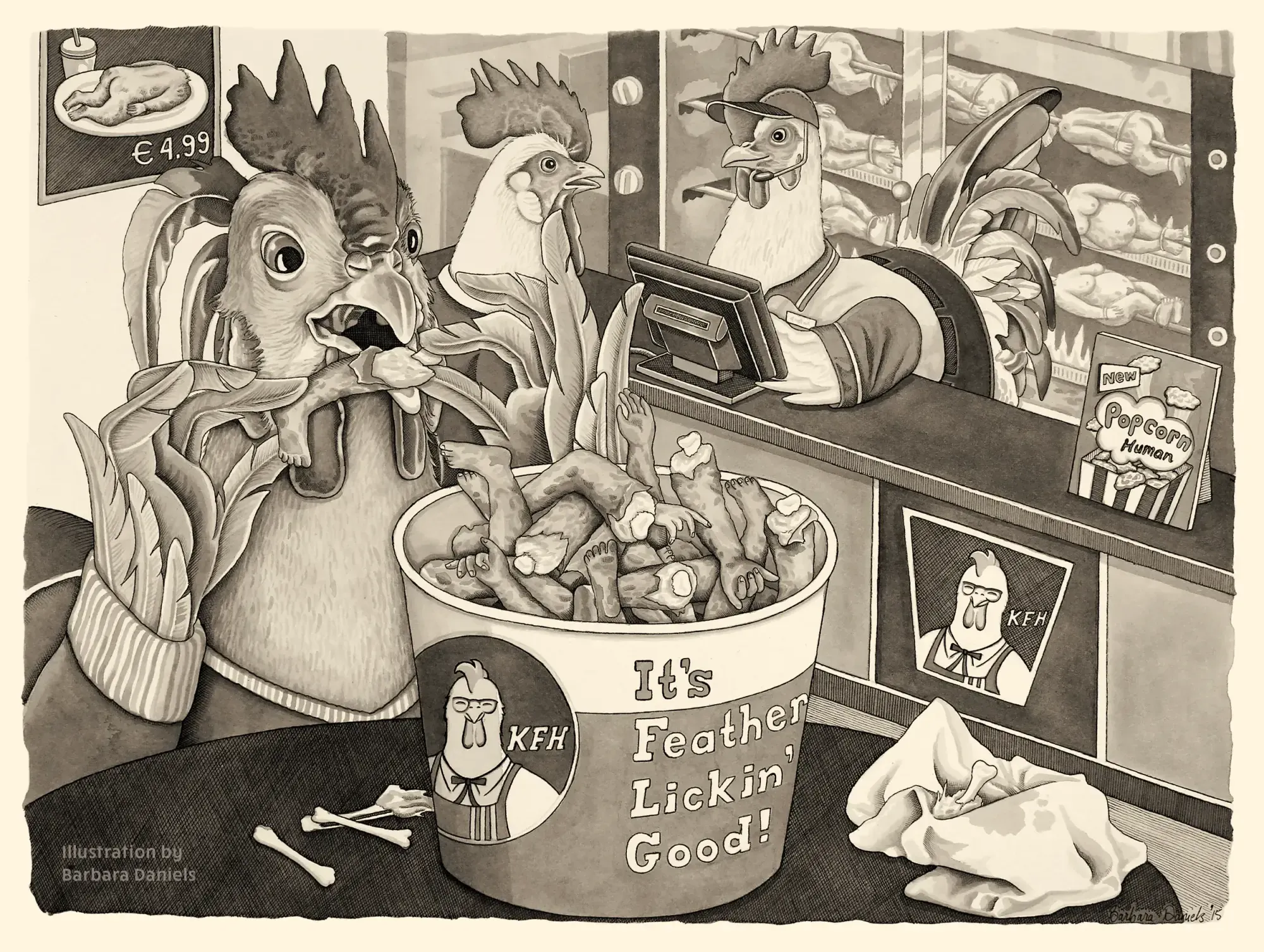
An oxymoron refers to a combination of contradictory terms, often involving an adjective and a noun, where the descriptive words inherently conflict with each other. For example, “round square” or “hot ice” are oxymorons because the qualities described by the adjectives cannot logically coexist. It’s a linguistic concept that highlights the inconsistency or paradoxical nature of certain phrases or expressions.
In recent years, our society has seen a significant increase in ethical concern for animals. Not so long ago, animals were largely subjects of indifference. It was rare to see anyone—perhaps other than Buddhist monks—practicing vegetarianism, but now even the term “vegan” is widely known. On the internet, you can readily find articles introducing vegetarian-based menus or restaurants, and supermarkets overflow with attractive plant-based foods. Interestingly, although the term “animal rights” is used more and more frequently, there isn’t much debate over what rights, specifically, animals have or do not have.
Anyone who has even a slight interest in the recent trends of vegetarianism or animal rights would think that the term “ethical carnivorousness” is indeed an oxymoron. While some people practice vegetarianism for dietary or religious reasons, when we talk about vegetarianism, we usually associate it with ethical motivations. It is understood that respecting animal rights leads to the practical outcome of vegetarianism, so how can there be ethical carnivorousness? Isn’t ethical meat-eating as contradictory as a round square? A strict ethical vegetarian would likely consider the idea of ethical carnivorousness to be as absurd as claiming that ethical murder is possible.
To argue that ethical meat eating is possible, we must first explain why animals have rights. Then, we need to explain how it is possible to respect animal rights while still consuming meat. In this article, I aim to discuss these two points and explore the possibility of ethical carnivorousness.
What are animal rights, anyway?
The term “animal rights” should be used with caution. When the average person refers to animal rights, they typically mean that animals should be treated ethically, not that animals possess rights that can never be overridden. Even animal rights activists, as well as the general public, acknowledge that animals’ lives can be taken for reasons such as disease control or human health. In contrast, we do not think that the right to life of a human being can be overridden by anything else. Even if one person’s organ donation could save five lives (in a variation on the Trolley Problem), it is unimaginable to forcibly extract this person’s organs. In philosophy, rights are often understood as entitlements that must be respected and cannot be overridden by other considerations. Accordingly, when we talk about animal rights, we must recognize that animals have absolute rights that cannot be violated. However, this is quite different from the everyday use of the term. For the sake of convenience in this article, I will use the term “animal rights” to simply mean ethical treatment of animals.

Affection and Ethics
Although interest in animal rights has recently increased in our society, this interest doesn’t seem to be in the ethical sense that I am about to explain. Instead, it appears that people express their affection for pets under the name of animal rights (66 percent of American households have a pet, 77 percent in Canada, 57 percent in the UK, and 25 percent in South Korea). We can infer this from the fact that much attention is devoted to animal welfare on the internet and television, and even public protests focus on pets. In reality, many people who participate in animal rights organizations are pet owners, and the main activities of these organizations are concentrated on the welfare of animal species that are pets, such as dogs and cats. Farm animals such as cows and pigs, wild animals such as wild boars and deer, street animals such as sparrows and pigeons, as well as zoo animals, receive far less attention.
The ethical reasons for recognizing animal rights must be based on rational reflection, not affection.
People who keep pets naturally think that their beloved and cute companions should be treated ethically. However, before talking about ethical treatment, it is important to emphasize that affection and ethics are different. Looking at the people around us, we see that most love pets, but there are those who dislike them. Even if someone loves a pet at one time, that love can fade. Isn’t that why pet abandonment happens? We cannot use such subjective feelings as the basis for an objective standard. Ethical judgments are made through a process of reasoning grounded in rationality, and they impose moral duties that we ought to follow. The ethical reasons for recognizing animal rights must be based on rational reflection, not affection.
Why are sexism and racism wrong?
The best way to persuade someone is to derive an argument from premises on which everyone can agree. Let’s start with sexism or racism, which the overwhelming majority of people believe to be ethically wrong. By asking why sexism or racism is wrong, we can extrapolate to discrimination against animals.
When it comes to protecting animal rights, institutionalizing humane farming practices is the quickest and most effective method.
So, why is sexism or racism wrong? Although people think these are wrong, when asked for the reasons, they often struggle to provide a clear answer, typically responding with, “Isn’t it obvious?” The most common answer is that discrimination is wrong because men and women, or White and Black people, are all equally human. However, this kind of reasoning can actually support discriminatory views. If we argue that people should be treated equally because they are the same kind of human, it could lead to the idea that only those within the same gender or race should be treated equally. This would be precisely the kind of sexism and racism that society now believes to be ethically wrong. If we draw the line of equal treatment at being human, there’s no reason not to draw similar lines at gender or race, or even at locality or region. This would endorse an exclusionary attitude. Therefore, we must not simply say, “Because they are the same kind of human,” but instead explain which human characteristics make discrimination based on gender or race wrong.
Characteristics Shared Equally by All Humans
To establish a solid basis for opposing sexism and racism, we must find characteristics that all humans possess. Consider the basic desires that all humans have, such as the desire to avoid pain, to rest when tired, to live with one’s family, and to satisfy basic curiosity. It goes without saying that no matter your gender or ethnicity, you should not be beaten, deprived of rest when tired, or forced to live apart from your family.
During times when racial discrimination and sexism were prevalent, these basic desires were not respected. The 2018 film Green Book is set in early 1960s America, where an ordinary White man becomes the driver for a famous Black pianist and takes him on a tour through the then still deeply segregated South. When the pianist asks to use the bathroom in a grand Southern mansion where he is performing, the White female owner tells him to use an outhouse instead. Despite being a guest artist, the pianist was not allowed to use the same restroom as White people. He had to drive 30 minutes to his hotel to use a real bathroom (and even then, the hotel was quite shabby since only Whites were allowed in the upscale hotels). At the time, Black people were not allowed to use the same restrooms, drink from the same water fountains, or share the same lunch counter as Whites. Does having a different skin color mean you don’t experience equal desires to urinate or drink?
Basic Desires of Animals
The reason that people have basic rights and that these rights must be respected, regardless of skin color, gender, or intelligence, is because all humans have basic desires. Now, we can apply this reasoning to animals as well. If animals, like humans, have basic desires, shouldn’t we respect them? Ethical reflection must follow reason, so this is the rational and consistent approach. Otherwise, it becomes species discrimination, similar to racial or gender discrimination. This is where “speciesism” comes into play.
Since humans are also animals, some basic desires of non-human animals overlap with those of humans, while others differ. Like humans, animals have the desire to avoid pain, to rest when tired, to live with their families, and to satisfy their basic curiosity. The specifics of these desires may differ from those of humans. For instance, apart from primates, few animal species show evidence of having any concept of family beyond their offspring. (The number may grow, however, as we have greater information about species in their natural habitat).
The most fundamental human desire to avoid pain is not absent in animals.
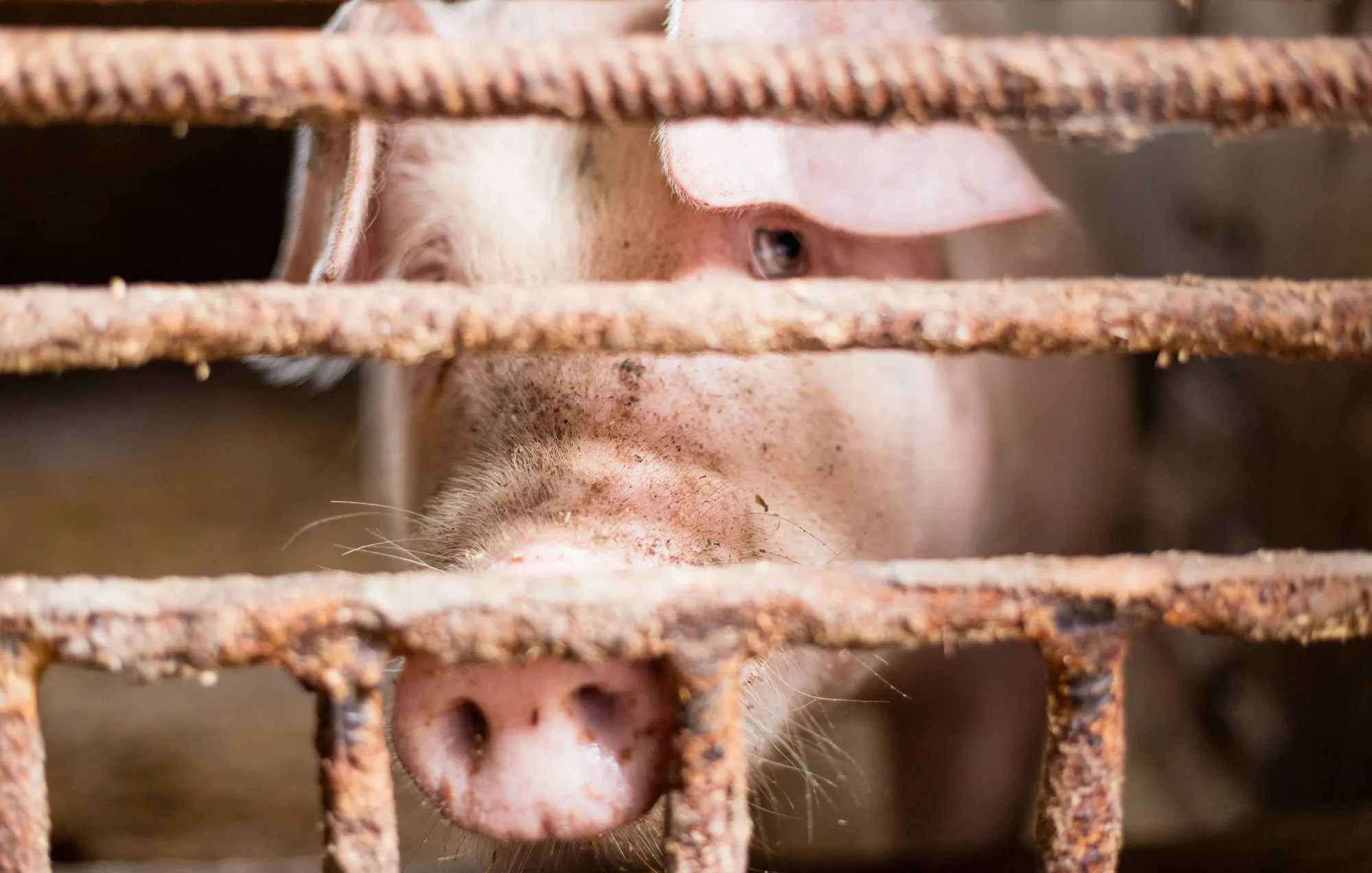
Additionally, an animal’s curiosity isn’t about reading books or participating in politics like a human’s. For example, pigs have a curiosity to dig the ground with their snouts and bathe in mud. Even if the specifics of their basic desires differ, we should respect them accordingly. The most fundamental human desire to avoid pain is not absent in animals. Any sensible person knows that kicking a dog would cause it pain, and therefore we should not physically harm it. While some animals, such as insects, are said not to feel pain, it says more about a person’s character if they stomp on a bug for no reason than about the bug’s ability to feel pain.
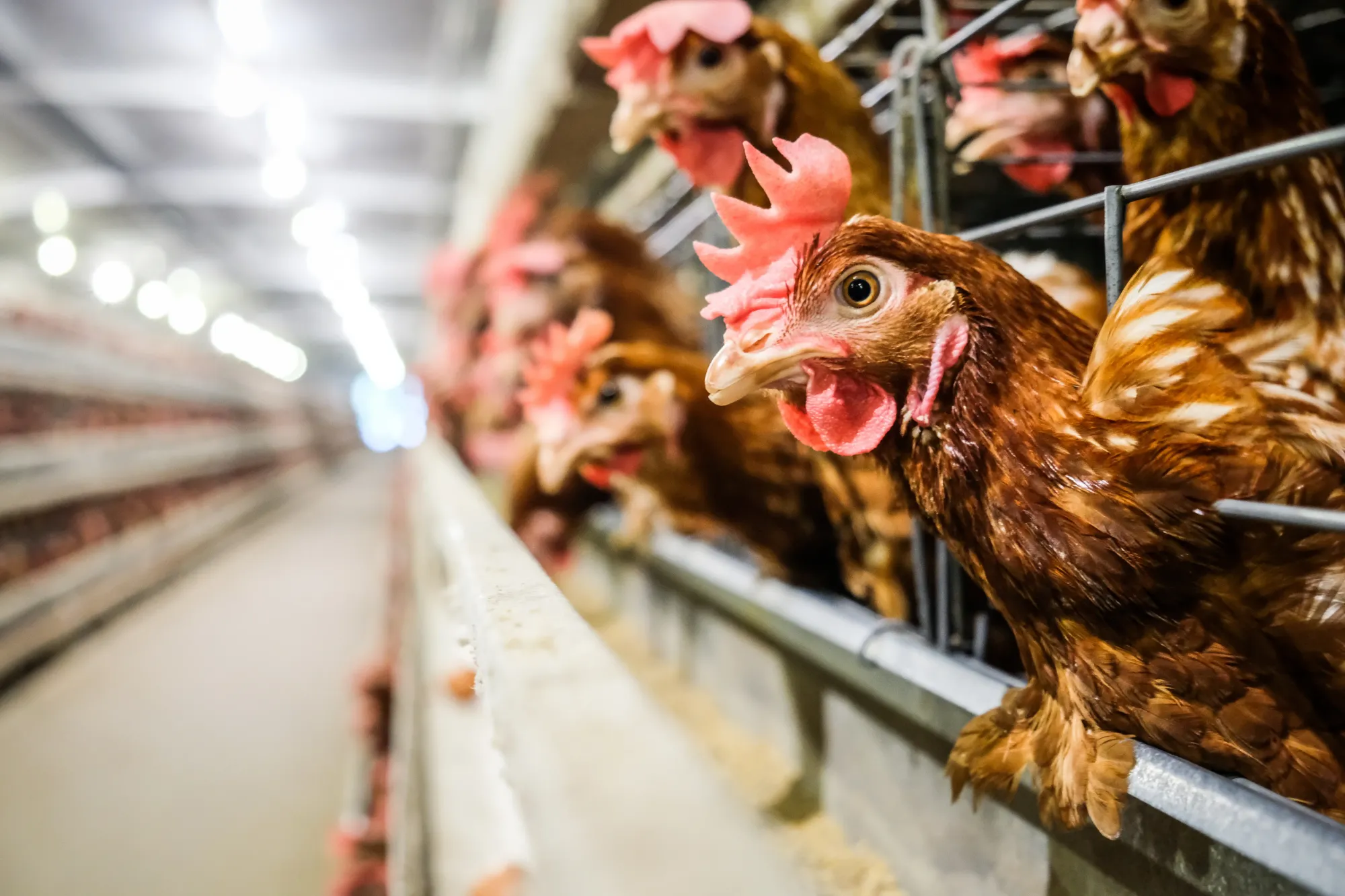
Most of the animals we consume as meat have the ability to feel pain and thus have the desire to avoid it. However, the so-called factory farming practices in modern society completely disregard these desires. Take chickens as an example. They are raised in small cages where they cannot even spread their wings, and the floors are wire mesh. Laying hens are kept in constant light to force continuous egg production. The crowded conditions for chickens are akin to humans living their entire lives in an overcrowded elevator, and no one would think this acceptable.
The reason we can enjoy cheap chicken at every fast-food restaurant is because we ignore the basic desires of chickens … simply because they are chickens.
Chickens are much less intelligent than humans, but forcing them to live out their lives in conditions far worse than a crowded elevator or subway at rush hour does not respect their basic desire to avoid pain. Such practices exist purely to produce cheap chicken meat and/or eggs. The reason we can enjoy cheap chicken at every fast-food restaurant is because we ignore the basic desires of chickens … simply because they are chickens. No one would think it acceptable to treat a person with a mental disability as a slave, ignoring their basic desires, and when such events happen, they make international headlines (e.g., in the incident where disabled homeless were kidnapped and forced to work without compensation on salt farms located on isolated, remote islands in South Korea). So, shouldn’t farming practices that ignore the basic desires of animals also be abolished?
Raising and Slaughtering Animals Without Pain
So far, the argument has been that we must recognize the rights of animals because we need to respect their basic desires. Factory farming was cited as one of the practices that does not respect these desires. So, does raising animals in non-factory farming settings respect their basic desires? Today in advanced economies, we no longer need animals for farming or transportation, but rather we raise them to obtain meat or leather. In other words, we slaughter most livestock. Does killing animals respect their basic desires? Is eating meat an act that violates the basic desires of animals?
No matter how well you might look after a human, it is unacceptable to confine and raise them with the intention of later eating them. While most non-primate animals do not have such basic desires because they lack awareness about what it means to be confined and raised, livestock are domesticated animals and if we released them into the wild under the pretext of giving them “freedom,” they would not survive. Thus, confining and raising them actually respects their basic desires, and raising animals while respecting their basic desires is not ethically problematic. (In that sense, confining wild animals in zoos could indeed be seen as worthy of criticism). This means, to be entirely clear, allowing animals to enjoy enriching environments, for example, by providing chickens with spaces where they can peck and perch at heights instead of being confined to battery cages. That would respect their basic desires.
However, raising animals “humanely” does not turn them into meat; there is one more crucial step—slaughtering them. Death is undoubtedly a painful process. Humans, being able to foresee the future and having a fear of death, experience amplified suffering from the prospect of death. Even if humans are killed without them noticing and under anesthesia, preventing any fear or pain, would it be acceptable? Certainly not, as killing humans disrupts their expectations and plans for the future, making it an unethical act. Except for primates and possibly a few other species such as elephants, animals lack self-awareness as beings that live across the past, present, and future. If they are slaughtered without causing them fear or pain, it is not ethically problematic. Ethical slaughter is entirely possible if animals are prevented from seeing what’s ahead and if enough time and care is taken to stun them before being slaughtered. Modern slaughterhouses do stun animals before slaughtering, but the conveyor belts move so quickly that occasionally some animals are not properly stunned. The reason is containing costs.
“Ethical carnivorism” is not an oxymoron. It is entirely feasible in theory. I say “in theory” because, in practice, truly ethical meat consumption would require us to pay much higher prices than we do now.
In modern societies, killing any living being is abhorrent; a topic people tend to avoid and feel uncomfortable discussing. However, let’s think calmly and rationally about it, as ethical reasoning demands. In doing so, we can conclude that slaughtering animals in the way described above, i.e., without inflicting pain, is not unethical.
Practically Speaking
“Ethical carnivorism” is not an oxymoron. It is entirely feasible in theory. I say “in theory” because, in practice, truly ethical meat consumption would require us to pay much higher prices than we do now. Why do we resort to factory farming and fail to ensure animals are fully stunned before slaughter? It’s to produce the maximum amount of product with minimal labor. The reason we can eat meat freely at every meal, unlike just a generation ago when it was reserved for special occasions, is due to unethical farming and slaughtering practices. To achieve ethical meat consumption, we must be prepared to return to the days of eating meat only occasionally. Although it would mean paying higher prices for meat compared to now, the basic desire of animals to avoid pain is far more fundamental than our desire to eat meat.

How can we move from factory farming to humane farming? Would it help to stop buying meat, in other words, to practice vegetarianism? Given how supply chains are designed, one person’s refusal to buy meat will not lead to a decrease in factory farming. Whether or not I choose to stop eating meat has no large-scale impact, just as giving my coat to a homeless person won’t eradicate poverty. This also means that ethical meat consumption is possible in another sense: Whether I eat meat or practice vegetarianism, factory farming continues, so there’s no basis for criticizing my actions as unethical. One might think that my vegetarianism could influence others, leading to a widespread adoption of vegetarianism, ultimately reducing factory farming as meat consumption drops below a critical point … However, realistically, this is unlikely to yield any real change in the real world, anytime soon.
Practically speaking, the only real way to respect animal rights is to institutionalize animal welfare practices across all farms.
When it comes to protecting animal rights, institutionalizing humane farming practices is the quickest and most effective method. In South Korea, products stamped with an “animal welfare” guarantee have been introduced; however they tend to be prohibitively expensive. This makes farmers hesitant to adopt animal welfare-friendly farming methods due to concerns about remaining competitive in the market. Practically speaking, the only real way to respect animal rights is to institutionalize animal welfare practices across all farms. It is more important to advocate for the government to implement such institutional changes than to individually practice vegetarianism.