Does Prayer Work?
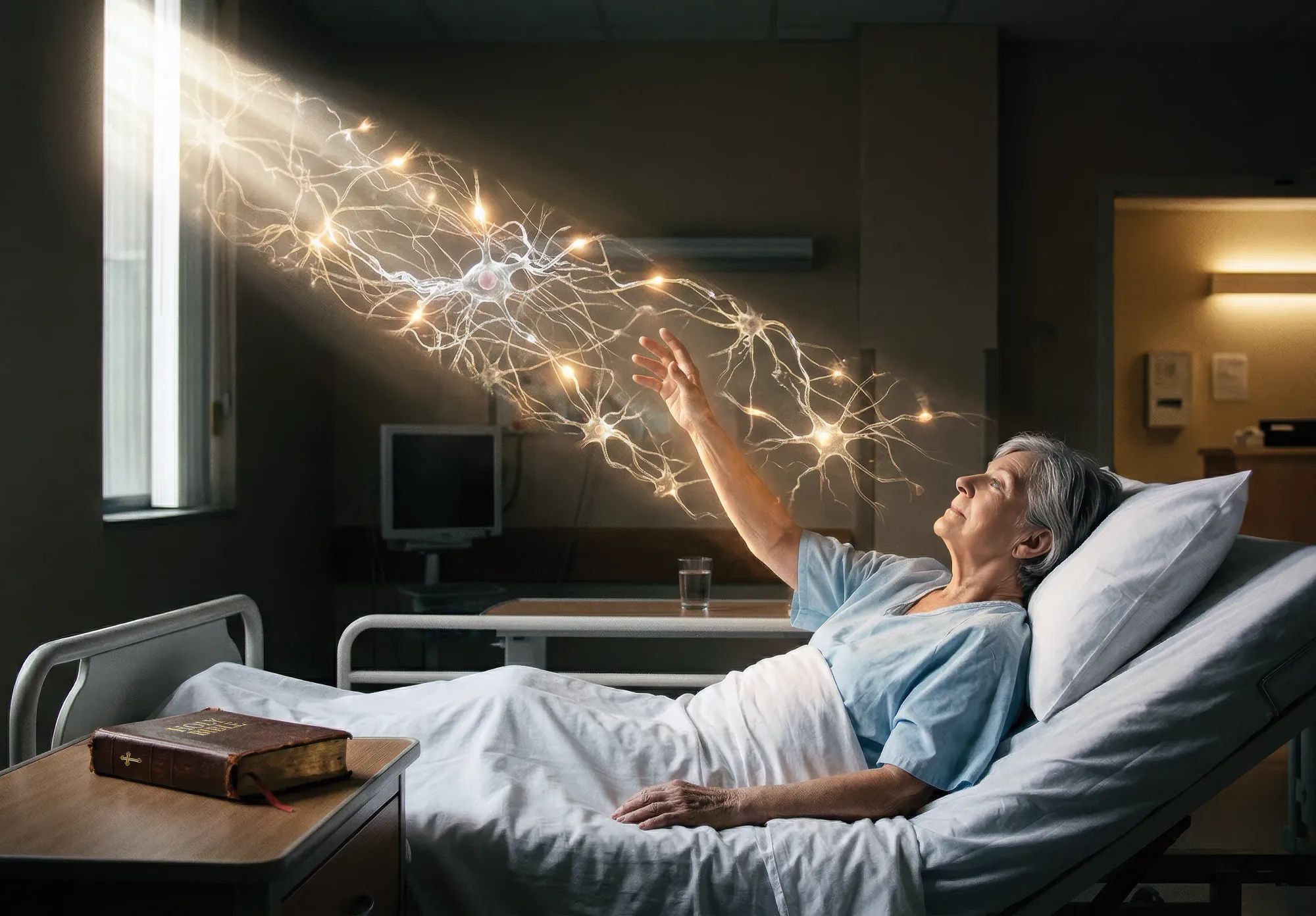
A feature length documentary film, released in December 2025, has revived an oft-touted claim of strong evidence of the supernatural. The Case For Miracles1 is based on the 2018 book of the same title by Christian evangelist Lee Strobel.2 Since the film has been criticized for being long on drama and short on evidence, I decided to look for documentation in the book. Unfortunately, when it comes to presenting specific cases of miraculous cures, this is limited to a single chapter, titled “A Tide of Miracles.”3
Among the dramatic cases cited by Strobel is that of a woman identified only as “Barbara” who was suffering from multiple sclerosis to the point that she had been confined to bed for seven years. She heard a voice telling her to rise and walk, which she did. She was sure this was the voice of Jesus. The documentation of this miracle, along with other claims in the chapter, however, is less than impressive, since they all consist entirely of testimonials; nor did the end notes to that chapter provide any medical documentation.4
Among the problems with testimonials as accurate histories are the imprecision of human memory, the tendency of narratives involving storytelling to arise among a group of those witnessing the same event, and bias on the part of witnesses. For example, consider the testimony of Tim Ley and members of his family regarding the appearance of the Phoenix Lights (thought by some to be UFOs) in 1997. He, along with his wife Bobbi, his son Hal, and his grandson Damien Turnidge, initially saw them as five lights in an arc shape. They soon realized the lights were moving toward them. As they did so, over the next ten minutes the lights resolved into a V shape similar to a carpenter’s square, or like two sides of an equilateral triangle. They, like other witnesses, reported a huge object, discernible not only by five lights on its leading edge, but as well because it blotted out stars in the night sky as it passed silently over the city. Soon, the object appeared to be coming right down the street where they lived, only about 100 to 150 feet above them, traveling so slowly it appeared to hover.
It would appear that much of what witnesses saw resulted from the perceptual centers of their brains automatically filling in the spaces between the lights to create a whole object.
Fortunately, in addition to the testimony of many witnesses, we have videos taken of the 1997 incident,5 which show a series of lights appearing in the sky, one by one, then winking out one at a time. In one of the videos, the man filming it exclaims, “Another one just showed up!” In that video the first three lights form a line, then a fourth appears in such a position as to make a shallow angle. In another video, this one without sound, one light appears, then another, then more, up to five, then six lights. These are first in shallow “V” shape, then in a more or less straight line. Then the lights wink out, one by one. None of the videos shows a solid V-shaped object blotting out the stars as it moves overhead. In fact, in most of them the lights simply hover, rather than moving in any discernible direction.6 It would appear that much of what witnesses saw resulted from the perceptual centers of their brains automatically filling in the spaces between the lights to create a whole object.
The images of the lights in these videos support the claim by the Air Force that the “Phoenix Lights” were not alien spaceships but military flares dropped by an Air Force reserve unit on a training mission. These flares are used in combat to illuminate a battlefield at night. As such, they were dropped by parachutes, which allowed them to hover for some time. They were dropped west of the Estrella Mountains, which lie west of Phoenix. They seemed to suddenly wink out as they slowly drifted downward, and their images were blocked by the darkened, hence invisible, mountains.
More to the point of miracle cures, consider the claim that the Indian mystic and holy man, Sathya Sai Baba, raised a devotee of his, Walter Cowan, from the dead on Christmas 1971. The narrative of this miraculous healing begins with Walter Cowan and his wife Elsie, followers of Sathya Sai Baba, arriving in Madras, India, on December 23, 1971. Walter, an elderly man, suffered a massive heart attack on Christmas Eve and was taken to a hospital, where he died. Then, on Christmas Day, Sai Baba entered the hospital room where Mr. Cowan’s body lay. After a time, he left. Then, friends of Cowan’s arrived and found him alive. This miracle was attested to by a medical doctor, Dr. John Hislop. His wife reported:
When we reached the hospital with the vibhuti, Mrs. Cowan said, “Walter took a very bad turn just a little while ago. I thought he was dead, and I was terrified. I at once called Baba in a loud voice. Now, Walter seems a little improved. When I called Baba I felt his presence at once.”7
The validity of this dramatic testimony is somewhat undone by Elsie’s statement that she thought her husband was dead and that he was then “a little improved.” In any case, both she, along with Dr. Hislop and his wife, were devotees of Sai Baba, rendering the objectivity of their testimonies suspect.
Since I wasn’t able to find more rigorous evidence than testimonies in Strobel’s book, I decided to look online for medical reports of miraculous healing, specifically healing attributed to the effect of intercessory prayer. In an article in the medical journal Heliyon from 2023 I found an article titled “The remote intercessory prayer, during the clinical evolution of patients with COVID-19, randomized double-blind clinical trial.”8 The article states the objective of the study as follows:
The objective of this study was to evaluate the effect of intercessory prayer performed by a group of spiritual leaders on the health outcomes of hospitalized patients with Novel Coronavirus (COVID-19) infection, specifically focusing on mortality and hospitalization rates. Design: This was a double-blinded, controlled, and randomized trial conducted at a private hospital in São Paulo, Brazil.
Here are the results of the study:
A total of 199 participants were randomly assigned to the groups. The primary outcome, in-hospital mortality, occurred in 8 out of 100 (8.0 percent) patients in the intercessory prayer group and 8 out of 99 (8.1 percent) patients in the control group […] The study found no evidence of an effect of intercessory prayer on the primary outcome of mortality or on the secondary outcomes of hospitalization time, ICU time, and mechanical ventilation time.
In another study, doctors measured the healing effects of intercessory prayer on patients recovering from cardiac bypass surgery:
Patients at 6 U.S. hospitals were randomly assigned to 1 of 3 groups: 604 received intercessory prayer after being informed that they may or may not receive prayer; 597 did not receive intercessory prayer also after being informed that they may or may not receive prayer; and 601 received intercessory prayer after being informed they would receive prayer. Intercessory prayer was provided for 14 days.9
The study yielded the following results and conclusions:
In the 2 groups uncertain about receiving intercessory prayer, complications occurred in 52 percent (315/6o4) of patients who received intercessory prayer versus 51 percent (304/597) of those who did not […] Complications occurred in 59 percent (352/601) of patients certain of receiving intercessory prayer compared with the 52 percent (315/6o4) of those uncertain of receiving intercessory prayer […] Major events and 30-day mortality were similar across the 3 groups.
Conclusions:
Intercessory prayer itself had no effect on complication-free recovery […] but certainty of receiving intercessory prayer was associated with a higher incidence of complications.
Another clinical double-blind study gave more positive results,10 in which intercessory prayers were made by a group that did not know the patient for whom they were praying, nor did any of the patients know whether or not they were the subjects of intercessory prayers. The researchers concluded that remote, intercessory prayer was associated with lower CCU scores (a metric used to evaluate severity of cardiac illness), suggesting that prayer may be an effective adjunct to standard medical care. While this study suggested that intercessory prayer aided recovery, the benefits gained were far from dramatic:
Using the unweighted MAHI-CCU score, which simply counted elements in the original scoring system without assigning point values, the prayer group had 10 percent fewer elements […] than the usual care group. There were no statistically significant differences between groups for any individual component of the MAHI-CCU score.
While a ten percent improvement sounds good, it hardly equals Strobel’s claimed miracle case of the woman with multiple sclerosis, bedridden for seven years, suddenly walking.
Effects of emotions or psychological states on the brain … can result in the transmission of healing by way of the nervous system acting on the body through the endocrine system.
Far more dramatic and positive results occurred in a notable Dutch study on the efficacy of intercessory prayer as an instrument of healing: “A Dutch Study of Remarkable Recoveries After Prayer: How to Deal with Uncertainties of Explanation.”11 The study encompasses in-depth interviews of 14 people selected from a group of 27 cases, which were evaluated by a medical assessment team at the Amsterdam University Medical Center. Each of the participants had experienced a remarkable recovery immediately after, or even during, intercessory prayer sessions. So, is this evidence of miraculous, supernatural healing? Not necessarily.
The article begins with a description of one of these healings, experienced by a woman named Julia who was diagnosed in 1990 with post-traumatic dystrophy, also known as Complex Regional Pain Syndrome (CRPS). She was wheelchair bound due to intense pain. In 2007, after 17 years of suffering, she and her husband took part in a prayer healing session led by a well-known Dutch evangelist. After the session, Julia stood up and started walking without a trace of pain. She was still free of pain 15 years later, when the study was conducted.
Julia’s CRPS is initially acute pain caused by an injury, that persisted long after the injury was healed. Among the causes of this syndrome are psychological factors and a neurologically triggered autoimmune response.12 In autoimmune disorders, the immune system goes from attacking foreign invaders, such as viruses and bacteria, to attacking the person’s own body. Other patients in the study also suffered from autoimmune disorders. Among these were muscular dystrophy, psoriatic arthritis, ulcerative colitis, and Crohn’s Disease. Some of the patients also suffered from purely psychological problems, such as anorexia nervosa and alcoholism.
All of these diseases can be induced by malfunctioning of the nervous system. This is not to say these disorders are all in the patients’ heads. However, the effects of emotions or psychological states on the brain-such as taking part in a prayer session and states of belief-can result in the transmission of healing by way of the nervous system acting on the body through the endocrine system.
Three other patients suffered from brain injuries or malfunction. One patient had Parkinson’s Disease, which is caused by the failure of certain brain cells to produce dopamine. Another had suffered from a stroke. Another patient suffered from deafness. While the healing of these problems cannot be so simply assigned to the effect of a psychological state on the nervous system and transmission of these effects to the body by way of the endocrine system, they all do involve central nervous system functioning, which could be affected by an induced emotional state.
Only four of the patients suffered from complaints seemingly separate from the nervous system. One suffered from iatrogenic aortic dissection—an injury or scarring suffered during a surgical procedure, such as the insertion of a stent. This is usually treated with beta blockers. These medications block adrenaline, thus relaxing the heart and easing stress on the aorta. So, a changed psychological state could, likewise ease this stress.
Another patient suffered from pelvic instability, which often results from pregnancy and is caused by a weakening of the ligaments at the pelvic floor. This is a basin-shaped structure, consisting of the sacrum, pubis, and hip bones, all held together by ligaments. When these ligaments are overstretched or injured, the bones of the pelvic floor move excessively during physical activities, resulting in pain in the groin, hip, or back. This makes even simple activities difficult and painful. This condition is usually treated by various stretching exercises.
Another patient suffered from drug induced hepatitis. This is inflammation of the liver caused by various medications, treated by simply stopping the use of these medications. Finally, one patient suffered from rotator cuff rupture. While this is caused by traumatic injury, its protracted pain results from inflammation. Thus, just as in Julia’s case, all four of these disorders involve chronic inflammation.
There are three problems imputing the dramatic healings to divine intervention. One is that they all seem to stem, one way or another, from either chronic pain or nervous system dysfunction. We do not see in them people being healed of drastic infectious diseases, such as COVID-19. Nor do any of them involve permanent remission of metastasizing cancers.
It is too far a leap to extrapolate divine intervention from a few healings we can’t explain.
Another problem is that of patient involvement. In both the study involving patients with COVID-19 and the one dealing with patients recovering from cardiac bypass surgery, the intercessory prayers were remote for the purposes of performing objective double-blind studies. Particularly in the case of Julia’s healing, the patients in the Dutch study were actively involved in the prayer sessions, thus clouding any clear evidence of cause and effect. Finally, it is too far a leap to extrapolate divine intervention from a few healings we can’t explain.
One last problem with seemingly miraculous cures as evidence of the Judeo-Christian God, is that such a deity would seem to be acting in a rather haphazard manner, healing some people here and there, while not bothering to intervene in horrific atrocities, for example, either the Holocaust or the Armenian genocide. In the latter event, the Armenians were targeted specifically because they were Christians.13 Between one and two million of them perished at the hands of the Turks and other of their Muslim neighbors.
Thus, these now and again, possibly miraculous, healings hardly constitute proof of the God of the Bible.