Islam and Pseudoscience: Close Encounters in the Classroom (and How to Deal with Them)
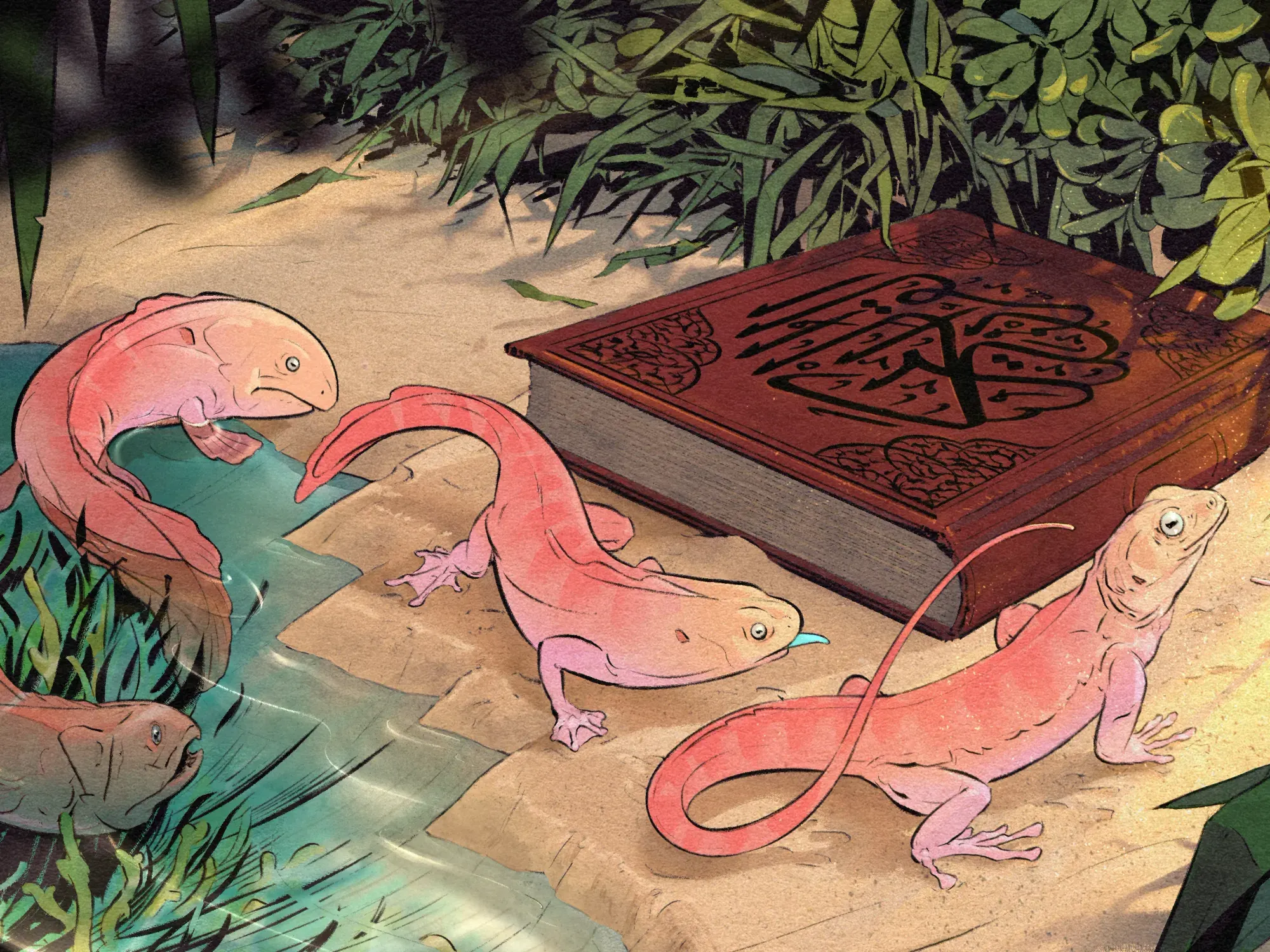
For ten years, I have been a professor of philosophy at a Moroccan public university that uses English as the language of instruction and employs a liberal arts pedagogical model. One of the reasons I was hired was my expertise in the debate on Islam and modern science. The university appreciated that, in addition to offering courses on classical themes and authors, I could communicate this debate to the students, who are overwhelmingly Muslim.
By cultural and family background, I am nonreligious, though deeply invested in research about religion. About twenty years ago, after my doctorate in philosophy, in which I attempted to study some formalized theories of knowledge, I decided to devote myself to studying the debate on science and religion. I was attracted to the world of ideas as much as I was when I decided to pursue philosophical studies, but I no longer wanted to deal with abstract theories that interested only a handful of hyperspecialized scholars. I wanted to study ideas that intertwine with worldviews, choices, and the lives of people outside academia, focusing on Islam.
Overly simplistic notions and narratives, distortions of scientific methodology and information, and the idea that scripture should have the final say on matters of science seem to prevail.
I was soon exposed to different visions—some more academic, others more popular—all aimed at demonstrating, even if by using different and often conflicting arguments, the harmony of Islam and science. I became aware of the presence, at least in certain positions, of largely pseudoscientific ideas. “Pseudoscience” was in fact the term used, informally, by some authors who criticized the very theories I was studying. Several Muslim thinkers and authors promote positions reconciling Islam and science, and some explicitly criticize the intersection of pseudoscience and Islam. These positions, however, are far from the majority. Overly simplistic notions and narratives, distortions of scientific methodology and information, and the idea that scripture should have the final say on matters of science seem to prevail.
A clearly pseudoscientific position was, for example, that of Harun Yahya (pseudonym of Adnan Oktar). This Turkish author built his reputation on a systematic attack on evolution conveyed through countless books and articles in many languages in a form of creationism presented as Islamic but in reality based on arguments that flourished among some Christian groups.
Some popular authors also argued that the Qur’an—the sacred text of Islam, revealed in the seventh century CE—contained precise descriptions of phenomena verified by science centuries later. The idea was that such precision could only derive from God and could therefore confirm the divine origin of the holy book. This position seemed somewhat more original, at least at first glance, but it was argued based on interpretative exaggerations.
Double standards are ubiquitous.
One such favorite example given by my students is the Qur’anic reference to “two seas” that do not mix, which, they claim, is a fact confirmed only by modern science. “And it is He [God] who merged the two seas; this one fresh and sweet, and that one salty and bitter; and He placed between them a barrier, and an impassable boundary.” (25:53). Another passage reads “He merged the two seas, converging together; Between them is a barrier, which they do not overrun” (55:19–20).1
The literature on the “miraculous scientific precision” of the Qur’an elaborates on the hydrological phenomenon allegedly “predicted” in scripture and even identifies these “two seas” with specific geographical locations. According to the Islamic preacher Dr. Zakir Naik, the verses should be understood in reference to a river flowing into the ocean; fresh water homogenizes into salty water, and the “barrier” should be read as a reference to the “transitional area.” The phenomenon, he adds, can be seen by the naked eye—for example, where the Nile flows into the Mediterranean Sea.2
Obviously, this interpretation raises several questions: if the river and the ocean actually end up mixing, how accurate is the reference to an “impassable boundary”? Furthermore, if we admit the phenomenon is visibly observable, in what sense would the verse anticipate modern science?
This approach to the Qur’an has long been criticized, even by Muslim authors,3 but it is persistent. I’ve noticed that several authors, including academics, continue to support it in a “soft” (and ultimately specious) version. At a recent academic conference on religion and science, for example, a slide highlighting Qur’anic references to meteors read: “This approach has no aim of proof, but is intended as an invitation to reflection, inspiration, and as an illustration of the absence of antagonism between science and religion.”
Survey data indicate that Muslim views on evolution vary considerably across countries. In some countries, acceptance and rejection are nearly evenly split, while in others—such as Pakistan—only about 30 percent of Muslims say they believe that humans and other living things have evolved.4Only a handful of scholars and scientists, such as molecular biologist Rana Dajani, have a public and visible position that ties together Islam and evolution, including human evolution. In my conversations with students, I have noted some resistance to evolution in two ways: by emphasizing the story of Adam and Eve (which is present in the Qur’an and in Islamic tradition, with some variations from the Christian one) and by declaring that evolution is unscientific.
This richness of human relationships offsets the inevitable frustration of dealing with pseudoscience, which constantly resurfaces in old and new forms.
I’ve noticed that these ideas are also spread by some colleagues. On one occasion, a professor encouraged an audience of students to form their own opinion on evolution. Then, he held a talk full of creationist ideas, including that believing in evolution is like believing that a tornado can build an airplane by hitting a junkyard. I asked him what he thought of those Muslim scientists who do embrace evolution. He replied that they should be “ashamed” for rushing to embrace an unsupported theory.
I have heard other colleagues impart notions of Intelligent Design, always with an Islamic twist. An author who systematically discredits evolution through this type of argument is Jordanian pharmacology professor Eyad Qunaibi, who has a YouTube video series that combines scriptural and theological arguments with the classic anti-evolution arguments of the Western and Christian type.5
I also realized that students have often absorbed veritable urban legends, such as the one according to which a NASA lunar mission confirmed the “splitting of the moon”—a miracle alluded to in the Qur’an and spoken of in tradition.
One thing that strikes me about the way academic authors and opinion makers in the Muslim world attempt to defend pseudoscientific or antiscientific ideas is their inconsistency in relying on authors who would hardly approve of a worldview based on a revealed religion, much less an Islamic one. For example, I’ve heard and read David Hume’s critique of induction invoked to argue that evolution is unscientific because it is a generalization and projection of known phenomena onto past places and times that cannot be observed.6 Hume did question induction, but he was also the philosopher who showed the weakness of those arguments according to which the world is so harmonious that it implies a creator or architect.
Hume also thought that analogies between nature and human artifacts were indefensible, just as he found miracles incredible. He did not teach that “anything goes,” but that some beliefs are more plausible than others based on precedent. How can one enlist a representative of philosophical skepticism like Hume in defense of Intelligent Design and a sacred text? Even granting, for the sake of argument, that evolution wasn’t “scientific” enough (ignoring that it is confirmed from ample and convergent evidence from different fields), if we embraced Hume’s skeptical ideas in an extreme and radical form, why then would we seek information on the origin of biodiversity in the highly general, allusive, and interpretable verses of a sacred text?
Another example of Islamic creationism is the use of the current scientific debate on evolution, in which scientists place different emphasis on different evolutionary factors. I have read, and I have been lectured by colleagues, on how this scientific debate ultimately demonstrates that evolution has not been understood well. Those same colleagues fail to consider that, regardless of the specific scientific interpretation of evolution, there will be no room in it for the story of Adam and Eve miraculously created.7 Diversity of interpretation among scientists is overstated, and diversity of views among theologians is passed over in silence or dismissed.
I always make sure to present students with all the options, including those I consider erroneous, explaining the potential weaknesses and challenges of each.
Similarly, I have heard Karl Popper invoked to argue that evolution is unscientific because it is unfalsifiable.8 Here too, not only is the fact that evolution is falsifiable ignored (for example, if we found fossil records that disproved it), but also that creationist theories and “scientific” readings of the Qur’an are often constructed in such a way as not to be falsifiable. When a critic identifies a verse or term that conflicts with science, many authors rush to point out that science is not the ultimate truth and that it can change. Yet they ignore this very idea when they want to “confirm” the Qur’an with science.9 So much for falsifiability. In general, notions of philosophy of science and postmodernism are invoked to downplay science, but then it is not explained why a revealed text should be embraced as the truth. Double standards are ubiquitous.
Another element present in discussions with religious apologists is a tendency to employ sophistical arguments, with unstated premises, unexplored objections, and even attempts to embarrass the interlocutors. For example, I was once asked whether incest accompanied by contraceptives is permissible. Despite being open-minded, I was struck by the example and could not help thinking that sometimes the sexual imagination of supposedly conservative people surpasses that of those with much more liberal views. But what was the strategy behind asking such a question?
The clarification regarding contraceptives was intended to block an objection based on genetic considerations. Had one responded with remarks even vaguely construed as favorable to incest, they would have appeared (to a religious audience) as the supporter of a relativist, morally corrupt position. Had one answered that they felt an aversion to the practice of incest, such an observation would have been used to argue that there are innate moral principles instilled by God (even in a nonbeliever) and that they demonstrate God’s existence. This type of argument ignores, for example, that there are explanations and justifications for morality and ethics that rely on evolutionary notions. Even if we admitted the existence of innate universal ethical principles, it’s simply not clear why they would demonstrate the existence of the God of a specific revelation.
As I conclude in my book Islam and Pseudoscience (Cambridge University Press, 2025), many ideas and practices related to Islam and modern science can be called “pseudoscientific” according to one specialist description or another, but what matters, ultimately, is that they are demonstrably flawed.
An important point to emphasize is that pseudoscience is not essentially Islamic or that Islam is not necessarily a generator or host of pseudoscience.
I always make sure to present students with all the options, including those I consider erroneous, explaining the potential weaknesses and challenges of each. This also applies to positions that I appreciate. For example, I sympathize with authors such as the molecular biologist Rana Dajani, who embraces human evolution, but I think it remains a delicate task to read the story of Adam and Eve in a way that is not hostile to evolution, and there is the theological challenge of reconciling all the death and suffering entailed by evolution with the idea of God’s goodness.
An important point to emphasize is that pseudoscience is not essentially Islamic or that Islam is not necessarily a generator or host of pseudoscience. For example, it can be shown that various arguments typical of creationism or Intelligent Design, while being linked by Muslim authors to specific verses of the Qur’an, have been originally promoted by Christian authors. In some cases, Western–Islamic collaboration on creationism or the importation of materials and ideas has been demonstrated by historians.
Wet cupping, a form of bloodletting performed with vacuum-filled cups, is popular among Muslims, having been recommended by the Prophet. However, it is also advocated by traditional Chinese medicine (and it is based on an outdated, erroneous understanding of human physiology). As an educator, I find it important both to show why certain ideas and practices are flawed or even dangerous, and to deconstruct the illusion of uniqueness and cultural exceptionalism they create (“my religion has a privileged relationship with science”).
Finally, it’s important to highlight Muslim critics of pseudoscience and their arguments. For example, the astrophysicist Nidhal Guessoum observes that the Prophet obviously knew and appreciated the healing practices of his times, and this shouldn’t be overstated. In other words, we now know that many herbs and practices used in the past are ineffective and sometimes also harmful, while modern pharmacology has distilled the active ingredients of yet other herbs appreciated in antiquity. There is no need to reject “modern” medicine and to consider the Prophet’s practices as binding.10
Medical matters are particularly interesting. One can see that Islam has sometimes been exploited to promote anti-science positions—for example, by rejecting vaccines because of the presence of products forbidden in Islam or by arguing, based on Qur’anic verses, that the human body was created perfect as it is (along with other arguments typical of global anti-vaxxers).11 However, there are also cases of Muslim leaders who have instead urged their followers to use vaccines in line with Islamic ethics and self-care.12
Showcasing the plurality of critics of such ideas, including those who are Muslims like Dajani and Guessoum, defuses the approach of those who present a single reading of scripture as if it were the sole Islamic point of view and who are reluctant to explore objections to their ideas.
Once all the critiques, interpretations, and challenges have been fully and honestly presented, the students are free to choose. I’ve noticed that this pedagogy allows for deep connections to be forged even with students who, at the end of the course, may not want to abandon creationism or other flawed ideas. This richness of human relationships offsets the inevitable frustration of dealing with pseudoscience, which constantly resurfaces in old and new forms.