It’s Time to Rethink Cancel Culture
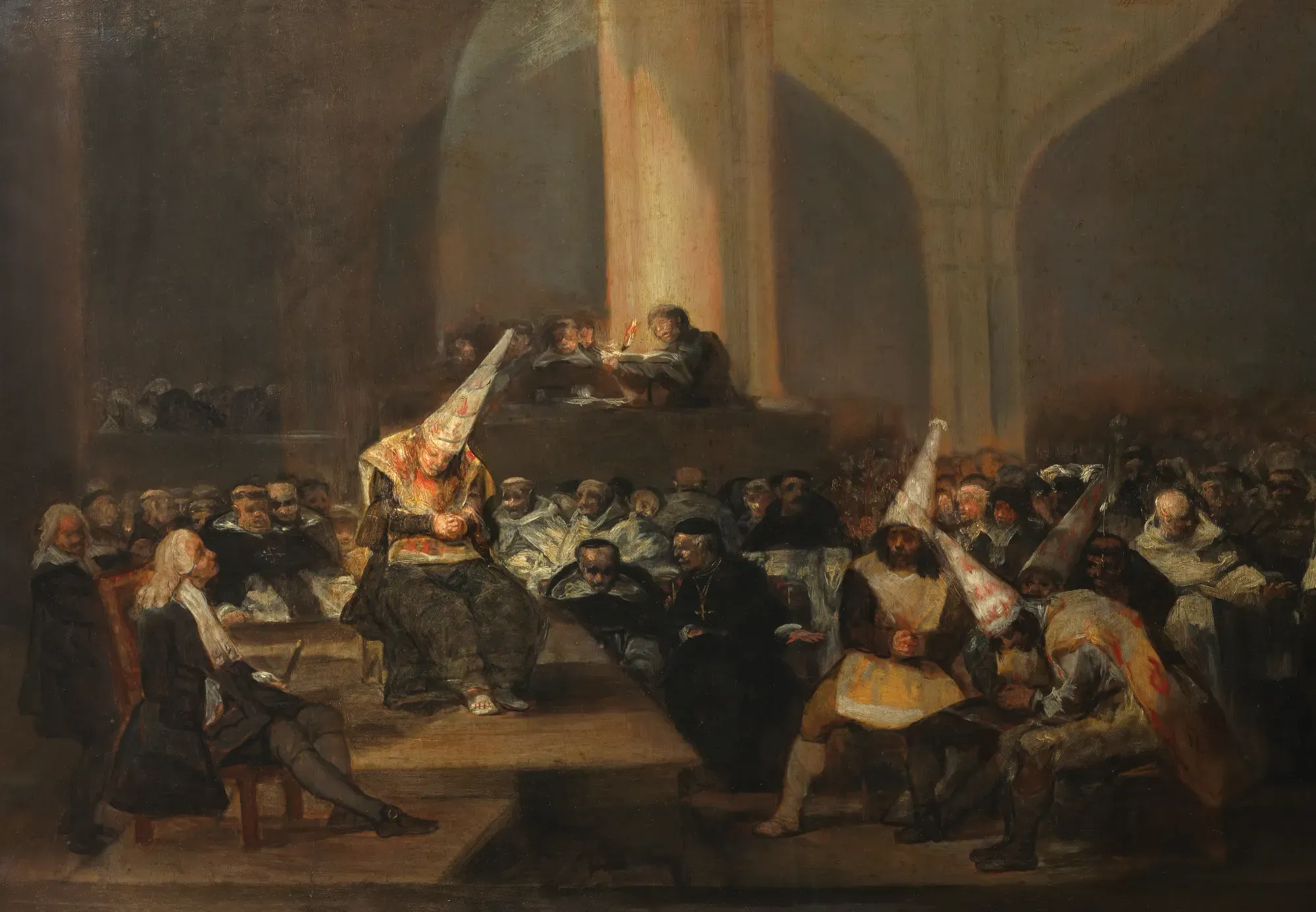
Ostracizing antisemites like Nick Fuentes is necessary and just. The cancel culture concept only obscures what’s wrong with today’s political culture.
What‘s the difference between cancel culture and shaming toxic people who infect one’s political movement?
This question recently embroiled the American conservative movement after Heritage Foundation President Kevin Roberts refused to denounce Tucker Carlson for his interview with antisemite Nick Fuentes. Roberts said that Heritage rejects the policy of “canceling our own people,” and specifically objected to canceling both Carlson and Fuentes.1
Roberts was widely rebuked by other conservatives for his statement and for defending his association with Carlson in the name of opposing cancel culture. There’s a world of difference, say his critics, between the behavior of woke activists in 2020 after the George Floyd protests, and sensible work to critique bad actors who’ve gained too much influence inside conservatism.
There is a difference, but is simply criticizing vile characters like Fuentes enough for a movement to maintain its dignity? And if Fuentes is disinvited from podcasts, is that cancel culture? What even is cancel culture, and does treating it as an uncontested political sin help us understand what’s happening in our political culture? Or does doing so play into the hands of attention-hungry trolls like Fuentes, who profit from the platform conservatives now reflexively give to victims of cancellation?
It’s not cancel culture to criticize.
Why don’t critics of Kevin Roberts think they’re engaging in cancel culture?
Writing in The Free Press, Eli Lake attempts an answer.2 It was “cancellation,” he says, when the editor of The Philadelphia Inquirer resigned over writing the headline “Buildings Matter, Too” during the George Floyd protests in 2020, and it was cancellation when a high school student was denied admission to college because of old tasteless internet posts. By contrast, criticizing Carlson for his amicable conversation with a rabid antisemite is only “doing the hard work of policing one’s coalition.”
But why should we criticize Carlson? Not, apparently, for inviting Fuentes on the podcast in the first place, but simply because he didn’t grill him hard enough. Lake recommends William F. Buckley’s approach in a 1968 interview with the rapist-turned-Black Panther advocate of terrorist violence, Eldridge Cleaver.3 Buckley gets Cleaver to admit he endorses the assassination of Richard Nixon, and other odious positions. But it’s noteworthy that Buckley does not actually criticize, let alone condemn, any of these positions in the interview. He at most asks tongue-in-cheek questions that relay others’ criticism to elicit Cleaver’s response. He actually grills him little better than Carlson did Fuentes.
You can’t shame a shameless troll, you can only embolden him.
Lake’s idea is that since Buckley is only using speech to try to discredit Cleaver, it can’t be cancel culture and so can’t be bad. But Buckley’s tactic is no model here. Even if he had been more vocally critical it would not have erased the dramatic effect of treating an agitator for crude mob violence as worthy of civilized conversation. To be sure, Buckley had the free speech right to platform a spokesman for thuggish Marxist viewpoints. But not every exercise of free speech is wise.
By the same token, it was Carlson’s right to host Fuentes, but in exercising his rights he also elevated and dignified an obscene antisemitic troll. In the weeks since Carlson’s interview, Fuentes has now done a grand tour of the podcast circuit and has even made it onto TV interview programs like Piers Morgan’s, where the host tried to be critical but is widely seen even by critics of Fuentes as having been bested by him.4 You can’t shame a shameless troll, you can only embolden him.
The Confused Definition of Cancel Culture
It’s now widely thought that cancel culture is an offense against free speech. We see this in the closest thing to a textbook definition of cancel culture we can find, in Greg Lukianoff and Rikki Schlott’s 2023 book The Canceling of the American Mind. They define cancel culture as “the uptick beginning around 2014, and accelerating in 2017 and after, of campaigns to get people fired, disinvited, deplatformed, or otherwise punished for speech that is—or would be—protected by First Amendment standards and the climate of fear and conformity that has resulted from this uptick.”
Read carefully, this definition is ambiguous. Does it mean that cancel culture is itself legally forbidden by the First Amendment (because it punishes people for speech that should be free), or just that it’s a personal moral offense perpetrated against those who are legally exercising their free speech rights?
If it means the first, then the definition does not cover all of the outrageous cancellations by woke activists. Some deplatformings really did violate someone’s free speech rights, as when a student mob shut down Judge Kyle Duncan’s speech before the Federalist Society at Stanford in 2023. But not all did. When The Philadelphia Inquirer editor Stan Wischnowski resigned in 2020 because of outrage over his decision to publish an article bemoaning the impact of Black Lives Matters protests on urban areas, he was well within his First Amendment rights to resign, and the paper would have been within its rights to fire him. Even if the editor’s article made a valid point and we think the paper’s ideological agenda is misguided, the editor does not have a right to his job, and the First Amendment protects a paper’s right not to have to fund a dissenting employee’s speech.
But if we take the definition of cancel culture to mean some personal moral offense against those who exercise legally protected speech, then many of Carlson’s critics are engaging in it in spite of themselves. However abhorrent Fuentes’s racist views may be, they’re also protected by the First Amendment. So, unless we adopt the social justice activist view that hate speech is actually violence, his critics are trying to punish him—if only through social shaming—for his protected free speech. That’s certainly true for any who say Fuentes should not be on conservative podcasts: they want to deplatform him, and other antisemites may now fear they will suffer the same consequences. But even those who just want to criticize him more harshly, on or off a podcast, are still otherwise punishing him.
Not every exercise of First Amendment rights is rational or wise.
So even the textbook definition of cancel culture is confused. Either it doesn’t explain what was wrong with core examples of the most objectionable cancel campaigns, or it actually classifies totally reasonable efforts to ostracize unreasonable people—itself the exercise of the rights of free speech and free association—as some kind of moral offense.
We need another framework for understanding what was wrong with cases like the 2020 Philadelphia Inquirer firing.
An Alternative Conceptualization
Not every exercise of First Amendment rights is rational or wise. Buckley unwisely platformed Cleaver as many today are unwisely platforming Fuentes. Some free speech is even overtly irrational. What made the Inquirer firing so bad was simply that it was driven by a kind of religious fervor to ferret out heretics who offend against a cherished but irrational orthodoxy.
But this kind of fervor is what defines a concept that is older and better-tested than cancel culture. A religiously driven social campaign to root out and punish heretics is what defines a witch hunt.
Cancel culture is a not very descriptive name for simply the latest chapter in humanity’s long history of irrational, inquisitor-driven persecution campaigns, from the literal medieval witch hunts targeting heretical devil worshipers, to Stalin’s party purges of traitors to the communist party. The ideologies driving these campaigns have varied, but all mobilized mobs who cared little about evidence to root out some unorthodox other.
The problem isn’t cancellation per se, it’s the canceling, smearing, persecutions, and sometimes prosecution of scapegoats because of the delusions and madness of crowds.
And while witch hunting campaigns often involve resorting to state force to suppress dissent or silence speech, they do not always. The Satanic panic in the 1980s included (futile) campaigns to censor rock and roll music and even prosecutions (which were eventually overturned)5 of child care workers alleged to be Satanic abusers. Over 12,000 cases of abuse were reported in this period, none ever substantiated as Satanic.6 But the campaign, which originated in Evangelical churches and drew on now-discredited psychological theories of recovered memories, also involved voluntary boycott and smear campaigns that simply worked to impugn reputations without violating anyone’s rights. Everyone—from Procter & Gamble7 (because it had a logo confused with Satanic symbols), to the makers of Dungeons & Dragons8 and The Smurfs,9 to (naturally) heavy metal musicians like Ozzy Osbourne—was a target. Some of these alleged witches were tried in real courts, many were simply tried (or mistried) in the court of public opinion.
To chalk this up to cancel culture is to dramatically understate what makes the underlying culture outrageous. The term alludes to the cancellation of TV programs by networks, and was first used after notable celebrities had opportunities canceled because of various scandals. But it was of course no outrage that Harvey Weinstein and Bill Cosby were canceled after dozens of credible accusations of sexual assault. It is outrageous when others had opportunities revoked because of unfounded accusations of wrongdoing—or credible accusations of manufactured wrongs—spread by online cancel mobs.
The problem isn’t cancellation per se, it’s the canceling, smearing, persecutions, and sometimes prosecution of scapegoats because of the delusions and madness of crowds.
As Stalin’s party purges demonstrate, witch hunts don’t need to be justified in the name of explicit, overt religiosity to be pursued with religious fervor. Nominally atheistic movements like communism can draw inspiration from religious models. (A relevant symbol here is that Stalin himself spent five years in seminary training to become an orthodox priest before he became enamored of communism.10)
Fast forward to the 21st century. As John McWhorter has argued persuasively in Woke Racism, the social justice egalitarianism of the last few decades bears all the hallmarks (in the words of his subtitle) of a new religion. The movement has its own articles of faith (that any inequality represents injustice), its own sacred texts (DiAngelo and Kendi), its own conception of original sin (white privilege), and its overwhelming demand for repentance and submission, in the name of which so many cancel campaigns have been launched.
As I’ve argued elsewhere, that demand for submission is what empowers all the rest of the religious fervor of the woke movement.11 And the moral code behind the demand is something that woke egalitarianism actually inherits from old-fashioned Judeo-Christian religion.
But if the real problem with woke inquisitions and heretic hunting is its religious fervor, will religious conservative critics of cancel culture be willing to admit this?
The Blind Spot for MAGA Witch Hunting
Surely many religious people are willing to condemn inquisitorial witch hunts of religion’s past. But are they willing to condemn them because of their religious fervor? And will they be willing to confront baseless persecution when it arises again?
This question is pressing because anyone critical of woke witch hunting has to confront the fact that the MAGA movement is prone to it as well. They need to confront this even if MAGA doesn’t hunt for its heretics in the same way or to the same degree.
In The Canceling of the American Mind, Lukianoff and Schlott do offer three whole chapters detailing very recent campaigns against free speech launched by politicians on what they characterize as the right. As I’ve argued, actual free speech violations (e.g., when student mobs pushed speakers off stage) were only among the worst offenses of the woke witch hunters. If there’s not even respect for free speech among the activists and politicians more broadly on the right, then surely MAGA activists are capable of engaging in witch-hunting campaigns whether or not they target free speech. As just an early indication of this, Lukianoff and Schlott note that in 2017 there were more attempts to fire university professors launched by the right than were by the left.
The George Floyd Moment on the Right
If the killing of George Floyd and his portrayal as a fallen martyr inflamed the woke hunt for heretics, shouldn’t we be willing to talk about how the killing of Charlie Kirk did something very similar among the MAGA faithful?
Make no mistake, as conservatives have eagerly insisted, Kirk’s mourners did not riot in the streets over Charlie Kirk’s death, and there were many differences between Kirk and Floyd and in the circumstances of their deaths.12 What’s more, many of those who openly celebrated Kirk’s assassination or political violence against people who share a similar viewpoint, or who claimed that Kirk had it coming, certainly did deserve to lose their jobs or otherwise face public shaming. Just as we rightly deplatform Nazis, we also rightly ostracize advocates of violence.
At the same time, some of those punished in connection with statements made about the assassination surely did not deserve it, and the only way to explain why they were punished is to point to a kind of witch hunting mentality in the MAGA crowd.
Consider the case of Darren Michael, a theater professor at Austin Peay State University in Tennessee, who was fired for posting a headline to Facebook saying “Charlie Kirk Says Gun Deaths ‘Unfortunately’ Worth it to Keep 2nd Amendment.”13 Michael was expressing disagreement with Kirk’s position on gun control, citing the tragedy of his death as a reason. Or consider Marjean Corkran, who was fired by Enterprise State Community College in Alabama for posting “Let us not forget some other children were shot in another (expletive) school today.”14 Or Suzanne Swierc, another university employee who was fired by Ball State University in Indiana, for posting “If you think Charlie Kirk was a wonderful person, we can’t be friends.”15
Joshua Bregy of Clemson University in South Carolina shared a post privately with friends on Facebook.16 It opened with an explicit denunciation of political violence and closed by noting that he grieved the tragic loss of Kirk. But it also took issue with Kirk’s views on guns and with the idea of treating him as a martyr. Someone from the Clemson College Republicans on his friend list shared a screen shot of the post.17 This was then reshared by influencers and politicians until President Trump himself called for defunding Clemson.18 At this point, Bregy (along with others who made more inflammatory statements) was dismissed.
They may have lacked tact, but they did not call for or celebrate violence.
More recently Greg Lukianoff himself has written about how his organization, the Foundation for Individual Rights and Expression (FIRE), has counted 80 attempts to discipline academic employees about statements on Kirk’s death since September 10th, compared to 98 comparable attempts in all of 2020 to do the same after Floyd’s Death.19 The Chronicle of Higher Education has also kept a record of academic employees fired for comments on Kirk’s death.20
Sorting through the data reveals many academic employees who said things that betrayed a severe lack of judgment, fully warranting their dismissal. (Could some dismissed after George Floyd have deserved it as well?) But Michael, Corkran, Swierc, and Bregy seem to have done nothing more than commit the faux pas of speaking ill of the dead by disagreeing with Kirk’s worldview. They may have lacked tact, but they did not call for or celebrate violence.
No one has a right to a job. Advocates of violence certainly shouldn’t expect to keep their jobs in spite of their gross display of bad judgment. And perhaps we can understand why some fans of Kirk, in their grief and anger, were erroneously swept up in an online movement to ferret out genuine offenders. But the effect of the campaign’s lack of concern for evidence—like other witch hunting campaigns—was the targeting of many innocent victims.
The campaign had its inquisitors: online influencers like Chaya Raichik, who became a clearing house for indiscriminate allegations of heresy against Kirk. In just the first two days after she declared “This is war,” I count on her feed at least three very public accusations directed against individuals who did little more than express perhaps tactless disagreement with Kirk.21, 22, 23, 24
It’s fundamentally a religious culture that underpins the recent uptick in witch hunting. And it’s virulent, to one degree or another, in key sectors of both political camps.
Charlie Kirk’s death should have been condemned. But he has also been sanctified into a conservative martyr. Speakers at his heavily scripted and deeply religious memorial service compared him not only to St. Stephen25 but to Jesus Christ himself.26 In a movement that already revels in its religious faith, in its acceptance of dogmas strictly on the basis of traditional authorities, it should come as no shock that in their grief and anger over their martyr, emotion and not evidence would push some to hunt the latest new category of witch, those who refuse to recognize their martyr.
Conservatives did not riot in the streets after Kirk’s assassination. But they also didn’t need to: they held political power. And notably, as Lukianoff and Schlott argue in their book, when they lost power on January 6, 2021, some MAGA activists did riot. And even for those conservatives who would never do such a thing, there’s an uncanny reluctance to recognize that the fundamental psychology behind these activist movements in their midst have many of the same signs of witch hunting by the woke.
It’s fundamentally a religious culture that underpins the recent uptick in witch hunting. And it’s virulent, to one degree or another, in key sectors of both political camps.
Breaking the Witch Hunters’ Spell of Cancel Culture
For those of us who don’t have tribal loyalty to any political camp, it should only be liberating to abandon the cancel culture concept in favor of a clearer conceptualization.
If we understand what’s been called cancel culture as just another witch hunt motivated by the latest religious-like reawakening, we can understand the difference between tribal campaigns to smear, deplatform, and persecute heretics, and rational efforts to ostracize bad actors. The campaign to canonize George Floyd and sniff out any objections to this orthodoxy were driven by irrational fervor that often targeted innocent victims. But campaigning to deprive Nick Fuentes of undeserved publicity can be a principled exercise of justice itself.
Antisemitism itself has always been an essentially religious call for witch hunting, where the Jew plays the role of the witch.
Such an effort to ostracize the likes of Fuentes is not just fundamentally different from a witch hunt. It actually represents the conscious opposition to the whole phenomenon of witch hunting because it’s working to expel an active witch hunter from polite circles.
Antisemitism itself has always been an essentially religious call for witch hunting, where the Jew plays the role of the witch. Motivated by Christianity, neo-pagan Nazism, or Islam, antisemites blame all the problems of the world on powerful Jews. Medieval inquisitions hunted witches and Jews alike. Ostracizing the witch hunters means expressly rejecting the religious fervor of the incitement to launch pogroms.
Don’t let witch hunters like Fuentes use their cancel culture spell to make it seem like they’re on the side of reason, freedom, and justice.