Magic and Skepticism
The scientific establishment within the former Soviet Union spent tremendous sums of money in the pursuit of such questionable projects such as “psitronic machines,” “faster-than-light communication,” ESP, PK, “free energy” and countless other notions that can best be described as pseudoscientific. Lest the ghosts of formerly doubtful ideas such as radioactivity, x-rays, relativity and even germ theory—all at first condemned and even ridiculed by orthodox science—be flaunted as examples of academic myopia, I ask you to note that those major discoveries were very quickly tested and accepted into the ever-widening spectrum of facts and wonders that serve us in probing our universe. Parapsychology and the above mentioned Soviet gizmos have, by comparison, produced not a single positive, definitive, repeatable event or claim, despite the bleatings of their apologists who suggest that perhaps their delusions should not be expected to conform to the standards of real science because this is something “different.” Baloney. It is either science or it is not. Either plant your feet in the soil of terra firma, or establish a base in Elysium.
If the funds spent in Russia alone were used on ideas that actually produced results, we’d all be better off. My admittedly brief experiences with Soviet scientists—in situ—showed me that they appeared to operate on rank and position; a scientist of a higher rank was always right, regardless of the weakness of his/her case. Now, this is certainly not unheard of in other societies: In France, I found abject and immediate surrender to academic authority, and it happens right here in the USA, too—more frequently than we can afford. I’d very much like to take a team of a few carefully-chosen persons to various countries and give seminars in double-blind experimental design, a provision that is often impatiently bypassed. I believe that a good approach to instruction in this facet could use traditional conjuring techniques to demonstrate firmly that no matter how well educated, or how basically intelligent, trained, or observant a scientist may be, s/he may also be a poor judge of a methodology employed in deception, and that is why magicians are integral to skepticism.
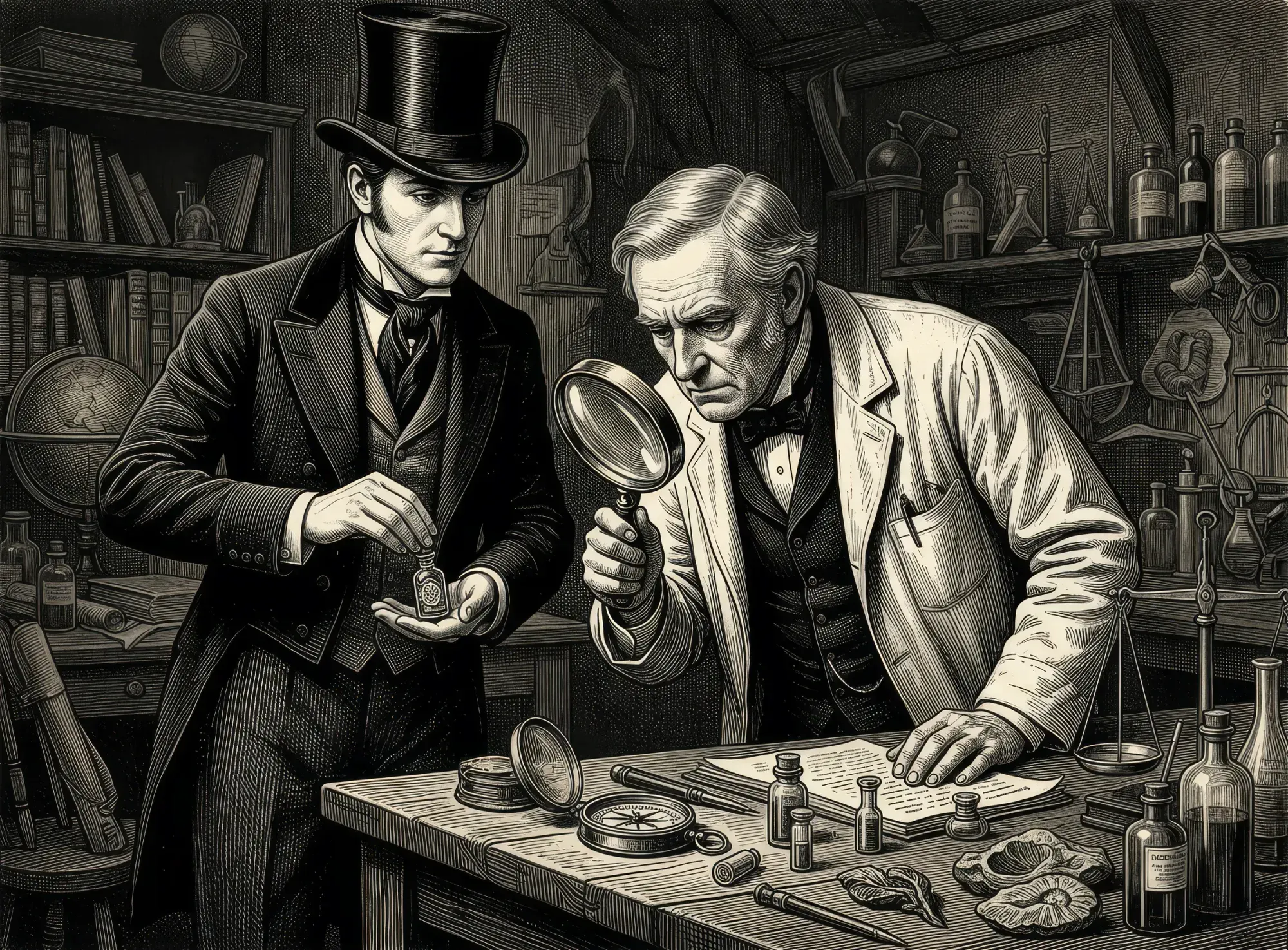
Scientists think and perceive logically by using their training and observational skills, and are thus often insulated from the possibility that there might be chicanery at work.
Magicians, in fact, have been a critical part of the history of modern skepticism, so please allow me to give you a peek behind the curtain, a cursory glance at who and what we magicians are, and are not. First, we’re entertainers, actors, showbiz people who have as our primary objective the delight of our audiences. We’re deceivers, taking on roles and characters to express our art, just as any actor does. With a few rare but important exceptions, we are not scientists—though some us will have enough knowledge of science to recognize flummery simply by using common sense. Our highly specific expertise comes from knowledge of the ways in which our audiences can be led to quite false conclusions by calculated means—psychological, physical and especially visual. Scientists think and perceive logically by using their training and observational skills, and are thus often insulated from the possibility that there might be chicanery at work. After all, a bacterium or a crystal will not go out of its way to deceive the scientific observer, while an appropriately motivated human being most assuredly will.
To quote Sir Arthur C. Clarke’s Third Law: “Any sufficiently advanced technology is indistinguishable from magic.” The techniques of the conjuror—or of the “psychic” performer—are apparently magic to even the best-intentioned scientists. Having rational explanations for these talents is not a matter of I.Q. or of academic preparation. It requires specialized education and bias-free critical thinking. Any scientist can be trained to design methods of testing and solving what might be simple “magic” tricks. Once a certain point is arrived at in that process, a “savvy” appears to kick in that is permanent. It’s a valuable addition to world experience, almost like learning another language.
An experienced magician can come upon a previously-unmet colleague working his trade in a street he’s never been to before, and will immediately see the truth behind the illusions. The mind of the magician works that way. We can’t make magicians out of scientists, and we would not try, but we can try to provide them with new and useful ways of thinking. Don’t think for a moment that this would be a case of simply exposing the secrets of each and every major magic illusion in that vast repertoire. That would take a lifetime or two, and would probably not educate the student in the basic process of “thinking in the groove,” or thinking like a magician. In mathematics, anyone can find the square root of the number 2, either by trying every likely number, refining and narrowing down the estimation until an appropriately-accurate result is arrived at (it’s always approximate, since it’s an “irrational” number), or one can design a method of systematically extracting that square root—a method that will work on any number within the range of such an operation; a method that will provide a proper, accurate-enough answer without trial-and-error. The magician favors the latter manner of solving a question involving trickery, bringing his attention to bear on the psychological, mechanical, optical, sensory, and emotional factors and information.
As an example of this process at work, consider this scenario: a pleasant, perhaps overly-charming, quick-talking performer offers to demonstrate a phenomenon in which a common teaspoon appears to turn flexible in his hands and be distorted out of shape, by a means that he says he himself does not understand, and which he attributes to the hidden psychic powers of the breathless spectator. How’s that trick done? Well, first of all, we’re not as aware of the actual curve of a teaspoon as we think we are. Were a straight, flat, piece of metal to be used, any minor change of shape would be immediately evident. Two identical spoons will usually nest together neatly, but if one of them is surreptitiously bent—slightly—the spectator has a difficult time noticing the difference, between two un-nested spoons, while with a straight piece of metal, he’d see it right away. My point is that a spoon’s profile is somewhat ambiguous, which makes it ideal for use in the repertoire of our scallywag—we’ll call him “Scally” for short—who claims that he has genuinely magical powers. Second, Scally handles the spoon casually, waving it about while chatting up the spectator and specifying just how the spoon should be held and what attitude to adopt—factors of no importance except as his means of misdirecting attention. As for the specific method that Scally uses to bend the utensil, as I’ve often told my students, he bends it when the spectator isn’t looking. No, that’s not avoiding an explanation; it’s an exact description. How Scally arrives at that point, of course, is the big secret. He does it with misdirection—when the spectator is distracted by his idle chatter and apparently random movements.
A bacterium or a crystal will not go out of its way to deceive the scientific observer, while an appropriately motivated human being most assuredly will.
Ever since mass communication became available there have been hundreds of Scally’s who came from nowhere to befuddle the public. For example, some 130 years ago, all of New York was agog over a vaudeville performer named Miss Lulu Hurst (1869–1950) of the state of Georgia, who at the age of 14 was initially known as “The Electric Girl,” and then as the “Georgia Wonder.” No one seemed to understand exactly how she did her demonstrations of resisting the efforts of the strongest men—chosen from the audience—who appeared with her on stage. Having no better explanations, amateur “experts” attributed her seemingly wondrous powers to electricity and magnetism, those then-mysterious agents that science and the public were increasingly using, but which still seemed rather magical. When three large and determined men from her audience tugged at a broomstick or a billiard-cue, trying to wrest it away from the fragile-looking girl, they failed every time. It appeared that Lulu had signed a pact with you-know-who. Yet such feats, if one only knew how to perform them, are straightforward exploitations of the basic laws of leverage. Have things changed that much today, when so many of us are still charmed by charlatans who invoke basic scientific principles to explain their tricks? Of course, they now have much more powerful and captivating terms such as “quantum physics” to throw into the mix. Back then, “magnetism” seemed to do the job.
Miss Hurst had discovered, among many other basic facts, that her diminutive figure gave her an unexpected advantage over the huge men she’d invited to join her on stage. As an example of one simple trick she’d do, see the illustration on this page. Two men would be asked to grasp one end of a broomstick horizontally with both hands, all of their hands held closely together, and both of them at the same end of the stick, which they would hold parallel to the floor. Miss Lulu would place one of her fingers under the extreme tip of the other end, and ask the men to push her finger down with the broomstick. They could not. Try it yourself and you’ll find that you apparently have supernatural strength, too! Again, it’s all a matter of leverage. It’s also a matter of how the challenge was issued. Lulu was in charge; she told the volunteers to push her finger down. Had she chosen to use her finger to move the stick, her leverage advantage might have become obvious to her audience.
Lulu was only one of the first of what soon became a whole series of “magnetic ladies” who were quickly created by entrepreneurs. Her success was such that she soon found her imitators going further than the original. One Anna Abbott, billed as the “Little Georgia Wonder,” had a career that far outlasted Lulu’s, which attracted audiences for only two years. It’s interesting to note that Lulu essentially began her career in her very early childhood, when she produced “spirit raps” in her bedroom—much as the Fox sisters had done back in 1848. And, Lulu fooled both Sir Oliver Lodge (1851–1940) and Sir William Crookes (1832–1919), devoted fans of spiritualism and other sorts of woo-woo who eagerly accepted her tricks as evidence of supernatural forces. These were competent, experienced scientists—physicists—but totally out of their field of expertise.
Let these examples serve as lessons learned. Anyone can be fooled, including and especially intelligent and educated people.