Rhodesia, the Vanished State: How Societies Succeed and Fail
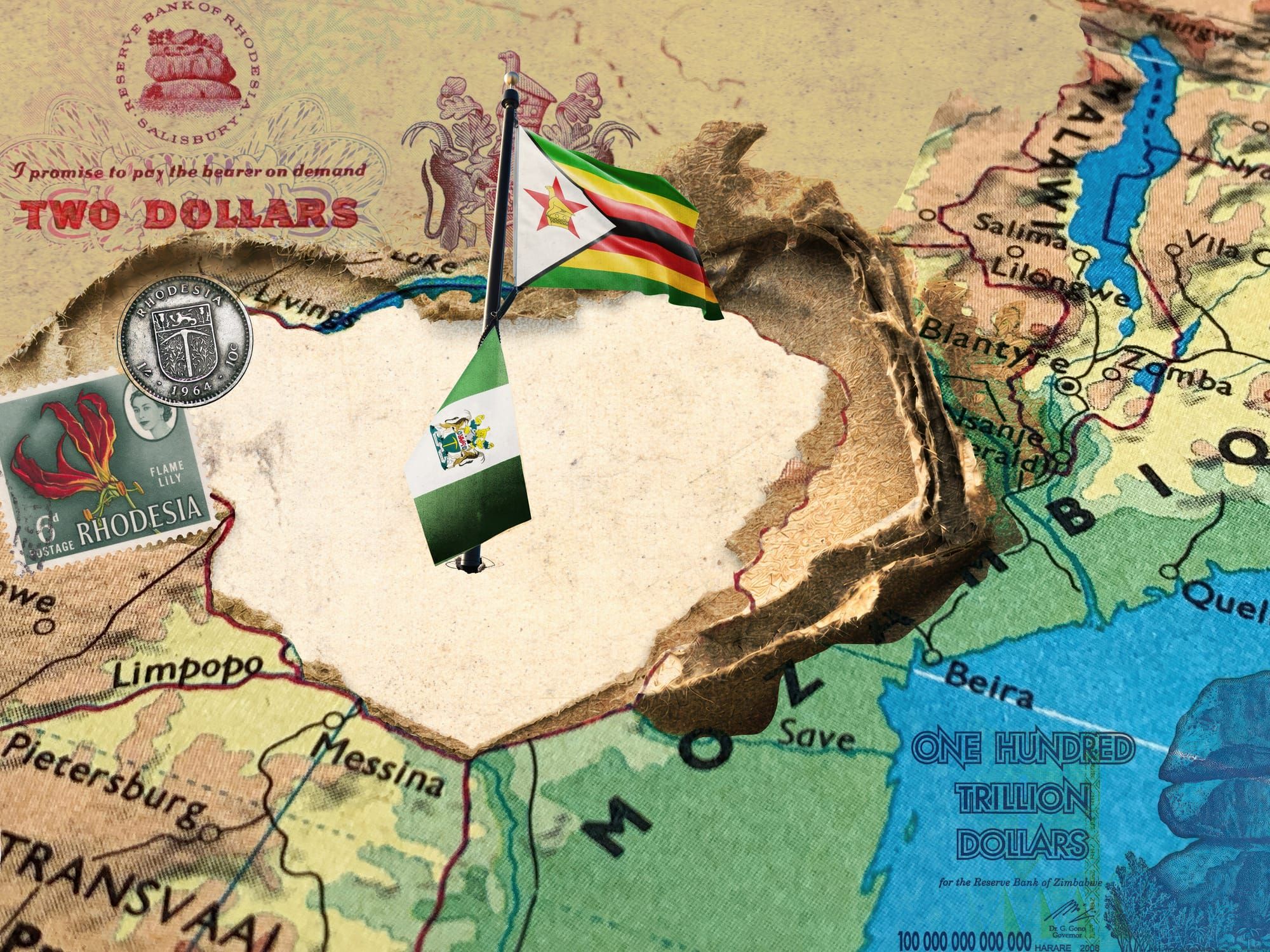
History often assumes that long-established states retain inherent certitude. Roads, railways, courts, universities, the civil service, currencies, monetary and financial systems, cultures, and borders appear to embody continuity. These embedded entities lend an impression that the foundational institutions of modernity and society, once established, are remarkably durable. Yet the twentieth century provides evidence of the opposite.
States have emerged, flourished, faltered, and disappeared within a single lifetime. Borders have been redrawn, as between Ethiopia and Eritrea; states have divided, as with Sudan and South Sudan; and old constitutional orders have been abandoned, as in South Africa and Korea. Europe offers even more striking examples. Yugoslavia fragmented into a succession of independent states after 1991; Czechoslovakia divided into the Czech Republic and Slovakia in 1993; East Germany disappeared altogether through reunification with West Germany in 1990; and the collapse of the Soviet Union created fifteen independent states, several of them in Europe.
Political transformation has often been accompanied by equally dramatic economic change, with currencies abolished, replaced, or rendered worthless. Much of Europe eventually replaced long-established national currencies with the euro. The supposed permanence of states and their institutions is therefore often more apparent than real: new political arrangements are repeatedly poured into old institutional vessels, “new wine in old bottles,” and sometimes the bottles themselves disappear.
Rhodesia: A Vanished State
Rhodesia provides a striking example of the “vanished state.” Over a period of ninety years, it acquired many of the outward features of permanence: a modern capital in Salisbury, an elected parliament, efficient municipal government, functioning courts and judicial systems, and an experienced civil service considered among the best in Africa.
It also developed an extensive, world-class multiethnic educational system. By the early 1960s, about 95 percent of African children were attending primary school, while the country maintained secondary, vocational, and technical schools alongside a university. The University College of Rhodesia and Nyasaland, established in 1955, entered a special relationship with the University of London and awarded London degrees; by 1964, 180 of its 600 students were African. These institutions contributed to comparatively widespread basic literacy. Healthcare likewise extended beyond the major cities through a nationwide network of hospitals; by the mid-1970s, roughly 80 rural hospitals served the African population.
Economically, Rhodesia developed commercial agriculture and mining industries, allied secondary manufacturing industries, including for ethanol, and a sophisticated financial sector that included major international banks such as Barclays, Standard Bank, and Grindlays, as well as its own stock exchange. Its currency remained relatively stable, with the Rhodesian dollar introduced in 1970 at an official value of US$1.40, while periods of rapid real economic growth raised living standards and output per head: real GDP per capita grew by about 4.6 percent annually between 1954 and 1958, and by 1976 remained 57 percent above the average for developing Africa.
This economic base was accompanied by an extensive road and railway network, a national airline, and the ordinary symbols and machinery of statehood, including armed forces, postage stamps, and passports. Salisbury and Bulawayo ranked among Africa’s best-serviced and managed cities, with attractive suburbs and substantial infrastructure. Major engineering projects such as the Kariba Dam seemed to embody confidence in a long-term national future. Meanwhile, a thriving literary culture and a vibrant fourth estate with newspapers and nationwide radio and television services contributed to a distinctive political and social culture.
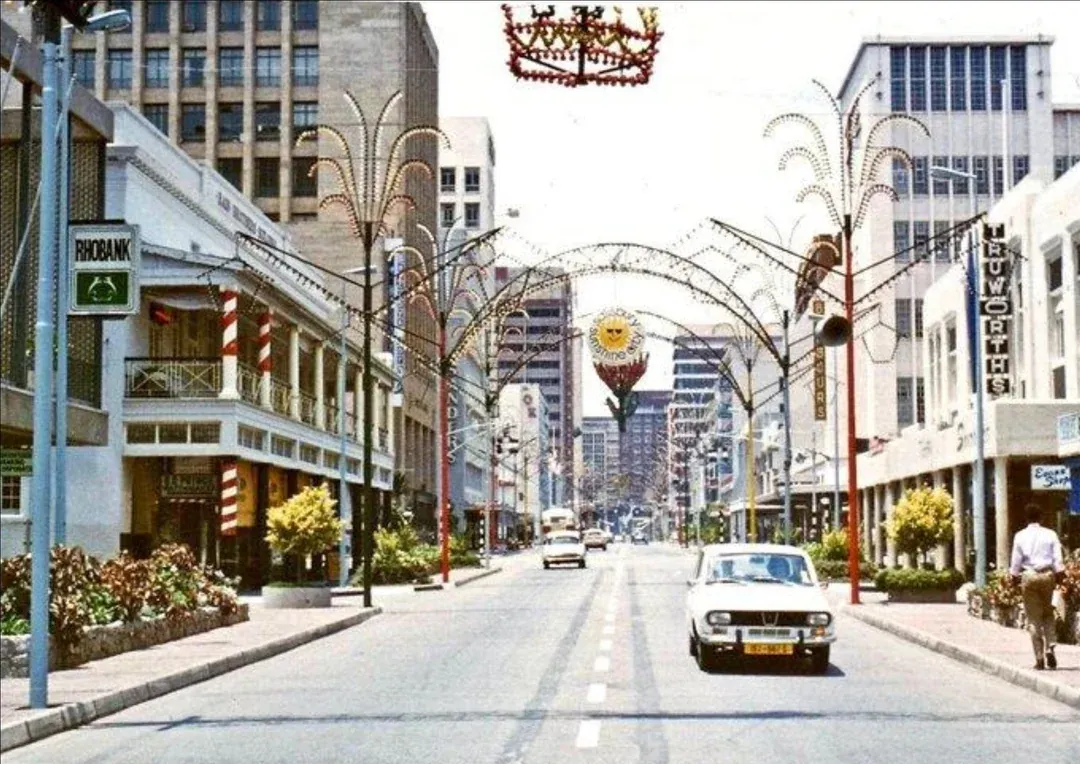
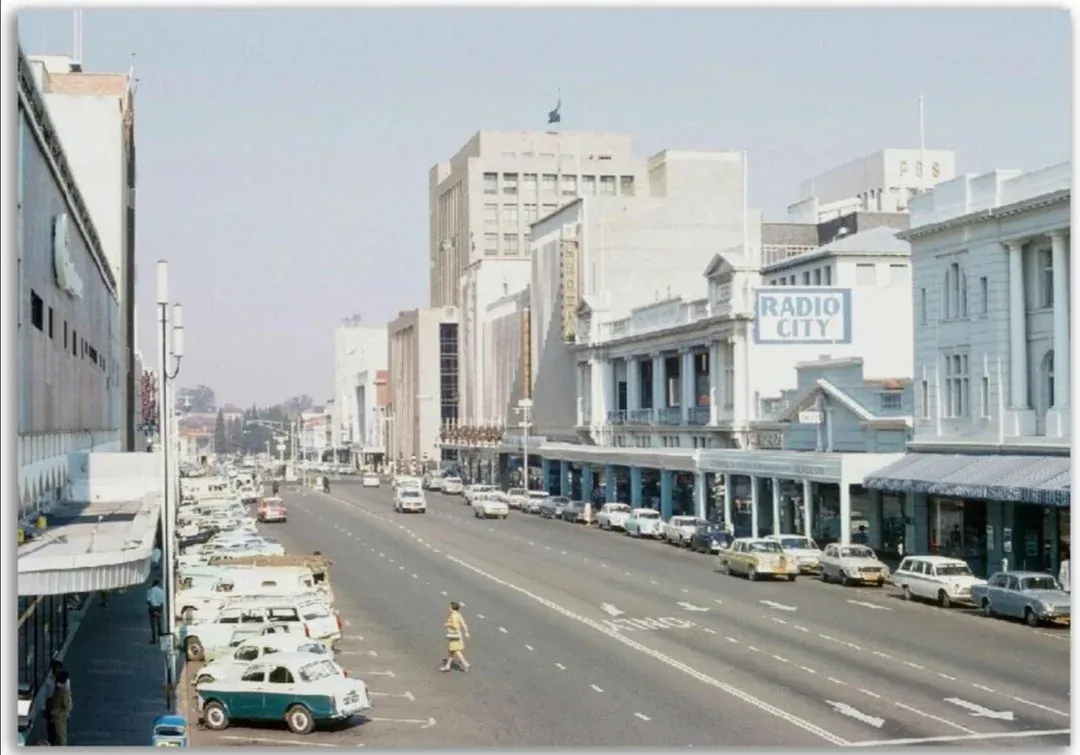
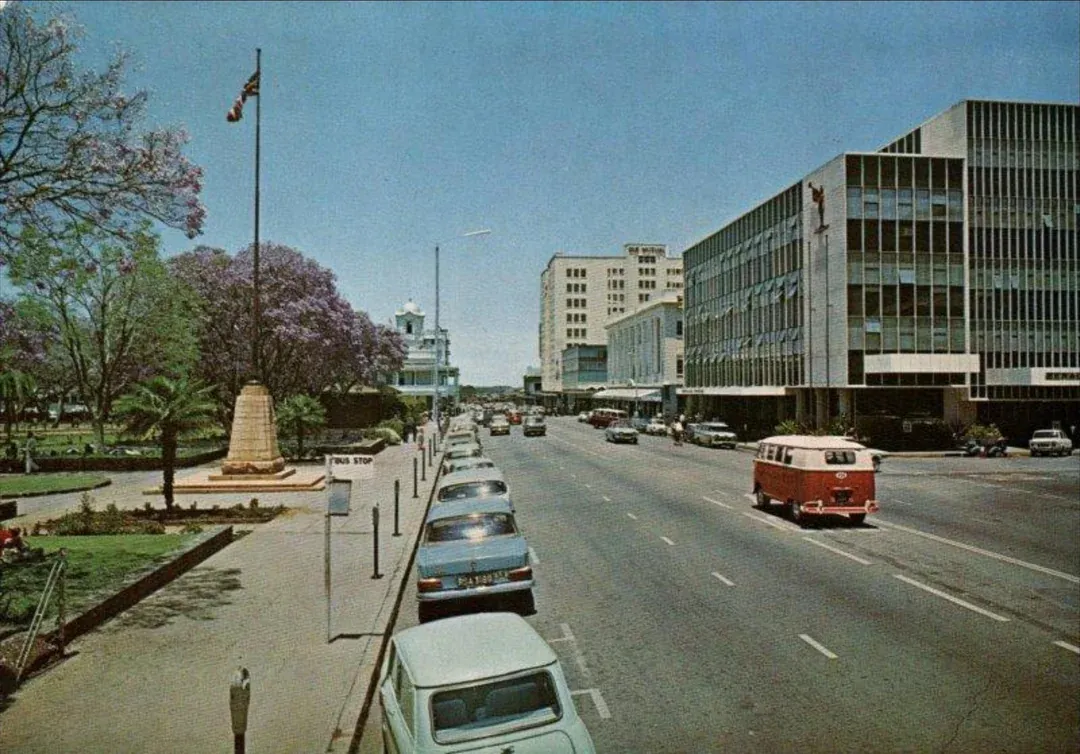
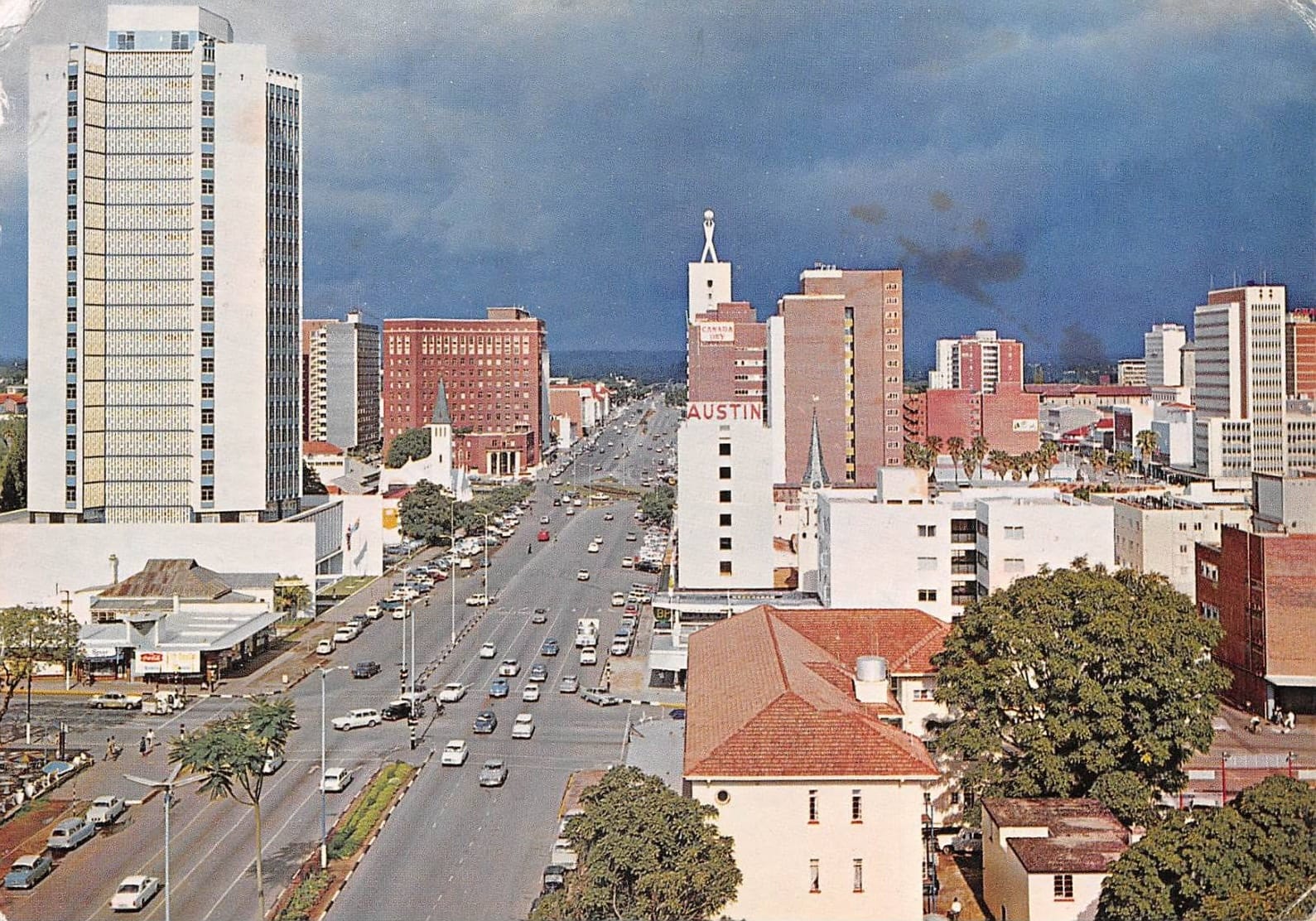
Salisbury, Rhodesia, 1960s–1970s
Yet, within a generation, Rhodesia disappeared from world maps and Africa’s cartography, and over time from Western historical consciousness altogether.
What happened to Rhodesia?
The sudden transformation into Zimbabwe saw Rhodesia’s political systems, economic fabric, and collective memory dismantled or recast to reverse an otherwise well-imagined historical trajectory built over multiple decades. Its established social and economic structures with long-embedded governing systems were overturned as the inheritor state displaced Rhodesians from their lands of birth or adoption.
Whether viewed as minority regime, settler state, Britain’s “last colony,” or a rare if prosperous society within landlocked southern Africa, Rhodesia’s sudden eclipse from the world stage, geography, and global mindsets illustrates how socioeconomic and political structures, institutions, and identities can be rapidly eroded, erased, and transformed.
The broader lesson embedded in the Rhodesian story concerns the fragility of modern states and even the vulnerabilities of Western cultures.
Rhodesia’s record of achievements, however, existed alongside social and political contradictions. The constitutional order rested upon unequal political voting rights that excluded most Africans from full participation in Rhodesia’s qualified franchise and electoral system for much of the state’s existence. Public outlays on health and education were uneven. Land ownership, trade union rights, parliamentary seats, and economic opportunity remained discriminatory across time and amid socio-ethnic classes.
African nationalist movements from the late 1950s under Joshua Nkomo, and more so after the demise of the ill-fated Federation of Rhodesia and Nyasaland in 1963, led by Ndabaningi Sithole and then by Robert Mugabe, increasingly rejected incremental constitutional reform and negotiations on evolutionary pathways to majority rule and independence.
Their locally detained or exiled leaders opted for irredentism and ultimately war in the guerrilla struggle or terrorist onslaught that would even predate Rhodesia’s Unilateral Declaration of Independence (UDI) on November 11, 1965, by the prime minister, Ian Smith. The dye had been cast before Smith’s decision.
Britain, the Commonwealth, the Organisation of African Unity, most African states (with the exceptions of Malawi and Gabon), the United Nations, the Eastern Bloc, the Warsaw Pact, the Non-Aligned Movement, and the wider international community, including the United States, regarded UDI as unlawful and illegitimate. Apart from South Africa, Portugal, and Switzerland, Rhodesia was effectively branded and treated as a pariah state.
Thus, Rhodesia at the time combined sophisticated state institutions and its modern economy with an unresolved crisis of accepted international political legitimacy. As time passed, these conditions of enforced isolation worsened.
Subsequent history has demonstrated that even an interregnum of Pax Rhodesiana at 90 years from 1890, and institutional competence as one of Africa’s few and longest existent Westphalian states, did not guarantee political or ultimate de facto and de jure state survival.
During UDI, 1965–1980, Rhodesia operated under comprehensive international sanctions. London excised it from the Sterling Area on the day of UDI. In 1966 the United Nations imposed mandatory worldwide economic sanctions (only France abstained in the Security Council) issued in unprecedented scope at the time.
Britain actively sought Rhodesia’s diplomatic isolation and placed its Royal Navy in a blockade of Beira, the sole port for crude imports for the inland Feruka refinery near Umtali. Strict petrol rationing followed, with local ethanol blended into all fuel product at 20 percent.
Adjacent states, South Africa excluded, but including Zambia, Tanzania, Egypt, Ethiopia, Uganda, Nigeria, and others progressively closed off trade and shut transport corridors. Many states in Africa, and elsewhere, provided direct or indirect political, diplomatic, financial, material, and military hardware to armed nationalist movements.
The OAU, East Bloc, Soviets, People’s Republic of China (PRC), North Korea, and others, including Nordics, notably Sweden and Norway, provided logistical and financial aid to insurgents in terrorist camps and related armed entities and NGOs seeking to overthrow the Rhodesian government.
By 1973, the number of training camps and facilities in East Bloc countries had grown significantly: Zanu (Zimbabwe African National Union) and its armed wing Zanla (Zimbabwe National Liberation Army) sent cadres to PRC, Cuba, Ghana, Egypt, Uganda, Tanzania and after 1975 to the neighboring Mozambique, to be directly aided by Frelimo.
Ultimately, Rhodesia’s excision from the wider public square reminds us that states are sociocultural creations rather than ordained historical fixtures.
Zapu (Zimbabwe African People’s Union) and its Soviet-trained armed forces, Zipra (Zimbabwe People’s Revolutionary Army), had training facilities in the USSR at Simferopol, Moscow, and Odessa, and in Bulgaria, Cuba, North Korea, PRC, Algeria, Egypt, and Tanzania. Other support came from East Germany, Yugoslavia, Czechoslovakia, and elsewhere.
All guerrilla numbers trained and extensive military support given expanded as time passed. The war was designed, funded, and mostly shaped abroad—and as much “out of Africa” as within. Over 115 training camps and external bases had been established worldwide by the end of the Bush War that ultimately ended with the disappearance of Rhodesia as a state.
Despite these severe threats and constraints, Rhodesia survived and displayed considerable economic resilience. Domestic manufacturing expanded through import substitution; agricultural production remained diversified and relatively strong, sustaining its role as “the breadbasket of Africa,” mining continued to generate hard currency export earnings in complex anti-sanctions countertrade deals and clandestine arrangements.
Meanwhile, South Africa and Mozambique offered critical commercial lifelines, at least until 1975, when Frelimo came to power in Maputo, and up to when Pretoria slowly but progressively disengaged after Smith had held fateful talks with Kissinger and Vorster in Pretoria in 1976.
Even so, sanctions imposed measurable long-term costs. Foreign investment became constrained. International capital markets remained inaccessible. The International Monetary Fund and International Bank for Reconstruction and Development, the main lending arm of the World Bank Group, would not touch Rhodesia. Arms acquisition became more difficult. There was no external source of aid. Consumer import goods were scarce. Essential supplies were locally manufactured. Export markets narrowed, and sanctions-busting transaction costs increased.
While sanctions alone did not directly induce Rhodesia’s political demise, and economic adaptations offset some disadvantages, they compounded growing burdens imposed by the costly and long-running counterinsurgency war that lasted 16 years end-to-end.
What became known as the Bush War fundamentally altered the otherwise implied trajectory in political economy for Rhodesia. Beginning as a relatively limited insurgency during the 1960s, it expanded dramatically during the 1970s as Zanu/Zanla and Zapu/Zipra received increasingly large amounts of international support. Separately, both penetrated Rhodesia’s northern, western, and eastern frontiers.
While Zanu/Zapu’s wars differed in patrons, ideology, strategy, tactics, scope, intensity, and foci, neither alone nor combined could either ever have succeeded without worldwide foreign assistance, including from allied interests and parties in the West, and coordinated political isolation of Rhodesia.
The conflict thereby became intertwined within the Cold War across Africa. While Rhodesia itself never occupied the same geopolitical prominence as did later Angola, it became another hot war theater in which East-West ideological competition, and Sino-Soviet interests, shaped Rhodesia’s ultimate demise.
The Soviet Union, East Bloc, China, North Korea, and Cuba viewed Africa and their client states through the prisms of Cold War competition, although their commitments in Rhodesia differed in ideology, scale, and character. Each in Sino-Soviet camps had chosen and aligned “cat’s paws” in the military sphere.
However sophisticated states appear, they often contain or conceal historic fault lines or the cultivated seeds of their destruction, so that many remain inherently fragile.
Britain sought a negotiated constitutional settlement yet would never accede to Rhodesian electoral norms or franchise requirements. Washington balanced its anti-Sino-Soviet concerns with support for majority rule. South Africa’s policy shifted over time with détente as Pretoria later prioritized its own strategic interests and calculus.
The war imposed enormous and escalating pressures upon Rhodesia. Military outlays absorbed an increasing share of state budgets to fund its small, highly professional army along with the larger number of Africans in the Rhodesian African Rifles. National Service for Rhodesians expanded every year post-1973 with enhanced and burdensome conscription, including for Coloureds and Indians in Rhodesia.
Labor shortages intensified. Some skilled personnel left the country, never to return. Commercial agriculture operated under duress in high-risk rural areas or hot war zones under mounting security constraints. Military and civilian casualties increased over time, reaching 50,000–80,000 by the war’s end.
The socio-psychological effects of prolonged conflict became embedded within the Rhodesian psyche and impacted large numbers of Africans, especially in remote Tribal Trust Lands or those relocated into Protected Villages.
Even so, urban and rural infrastructure remained functional throughout most of the war, demonstrating adaptation and institutional resilience. The war slowly eroded control over border areas and administrative capacity while increasing dependence upon external military operations to thwart larger terrorist inflows.
The Rhodesian army never lost its many battles fought in the bush or in foreign states, but some in the military thought it “lost the war”—and peace. For many, the war ended ignominiously, with negotiations enforced under British tutelage.
Zimbabwe: The Inheritor State
Rhodesia did not merely disappear from cartography: its institutional, economic, and physical inheritance passed into the successor state of Zimbabwe, whose subsequent trajectory forms an evolutionary saga in this history.
The Lancaster House Agreement of December 21, 1979, set down the agreed framework for an end to the Bush War, with transition toward an internationally recognized election and a date for Zimbabwe’s independence on April 18, 1980.
The short interregnum rubric of Southern Rhodesia under the Governor, Lord Christopher Soames, was fraught. Appointed to oversee the ceasefire and elections, Soames granted amnesty to guerrilla fighters. Under the Lancaster House agreement, those fighters were supposed to gather at designated Assembly Points under British supervision, but more than 7,000 members of ZANLA, the guerrilla army of Robert Mugabe’s Zimbabwe African National Union (ZANU), reportedly remained outside them, while intimidation was widespread. Meanwhile, the wartime alliance between Mugabe’s ZANU and Joshua Nkomo’s Zimbabwe African People’s Union (ZAPU), which had negotiated at Lancaster House together as the Patriotic Front, broke down as the two movements pursued their own political ambitions and contested the election separately. Other political parties likewise competed for power.
Independence brought international recognition and initial optimism, including foreign aid and some investment. Zimbabwe inherited a diversified economy, a strong currency, functioning central state institutions, efficient and profitable state-owned companies, an experienced civil service, commercial agriculture with food self-sufficiency, large export earnings, and educational and health systems that compared favorably with all other African states.
The early years of independence were marked by the articulated mood music of “reconciliation,” with reasonable growth rates and some social achievements, mostly built off capital stock from Rhodesian economic bedrock.
Primary education expanded and access to rural health increased significantly. International aid donors returned. Diplomatic isolation ended. Sanctions were lifted. The terms of trade improved. But government exploited the inherited low level of foreign and local debt to expand the state remit and its parastatals, as the civil service underwent rapid Africanization and expansion.
The reconciliation transition also contained unresolved political and economic tensions. Centralist and socialist ideologies with statist policies were implemented. Hence the honeymoon did not last long.
Relations between Zanu-PF and Zapu (reflecting Shona–Ndebele ethnic divide) deteriorated sharply in the early 1980s. Dissent in Matabeleland and Midlands culminated in the Gukurahundi campaign of genocide waged against Ndebele undertaken by Mugabe’s North Korean-trained 5th Brigade. About 20,000–25,000 civilians were killed. Remedy or recompense is yet to be levied and continues to influence national and Ndebele historical memory.
The quasi-enforced Unity Accord of 1987 cemented Zanu-PF’s political control while ending long-term de facto competition from Zapu in the Shona-controlled one-party state. By then Rhodesian parties were no longer in parliament, and from that time fewer such politicians were involved in national politics as the years passed. They are now absent and irrelevant.
Political authority became increasingly concentrated within presidential hands and in the politburo, central committee, and party executive. Since 1980, at least 20 constitutional amendments have expanded presidential diktat, the latest by Emmerson Mnangagwa designed to emasculate voting and threats outside the entrenched ruling Zanu-PF party in 2026.
For decades, opposition parties and politicians have been intimidated, beaten and systematically weakened even as elections continued, but have been mostly flawed, usually accompanied by violence, and almost always corrupted.
While Zimbabwe remained comparatively stable throughout much of the 1980s and early 1990s, structural weaknesses accumulated thereafter. Overseas aid was reduced, foreign investment withdrew or shrank, IMF policy correctives were abandoned, fiscal deficits increased, state outlays and parastatals expanded, as foreign and domestic debt annually augmented.
Meanwhile, formal employment stagnated and then declined precipitously. African population growth at over three percent annually during 1980–1998 placed increasing pressures upon fast-shrinking formal labor markets. Mass poverty and unemployment resulted.
Formal employment has fallen to around 10 percent of all in work, most now informalized, an inversion of metrics typical of the 1970–1980s, as the hand-to-mouth kiri-kiri economy has become one of daily survival. Trajectories for the future imply that past long-term secular growth profiles have receded into the mists of time.
Some seismic events contributed to this macro-social malaise. Large unfunded war veterans’ compensation payments were made. Land invasions created catastrophe. Costly military interventions took place in Mozambique and in Democratic Republic of Congo. Ideology and overt hostility to foreign investors, with state-mandated indigenization initiatives diminished net capital investment.
The key turning points arrived during the late 1990s and early 2000s with land confiscations, accompanied by state-orchestrated violence and the eviction of 4,500 owners from White farms along with 300,000 farm workers and families, numbering around two million people. This Fast Track Land Reform Programme in 2001 fundamentally transformed agrarian ownership and the land rights of Rhodesian autochthons. More Rhodesians fled their land of their birth.
Many confiscated farms were handed to Zanu-PF “chefs,” political cronies, party cadres, officials, and nomenklatura, after often chaotic seizures that severely disrupted commercial agriculture, fatally damaged agro-allied industry, caused banks to collapse amid serial monetary crises, generated mass unemployment, reduced export earnings, induced serial bouts of hyperinflation and undermined residual investor confidence.
The supposed permanence of states and their institutions is therefore often more apparent than real.
A severe economic contraction followed. Between 1999 and 2008, Zimbabwe’s real GDP fell by more than 40 percent; a later World Bank assessment put the decline at 49 percent, describing it as one of the deepest peacetime economic contractions recorded anywhere. Hyperinflation reached extraordinary levels. By November 2008, one widely cited estimate put annual inflation at 89.7 sextillion percent, with prices doubling approximately every 24.7 hours.
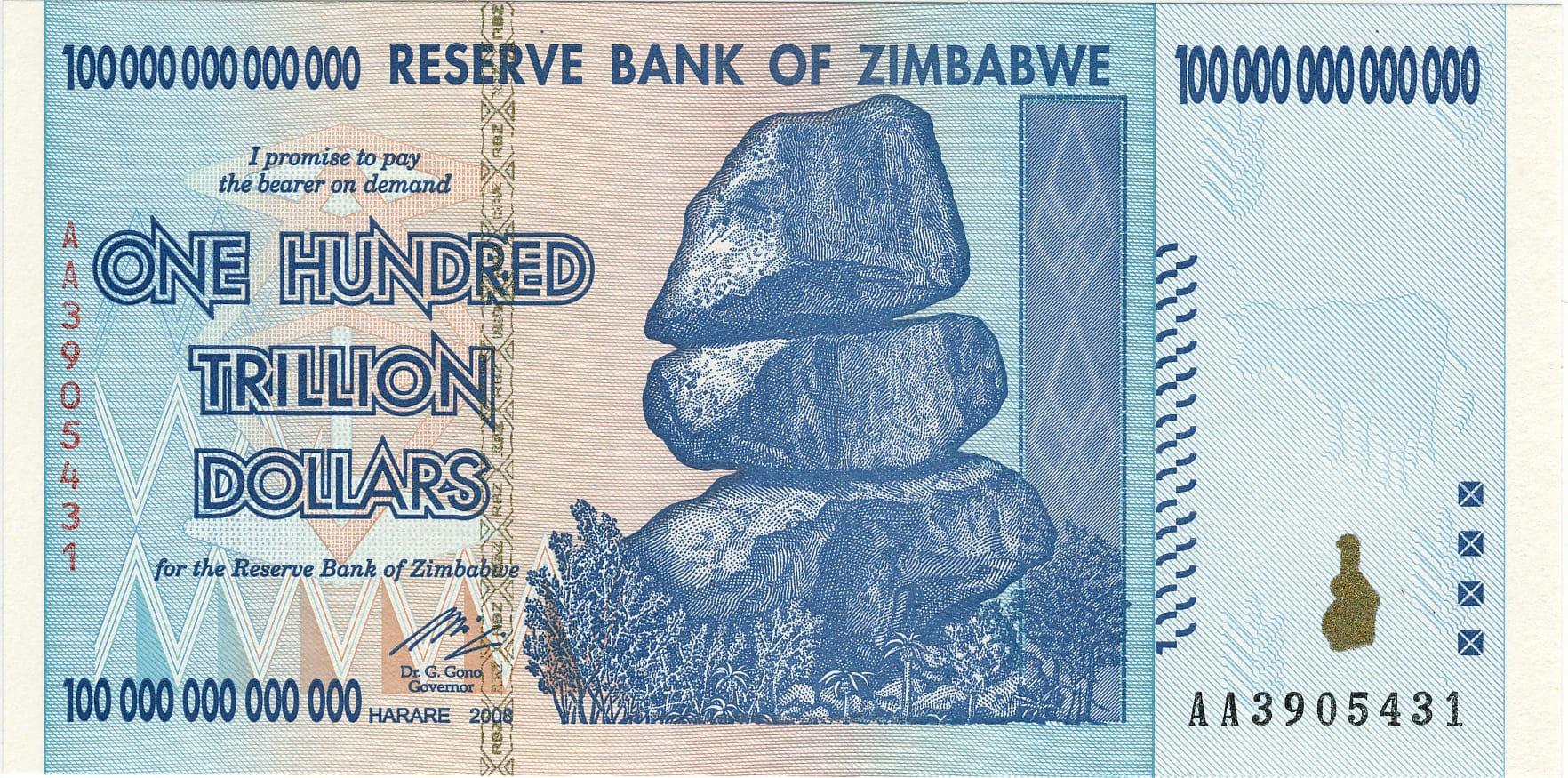

Zimbabwe’s currency collapsed through successive redenominations, culminating in the infamous 100-trillion-dollar notes before the domestic currency was effectively abandoned. Dollarization followed, although subsequent governments repeatedly attempted to restore a national currency. In 2024 the government introduced another, the Zimbabwe Gold, or ZiG; even in 2026, however, the IMF continued to describe the economy as heavily dollarized, with the ZiG only gradually gaining acceptance.
Infrastructure and basic services deteriorated alongside the economy. Electricity shortages became chronic. In 2020, for example, Zimbabwe had only about 1,585 megawatts of available generating capacity against peak demand of roughly 1,900 megawatts, forcing power cuts of 12 to 14 hours a day; during later drought-related shortages, load-shedding sometimes exceeded 18 hours a day.
Municipal water and sanitation systems provide an even starker example. The World Bank concluded that at the nadir of the crisis in 2008–2009, water and sanitation service delivery in Greater Harare (formerly Salisbury) effectively collapsed, as power shortages, lack of water-treatment chemicals, and failures in pumping and wastewater treatment overwhelmed the system. Even after emergency repairs, some parts of the metropolitan network received water only a few times a week and others received none at all. By 2013, only about 39 megaliters of wastewater a day were being treated while 231 megaliters went untreated, much of it flowing into waterways supplying the capital itself. In Beitbridge, a contemporary UNICEF assessment described streets strewn with refuse, an absence of garbage collection, sewage running in the streets, and severe water shortages.
The consequences for public health were dramatic. The deterioration of water and sanitation helped produce the 2008–2009 cholera epidemic, which spread to 55 of Zimbabwe’s 62 districts and produced 98,424 suspected cases and 4,276 reported deaths. WHO explicitly linked the epidemic to unsafe drinking water, poor sanitation, declining health infrastructure, and reduced numbers of healthcare workers reporting for duty. Greater Harare alone accounted for about 26 percent of the roughly 4,300 cholera deaths.
The health system itself suffered severe shortages of personnel, drugs, equipment, and funding. Even after partial recovery, the World Bank found in 2012 that Zimbabwe had only one doctor for every 15,473 people. Life expectancy also declined sharply, although the economic and institutional crisis was only part of the explanation: Zimbabwe was simultaneously experiencing one of the world’s most severe HIV/AIDS epidemics.
Economic inequality also widened markedly. According to the World Bank, Zimbabwe’s Gini coefficient rose from 44.7 in 2017 to 50.4 in 2019, leaving only twelve countries in the Bank’s comparison with greater measured inequality. In 2019, the richest 10 percent of Zimbabweans accounted for about 41 percent of national consumption. Over the same two-year period, consumption fell for every income group except the richest tenth of the population, while extreme poverty rose from 30 to 38 percent and the number of people classified as extremely poor increased from 4.5 million to approximately six million.
Greater numbers of skilled Zimbabweans have thus emigrated to South Africa, Britain, Australia, Botswana, Zambia, Canada, The Americas, the Gulf, Asia, or elsewhere. Of all Rhodesians, only 10 percent remain at home as “left behind,” the rest ensconced elsewhere in Africa or spread widely abroad.
Around 3–4 million Africans have joined this exodus for survival. This enormous human capital loss has never been measured but stands as a net deadweight loss on the economic future.
Lessons Lost
Zimbabwe demonstrates that state deterioration rarely occurs instantaneously. Rather, decline frequently unfolds, cumulatively, through numerous individual, state, or policy decisions and acts of self-harm, even if not combined with one-off seismic events, Zimbabwe has witnessed many calamities. Deeply entrenched is corruption, the rule of law is replaced by law by rule or edicts selected by the chefs, erosion of integrity is seen in most independent institutions, notably the courts, judiciary, and faulted electoral systems, and censorship emasculates the press.
All that would be bad enough if not alongside the increased concentration of presidential, party, police, and military authority, combined with the liberal use of instruments of repression, in cases of terror, plus malign activities by the Central Intelligence Organisation and informal militia under the control of the dominant party and regime.
International financial institutions have shunned Zimbabwe. It is still in arrears to the Bretton Woods twins. Foreign debt is around $16 billion with public debt over $23 billion, arrears at around $12 billion. The predicament has worsened annually. No solution is yet in sight to remedy these debt arrears, let alone offset the foreign and local landowners at $3.5 billion in unpaid costs for confiscations, that sum excluding any land values.
State capacity is not inherited automatically by future generations, let alone by new regimes, let alone revolutionary states.
When in 1980 Rhodesia became Zimbabwe, this state mattered; now, for the West, Zimbabwe does not much matter. Hence, too, Rhodesia has slipped from its historical memory and the public square in such a fashion as to have almost vanished in an act of convenient dismissal or contrived disappearance.
While Rhodesia was rapidly taken off world cartography and largely excised from mainstream foci and international discourse, later generations increasingly encounter it only as an aberration or historical footnote. Now it is usually associated with images and tropes about settler colonialism, decolonization, the illegalities of UDI, injustices of the war, and peons artfully scripted to laud the liberation struggle, and the foundation myth for an inheritor state birthed in the original sin of genocide, one later compounded by calculated ethnocide.
Much of Rhodesia’s foundational, administrative, commercial, and social history has received comparatively limited attention, including in academia, except now from a handful of Rhodesian authors in exile.
This condition reflects broader aspects of retained memory: successor states, revolutionary or not, often indulge in historical revisionism, to redefine national myths and acceptable narratives, while international stories, foci, and attention inevitably shift elsewhere.
In Rhodesia’s case, acts of organized cultural elimination were initiated rapidly and systematically post-independence. Heroes’ Acre was conceived in 1980 by Mugabe and soon thereafter was built by North Koreans with no reference to any Rhodesians; Cecil Rhodes’s statues and those of Alfred Beit and others in the Rhodesian pantheon were summarily taken down; major streets were renamed after liberation heroes; public buildings acquired new nomenclature, and so on. All was done to airbrush the Rhodesian era and its unwanted history from view.
Rhodesians encountered profound personal loss associated with asset confiscation, the exigencies of sudden unwanted migration, separation from ancestral homes, and the dissolution of familiar networks. For most, their friends and families are widely dispersed across the world, even if but a few remain at home.
The survival of modern states depends not just upon their apparent strength at any single moment, but upon eternal vigilance.
Yet while states may disappear in cartography, they may exist culturally through nostalgia, retained memorabilia, and memory. Ex-Rhodesians have established exile societies, entities, and organizations across the world. Tens of thousands of “Rhodie” reunions and meetings have been held in the last forty-six years.
Rhodesian cultural modes de vie, braais, accents, family histories, artifacts, music, paintings, humor, published books, poetry, YouTube clips, documentary films, veterans’ associations, historical societies, and Facebook groups have sustained this culture.
As the Rhodesian balladeer, Clem Tholet, once sang: “Rhodesians Never Die”—and yet they do, and have. The demographic tide is against cultural longevity forever, even in numeric terms. Meanwhile, the Rhodesian state is no more, its past not evident in contemporary public imagery and consciousness.
As historic place names altered, institutions were taken over and reorganized, legal systems eroded or modified, state symbols replaced, and historiography reinterpreted in revisionist fashion to rewrite the past. Flags changed too—the hallowed “Green-and-White” summarily replaced at midnight on Independence Day by the Marxist iconography of Maoist imagery and the Zimbabwe Bird, itself paradoxically one of Cecil Rhodes’s favored icons. That sudden signal told the tale and sealed the fate of the future.
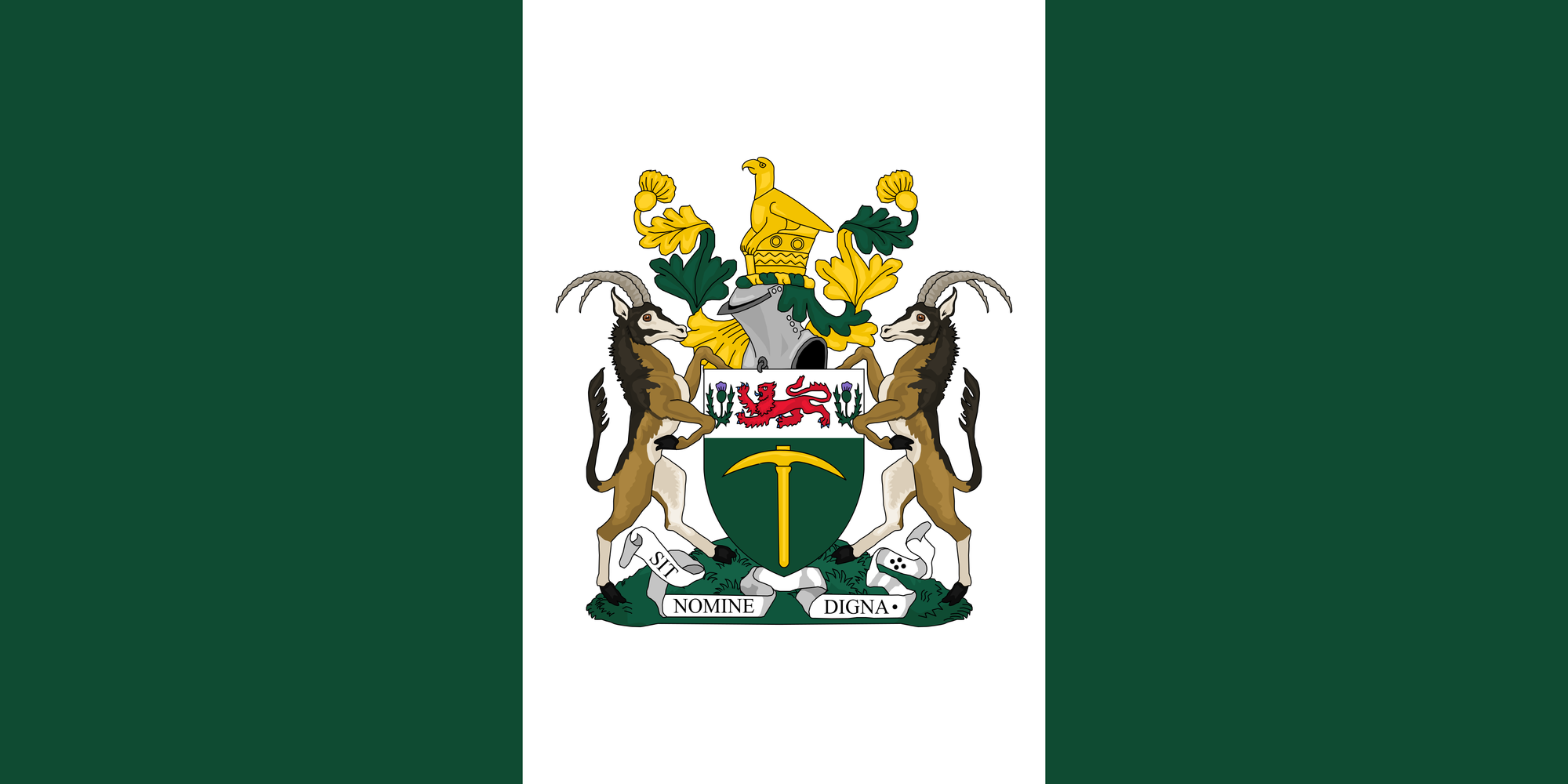
If there had been no Rhodes, there would have been no Rhodesia, and then no Rhodesians, nor Zimbabwe. One begot the other, even if unacknowledged, or unwanted. Beyond all, still today, the economic bedrock of Zimbabwe rests on numerous Rhodesian foundations.
Lessons Learned
The broader lesson embedded in the Rhodesian story concerns the fragility of modern states and even the vulnerabilities of Western cultures. State capacity is not inherited automatically by future generations, let alone by new regimes, let alone revolutionary states. It must be renewed continually. Prosperity depends on much more than just physical capital. This lesson extends beyond Zimbabwe. Rhodesia’s eclipse invites reflection on conditions under which modern states endure or fail.
Ultimately, Rhodesia’s excision from the wider public square reminds us that states are sociocultural creations rather than ordained historical fixtures. They arise through inherited socio-cultural matrices, accumulated political choices, and only endure with institutional maintenance.
States can dissolve or disappear when malign historical forces—foreign or local—converge more rapidly than built-in systems can manage. The Rhodesia story is less one of inevitable historical destiny than of contingent decisions made under extreme pressure or by later flawed regimes.
The survival of modern states depends not just upon their apparent strength at any single moment, but upon eternal vigilance. However sophisticated states appear, they often contain or conceal historic fault lines or the cultivated seeds of their destruction, so that many remain inherently fragile. Rhodesia’s demise was an early “civilizational moment” for the West, if not so recognized, nor so seen.