Roman Polanski: Hell is empty. All the devils are here.
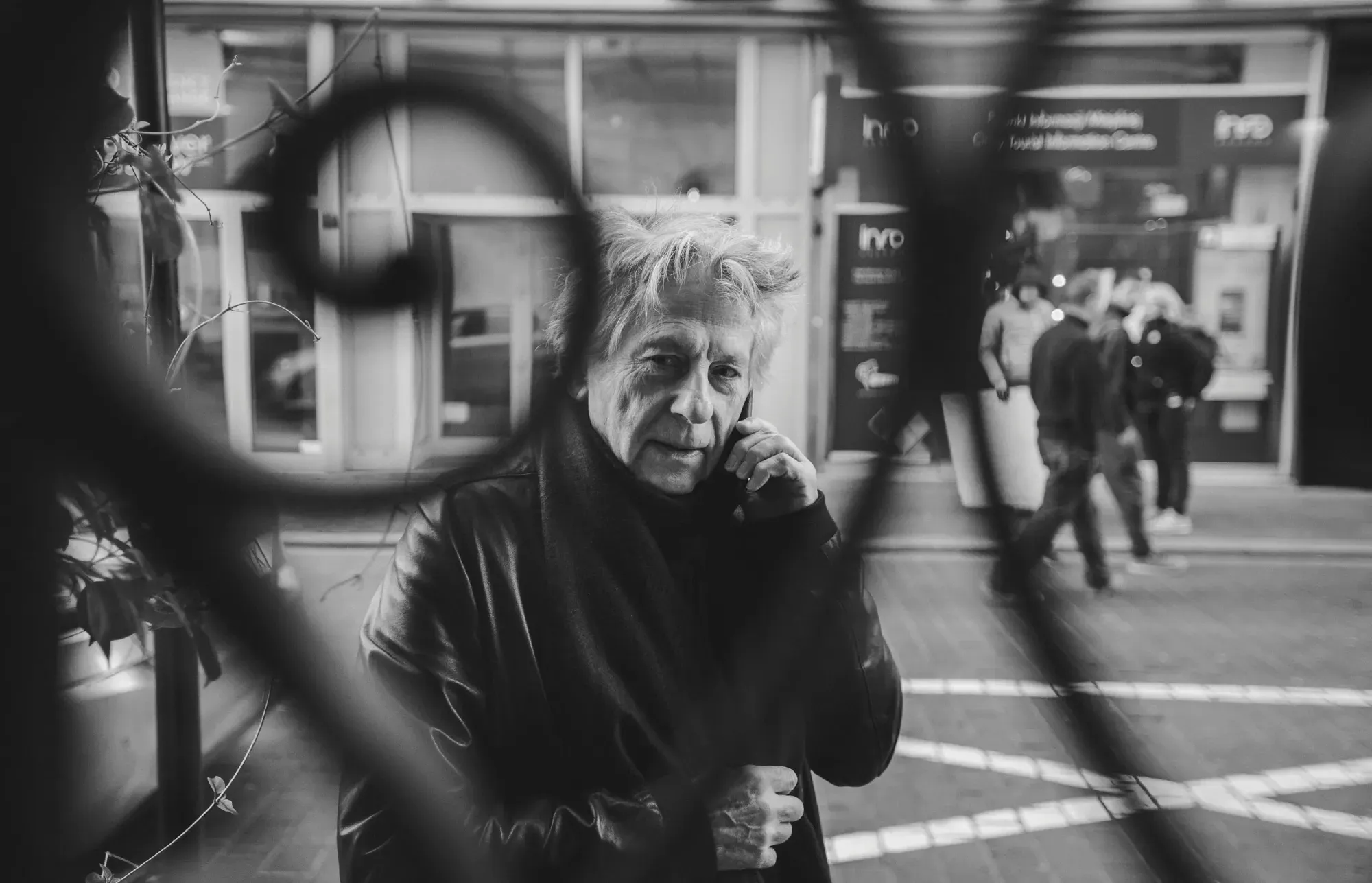
“Hell is empty; all the devils are here!”
—Ferdinand in Shakespeare’s The Tempest
I was six years and thirteen days old when the War broke out, and twelve when it ended. The greatest suffering I experienced at that time wasn’t due to material conditions—misery or hunger—or even to fear. It was caused by my parents’ absence and my heartrending longing to see them again, my isolated existence in a world turned strange and cold.
I have already spoken on several occasions about those times. At the end of the 1970s, for the autobiography I was about to write, I gathered my thoughts and put my memories in order for the first time. I treated the events described in that book subjectively, striving above all to depict faithfully the experience of a little boy who has been hurled into a nightmare beyond his understanding and that he was seeking to resist in his own childish way in order to survive.
I had to confront those memories again at the request of Steven Spielberg and his Shoah Foundation, founded in 1994 as an archive of testimonies from Holocaust survivors, which today number in the tens of thousands. In this new context, I had to re-examine everything that had happened to me from a broader perspective, as part of a phenomenon that seemed inconceivable and was, undoubtedly, unique in human history: a handful of psychopaths’ systematic attempt at the complete extermination of the Jewish people.
In 2005, L’Institut national de l’audiovisuel (INA), in collaboration with the French Foundation for the Memory of the Shoah, launched a similar ambitious project, aiming to preserve the memories of the last survivors in audiovisual form. My interview is among the hundred or so conducted as part of this project.
This essay, and my book Don’t Run! Walk! is presented to readers today based on this several-hours-long recording.
Before the Ghetto
My parents knew Yiddish but didn’t speak it at all in their daily lives. It was only later, when I found myself in the ghetto, that I had a little more of a chance to hear Yiddish spoken. There were, of course, all kinds of Jews in Poland. Most of the Jews you encountered on a day-to-day basis had descended from different waves of immigration but were fully integrated. Most had been there for six to eight centuries.
My parents had non-Jewish friends, as did I. The friends who lived on our floor, for example, were Gentile.
The entire family participated in two or three of the important religious holidays, such as the Seder at Passover. In general, these were occasions for the whole family to gather around the same table; but apart from that, my parents didn’t practice religion. I had an uncle who took me to synagogue two or three times so I could see what it was like and learn about certain rites. But since I was a child, I of course wasn’t at all interested. I was rather bored, in fact. I wasn’t a believer.
I had to re-examine everything that had happened to me from a broader perspective, as part of a phenomenon that seemed inconceivable.
Moreover, when we talk about what happened, we should leave aside the question of whether the victims were believers or not. Whether they were religious or not changed absolutely nothing. Nor did it change what happened to us, either.
At some point, my parents decided to return to Kraków. We moved back in with my grandmother. And that’s where I started school. I was at the age when children needed to be sent there, but it didn’t last long. Soon after, they moved all the Jews into a neighborhood that became the ghetto, and there was no school there.
I have a wealth of memories linked to the beginning of the War, and even from before it broke out, because there was a very distinctive pre-war atmosphere. I was only six years old when it started. Before it, there were rumors circulating. People began to be afraid long before the Nazi invasion. It wasn’t a surprise since we were expecting something. Hitler had been right at the border for three years. We could see what was happening, how it was shaping up.
At first, you couldn’t take him too seriously, in the same way, for example, that we aren’t taking what is happening in Iran seriously enough at the current time. The threats from their supreme leader aren’t worrying us as much as they should. Hitler’s threats also seemed absurd. When he harangued the German crowds with shouts, he could even seem quite comic, but he also hypnotized his audience. And then things started to become increasingly serious until people talked of nothing else.
The laws against the Jews came gradually. That’s an important point, because quite a few people who learn what happened wonder why the Jews didn’t react. They don’t understand how such things occur. It wasn’t as if one morning came around and the Jews were threatened, leaving them time to react.
The worst didn’t come immediately. Jews weren’t able to organize. It started with banking and money problems. A Jew could no longer have a bank account. Given my age at the time, I don’t really remember such things very well, but I heard about them from my parents’ conversations. Bits and pieces of what was happening penetrated my child’s mind.
At any rate, the first measure I clearly understood was the wearing of the armband with the Star of David. It was a white armband that had to have precise dimensions, and it was very “Teutonic” in style. I don’t remember the width very well, but I think it had to be a little more than three inches wide, and the star was blue. It was made of two overlapping triangles in a way that was quite difficult to draw. Since I’d been very small, I’d always drawn, and I’d always heard that I did it very well. Encouraged, I drew as much as possible. But I had a lot of trouble drawing that star. The reason was because it was made with a stencil. As a result, it was difficult to replicate. Even today, when I try, I make a mistake. So that’s the first thing I took on, the armbands.
One day, my father came home with blood flowing from his ear. He’d been struck by a Nazi officer because he hadn’t saluted him. Jews were obliged to salute Nazis when they passed them.
The Transfer to the Ghetto
We were forced to move. This happened after about a year or less—somewhere between six months and a year. I don’t remember the exact dates, but they’re easy to verify. Contrary to what many people think, the neighborhood where they put the Jews was on the other side of the Vistula in a part of Kraków that was not, in fact, the old Jewish quarter.
All Jews were forced to go into the perimeter that was assigned. The Poles, Cracovians, who weren’t Jewish had been forced to move out beforehand to free up that part of the city.
I think we were allowed to take almost all our belongings with us. That was because it wasn’t a closed ghetto yet but just the place where Jews were allowed to exist. They couldn’t live elsewhere. Previously, many of them had lived in a very old quarter known as Kazimierz and named after King Kazimierz the Great, who’d brought the Jews there in the fourteenth century and where there was a very old synagogue. Like the others, this neighborhood was emptied of Jews who were all forced to cross the bridge and settle on the other side of the Vistula.
But at first there was no wall. We lived in cramped apartments—they always housed two, three, or more families. My father dealt with the situation quite well. At the beginning we had two rooms with a small kitchen. There were only two families in that apartment, I believe. We saw little of them, which was good—well, I wouldn’t call it “good” today … The building was on the corner between Rękawka Street and a large square with a church.
One day, my sister called me to the window and said, “Look.” They were building a wall between our building and the one opposite, blocking access from the square to our street.
And I understood that they were walling us in. We both wept.
Checks and Arrests
At the very beginning of the Occupation, even before the ghetto existed, we had to hand over our typewriters. My father was forced to give up his. Once the ghetto existed, things got even worse. We weren’t allowed to keep food, for example. We could buy it, but only what we had the right to consume.
We were warned that there would be a search, that they were going to do an inspection. My mother had baked some small rolls. At the time, we had a small kitchen and a room where we all slept. Originally, we’d had two rooms, I think. After that, it was reduced to one room and a small kitchen. It was there, before the story of the bread rolls took place, that they came looking for my sister. They absolutely wanted my sister, although I don’t know why. My mother hid her in the bed. They didn’t find her.
People who learn what happened wonder why the Jews didn’t react. They don’t understand how such things occur.
The day of the food inspection, two Nazi officers came. One of them was holding a riding crop. My father had already told my mother to hide her bread rolls, but she had wanted to get rid of them completely. Her idea had been to crumble them up and throw them in the toilet. Finally, she put them in a kind of round hatbox and placed it on a suitcase on top of the wardrobe. At first they followed her into the kitchen. She showed them everything. We stayed in the other room.
I think my father stayed with us to draw up the inventory of the things we owned that they’d told him to do. And then they joined us in the other room, where we were. They looked everywhere, and strange as it may seem, one of them went directly to that hatbox, which he nudged with his crop. It fell open and revealed all the bread rolls inside.
I don’t remember exactly what happened next. My emotions probably erased the memory of that moment, but I do know that the Nazi officer laughed sarcastically and kicked the bread rolls, or something like that. The other officer played with my little teddy bear and left with it—I don’t know why. And that was the end of my bear.
There was a much more intense moment when they came to get someone in the building. We turned off our lights and could hear them on the stairs. I was sitting in front of the stove (back then, every room had one of those ceramic coal stoves in the corner). The little door to the stove was open. The red light it threw was the only one on the wall. I was sitting in front of it, my father a bit behind. And I don’t know why, but I drew a swastika on the wall with my saliva. And my father said, “Are you out of your mind or what!” He then used his own saliva to change the shape of my drawing.
At that moment, we heard terrible screaming; they were dragging a woman down the stairs. And then—I don’t know how many more. The woman was screaming, and the Nazis were bellowing. And then, well, after that, they left. That’s how it all ended. I remember it as the first moment that really disturbed me. The next episode of violence occurred when I went to see my grandmother.
Witness to a Murder
My grandmother always asked questions: “Tell me how daddy is. And mommy? Do they argue?” They were the kinds of questions grandmothers love to ask children that annoy those children to death. And so, I went to see my grandmother.
On the way back, the street suddenly started to empty. Not understanding why, I looked around. And then I saw a column of women walking in my direction on the other side of the street. They were being accompanied—or rather, guarded—by the SS. They were walking very fast, and I kept watching what was happening.
At the end of the line was an old woman who’d fallen on all fours and was practically crawling on them. She would raise herself up and babble something in Yiddish that I couldn’t understand. But what she was doing was pleading with the young officer behind her.
And then she went back to walking like that on all fours and, suddenly, the officer pulled out a pistol and shot her in the back. Blood came—not like a spurt but like a drinking fountain. A little ball, a little geyser—yes, like that. Then it disappeared, and she fell. I was petrified. I hid in the house right behind me. There was a wooden staircase. I found a nook under it and stayed there for quite a long time.
It was the first time I’d seen something of that nature. And it was precisely around that time that I started wetting the bed. That day, I saw with my own eyes what I’d heard talked about around me, because all the adult conversations were only about scenes of that kind.
I knew what was happening, but I’d never seen it. Then I did.
Photography Credit: R. Sluszniak / “Polanski, Horowitz. Hometown”
Excerpted and adapted by the author from Don’t Run! Walk! A Father and Son in the Shoah. © 2026 by Roman Polanski. Reprinted with permission of RatPac Press and Skyhorse Publishing, Inc.