The Search for Consciousness
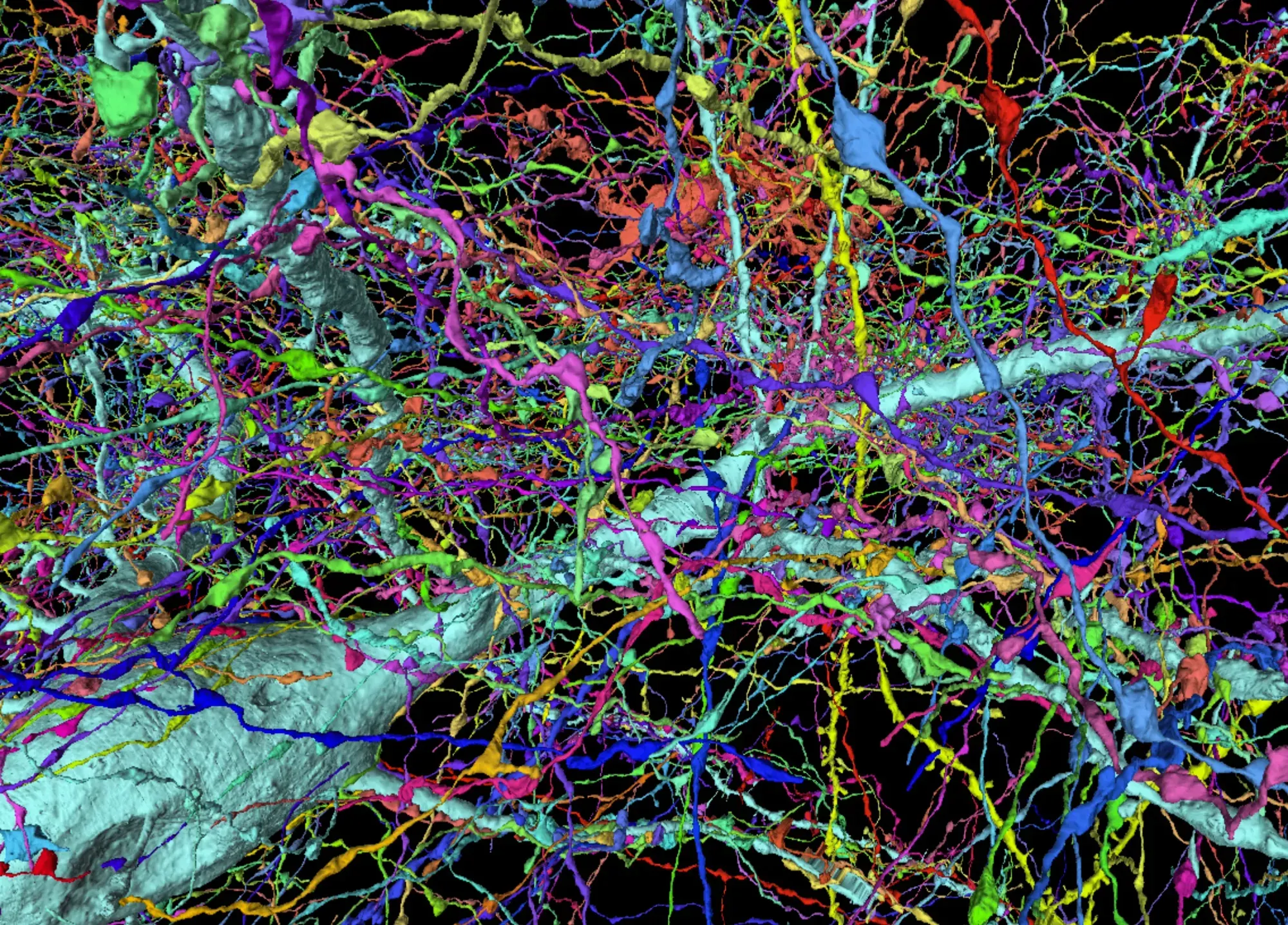
In the early 1990s, the human brain began to glow. Not literally, of course. But for the first time, scientists could watch living brains change while a person was still alive, still thinking, still themselves. People crawled into a doughnut-shaped machine, formally known as a functional magnetic resonance imaging (fMRI) scanner, and waited as the computer translated tiny shifts in blood oxygen levels into ember-flecked images on a screen.1 The colors were not thoughts. They were proxies: The scanner translated changes in blood oxygenation and blood flow—indirect consequences of neural activity—into colored statistical maps.
Still, it was hard to look away. For the first time, thoughts seemed to leave footprints.
It felt like a breakthrough in the most visceral sense of the word. Something that used to be entirely private, the quiet fact of having a mind, was now casting a measurable shadow. When you see a footprint, you know something passed through. The question is whether such a footprint could also describe exactly how it feels for the individual to walk.
Consciousness is difficult to wrap our heads around, and it would be dishonest to pretend this isn’t the reality.
First, we need to pin down exactly what we mean by “consciousness,” because the word has become an amalgamation of colloquialisms and jargon that leads people to talk right past each other.
In ordinary conversation, consciousness often means being awake. It means not asleep, not fainted, not under anesthesia. But when philosophers and neuroscientists argue about consciousness, they usually mean something more intimate: subjective experience. Not just that the brain processes information, but that it feels like something to be the one doing the processing. There is something it is like to see a stop sign’s reflection against gray dusk. There is something it is like to feel a sharp white heat shoot up your arm as your hand recoils from brushing the rim of a pan. There is something it is like to be you, even if you cannot quite describe that “you” without sounding vague.
This is sometimes called phenomenal consciousness. It is the “what-it-is-like-ness” of experience, the texture of being inside your own life. It is not merely that you can detect red, but that red has a particular quality when it appears in your mind. It is not merely that a nerve signal travels, but that pain hurts, and how that pain feels for you, specifically. You can measure what the eye detects and what the nerve transmits, but the felt part, the interior part, is the elusive thing that refuses to sit still.
Philosopher Thomas Nagel illustrated this difficulty with a famous thought experiment: What is it like to be a bat?2
Bats navigate the world through echolocation, emitting high-frequency calls and constructing a mental map from the echoes that bounce back.3 Neuroscientists can study their auditory cortex, measure the timing of sonar pulses, and map the neural circuits that process those signals.
Yet even with all that information, something remains missing. Knowing everything about how echolocation works does not tell you what it feels like to experience the world that way. The bat’s perspective remains locked inside the bat.
The simplest version of the problem looks like this:
The brain is physical. Neurons are physical. Electrical and chemical signals are physical. Blood oxygen is physical. All of this belongs to the world of things you can weigh, scan, slice, stain, or label.
Experience does not obviously belong to that world. Experience is private. You can describe your fear to me, but I cannot access your fear the way I can access a video of you getting jump scared at a sleepover. Your consciousness is the one thing you can never physically step outside of to observe directly, because stepping outside of it would still be an experience. Even if you are to reflect on your conscious experiences, this is still inherently a conscious experience.
This gap between physical mechanisms and subjective experience is what people mean by the “hard problem” of consciousness.4 The “easy” problems—easy only by comparison—are questions like how the brain integrates information, how attention works, how memory is stored, and how perception becomes behavior. These are hard in the ordinary sense: they require clever experiments, careful measurement, and decades of work. But they are the kinds of questions that at least yield to investigation. The hard problem is different in kind, not just in degree. It is why any of that processing is accompanied by a felt perspective at all. Why is there an inner movie rather than only circuitry?
This is not a new question. For centuries, the greatest minds noticed the strangeness of mental life and reached for an explanation that matched its feeling.
What we consider our thoughts and emotions mystified early philosophers. On the surface, these facets of cognition seem distinct from the physical objects we can interact with since they are only accessible to us, separate from the material world. It would not have been illogical to suspect that mind and matter were different kinds of things.
René Descartes is the name most people associate with that suspicion. In the seventeenth century, he formalized it into dualism, the idea that the mind and body are fundamentally different substances. The body is physical, extended in space. The mind is not. Descartes famously used his method of doubt to conclude that he could doubt the existence of his body or even his reality, but not his thoughts. This provided the basis of his cogito, ergo sum—I think, therefore I am.
This argument works because it begins with something rooted in intuition and thus feels unshakable. Whatever else might be uncertain, experience itself seems real. The problem is that dualism, once you try to stretch its bounds to conform to the real world, runs into a question that sounds almost childish until you realize you cannot answer it.
Your consciousness is the one thing you can never physically step outside of to observe directly, because stepping outside of it would still be an experience.
If the mind is immaterial, how can it work to control all of our movements—from running a marathon to the spasms of muscle twitches that follow?
Princess Elisabeth of Bohemia asked Descartes exactly that in their correspondence. Her critique was mechanistic, almost clinical. If the soul lacks physical size and does not take up space, how can it give rise to voluntary movement? How does an immaterial thing push a material one? Descartes never offered a mechanism that fully satisfied his critics. The interaction problem lingered, a loose thread that philosophy could not tie off neatly.
That thread tugged thinkers toward another possibility: maybe mind and body are not two different media interacting awkwardly. Maybe the mind is not separate from matter. Maybe the mind is what matter does when it is arranged in a particular way.
Enter monism, a family of views that collapses mind and body into one underlying reality. For a long time, that conversation remained largely philosophical—until science entered the picture. The story changed, not because science answered the question immediately, but because it offered something the old debates lacked: leverage.
Science is good at taking mysteries and turning them into mechanisms. It is how we got from alchemy to chemistry, from vague “vapors” to electricity, and from superstition to medicine. And the brain, once it came into view as an organ that could be mapped, studied, and—like other organs—injured, began to behave like the kind of thing science could understand.
When seemingly nonphysical aspects of our lives go awry, such as personality or memory, we now often search for a bodily explanation. That instinct has become so normal that we barely notice it. Someone becomes depressed, and we talk about serotonin. Someone has a stroke, and we talk about damaged tissue. Someone’s behavior changes, and we talk about trauma, hormones, tumors, neurotransmitters, and sleep deprivation. We are, without always realizing it, treating the mind as a biological process.
The clearest early evidence came not from a laboratory, but from an accident. Phineas Gage was a railway worker in the 1800s.5 An iron rod shot through his skull, destroying part of his frontal lobe. Miraculously, he survived. But those around him reported striking changes in his temperament.6 From this, a core idea emerged: a physical injury to the brain appeared to alter aspects of personality and self-control. Suddenly, personality did not look immaterial or immutable. It looked vulnerable. The historical record is thinner and more contested than textbook retellings suggest, but Gage remains an important case because his severe frontal injury was followed by reported changes in social conduct, planning, and temperament.
And once you accept that, you begin to notice this pattern everywhere. Speech can disappear from lesions or cuts to the brain. Moods can shift with chemical intervention. Memory can dissolve as tissue degenerates. The brain is not simply correlated with mental life. It is necessarily entangled with it. The most parsimonious scientific conclusion is that human consciousness depends on brain activity.
But here is the moment where the story has to slow down, because it is easy to mistake a powerful conclusion for a final one: The brain is necessary for consciousness. That does not yet tell us what consciousness is or how it emerges.
If you smash a radio, the music stops. If you replace a component, the music changes. From that, you can learn that the radio matters for the music. But if you want to understand music, you cannot stop at the claim that “music comes from the radio.” You would need to understand signals, decoding, speakers, and, in a deeper sense, you would need to explain why certain patterns of sound evoke feelings of sadness or nostalgia in a listener.
The brain is not a radio, and consciousness is not simply a broadcast, but the structure of the reasoning is similar. Brain injury demonstrates this dependence. It does not yet explain experience.
So, what does?
The next move in neuroscience was to stop treating the brain as a black box and start watching it work. That is where we pick back up from the fMRI and its glowing scans. An fMRI does not record neurons firing directly. It measures changes in blood oxygen, signifying neural activity. When an area is more active, neurons consume more oxygen for energy, the rate of blood flow changes, and the scanner can detect that. This is why those early fMRI images felt so revolutionary. They made mental life visible in a new way. Not visible as a thought bubble floating above a head, but visible as a physical pattern inside tissue.
It is hard to overstate how alluring that visibility can be. If you can see the brain change when a person thinks, then maybe consciousness is simply the sum of these patterns. Maybe the “problem of consciousness” is actually one of measurement, and once we create the right tools, the mystery will dissolve into nothingness.
There was a particular moment that made this belief in brain imaging flare. A patient diagnosed as being in a vegetative state was asked to imagine two different things: playing tennis and walking through a city they’re familiar with.7 These mental tasks reliably produce different patterns of brain activity in regions of the brain that are far separated, making it easy for researchers to discern which task is being conceived in the scans.
The patient’s brain produced distinct patterns aligned with the instructions, allowing researchers to interpret one pattern as one answer and the other as another answer. A person who could not speak could still communicate by thinking. That study was a powerful reminder that the absence of a voice is not the absence of a mind. It also suggested something with much wider implications: that mental content could be decoded.
Decoding is no longer a faraway concept confined to science fiction. It has become a tangible research goal, and the technology pushing it forward is not only the scanner but also artificial intelligence. Before we get there, we need one more piece of groundwork: the idea that the brain does not passively record the world; it actively constructs our perceptual experience of it.
The brain takes input from the senses and builds a model of the world. What you experience is not raw data. It is nothing more than an inference, stitched together so seamlessly that you never notice the seams.
Take your eyes. You might assume your visual field is uniformly detailed and colored, like a high-resolution screen. But color-sensitive cells are concentrated in the small central region where you are directly looking. Color-sensitive cones are densest in the fovea, and color discrimination declines sharply toward the periphery. Yet our experience of a richly colored world is more uniform than the retinal input itself. That coherence is not in your eyes; rather, it is manufactured in your brain.
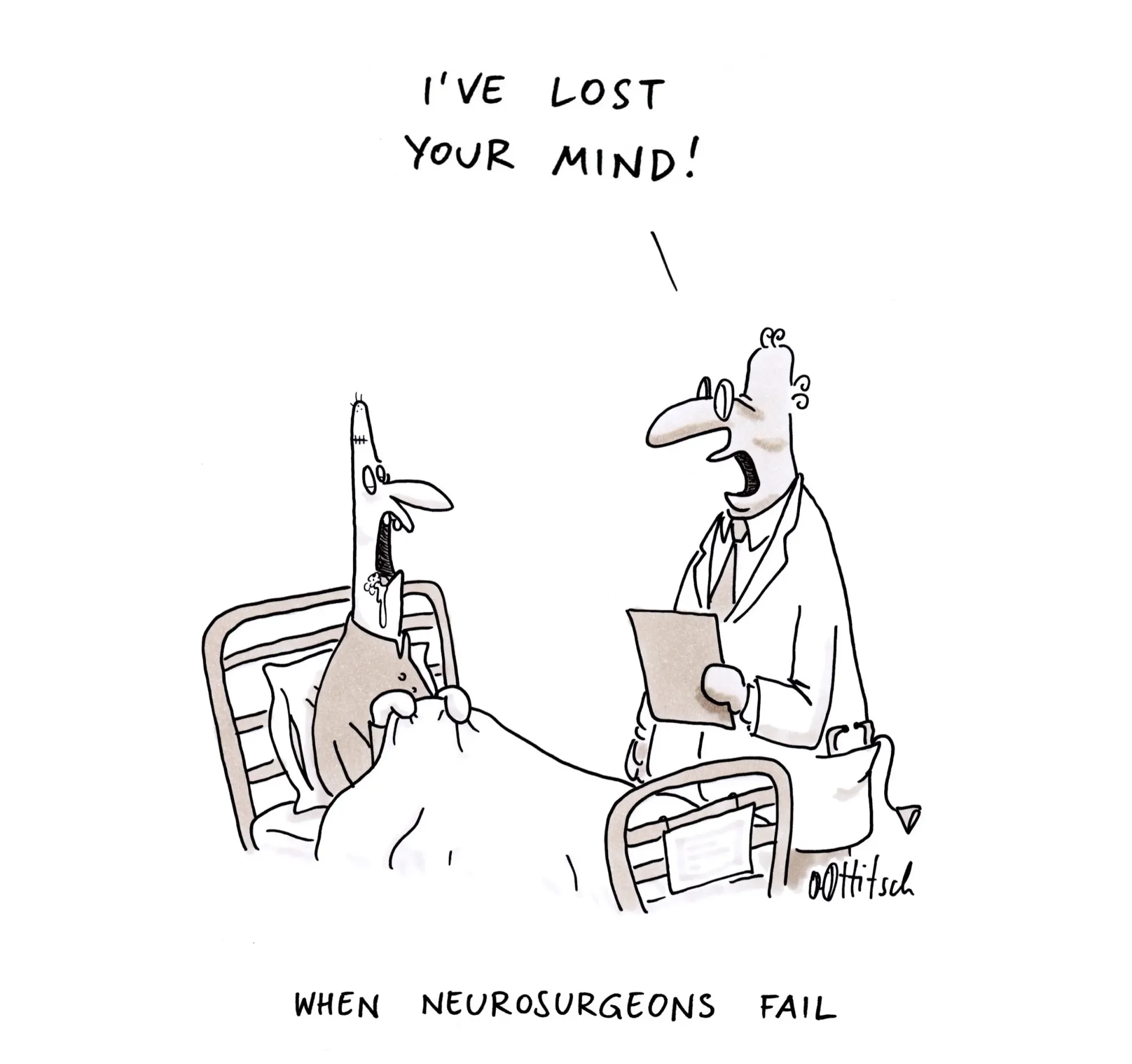
Or take this: tihs snetecne is hradly lgeible at frist glnace, and yte yuor bainr qciukly rsetores it wouthit mcuh eorfft. Your perception is not simply receiving. It is repairing, filling, and predicting.
This is the hinge between Phineas Gage and decoding. Gage showed that damaging the brain can change the mind. Decoding asks a more audacious question: if the mind leaves patterns in the brain, can we read those patterns in the other direction? Can we start with the footprint and infer the walker?
Here is what a typical decoding experiment looks like today:
A volunteer lies in an fMRI scanner and looks at a sequence of images. Faces. Animals. Landscapes. Street scenes. Text. The scanner records patterns of activity in visual areas of the brain while each image is seen. That creates a dataset: image in, brain pattern out.
Then the researchers train an AI model. The model’s job is to learn associations between patterns of neural activity and visual features.8 It does not “understand” an image the way you do. It does not have a childhood memory attached to a beach or a fear attached to a dark alley. It is doing something closer to statistical analysis. Given a particular neural pattern, what visual features are likely present?
What we experience as the moment of choice may be less a cause than a caption.
After training, the researchers test the model. They show the volunteer a new image, one that the model has never seen. The scanner records the volunteer’s brain activity. The model receives the neural pattern and generates a reconstruction, an image that approximates what the volunteer is looking at. Often, it is blurry. Often, details are wrong. But sometimes—in a way that makes your stomach drop—the reconstruction is recognizable. You can tell it is a face. You can tell it is a street. You can tell it is a dog. Sometimes the model can even approximate images the volunteer is imagining, not currently seeing.
That last part is where the idea of a private mind starts to wobble.
While it’s tempting to call this mind reading, it’s also important not to overstate it. What the model is doing is not pulling a full-color movie from the brain as if the brain contains a hidden screen. The model is trained to infer content from correlates, making sophisticated guesses, trained on many examples. Still, the fact that the guess can be accurate at all is astonishing. This suggests that subjective content has enough regularity and enough physical signature that an external system can learn to predict it.
In other words, experience leaves footprints, and now we can sometimes sketch what made them. If we can reconstruct what someone is seeing from a scanner, what stops us from reconstructing the rest of their conscious experience?
It is one thing to say the brain is responsible for mental life. It is another thing to watch that claim take shape on a screen. A face becomes a face again, not because the person described it, but because an algorithm matched a pattern of oxygen shifts to a visual template it has learned. The boundary between inside and outside, between private and observable, begins to feel less like a law of nature and more like a temporary limitation of tools.
This is why decoding feels like the pinnacle of science. It is not only impressive, but it shifts the story we have told ourselves about our own minds. For most of human history, your inner life was the last place no one could reach. People could misread you. People could manipulate you. People could punish you for what you said. But your raw experience, the stream itself, belonged to you by default. Decoding makes that default feel negotiable.
At first, that negotiation sounds straightforward, even hopeful. If a person cannot speak, perhaps decoding can help them communicate. If someone is trapped in paralysis, perhaps we can build an interface that translates intention into action. The same technology that unsettles can also restore.
But then the implications widen. Consider what John-Dylan Haynes and colleagues found when they used brain imaging to predict which of two choices a subject would make,9 several seconds before the subject reported becoming consciously aware of deciding. The neural groundwork for the decision had already been laid. The conscious experience of choosing came after. These studies suggest that neural activity can bias or partly predict some choices before people report conscious awareness of deciding. They do not show that all deliberation is post hoc, nor do they settle the question of agency, but if that finding holds, the story we tell ourselves about deliberation—that we weigh options, then decide, then act—may be a narrative the brain constructs after the fact. What we experience as the moment of choice may be less a cause than a caption.
That is why these tools demand more than scientific attention. If decoding can reach not only what you perceive but what you were about to decide before you knew it yourself, then the question of consciousness stops being academic. It becomes a question about what we mean by agency and who we hold responsible for what.
Is this reading thoughts, or is it closer to reading smoke and inferring fire? Is this accessing someone’s experience, or is it building a model that predicts what experience is likely happening? That distinction might sound like mere semantics until you remember what we defined consciousness as in the first place.
Phenomenal consciousness is not simply the presence of information. It is the felt quality of information. It is not just the data of how red a stop sign is, but the redness of red as it appears in your mind.
Decoding, in its current form, is extraordinarily good at tracking content. It can often tell that the brain is seeing a face, a street, an animal, a shape, or an object. It can sometimes approximate the image itself. But content is not the whole mystery. The mystery is that content comes with an experience.
This is where it helps to picture two different achievements side by side.
One achievement is like translating a language. If I give you a sentence in Spanish and you translate it into English, you have preserved the meaning, at least approximately, even though the words are different. Decoding is doing something like that. It takes a physical pattern and translates it into a guess about meaning: face, street, dog, tennis, home.
The other achievement is explaining why language is accompanied by understanding at all. You can build a machine that translates sentences without ever “knowing” what it is like to mean them. Translation and experience are separable.
That is the uncomfortable possibility lurking underneath decoding. Dr. Janel Le Belle, a neuroscientist at UCLA who studies the intersection of brain biology and conscious experience, puts it plainly:
The decoding studies don’t explain any mechanism that turns neural activity into subjective awareness, so they don’t resolve the deeper questions about the nature or origin of consciousness itself.10
The decoding experiments are an impressive feat of science. But impressive and complete are not the same thing. The hard problem does not dissolve just because the footprints have become easier to read.
A grain of sand’s worth of tissue requires petabytes to describe—and the human brain contains roughly one million times that volume.
This is where many physicalists say, fine, then let’s go deeper. Physicalists hold that consciousness is entirely a product of brain matter, and if decoding is a translation problem, perhaps what we need is a complete dictionary of the brain. Not just broad regions lighting up, not just proxies for activity, but the wiring itself. The full architecture. The connectome.
The ambition behind connectomics is truly grand: to map the brain the way you might map a city, down to its streets and intersections, except the streets are axons and the intersections are synapses, and there are enough of them to make your head hurt.
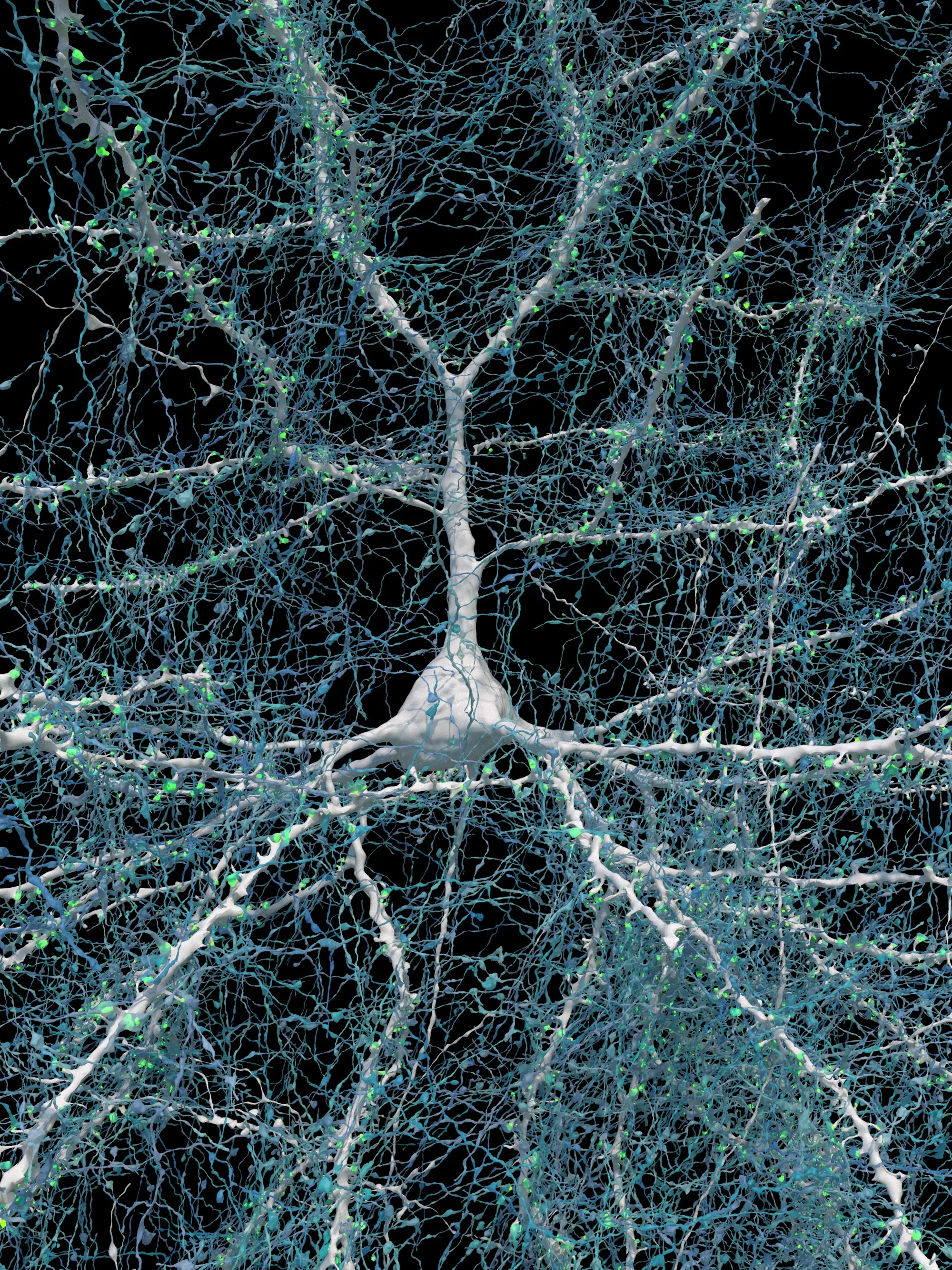
For years, the sheer scale of the task made the idea seem nearly impossible. Even a speck of brain tissue contains staggering complexity. A cubic millimeter of cortex contains roughly fifty to sixty thousand neurons and hundreds of millions of synapses woven into a dense electrical web.11 Capturing this detail requires images at nanometer resolution, which means that reconstructing even that tiny volume produces an avalanche of data.
A recent example shows just how large that avalanche can become. In 2025, the MICrONS consortium—led by teams at the Allen Institute, Baylor College of Medicine, and Princeton University—released one of the most detailed wiring diagrams and functional maps of mammalian cortex yet assembled. The project reconstructed a cubic millimeter of mouse visual cortex and surrounding visual areas, capturing more than 200,000 cells and roughly 523 million synapses. Crucially, it did not only map structure. It also linked that wiring diagram to recordings of neural activity from tens of thousands of neurons while the mouse viewed visual stimuli.
The result is less a finished map of the mind than a proof of scale. Even a grain-of-sand-sized fragment of cortex contains an almost absurd density of structure and activity. Mapping it required advanced microscopy, machine-learning reconstruction, and enormous data infrastructure. If this is what one cubic millimeter demands, the prospect of mapping an entire human brain—or individual brains—at comparable resolution remains, at present, far beyond our reach.12
A separate Harvard-Google project made the scale problem feel even more concrete by reconstructing a cubic millimeter of human cortical tissue at nanoscale resolution. That tiny sample contained roughly 57,000 cells and 150 million synapses, generating about 1.4 petabytes of data. The fact that so much information is required to describe so little brain tissue is precisely what makes whole-brain connectomics both tantalizing and overwhelming.
The result is less a finished map than a starting point. If a cubic millimeter requires petabytes of data to chart, mapping the entire human brain would require datasets so large that today’s data storage systems struggle even to imagine them.
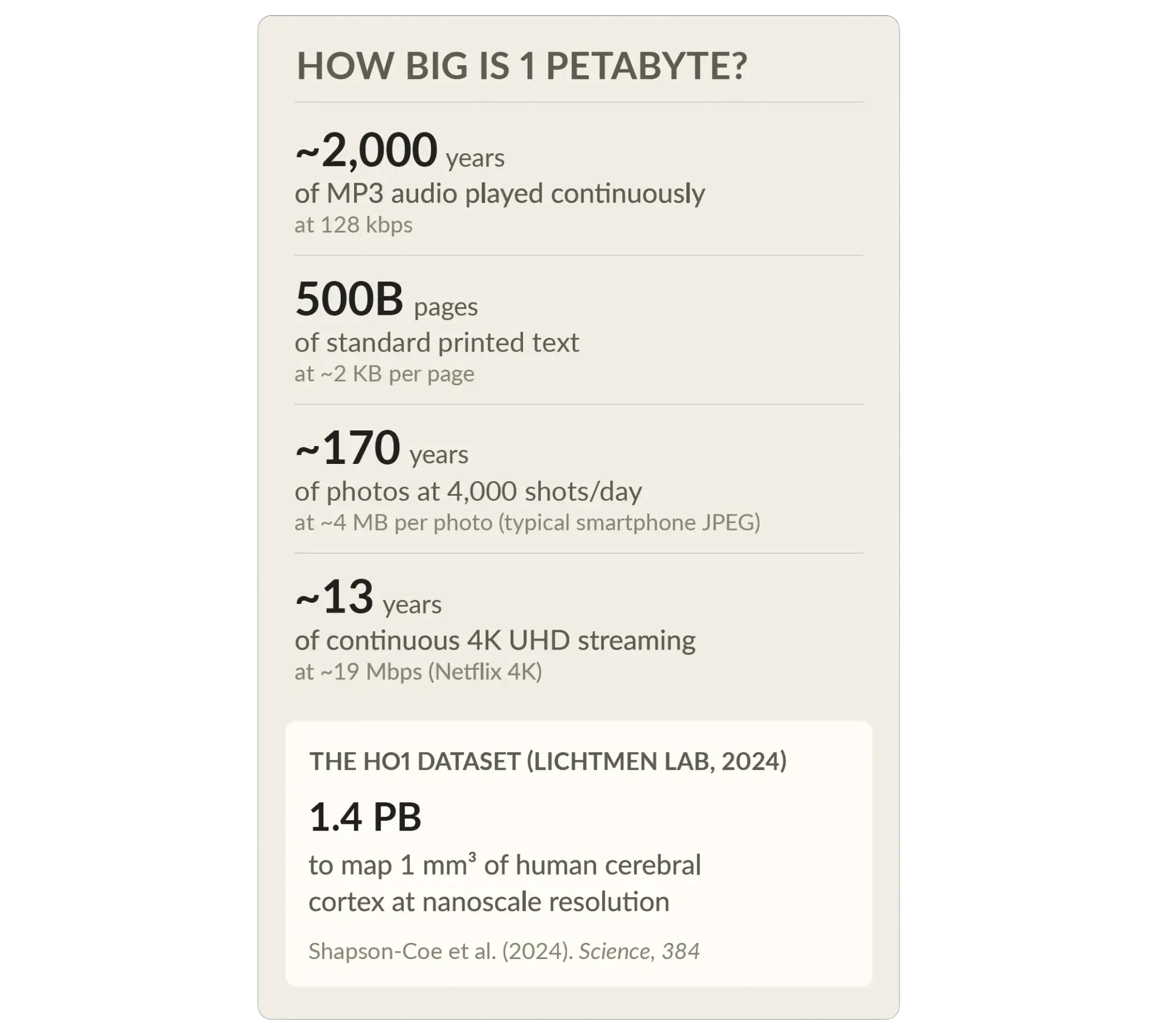
That number is worth sitting with, not just because it is impressive, but because it reveals something about the very nature of the problem. The brain is not only mysterious in principle. It is daunting in practice. A grain of sand’s worth of tissue requires petabytes to describe—and the human brain contains roughly one million times that volume.13
Still, you can feel the temptation. If we could map the connectome, the logic goes, then the mystery would have nowhere to hide. The elusive consciousness would be pinned down by its circuitry. The brain would be explainable in the way a computer is explainable.
But the twist is that even a perfect map might not do what we want it to do.
A wiring diagram is not the current running through it. A map of Los Angeles is not the feeling of driving through it at night with the windows down.
A complete inventory of the brain’s connections might tell us how information can move, where integration is likely to happen, what pathways support attention, memory, vision, language, and emotion. It might tell us why certain injuries abolish speech or change personality. It might even help us predict what a person is seeing with frightening accuracy.
As Le Belle puts it, the connectome “may be more helpful in understanding neurodiversity and perhaps the structural changes in certain brain disorders,” but falls short of capturing the dynamic cognitive processes that produce consciousness.
What connectomics is missing is why any of those processes should be accompanied by experience. And this is where the hard problem returns, not as casual philosophy trivia, but as a real limit on what any of these tools can claim. To see why, imagine a theater.
The brain is not simply correlated with mental life. It is necessarily entangled with it.
Neuroscience is getting better and better at cataloging the backstage machinery—the pulleys, the lights, the wiring, the stage directions. Decoding can sometimes infer what scene is playing from the patterns of activity alone. Connectomics promises the most detailed blueprint of the building we have ever had. But the hard problem is not a question about the machinery. It is a question about why there is an audience at all. Why is there a point of view in the seat? A blueprint of every beam and wire cannot answer that. It can tell you everything about how the theater was built and nothing about what it feels like to watch the play.
That is why decoding can feel like it is approaching consciousness, and still not settle it. The distance between brain activity and mental content narrows. The idea of total mental privacy slowly erodes. The very prospect of decoding makes the mind look measurable in a way it never has before. But all of that measurability—the narrowing distance, the eroding privacy—still leaves the deepest question untouched.
In the early 1990s, the brain began to glow, and it felt like the beginning of an answer. Three decades later, with decoders, models, and reconstructions, the glow has become clearer, sharper, and more interpretable. What we have gained is extraordinary: we can follow the footprints further than we ever have. What we have not yet gained is the feeling of walking.
And maybe that is the real story. Science is not failing. It is doing exactly what it does, mapping the physical world with increasing precision. The question is whether consciousness, the interior fact of experience, is the kind of thing that becomes fully visible when the map is complete, or whether it remains, in some stubborn way, the one part of reality that can be described from the outside but never fully captured there.