The Soul of Science—Collected Tributes to Pat Linse
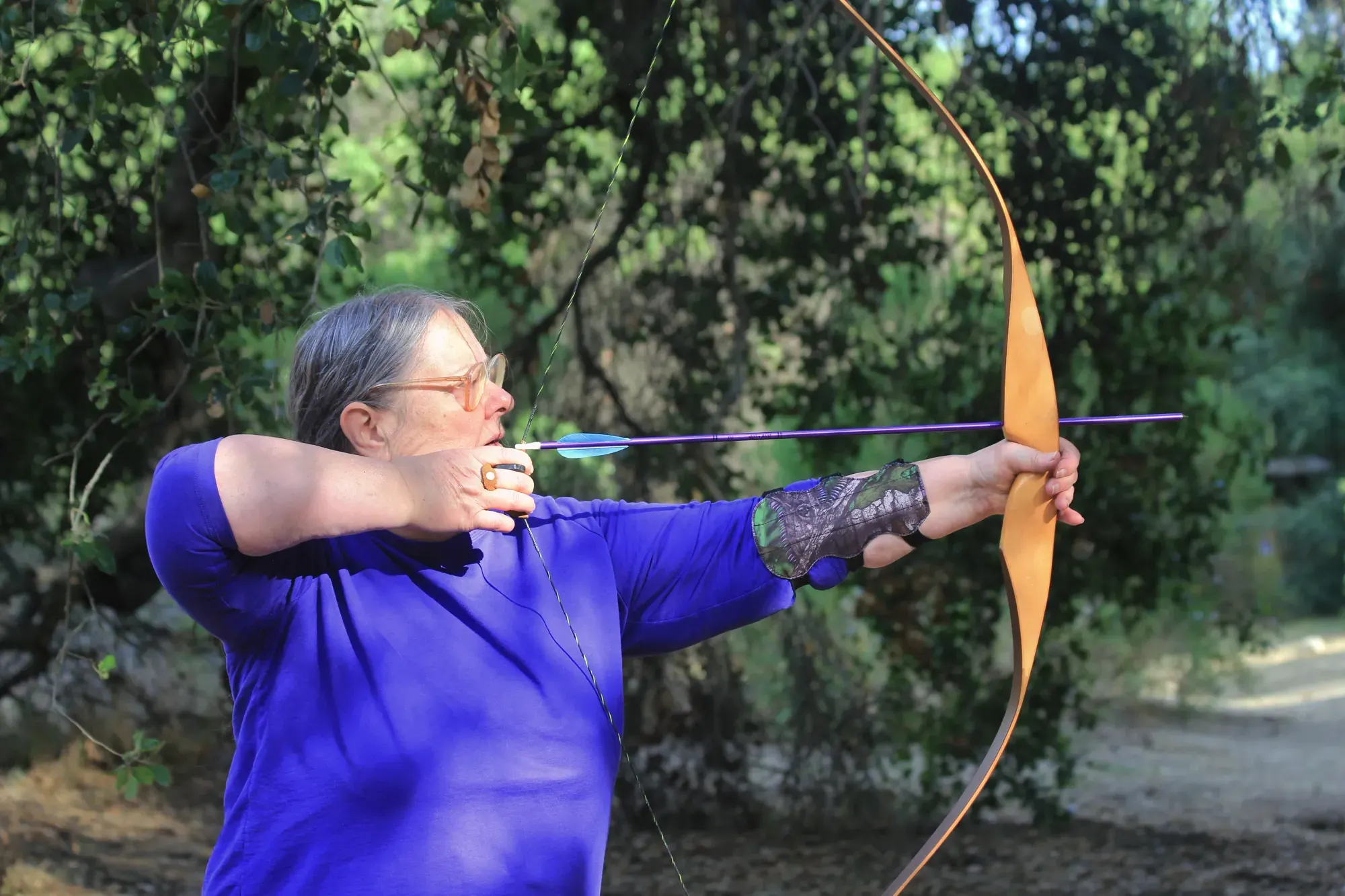
Ralph Lewis, psychiatrist and contributor to Skeptic magazine:
I was very fond of Pat from the first time I met her. She was a very likable person, in all her angsty, introverted shyness. She clearly preferred pulling the strings from behind the scenes. She once told me with a sly smile that she enjoyed arguing with Michael about political positions, with her seeing herself as more liberal and him (back then) as more libertarian. She joked that he would disagree vociferously with her and then she’d overhear him a short time later using her arguments in a conversation with a conservative—which gave her great satisfaction.
Despite her narrow geographical comfort zone, she was a most worldly person. In her preferred social mode of 1:1 interactions she was very personable, caring, helpful, lively, and good humored. And she was certainly a talented artist, a meticulous editor, a sharp thinker, and an astute observer of the human species.
I’ll miss her, in all her endearing quirkiness.
Carol Tavris, social psychologist, “Gadfly” columnist for Skeptic magazine:
When a death comes this suddenly, with no forewarning to friends and colleagues, we are left with all those unsaid words, all those unexpressed appreciations, that we wish we had had time to say—especially to someone as shy and reserved as Pat. Though we exchanged many a merry email over the years, I’ll never know if she was aware of how much I appreciated her artistic talents. I’d get a proof back from some Gadfly column, and see that she had left a big space for the art; and I’d say, “What in the world will you do here for this impossibly complicated or contentious topic?” And she would reply, “Oh, I have a little idea in mind …” and then, boffo, it would be perfect: an illustration that was never boringly on the nose, but rather an elbow, a wink, sometimes a kick.
Stanley Milgram had a term for the people in our lives whom we feel attached to, but don’t really know—a fellow train commuter, that person down the hall in our office, a neighbor we greet every morning: “familiar strangers.” We don’t realize the importance of those connections until they are gone, and that is how I’m feeling now. Pat was a stranger to me in terms of her personal life, but familiar through so many years of Skeptic assignments, and I now feel bereft of that sweet, enjoyable, reliable connection. She gave so much to Skeptic and to skepticism, and to all fortunate enough to work with her.
Brian Dalton, writer, film producer, creator and star of Mr. Deity, designer of Skeptic magazine in our early years:
I’ve known Pat Linse since the early 1990s when I was just coming out of religion. Amazingly in retrospect, I found the Skeptics Society and Skeptic magazine through Dr. Laura Schlessinger (true story), the noted conservative radio talk show host who was an early board member of the Society when she publicly denounced the pseudoscientific notion of recovered memories (that turned out to be false memories). I met Pat for the first time when I attended one of the Skeptics Caltech lecture series events and purchased a bunch of back issues of the magazine. Her gentle spirit and kind manner stood out immediately. But as I got to know her over the years, I realized what a force she was. That’s exactly how I came to think of her—a force of nature.
We got to know each other better when she asked me to redesign Skeptic in the late-1990s. I was doing graphic design then, and Pat felt it was time for a new look. Quite a bit of our time together then was spent helping her convert everything over in the layout program she was using (it was different from the layout program I was using). It took her almost no time to get everything up and running, her intelligence and creativity on full display.
When I began writing and producing the Mr. Deity show, Pat and Michael were a great source of support. She pushed the Mr. Deity DVDs I brought to the monthly Skeptics Caltech events, and she was always enthusiastically helpful in spreading the Deity gospel. I would almost call her a disciple, but Pat was no one’s disciple!
Our personal conversations over the years tended towards liberal politics, on which we mostly agreed. Aside from her kindness and intelligence, my most accessible memory of Pat revolves around my desire—I had it almost every time I saw her—to grab those glasses from her face and clean them! I never understood how she could see through those cloudy lenses!
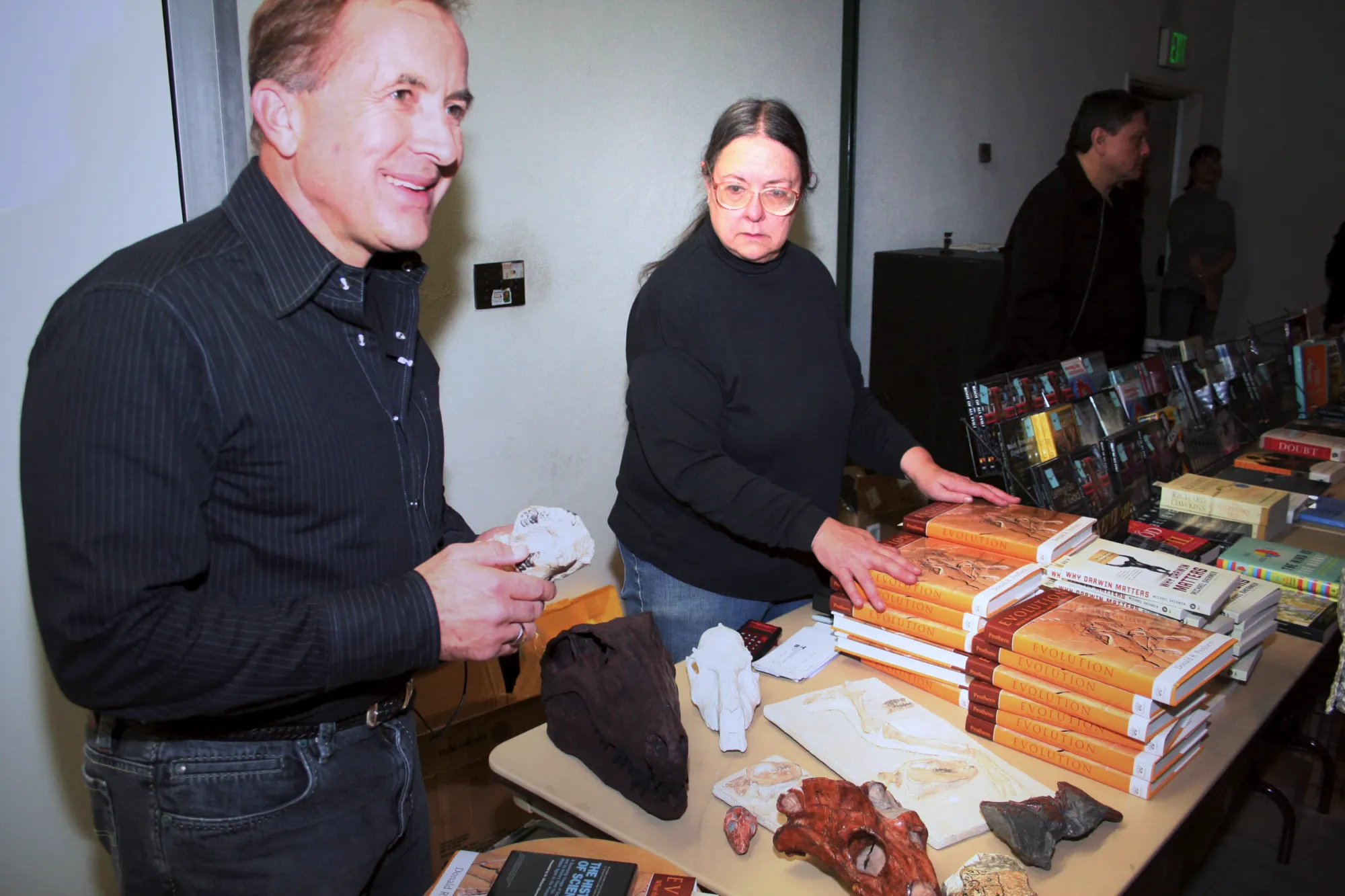
Being a force of nature, the possibility of her absence never even occurred to me. I’m sad about this tremendous loss, but at the same time I feel incredibly fortunate to have known such a powerhouse of a human being. Most of all, I will remember that Pat never failed to make my life just a little better, somehow, in some way, every time we met.
Harriet Hall, M.D., “SkepDoc” columnist for Skeptic magazine, critical expert on pseudoscientific medical claims, and long-time colleague:
I was devastated to learn that Pat had died. She was the soul of Skeptic magazine. Her duties may be assumed by others, but she can’t be replaced. She was a unique combination of artistic talent, skepticism, and hard-nosed critical thinking skills. And of course, she was the magazine’s corporate memory. I wish I could have gotten to know her better. Ours was a long-distance relationship. Our only close encounters were brief contacts at conferences and one memorable occasion when I was in the area and she invited me to the office and gave me a tour.
She emailed me with galley proofs of my articles and promptly and accurately made any corrections I suggested. She did the illustrations for my SkepDoc columns, and it was always a delight to see what her creative mind had come up with. I thought the illustration for my column on Mark Twain and alternative medicine was pure genius (a steamboat on a river filled with floating bottles of quack medicines).
Pat was easy to talk to and was always very supportive. I came to trust her judgment (perhaps because she always agreed with my opinions about individuals and about controversial issues!) She impressed me as well-organized, efficient, generous, friendly, self-effacing, and uber-competent in every sphere. I frequently emailed her with questions and comments about anything and everything. I came to think of her as a true friend and a kindred spirit. I will miss her terribly.
Kevin McCaffree, co-director (with Anondah Saide) of the Skeptic Research Center, sociologist of religion, secularism, criminology, and cultural evolution:
I met Pat for the first time in 2010. She was helping to sell admission tickets behind a folding table just inside the entrance to the Caltech auditorium at which the Skeptics Society hosted its Distinguished Science Lecture Series. I was there to hear one of the speakers and in time I came to enjoy the environment and show up early (with Anondah Saide) to help set up and sell tickets.
Anondah and I came to find Pat as interesting as any speaker in the series. She was conversant about many facets of science, she was precise in her thoughts, and she was utterly immune to bullshit. She was going to tell you the truth as she understood it, and aspects of that truth that were interesting to her, from the Cambrian explosion to the evolution of deception. She’d expect an informed and thoughtful answer! I’d not realized it at first, but in meeting Pat I was seeing the “soul” of science: naturalism, skepticism, curiosity. Let me explain.
I’m not sure where it was, maybe it was behind a book display at one of the speaker events or James Randi’s The Amazing Meeting event in Las Vegas, but I distinctly remember her telling us about Michael’s libertarianism and, more pointedly, his appreciation for Ayn Rand. This was fantastically unacceptable for Pat who, of course, was precise in her diagnosis of the many ills and societal misfortunes that befall people quite independent of their wills or desires or drive. She understood that selfishness and self-actualization are not bad in themselves and can do incredible good—as in the case of successful business entrepreneurship—but this by itself isn’t enough, at least yet, to adequately ensure that everyone born today will have a roughly equal shot at success. Pat insisted that this required some kind of government intervention; highly scientific, rational and realistic government intervention. I remember finding her persuasive about this. I also remember asking her if she had changed Michael’s mind on things. “Oh yes,” she said, “he is much better now.”
On another occasion, there was some debate over email about what to do regarding a contributor’s credentials. At the end of this person’s article on a serious and important topic, they’d claimed to have Ph.D. in a scientific field though, in fact, they had no such degree. Pat found the professional misrepresentation unethical, of course, but she made a point to insist that it shouldn’t matter on principle whether a person has a Ph.D. What mattered was whether they knew their stuff or not. Her point was deeper. This person shouldn’t have felt the need to inflate their formal education and degrees—Skeptic would publish anyone capable of interesting, informative scientific commentary. My own experience as a professor confirms her intuition that a lot of credentialism is just fluff. Pat’s vision, implicitly, was for a magazine that anyone could be a part of.
There are other exchanges, other little jewels here and there, that Pat gave me. She was shy, so sometimes it took a bit of effort to get her to begin sharing. But I’m glad I tried and I’m glad she shared with me.
There are many nuances and niches and nooks in nature and in life, and one needs a certain dexterous and stubborn curiosity in order to properly peek at the world in its fullness. Pat helped me with this.
Donald Prothero, paleontologist, geologist, teacher, and director of various Skeptics Society Geo-Tours:
I’ve known Pat since the early 1990s when I became an active early member of the Skeptics Society and began to contribute articles to the magazine. But our longest interaction was through books and publishing. When I began to design and produce my own books for my publishers in QuarkXpress (the software that printers use), she taught me all the tricks and always knew how to troubleshoot any problem. She was not only a Master of Quark, but also a master of design and illustration. She did the cover of the first edition of my paleontology textbook in the grand movie poster tradition (she had done the art for many movie posters in her time). When my publisher needed someone to redo all the line art for the third edition of my paleontology textbook, she worked on every piece of art so that they all had consistent line weights and type styles. She also did the art for several other of my books. For many of my Skeptic articles, she took crude images I had provided her and rendered them as masterfully clear drawings.
My other long-term interaction with Pat was during the Skeptic Geo-Tours that my wife Teresa LeVelle and I ran from the early 2000s until 2016. I would write up an elaborate guidebook for each trip, and she would design it, illustrate it, and then get it bound and printed with a great cover. Then she would help with the trip logistics, from feedback on planning the trip, to pitching in at lunch to get all the folding tables and coolers out and the food laid out so we could feed an entire busload of people in a few minutes.
We spent a lot of time together when we set up the Skeptics booth at The Amazing Meeting (TAM) and at our monthly lectures at Caltech. The running joke was that all the tables and boxes of books had the most educated moving crew in the business, with several Ph.D.s among us. But we got it moved upstairs to display, then broken down and put away in record time, with Pat supervising every step and making sure everything got done right.
Most of all, I will miss Pat as a close friend and sympathetic ear. Sometimes she would tell these amazing stories to me, just hanging out when the booth was not busy, or we would talk about all sorts of topics, skeptical, political, religious, and scientific, whenever the opportunity arose. She was a frequent dinner guest at our house. As others have noted, she was the quiet force behind the Skeptics Society and especially Skeptic magazine. Other people may take over parts of her job, but she can never truly be replaced.
I will miss her terribly.
Tim Callahan, author, and Religion Editor for Skeptic magazine:
I was shocked and stunned to hear of the sudden and unexpected death of Pat Linse. As a fellow artist, I admired her level of skill, craft, and competence.
However, what most impressed me about her was her quiet common sense—or perhaps I should say uncommon sense, since that quality is so lacking in so many people. She also had an easy-going, approachable nature.
Whenever I dropped by the office of Skeptic for whatever purpose, I found it a calming delight to converse with her and I was, on a number of occasions impressed by her history of previous world travels. She was the complete opposite of anyone I’ve encountered who was vain and self-aggrandizing. I will miss her terribly.
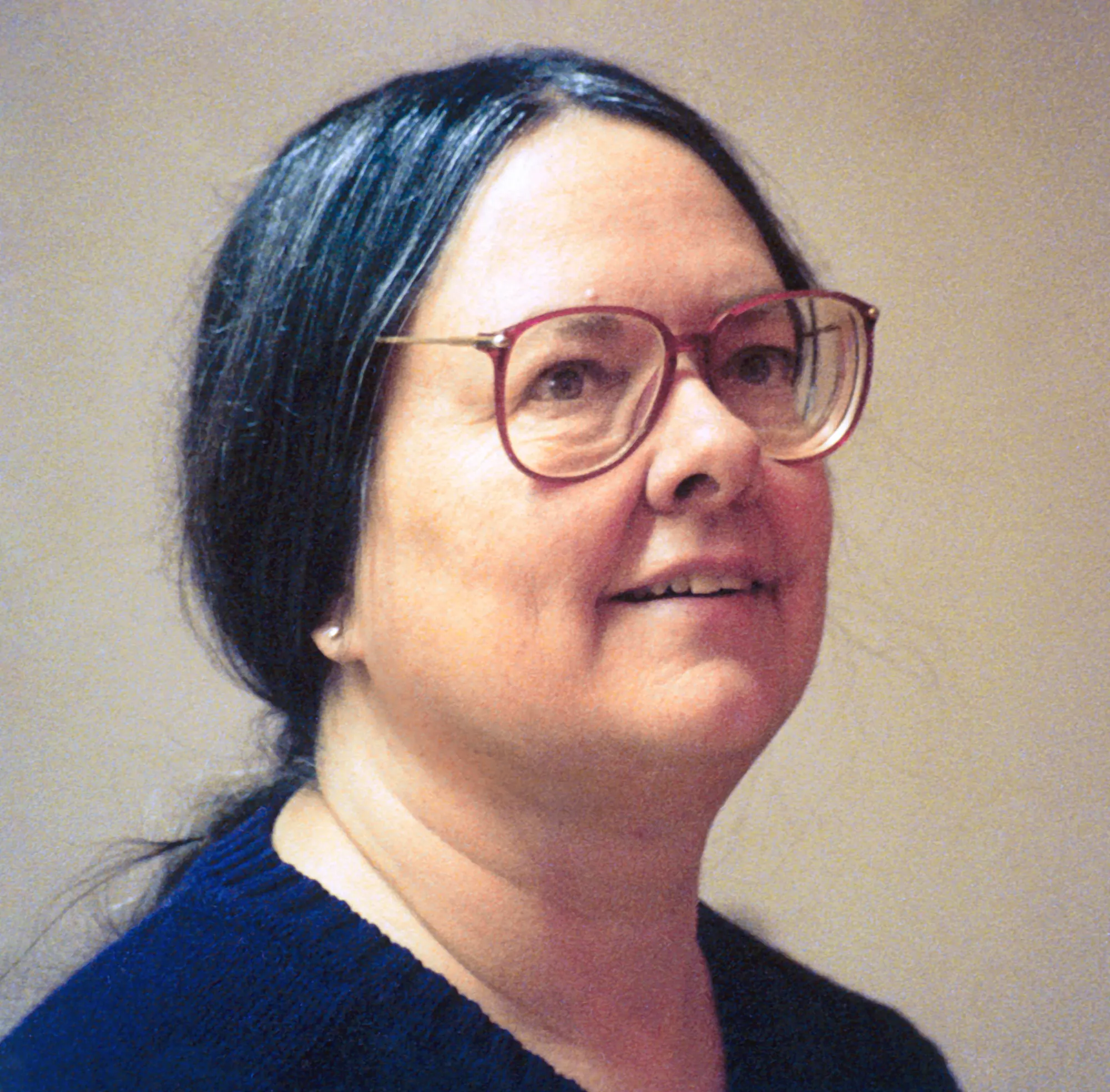
James Gurney, artist, author, Dinotopia creator, and classmate of Pat Linse’s at ArtCenter College of Design, Pasadena:
Pat and I were classmates at art school. She was the only student who saw through the nonsense in most of the introductory classes. She invented the term “artificial grief” for the assignments that seemed designed to waste the student’s time with pointless effort. She would run every idea through her invisible “crap detector,” a mental mechanism that we had never heard of before.
In the basic color class, while the rest of us struggled and failed at painting smooth, bright color swatches, she ignored the pigments and the method that the teacher assigned, and she bought her own specialty colors, applying them with an airbrush instead of a regular brush, with spectacular results.
She put herself through art school by airbrushing the packaging art for the Smurfs. To us she had that exotic air of professionalism, and her view of things carried a lot of clout, sometimes more than the teachers.
I was not surprised to hear later that she was involved in launching Skeptic magazine, and I wish I had been a little more skeptical myself back in those days.
Bill Nye (“The Science Guy”), science communicator:
You don’t have to be psychic to know that, right now, you’re reading Skeptic magazine. Note well though, this is the first one you’ve ever read that Pat Linse didn’t finish before it got to your in-box, be it ground-service or electronic. You can’t run an organization like this, without someone like Pat behind the scenes, writing, producing, editing, and laying it all out in readable fashion. Michael confessed to me how lost he feels without her. Turns out, she co-founded this outfit. Without Pat, your critical thinking skill would be that much more diminished. Her hard work was valuable; her wisdom was priceless.
Readers of this magazine are not much for the afterlife. If it turns out there is one, we’ll all be surprised—and so will Pat. From the background, she influenced all of us in the very best way. She left our world better than she found it. She will be missed indeed.