Spy vs. Spy

A review of: The Spy Archive: Hidden Lives, Secret Missions, and the History of Espionage by Dexter Ingram (IN Network, 2025) and The Spy in the Archive: How One Man Tried to Kill the KGB by Gordon Corera (Pegasus Books, 2026).
Has espionage changed over time? And what inspires people to betray their country? Two new books tackle these questions and more from different perspectives. The Spy Archive by Dexter Ingram is a history of espionage, from ancient times to the early 21st century. The similarly titled book The Spy in The Archive tells the story of one man’s journey from KGB officer to defector.
I initially worried that Ingram’s The Spy Archive was so short that it might be little more than an extended encyclopedia article. My fear was first challenged by its back cover praise by prestigious intelligence professionals and by Ingram’s own experience in the field, which the text confirms gives his advice and critiques a value that a historian could not provide. As I read The Spy Archive, I also grew to appreciate Ingram’s choice to focus on technique over politics. Of course, his historical survey hits most of the expected highlights, in Europe and the U.S., including the Middle Ages, the Renaissance, The American Revolution, two World Wars, the Cold War, and modern issues such as drone strikes and internet based attacks.
Along the way Ingram comments that the most effective and long-standing multi-nation intelligence sharing alliance in history is known as Five Eyes, which leading news outlets have reported since publication that at least one member country has expressed concern over continuing to share intelligence with the U.S.
Skeptics will appreciate that Ingram directly mentions critical thinking, though some may be disappointed that he includes discussion of Biblical espionage in the chapter on ancient espionage. I applaud Ingram though for giving a disproportionately large amount of space to such topics as what has and hasn’t changed in spying technology (such as comparing an ancient false bottomed earthen jar to a Cold War era hollow coin), and discussing how female and African American spies have sometimes been more effective due to sexism and racism. He even gives full chapters to the history and influence of spying within Asia, spying in fiction, and to ethical issues, including the toll that life or death decisions can have on intelligence agents who work in offices.
One of his odd inclusions: Ingram says that World War II Nazi leader Klaus Barbie was saved from a war crimes trial by doing work for U.S. military intelligence, which is not mentioned in the indexes of the survey texts The Secret World by leading intelligence historian Christopher Andrew, A Century of Spies by the late Jeffrey T. Richelson of The National Security Archive, nor in the second edition of the reference book Spy Book by U.S. government Norman Polmar and writer Thomas G. Allen.
Ingram’s doubts about the efficacy of “enhanced interrogation” surprised me, as did his ambivalence about the mass U.S. spying revealed by Edward Snowden. However, Dexter Ingram’s experience as a U.S. Navy pilot and State Department counterterrorism expert made it impossible for me to dismiss his opinions as liberal virtue signaling.
It’s always a challenge what to include in a short text, but I was shocked that he barely mentions Soviet espionage against the U.S. atomic bomb, and that in an entire chapter on ethics there is no extended discussion of the dilemma that information gained by a broken code or active spy is sometimes not acted upon because it would stop the flow of information. Less seriously, Ingram also got at least one name wrong (U.S. Navy traitor John Walker’s daughter was actually named Laura). In a side note, Walker’s contemporary, Aldrich Ames, the treasonous ex-CIA agent who is also mentioned, died in prison in January of 2026 after the book’s publication.
Of more concern than inconsistent inclusions is that Ingram’s statements sometimes seem contradictory. One example is the question of the valuable intelligence technique of multisource validation. How can Ingram credit it to the ancient Chinese philosopher Sun Tzu in one chapter, later comment that the technique was used in the Middle Ages, in a subsequent chapter credit the famous Renaissance author and spy Machiavelli as pioneering the technique, and then call Napoleon’s use of multisource validation “revolutionary?” The most concise contradiction is Ingram’s incoherent comment that whistleblowers can help the system correct itself.
The contrast to Gordon Corera’s The Spy in The Archive could not be wider, a multi-topic, multi-chronology history written so smoothly it could serve as a model for clear writing, while also being almost as suspenseful as spy fiction.
The most serious problem with the book is organizational. I like foreshadowing and “reflections” about the material discussed, but here it almost seems random, such as having introductory material in the center of a chapter and substantive material only in the introductory or reflection sections, as well as material in one chapter that would fit better in another chapter. There are too many examples of material being discussed twice, sometimes at length and usually without acknowledgement or good reason. At worst, the material is so disordered that it is hard to follow (especially in the last two chapters) despite the sentences themselves not being badly written.
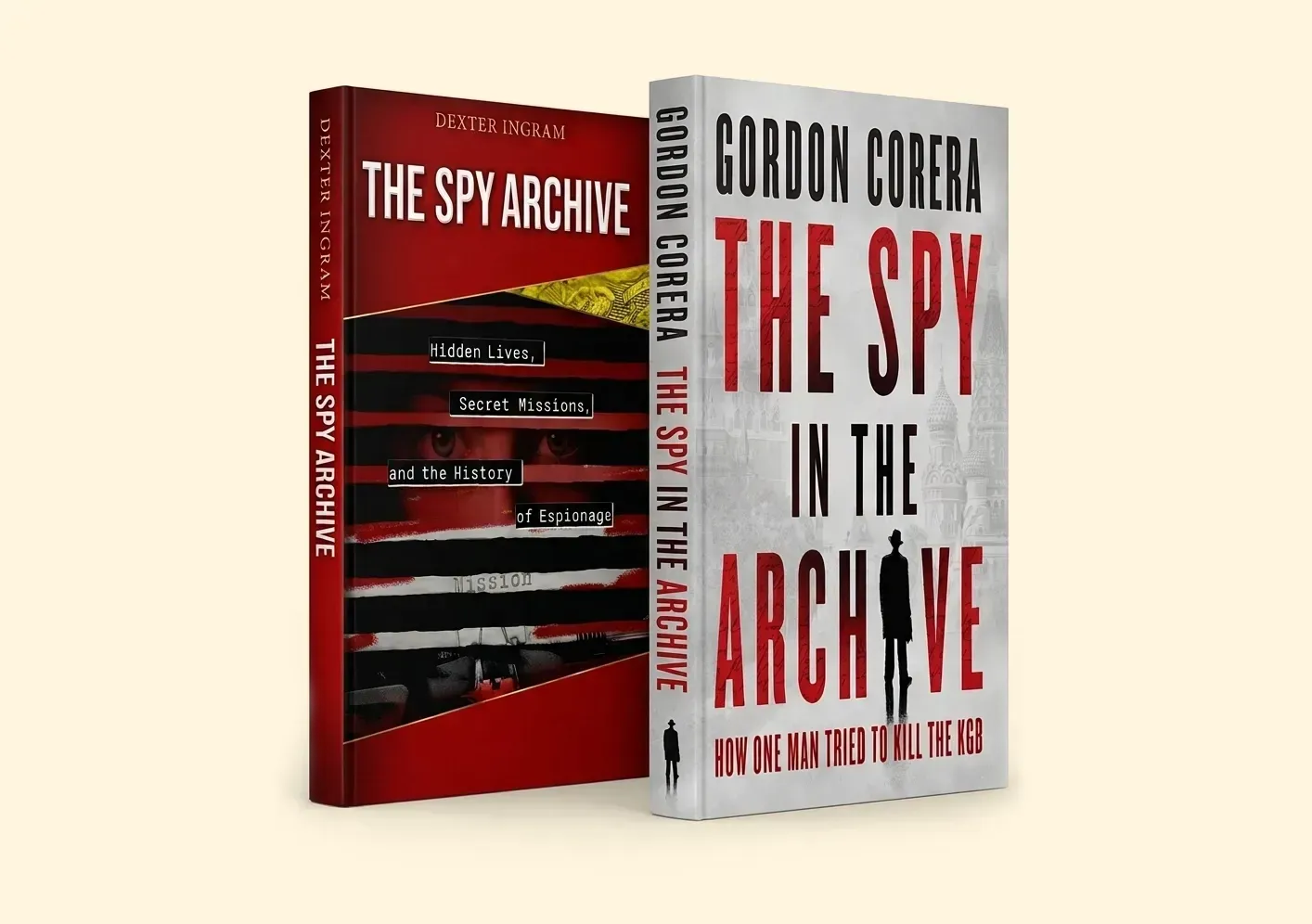
The contrast to Gordon Corera’s The Spy in The Archive could not be wider, a multi-topic, multi-chronology history written so smoothly it could serve as a model for clear writing, while also being almost as suspenseful as spy fiction. Like Ingram, Corera breaks the story into small parts, but in Ingram this creates disorder, while in Corera it makes for a faster read.
The true story is extraordinary: an archivist for the KGB became disillusioned by the lies and brutality revealed in the archives that were the Soviet Union’s most well kept secrets. So over the course of many years he took a massive amount of notes and smuggled them out of the archive each day hidden in his shoes, and finally escaped Russia with the help of British Secret Service agents, who were armed with automatic weapons for good reason. The trove that the archivist, Vasili Mitokhin, so dramatically made available to the West, revealed the identities of as many as a thousand Soviet agents in 36 countries.
There have already been books about these revelations, most prominently The Sword and the Shield, co-authored by Mitrokhin and historian Christopher Andrew. In contrast, The Spy in the Archive is about Mitrokhin’s personal evolution from enthusiastic KGB agent to archivist to defector. Along the way Corera skillfully interweaves key moments in the history of the Soviet Union and also made me feel the culture of fear enforced by Soviet security forces which is the underpinning of both the Soviet story and the evolution of Mitrokhin’s disillusionment. (I imagined echoes of this culture of neighbor turning on neighbor with recent news of possible bounties for women leaving Texas to seek abortions). Worst of all, the top secret KGB archives revealed that it was common for brutal punishment to be insisted upon even when the prosecutors knew the charges to be completely false, even when based solely on personal malice or gain.
Mitrokhin’s struggle to get his material published is suspenseful beyond his fear of being caught. A risky approach to the Americans was dismissed without consideration, and British diplomats were understandably slow in believing that Mitrokhin was telling the truth. Then, the agents struggled to convince the English government to fund the exfiltration of Mitrokhin and his family, as the Cold War ended and intelligence service budgets were slashed. But the dramatic escape happened, Mitrokhin was given a new life in England, and his notes were turned into books that forced the rewriting of Cold War history.
Stress remained: Mitrokhin was enraged that the first published book based on his notes (the aforementioned Sword and the Shield) ignored the evils within the Soviet Union. It also saddened Mitrokhin to realize, sooner than his new British government friends did, that Putin was lying about his openness to democracy (post-Cold War Russian spying is fully documented in Calder Walton’s recent book Spies, which I reviewed in Skeptic v30n1). Perhaps it is better that Mitrokhin did not live to see Russia’s January 2026 launch of a nuclear capable missile into Ukraine.
The Spy in the Archive: How One Man Tried to Kill the KGB is nearly a perfect book, from its apt subtitle to the emotions rendered so vividly throughout the text.
It’s a gripping and historically important story told extremely well. There are only a few details that I wish had been mentioned, such as the difficulty (or not) of exfiltrating Mitrokhin’s notes, and more directly and extensively discussing how they were determined to be genuine. Corera should also have mentioned the comparable exfiltrated notebooks of defector Alexander Vassiliev, and how many books were published based on Mitrokhin’s material during his lifetime.
But these are quibbles: The Spy in the Archive: How One Man Tried to Kill the KGB is nearly a perfect book, from its apt subtitle to the emotions rendered so vividly throughout the text. Ingram’s The Spy Archive could have been a very nice book if it had had a good content editor or coauthor to rewrite it from Ingram’s rough draft, which is what large portions of the published book read like, obscuring its strengths.
One link between the two books is betrayal: Ingram notes that most recent U.S. traitors were partly motivated by money but also as by feeling underappreciated by their intelligence agency employers, and Corera concludes that Mitrokhin’s motivations had more aspects of this than he wanted to admit, perhaps even to himself.