Texas Education and Christian Nationalism
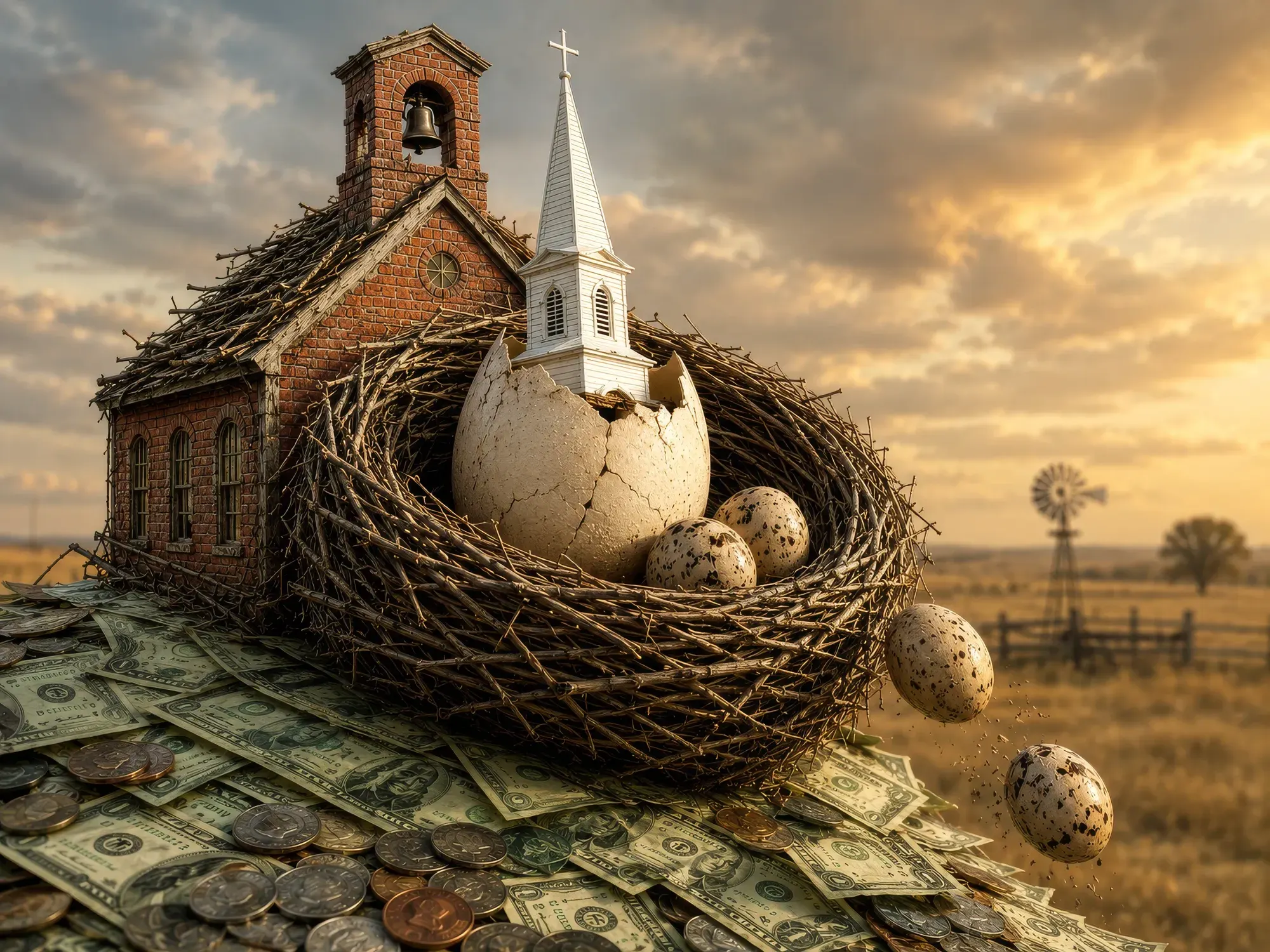
The Texas Legislature passed Senate Bill 2 in 2025 providing $1 billion in funding to create the Texas Education Freedom Accounts (TEFA) program, giving parents greater freedom and flexibility in choosing educational environments for their children. Parents who choose to enroll their children outside the public school system—including a private religious school or homeschool—and are accepted into the program can use their child’s TEFA funds to pay for approved education-related expenses through the program marketplace.1
The TEFA program would give participating families state funds to cover tuition, textbooks, and other education-related costs through education savings accounts. The program is universal and available to all Texas families with K-12 students.2
Families that enroll their child in an accredited private school will receive a scholarship worth $10,474, while homeschooling families will receive $2,000 in funding. Students with disabilities can receive up to $30,000 in funding. There is a multi-tiered priority system to determine which students are awarded scholarships under the funding cap.3
In theory, such programs would give children an educational opportunity they would not otherwise have. Materially, students already in private or home school are most likely to benefit. The Texas law is written to benefit families who know how to navigate complicated education systems.4 Most of Texas’s school voucher applications have come from white families and children who previously attended a private school or home-school.5
School-choice enthusiasts have tried and failed for more than sixty years to create a voucher program in Texas. Texas’s first foray with vouchers came in the wake of the 1954 Brown v. Board of Education case, in which the U.S. Supreme Court ordered desegregation of public schools. Following that ruling, segregationist legislators explored ways to keep Hispanic and Black kids from attending schools with non-Hispanic white students. One unsuccessful idea was for the state to subsidize tuition at private schools for parents who did not want their children to attend an integrated school.6
Voucher proponents have since amended their case. They now argue school-choice is a way to empower poor and minority families to get their kids out of underperforming public schools and into charters and private schools that are presumed to deliver better education.7
Teachers and administrators cite considerable evidence showing that vouchers—far from empowering poor families—subsidize wealthy parents who can already afford to pay private school tuition. Poor parents, meanwhile, still cannot send their kids to private schools because tuition often far exceeds the voucher subsidy.8
Of the nearly 275,000 TEFA applicants statewide, barely a quarter were currently enrolled in public schools. Experts largely attributed the disparity to the reality that $10,500 is generally not enough to pay for private school. Although lower-income families comprise a majority of TEFA awardees, they were the least likely to apply to the program. The more economically disadvantaged a school district was, the fewer families from that district applied. Rural districts made up only 11 percent of applications; more than half the applicants came from large cities and suburbs. This effect among lower-income and rural communities is common in other states with voucher programs. School voucher programs are often the least accessible to the people policy-makers say most they intended to serve.9
Texas is a spearhead of a national campaign to end the separation of church and state.
Texas would be redirecting public funds into private education at an unprecedented scale.10 Parents may spend their child’s voucher funds in the TEFA marketplace to hire private tutors and special education and therapy service providers. They may purchase textbooks and faith-based curriculum materials. They may use the funds to pay for Bible studies and extracurricular activities such as horseback riding and Christian summer camps. They may use state tax dollars to pay for online courses taught by artificial intelligence.11
Texas is a spearhead of a national campaign to end the separation of church and state.12 Some Texas Republicans and evangelical Christian fundamentalists have been exhorting Bible study to be mandatory in public schools, which, according to the American Civil Liberties Union, violates the separation of church and state outlined in the U.S. Constitution’s First Amendment.13 The lieutenant governor declared the phrase “separation of church and state” has “no constitutional basis” and should no longer be used by public officials.14
According to journalist Alec MacGillis, the current voucher movement began in the 1990s in Ohio as a concealed effort to finance urban parochial schools, later expanded to a wider effort.15 What occurred in Ohio is an illustration of a development that would otherwise be unnoticed. The Ohio campaign—organized by an advocacy group called the Center for Christian Virtue, a leading advocate for vouchers—provides a lesson and model that voucher advocates have deployed in other states: Characterize school choice as a way for disadvantaged children to escape struggling schools, a civil rights cause. Thus, one must ask:
- Is the current Texas Education Freedom Accounts program a concealed effort to finance parochial schools? And if so,
- Is it ultimately a result of White Christian nationalists (WCN) exerting influence on Texas’s public education policy-making processes?
Adherents to WCN ideologies are increasingly exerting influence on public education policy-making processes at both state and local levels and are having an increasing effect on public education in the U.S.16, 17
WCN can be understood as a “cultural framework—a collection of myths, traditions, symbols, narratives, and value systems—that idealizes and advocates a fusion of Christianity with American civic life.”18 White people are its primary proponents, seeking to connect a mythic Christian past with a political vision for America’s future, and often embracing authoritarian means of social control to maintain a White-Christian-dominant social hierarchy.19 Surveys in 2022 and 2024 found that 30 percent of Americans qualified as Christian nationalism adherents or sympathizers.20 White Christian nationalists believe the “American government should unapologetically privilege Christianity.”21
Burke and colleagues outlined four assumptions of White Christian nationalism. These assumptions lead to a vision of public schooling holding that because education is a powerful social system that shapes national identity and ideologies, it should actively promote Christianity and/or Christian values.22
Many conservative Christians have been emboldened and have embraced the ideology of Christian nationalism.23 The White Christian nationalist movement has galvanized parent, community, and larger-scale political groups whose guiding ethos challenges teacher professional roles in shaping literacy curriculum and instruction.24
The Seven Mountains, which would extend Christian dominion over the nation, calls on Christians to establish the physical Kingdom of God on earth.25 It argues that for a Christian theocracy to become the theology and law of the land, Christians must seize control of the seven spheres or “mountains,” which include: religion, family, government, media, arts, entertaining, and education.26 Thus, White Christian nationalists’ political organizing frequently targets public school curriculum, instruction, and policies regarded as “unbiblical” or “unconstitutional.”27
Legislative actions exemplify how lawmakers have advocated reshaping public education into a tool to advance White Christian nationalist ideology. By mandating religious instruction, restricting inclusive curricula, empowering religious ideology to overlap with public education, and targeting already marginalized students, these policies aim to shape public schools in ways that teach an exclusionary cultural vision of America and Americans.28
Behind the Texas Christian nationalist campaign are two West Texas oil billionaires who have spent $45 million reshaping state government to their theological vision.
Burke and Hadley trace the increasing influence of White Christian nationalism to the U.S. Supreme Court’s reorientation under Chief Justice Roberts, which is reinforced by executive branch policies in President Trump’s second term.29, 30 Trump has capitalized on growing skepticism of public schools, who called Texas GOP lawmakers himself to urge them to pass this part of his education agenda.31 For many Republican-controlled state governments, Trump’s presidency and recent Supreme Court rulings have had an emboldening effect regarding enacting White Christian nationalist’s educational policies.32
Behind the Texas Christian nationalist campaign are two West Texas oil billionaires who have spent $45 million since 2000 reshaping state government to their theological vision: Tim Dunn and Farris Wilks. Nearly every Republican in the Texas legislature depends on their financial support. Wilks’s and Dunn’s ground-level strategy befalls school board meetings across Texas, causing as much disruption and chaos as possible to undermine public confidence in existing institutions to make space for Christian alternatives.33
Are the TEFA program and other recent State educational policies manifestations of WCN ideologies exerting influence on Texas’s public education policy-making processes? Consider Texas’s educational policies.
Senate Bill 763 allows Texas schools to use safety funds to pay unlicensed chaplains to work in mental health roles. Volunteer chaplains will also be allowed in schools.34
Little Patriots—launched publicly in 2021—developed a supplemental curriculum for elementary school students that was said to compensate for a lack of emphasis on “the good things of our nation.” The initial curriculum contained an emphasis on Christianity in U.S. history, including the erroneous assertion that the founding fathers were all Christians. An early version of the curriculum was heavily criticized for what many called an oversized emphasis on Christianity. This curriculum eventually became Bluebonnet Learning. In addition to the Christian influence, critics say the materials “whitewash” negative events consequential to the early history of the U.S., including the brutal treatment of Native Americans and the foundational role played by slavery.35
The Texas education board voted to allow Bluebonnet Learning Bible-infused teachings in elementary schools under an optional curriculum using materials created by the Texas Education Agency following instructions from the state Legislature.36, 37 Supporters of Bluebonnet Learning say the Bible is a fundamental part of U.S. history. They argue that children’s literacy skills would suffer without a robust understanding of Bible references because Christian themes are pervasive in American culture.38
A Texas law provides public school teachers with immunity from prosecution if they violate the First Amendment’s Establishment Clause, which bars government sponsorship of or favoritism toward any religion over another.39
Conservative Christian activist David Barton would serve as one of several expert content advisers for the social studies standards revamp. Barton views church-state separation as a myth and the Ten Commandments as foundational to American education.40 A draft of new social studies standards approved by the State Board of Education in April 2026 requires that references to Islamic contributions to algebra and astronomy be removed.41
Barton is the founder of WallBuilders, a Christian advocacy group that believes the U.S.’s biblical foundation is under constant attack and that the U.S. was founded as a Christian nation.42 Farris Wilks, the West Texas oil billionaire, has funneled over $3 million into Barton’s WallBuilders organization, which functions as a bill mill, drafting Christian nationalist legislation designed for replication nationwide.43
Texas’s law requiring classroom display of the Ten Commandments wound its way through the courts. U.S. District Judge Fred Biery found that Texas Senate Bill 10 “impermissibly takes sides on theological questions and officially favors Christian denominations over others.” He ordered a preliminary injunction to block some school districts in Texas from implementing the law.44 In his ruling, Biery wrote that children’s exposure to a state-approved Christian version of the biblical document was coercive.45
The U.S. Court of Appeals for the Fifth Circuit in April 2026 reversed the lower court’s decision. Dissenting judges warned that the ruling trampled on the First Amendment and decades of Supreme Court precedent.46
Senate Bill 11 requires school boards to decide whether to provide a daily devotional period that students could attend during non-instructional hours to pray and/or read the Bible or other religious texts. The bill is part of a slate of bills approved in recent legislative sessions that aim to promote a conservative brand of Christianity in public education and test the legal limits of church-state separation.47
A 2023 state law required the Texas Education Agency to create a list of reading materials for the Texas State Board of Education’s consideration, with schools required to teach the materials beginning in the 2030-31 school year.48 The proposed list includes religious excerpts with a Christian focus.49 A total of 11 passages from the Christian Bible would become required reading if the list is approved.50
Texas is the first state to require Biblical reading for all public school students.
On June 26, 2026, the Texas State Board of Education voted 9-4 vote along party lines to require Bible stories in public schools; the Board also approved a mandatory reading list and a rewrite of K-8 social studies lessons that minimize racial, geographic, and cultural diversity. The statewide reading list requires that schools teach Bible material to children as young as 6-years-old up to young-adults preparing to receive their diplomas. The list includes Christian stories about Adam and Eve, the eight Beatitudes, and the Parable of the Prodigal Son.51
Texas is the first state to require Biblical reading for all public school students. State Board of Education member Brandon Hall celebrated the inclusion of Bible passages in Texas’s public school curriculum, attributing the decision to divine guidance.52
The new standards favor Christianity and certain Christian denominations over others.53 Texas rabbis and Jewish scholars argue the curriculum’s framing is inaccurate; nearly all Hebrew Bible selections use Protestant translations and present Judaism through a Christian lens. Only one reading uses a Jewish translation. Critics say no Jewish leaders were consulted and the actual selections risk promoting one religious viewpoint over others.54 According to historians, there are at least 900 English translations of the Christian Bible. Thus making it unlikely that a selection exists that would satisfy the wide array of Christian and Jewish denominations.55
In summary and conclusion, Texas is a spearhead of a national campaign to end the separation of church and state. Assumptions of White Christian nationalism lead to a vision of public schooling holding that because education is a powerful social system, it should actively promote Christianity and/or Christian values. The school voucher movement began as a concealed effort to finance parochial schools by characterizing school choice as a way for disadvantaged children to escape struggling schools.
Materially, students already in private or home school are most likely to benefit.
The Texas Legislature created the TEFA program; parents may enroll their children in private religious schools. Most voucher applications have come from white families and children who previously attended a private school. School voucher programs are often the least accessible to the people policy-makers say they most aim to serve.