The Matter of Dowsing
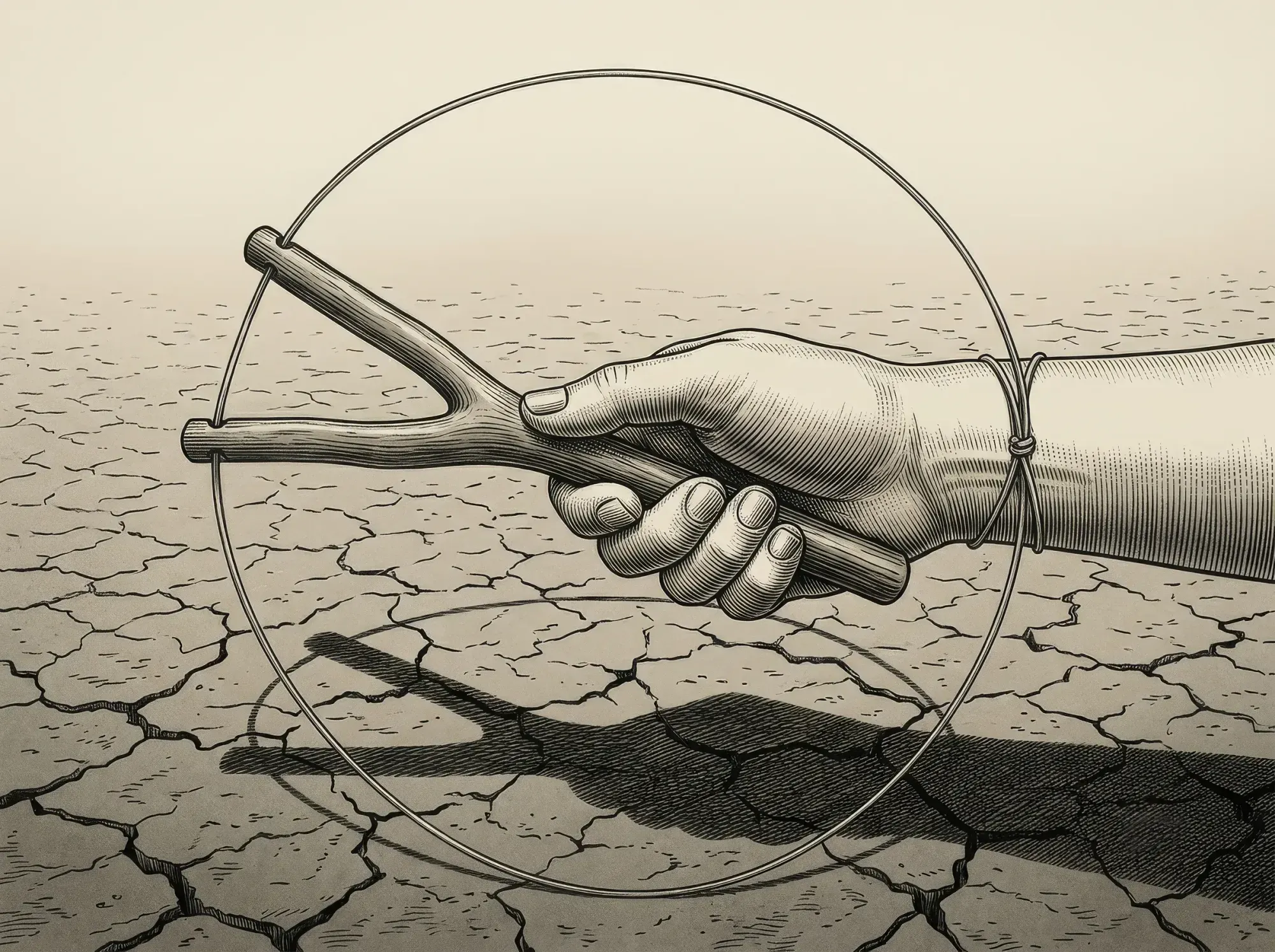
What follows is a document we are sending out to all claimants who want to try for the Pigasus Prize—the million dollar award offered by the James Randi Educational Foundation (JREF)—through dowsing. We felt this was necessary because of the endless discussions we’ve had with folks who have little understanding of what’s going on when they start twitching sticks. We encourage distribution of this text, without limitations except that it may not be changed in any way, though it may be quoted from in a responsible manner. Credit is to the James Randi Education Foundation.
By far the most common claim made for the Pigasus Prize is dowsing. Please read this with care and understanding. The facts expressed here have been arrived at after many decades of experience and careful consideration. JREF has put its reputation and its prize money behind the conclusions to be stated here. (Full information about the Pigasus Prize may be found on the JREF web page (http:/www.randi.org) or by mail application to 201 SE Davie Blvd., Ft. Lauderdale, FL 33316. There is no charge.)
Narrowly defined, “dowsing,” or “divining,” is the claimed ability to discover underground sources of water or metals by means of a “dowsing rod” or “divining rod.” However, this terminology and its scope have been expanded and are now used with a far greater range of meanings. Dowsing now includes the claimed ability to discover almost anything, from water and minerals to missing children and archaeological sites. Each dowser has their specialty. The device a specific dowser will use ranges from the traditional forked stick to just the bare hand. Pendulums, bent wires, wands of various sorts, and swivelled rods and housings are commonly encountered. (Currently, several “scientific” versions of dowsing rods in this form, which purportedly contain actual electronic circuitry, are being sold to government agencies in the USA for very high prices, as much as $14,000. One such stick, known as the “DKL LifeGuard,” is endorsed and validated by scientists who should know better.) In every case, the device used is a system in a state of poor equilibrium, something that cannot easily be kept balanced, and which is subject to very slight tremors, twitches, or changes of inclination. We’ve seen an astonishing variety of metal springs, coils, wires, balls, threads, and bobbing elastic devices, all trembling and vibrating freely, used as dowsing machinery.
Dowsers seldom agree on the basics of their claims. Some will insist that rubber footwear—or footwear made of other insulating materials—must be used by the operator, while an equal number insist that such materials inhibit the effect, and must never be used. Those who use stiff wires bent at right angles and held in each hand parallel to the ground may say that the wires will cross one another when the sought-after object or substance is encountered; just as many say that the wires will diverge. Every dowser has their own personal theory, rules, and preferred techniques.
Some claim that their power is divine in nature. Some say that dowsing is a learned art. Most claim that anyone can dowse successfully, while others say that it is an inherited gift. Some deny that it is in any way “paranormal,” while some embrace that definition. Dowsers will often scoff at the claims of other dowsers, and will have a very limited set of parameters that they will accept as viable. Some say that they can only perform successfully if there is a real “human need” present; others are not so inhibited. Many say that they can find any object or substance, while others say they can find, for example, only flowing water moving underground, but not in pipes. Some are specifically pipe-locators, they say, and some only look for metal pipes, not plastic. Most dowsers claim 100% accuracy. Very few claim anything less than 90%.
The bottom line is that dowsers all fail, when properly and fairly tested. There are no exceptions.
Water dowsers are by far the most common variety we have encountered, and they, too, exhibit a wide spectrum of claims. Some only look for fresh/potable water. With some, it must be moving water. Some cannot detect water in pipes, only “natural” water. Most say they can tell how far down the water is, and at what rate it will be delivered, once tapped. Water dowsers—as well as some less specialized—say they can be thrown off by magnetic fields, nearby electricity, machinery, buried meteorites, masses of metal, or other underground rivers that intersect their path. The list of elements and situations that they say can inhibit their performances is endless.
The bottom line is that dowsers all fail, when properly and fairly tested. There are no exceptions. Even after they have clearly and definitively failed, they always continue to believe in their powers. Why should this be so?
We are witnessing here a very powerful psychological phenomenon known as the “ideomotor effect.” This is defined as an involuntary body movement evoked by an idea or thought process rather than by sensory stimulation. The dowser is unknowingly moving the device of choice, exerting a small shaking, tilt, or pressure to it, just enough to disturb its state of balance.
This has been shown any number of times to be true, but the demonstration has meant nothing to the dowsers, who persist in their belief no matter how many times it is shown to them that dowsing does not work. The defensive reaction of most dowsers, following their failure, is to claim that they should not have submitted to any test, and will never do so again. And most will say that dowsing comes under special rules that deny that it can be tested, ever. The discouraging fact is that no dowsers are ever convinced, despite the rigid controls of proper double-blind testing, that they cannot dowse. Their need to believe is so strong and so ingrained, that they refuse to accept any quality and/or quantity of good evidence. They have adopted a philosophy that shields them against reality.
There appears to be a feeling on the part of the dowsers that if they’ve been self-deceived it indicates that they are therefore stupid or naive. This is certainly not the case. Any person, regardless of education, IQ, sophistication, or social position, can fall for the ideomotor phenomenon. An indication of that is that a great number of scientists—mostly physicists—have embraced belief in dowsing, in spite of their superior knowledge of how the world works. But this is an effect of the mind, a different matter from the workings of the common everyday objects and situations we encounter in our lives.
It’s a trick of the mind, a very convincing trick, but a self-deception nonetheless.
Please be aware of this, however: though you may be puzzled over this seemingly strange conviction embraced by the dowsers, unless you have actually experienced the ideomotor effect at work, you cannot have a proper appreciation of how absolutely compelling and irresistible it can be. In fact, dowsers are insistent that the disbeliever should try the effect and thereby become convinced of its efficacy; they assure you that once you’ve tried it, you’ll change your mind. And they’re often right in that respect; the dowsing device really does seem to move on its own, in response to some sort of external signal or force. As a result of some imagined or real hint from nature—water dowsers are often familiar with the topological or geographic signs or conditions that indicate the probability of water in any given spot—the operator unconsciously tilts or impels the device, and believes that indicates the presence of the sought-after material. That is simply not true. It’s a trick of the mind, a very convincing trick, but a self-deception nonetheless.
Now, I am fully aware that the dowsers will read this discourse and completely ignore it. I regularly receive expressions of pity from them for my inability to accept the reality that they believe they have discovered. Many applications that are received at the James Randi Educational Foundation from dowsers express great wonderment at why the million-dollar prize has not already been awarded, when dowsing is such an easy thing to demonstrate. Many are amazed that dowsing is eligible for the prize at all, since it is so widely accepted. And each dowser assures me that they are going to be the one to show me the error of my ways, and to dazzle me with a simple demonstration.
Each dowser goes away from any trial of their powers, dismayed by their failure, puzzled at the reasons for the failure, but always capable of coming up with what seems to them to be a reasonable excuse. That excuse may be any one of many, including an unfortunate arrangement of the planets, improper temperature or humidity, a problem of indigestion, too much ambient noise (or too much silence) or a poor attitude on the part of the observers. These are not invented excuses; they are drawn from my personal experience in testing dowsers.
I must say that of all those who have ever applied to be tested for the Pigasus Prize, and of those whom I have actually tested, no other kind of claimant is as honest as dowsers. These are persons who are genuinely, thoroughly convinced of their powers. In only two instances—one in Australia, and the other in the U.K.—did I ever encounter any cheating being tried by dowsers. And those cases were easily solved and immediately terminated.
I ask all those who wish to apply to become claimants based upon their dowsing skills, to first try a double-blind test of their abilities. We at the JREF can advise you how to design such a test protocol. You will find, I assure you, that the description above of the ideomotor effect will be proven valid. Unfortunately, my experience tells me that you, as a dowser, will refuse this advice and believe that such a procedure is not necessary.
If you wish to see a full account of the most definitive set of dowsing abilities ever conducted, you may find it in the first two issues of SWIFT, the newsletter of the JREF. Numbers 1 and 2 of Volume 1 may be purchased for US$6 for both, postpaid, from the address at the beginning of this document. We strongly recommend that you read this account before submitting your application.