The Omnitron Is Still With Us

In 1987, dowser Dell Winders and I met on a Fort Lauderdale beach to test his “Omnitron” device-a $3,495 wired-up dowsing rod machine that he was selling. I recently came upon the videotape of that session. Mr. Winders, who presently advertises at www.omnitron.net, claimed he could locate some gold coins he’d brought along, if they-as a set-were to be randomly placed in one of ten holes on the beach. He came equipped with his locator device, the dowsing rods, and the coins. He was also well-supplied with the trusty alibis with which dowsers always prepare as a shield against their inevitable failure (see below).
Now, I would certainly recall any dowser who had been successful. However, Winders now claims that in the test, he found the coins eight out of twelve times, which would have been statistically verysignificant for that particular test protocol. He also claims that I’ve denied that the test ever took place; no, I’ve said that no successful test of his device took place, and though I quite possibly could not identify Winders by name among the literally hundreds of dowsers I’ve tested, all over the world, I know for sure that none of them has ever succeeded. Surely, Mr. Winders would have at least one person who can verify his version of that test, and I’ve invited him to provide us with that information …
Understand, this was before the JREF existed, and the prize I personally offered at that time was $10,000. In any case, I don’t see why Mr. Winders wouldn’t want to apply again-this time for the million bucks. So, I wrote to him via e-mail:
Mr. Winders: Back in 1987, when we met in Fort Lauderdale, the prize I offered for a successful performance of your Omnitron device was only $10,000. Presently, that prize amounts to one million dollars, and the same rules apply. Since you are still selling the Omnitron, it appears to be still working as you advertise, and you or anyone else can win the million simply by doing a 30-minute test. Are you interested?
I ask you to examine this photo of the “amplifier” unit of Winders’ “Omnitron” (Figure 1). As you see, there are six materials the user can be looking for: copper, silver, gold, lead, tin, and diamond. Note that my Omnitron is set at the “diamond” position; I wouldn’t want to miss a stray diamond, now, would I?
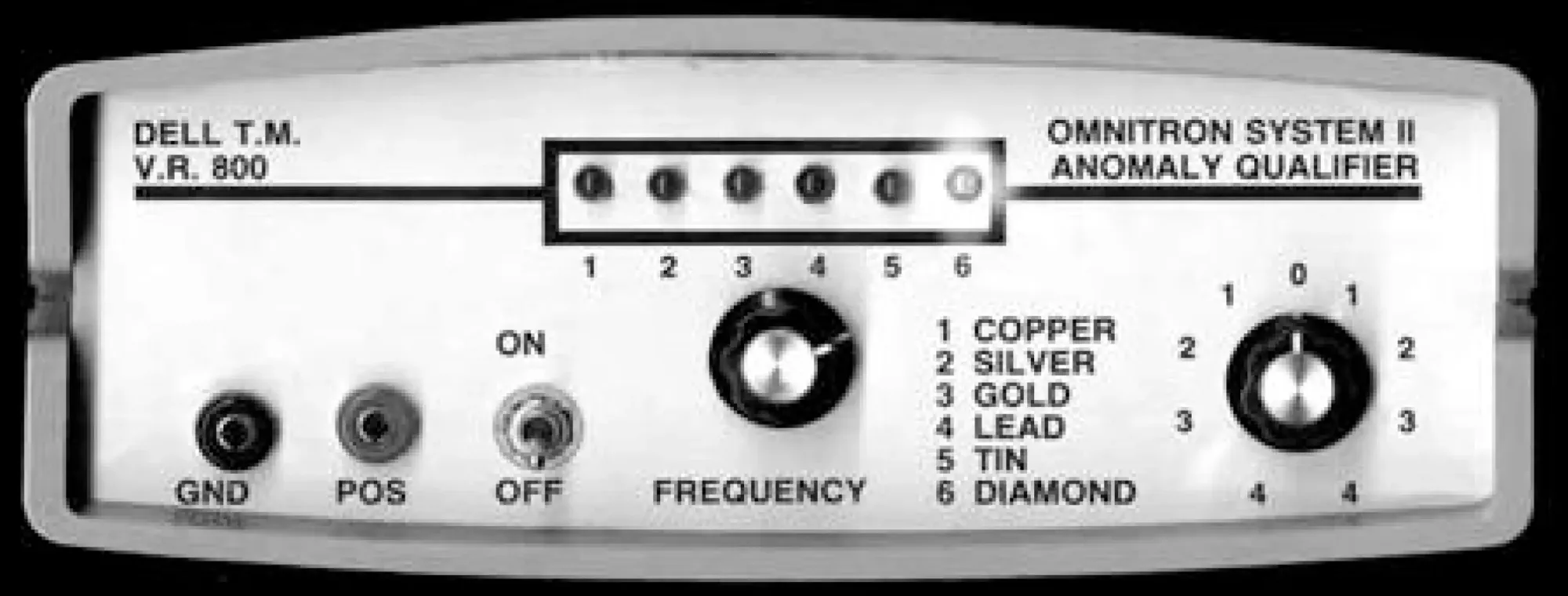
It’s all quite esoteric, though the wiring inside looks as if an orangutan put it together with a glue-gun.
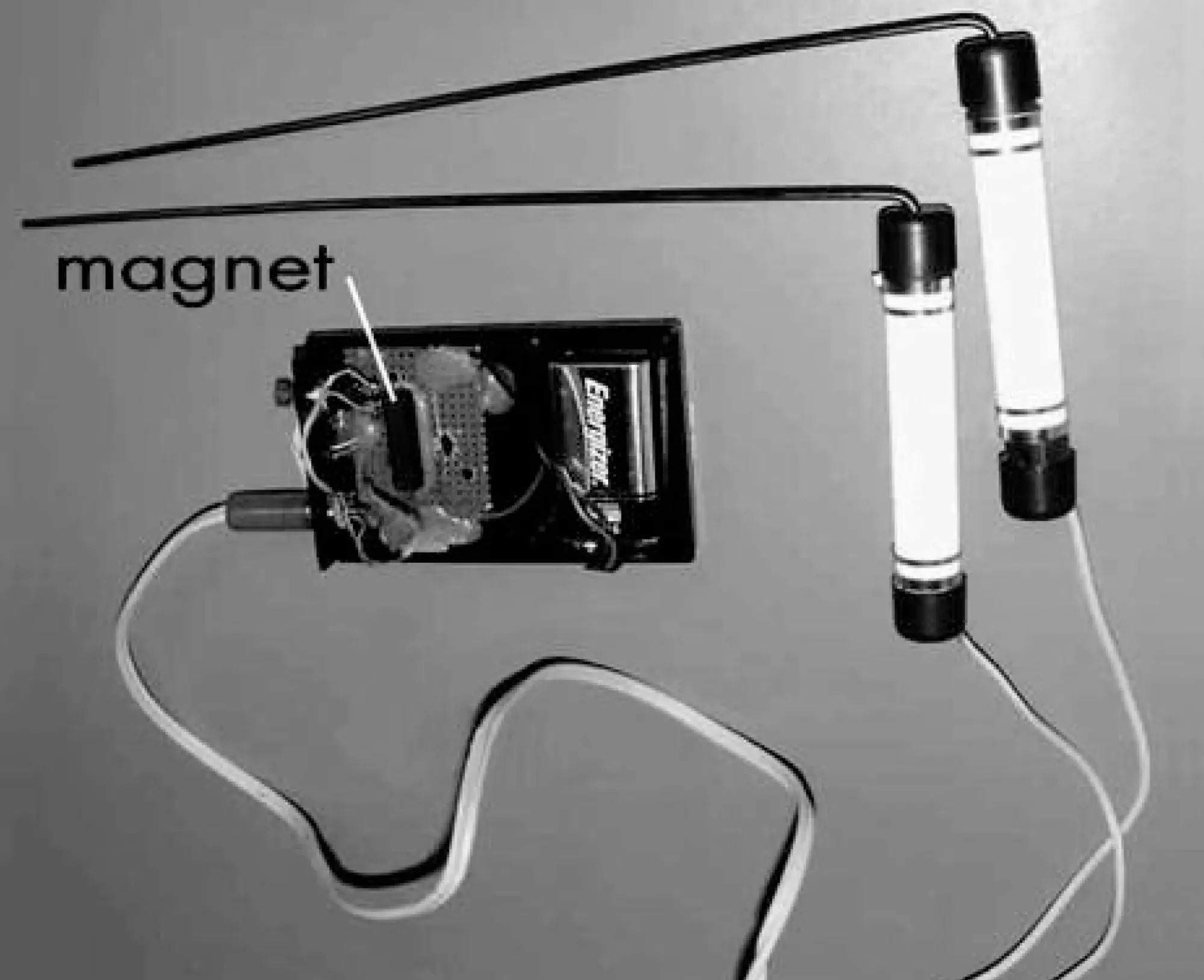
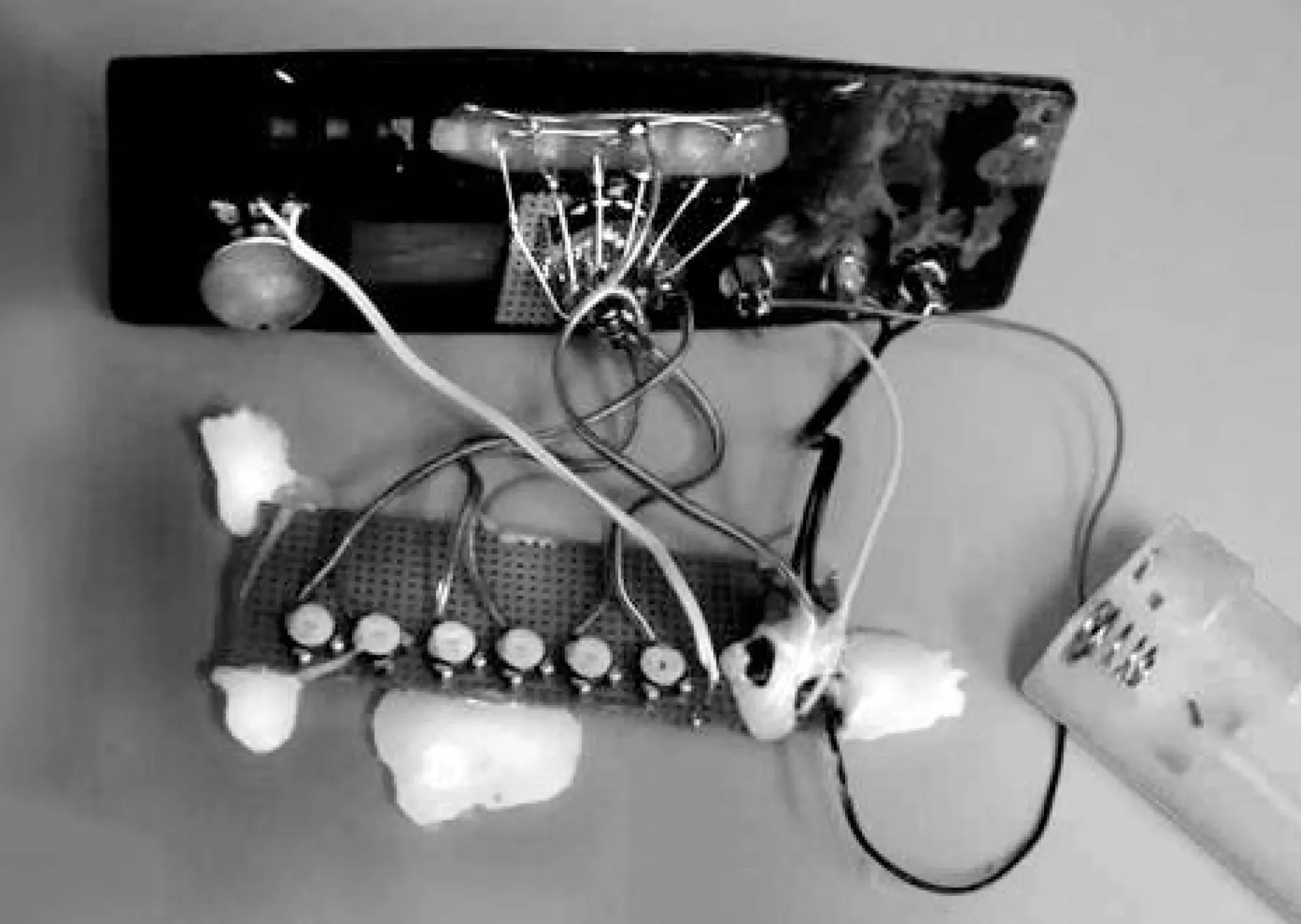
Users choose the substance they want to home in on by dialing it up, then start waving their sticks about. Those metal sticks are plugged into a small pocket unit that has a battery inside connected to a red LED (Figure 2). This circuit consists of a push-button switch and a jack into which the sticks are plugged. Pressing the switch lights up the LED, as does contacting the metal rods with one another. Simply glued to the circuit board is a very weak composition magnet. No electrical connection, folks, it’s just glued in there. Faith-based, I guess. The “amplifier” unit is located nearby, and somehow there’s supposed to be a mystical connection between that unit and the rods. It’s all quite esoteric, though the wiring inside looks as if an orangutan put it together with a glue-gun.
But the best part is the set of seven caveats that Winders offered us at that beach 18 years ago:
- While he was digging the holes in the sand with a huge auger: “They’re trying to wear me out!” This is dropped in so that failure can be attributed to fatigue.
- Looking at his watch: “We’re starting late in the day. I hope we don’t get interference!” One variety of “interference” among many, apparently starting late can doom any success for the Omnitron.
- Asked about how deep the holes should be for optimum Omnitron conditions: “I take them as they come. If it works, it works. If it doesn’t work, it doesn’t work.” A general, all-purpose alibi.
- Casually thrown in: “Only in Florida, we get interference. What causes it, I don’t know. Last time, it was sunspots.” Mr. Winders lives in Haines City, Florida. Does that mean he always has these problems when he operates the Omnitron? Or does it work better for him in New York? If and when we get to test him, we’ll go wherever he wants to, of course.
- Asked about optimal size of the substance sample: “I can’t differentiate between a speck and a ton!” Oh-oh. Since there are bound to be “specks” of many substances around, that almost says that the Omnitron will be spinning constantly.
- What could result in failure? “If there are any problems, it will be me, not the equipment.” I see. Again, that seems to say that if Dell isn’t up to scratch, and the test fails, the Omnitron is still an effective device.
- We had plates placed over the holes to conceal whether the gold coins were in there, or not. “It could be the plates that interfere.” Damn plates!
You see, that’s the big problem with testing dowsers: there are so many things that can “interfere” with finding the target being sought.
Well into the performance, my notes tell me, Dell Winders commented, “This morning, the conditions seemed to be working alright, but now we’re getting interference.” You see, that’s the big problem with testing dowsers: there are so many things that can “interfere” with finding the target being sought. The list is endless-temperature, humidity, altitude or attitude, noises, atmospheric pressure, breezes, indigestion, footwear, radios or cell phones nearby, clouds, too much or too little sunlight, any sort of variance from the ideal situation-whatever that might be-is brought up as an excuse for failure. In short, dowsing seems to be a fickle talent. In my opinion, it doesn’t exist at all. But the JREF has a million dollars ready to give Dell Winders-or anyone else-who can make this dowsing rod-or any dowsing device-work as advertised. Anyone out there?
P.S. Dell Winders has responded. Here is his answer, in full:
I was not offered any prize money. Not even gas money. I am not interested in your lies and deception, except that the truth be known.
The prize money was there. And, that second comment accurately reflects the goal of the James Randi Educational Foundation. We, too, are not interested in lies or deception, but we are interested that the truth be known. Here, again, is the basic question:
Will you or will you not demonstrate your device and win the million-dollar prize? You are advertising and selling a device which you claim works, yet you will not show that it works, and win a million dollars?