Are Liberals More Depressed Than Conservatives?
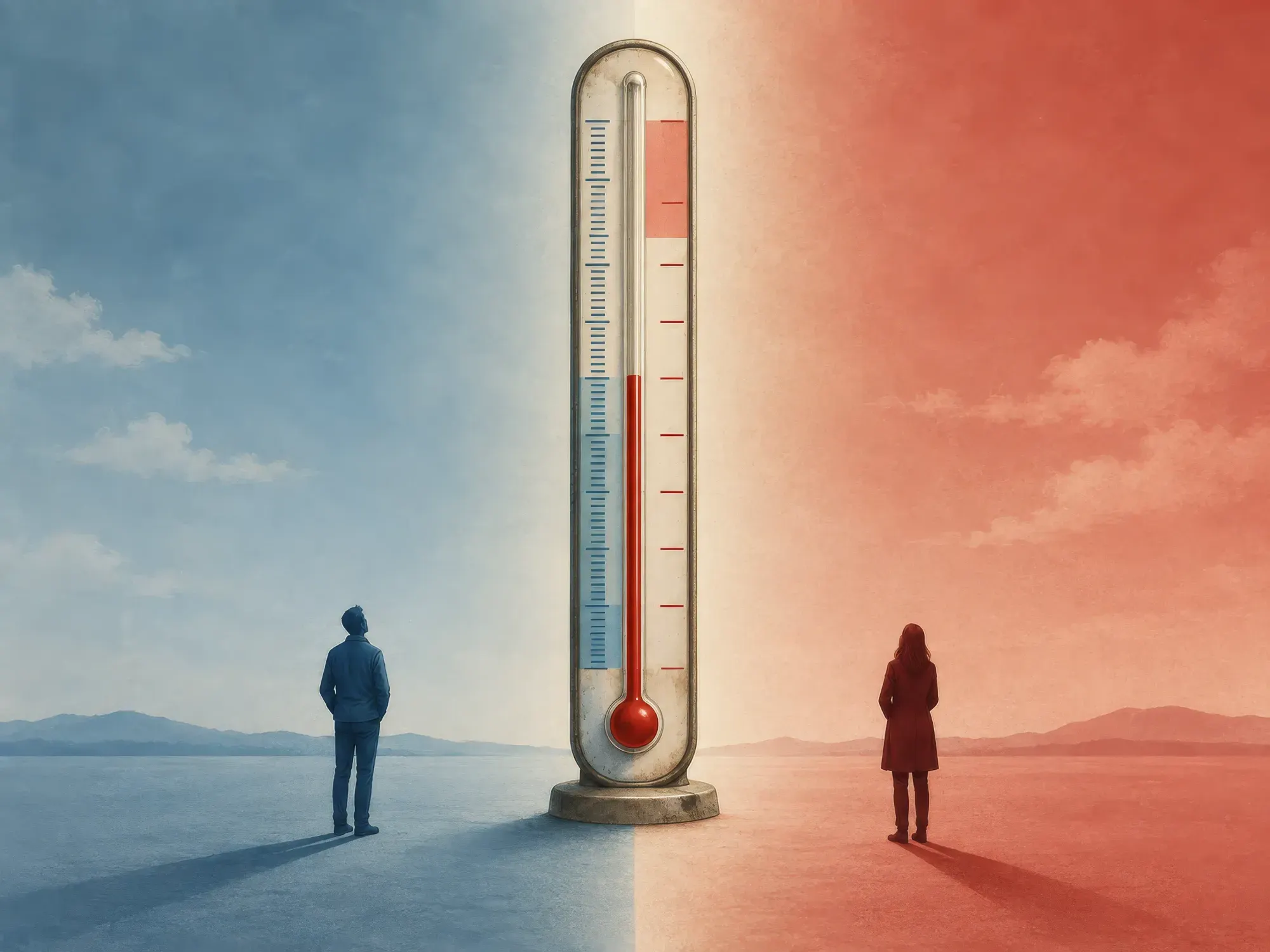
Recent surveys, followed by extensive media coverage of their findings, show that American liberals—and liberal young women in particular—are more likely than conservatives to self-identify as having struggled with anxiety and depression. What isn’t clear is why.
A 2022 paper titled “The Politics of Depression” reported that liberal girls self-reported a higher depressive affect score than liberal boys, conservative girls, and conservative boys, with liberal boys reporting the second highest score. The same trends hold when it comes to negative self-esteem and self-derogation. These scores remained true across multiple demographics, including income, education, race, and age. Conservatives with a postgraduate education were the happiest, and conservatives making only $30,000 a year or less were still as happy as liberals who made six-figure incomes. It’s also worth noting that in terms of personality traits, “[the] politically liberal tend to be higher on openness to experience (complexity of mental life) and neuroticism (negative emotionality),” two of the Big Five personality dimensions (the others being conscientiousness, extraversion, and agreeableness).
Mental health conditions (depression, anxiety, etc.) lack the kind of direct, observer-independent biomarkers that define diabetes (fasting glucose, HbA1c, oral glucose tolerance test) and other physical conditions. Diagnosis and population statistics measuring mental health therefore lean heavily on self-report instruments or clinician interviews that still depend on the patient’s description of internal states. Because of that reliance, group differences (sex, culture, cohort, socioeconomic status) are always ambiguous: they could reflect differences in underlying neurobiology/functioning, differences in willingness or ability to report distress, differences in interpretive frameworks (“what counts as low mood”), or some mixture. This is a real and well-recognized limitation in psychiatric epidemiology. In other words, a flaw in relying on self-reports is that we’re less sure if the difference in health is objectively accurate or if a difference in the perception of health is driving the difference.
Mental health conditions (depression, anxiety, etc.) lack the kind of direct, observer-independent biomarkers that define diabetes (fasting glucose, HbA1c, oral glucose tolerance test) and other physical conditions.
A study by Brian F. Schaffner et al. proposed, “One explanation is that rather than a genuine mental health divide, conservatives may inflate their mental health ratings when asked, due to stigma surrounding the term.” Schaffner added that “under a conservative ideology that emphasizes stability, security and personal agency, the thought of mental illness may invite thoughts of the unknown, or appear as a threat to their security,” pointing to the fact that when they substituted the term “overall mood” for “mental health,” the gap they originally found in their study disappeared.
Conservatives do score higher than liberals on the personality trait conscientiousness, which is defined as socialized impulse control, which would lend itself more to avoiding stigmatizing issues. Several studies back up the theory that conservative ideologies are more stigmatizing of mental illness because conservatives are more likely to view the mentally ill as a threat or weakness. Other studies have found that Republicans are less likely to seek mental health help and are less likely to trust the institutions providing mental health information.
Given this research, I would like to suggest that it is possible that conservatives’ view of mental health and associated institutions may skew data to make it seem as if conservatives are mentally healthier than liberals, who are comparatively more accepting of the terminology around mental health and mental illness. However, this isn’t fully explanatory because it wouldn’t account for the connection between liberalism and neuroticism or some of the data from the “Politics of Depression” paper on less jargon-laden terms, such as self-esteem.
Another possible explanation is that liberals are more likely to consider struggles to be an illness due to a broader conception of harm. Dr. Nick Haslam, a professor of psychology at the University of Melbourne, said, “There is a fairly strong relationship between having a more progressive liberal political ideology and having a broader concept of harm,” referring to the concept creep of terms describing harm, such as “trauma.”
When filling out mental health questionnaires, participants can fairly easily understand what their scores will come out as, and if they’re more likely to see themselves as having a clinical problem, they may be more likely to skew their answers toward that result. Importantly, this does not require participants to be lying or intentionally exaggerating. When a mental health assessment question asks, “How often do you feel down? Never, occasionally, often, or nearly all of the time,” it is a highly subjective question. If I felt “down,” whatever my interpretation of that term is, on and off for about six days out of the last 14, is that occasionally or often? If I wanted my pain validated and treated because I felt it was problematic, I’d be more likely to put “often,” but if I did not perceive myself as having a clinical problem, I may call it “occasional.”
There is a gap between what liberals and conservatives consider clinical depression, and liberals will be more likely to explain that gap by citing data that concludes conservatives support stigmatization.
Similarly, participants might weigh thoughts differently depending on the lens they’re looking through. If, while driving, they have the thought that they could easily decide to drive off the road and crash their car, someone who thinks of themselves as healthy is likely to dismiss that thought as a random human impulse that’s quickly forgotten. Someone who’s worried and neurotic may remember that thought when asked about suicidality and say they occasionally think about it, rather than never.
Like the claim that conservatives are inflating their mental health scores, the claim that liberals and progressives are deflating them due to the concept creep of psychological terms is possible, but it’s hardly provable how much of the observed difference in mental health outcomes can be attributed to this factor versus competing explanations.
Some conservative commentators have been quick to use the studies about mental health to their ideological advantage. One take, especially popular among conservatives and Christians (and conservative Christians), is that liberal women lack emphasis on family and faith, which bolsters mental health by providing regular social connection, a sense of community, and duty to others. Social psychologist Jaime Napier said:
One of the biggest correlates with happiness in our surveys was the belief of a meritocracy, which is the belief that anybody who works hard can make it. That was the biggest predictor of happiness. That was also one of the biggest predictors of political ideology. So, the conservatives were much higher on these meritocratic beliefs than liberals were.
Another writer for the conservative-leaning Washington Times, quoting a Skeptic Research Center survey, argued that misunderstanding statistics such as overestimating the rate of Black Americans murdered by the police by several orders of magnitude could lead to a bleaker view of the world, and thus, impact mental health.
The liberal response is that liberals correctly perceive injustices like racism, climate change, and the polycrisis: see phrases like “If you aren’t angry, you’re not paying attention.” Liberals are also more likely than conservatives to seek out mental health evaluations and help.
There isn’t even consensus among mental health professionals about how wide or narrow the definition of depression should be.
Then there are possible third factors. Jonathan Haidt has been a proponent of the theory that social media is the cause of the mental health crisis among younger generations. Liberal Democrats are more likely to use social media for civic activities, and most social media websites (other than 𝕏) lean Democratic. If Democrats and liberals use social media more on average, it could be one of the factors negatively affecting mental health. Haidt argues that it’s not just the amount of time spent on social media, but it’s that the messages targeted toward teenage girls are disempowering and lead them to an external locus of control. A Monitoring the Future survey found that over 30 percent of liberal twelfth-grade girls agreed that “whenever I try and get ahead, something or somebody stops me.” The number was just under 30 percent for conservative boys and below 20 percent for liberal boys and conservative girls.
An often-neglected factor is that conservatives also rate higher on physical health, which could affect mental health outcomes, considering that mental and physical health are closely tied to each other.
The general findings are also corroborated through the comparison method used by social scientists to check their findings with those in other countries. Similar findings about those with worse overall health being more likely to identify and vote for the left and better overall health being more likely to support the right were replicated in Europe, Japan, Germany, and England and Wales. This extends to depression. A cross-sectional analysis shows that the mainstream right has lower self-rated depression than the mainstream left in Western Europe.
It’s not as if we can section out stigma versus an expanding definition of harm and test it against depressed patients.
So, are conservatives inflating their health, are liberals expanding their concept of harm, or does the divide reflect a real difference that stems from ideological beliefs or lifestyle factors that correlate with political views? Even if we designed a study that controlled for third factors like physical fitness, social media use, family status, and religiosity, it’s not as if we can section out stigma versus an expanding definition of harm and test it against depressed patients.
There is a gap between what liberals and conservatives consider clinical depression, and liberals will be more likely to explain that gap by citing data that concludes conservatives support stigmatization. Conservatives will explain the gap by saying liberals have expanded the definition so much they’ve begun to medicalize and treat normal human conditions—in fact, many books in the last decade have argued this premise, such as Saving Normal, The Age of Diagnosis, and Bad Therapy.
And so it goes. In fact, there isn’t even consensus among mental health professionals about how wide or narrow the definition of depression should be. In the United States, the Diagnostic and Statistical Manual of Mental Disorders (DSM) is meant to be a unified definition of disorders like depression, but the manual itself is subject to continuous change, with each new edition redefining diagnostic criteria, often significantly.
The bottom line is that suffering people deserve care, and there are pros and cons to both medicalization and less formal, more holistic models such as physical exercise and community support. Seeing both as socially acceptable depending on the patient’s needs allows us to address that suffering by putting aside the unanswerable question of “Who has it statistically and objectively worse?” and meeting the person in front of us with the options available to them.