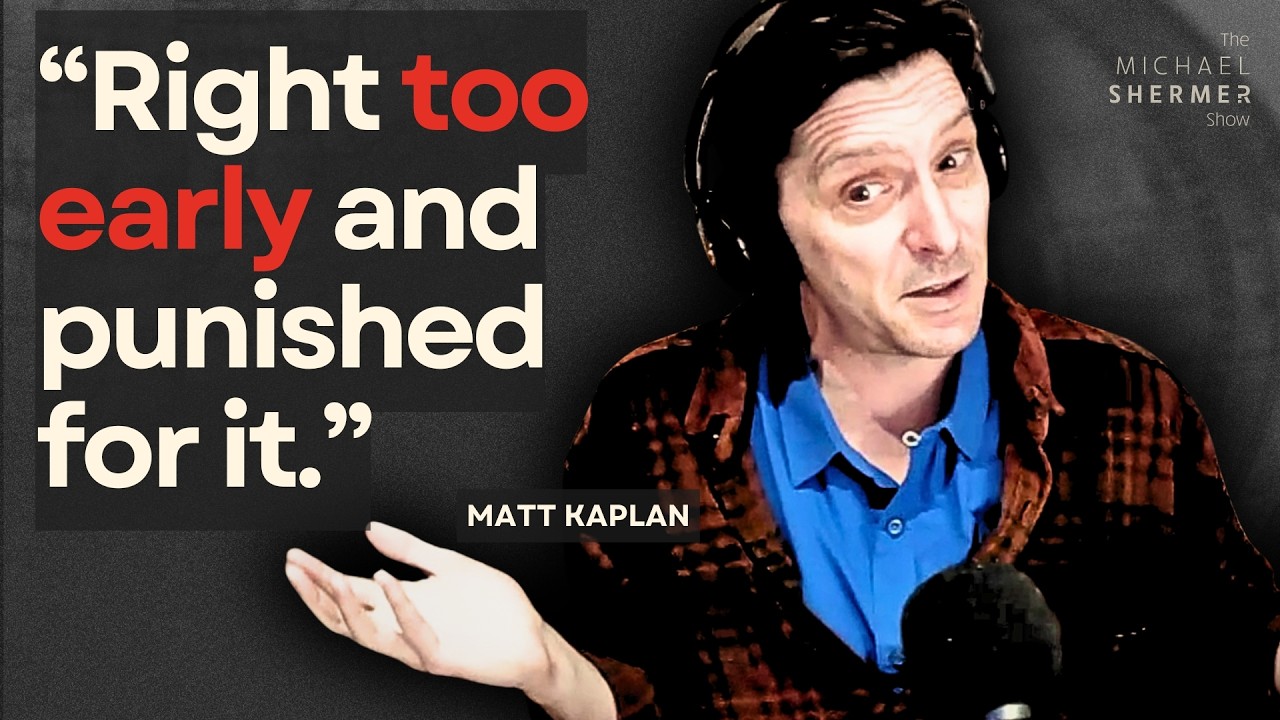

Heretics: The Scientists Who Were Mocked But Later Proven Right

About this episode:
Why do some world-changing ideas get ignored, attacked, or buried for years before anyone takes them seriously?
Michael Shermer sits down with The Economist science correspondent Matt Kaplan to discuss the scientists who got there first and paid the price. They talk about why institutions resist new ideas, why careers can depend on defending the status quo, and why being right is often not enough.
They discuss figures like Katalin Karikó, whose work on mRNA was dismissed long before it helped transform modern medicine, and Oliver Wendell Holmes, who faced fierce backlash for arguing that doctors themselves were spreading deadly infections.
This is a fascinating look at what happens when evidence collides with ego, reputation, and scientific orthodoxy. It’s also a conversation about truth, status, intellectual courage, and the deeply human side of science.
Matt Kaplan is a science correspondent at The Economist. He has written about everything from paleontology and parasites to virology and viticulture over the course of two decades. His new book is I Told You So! Scientists Who Were Ridiculed, Exiled, and Imprisoned for Being Right.

Support the show
Did you enjoy this episode? Show your support with a tax-deductible donation and share the show with your friends and family. Together, we can make a meaningful difference.
Transcript
Coming soon...