economics
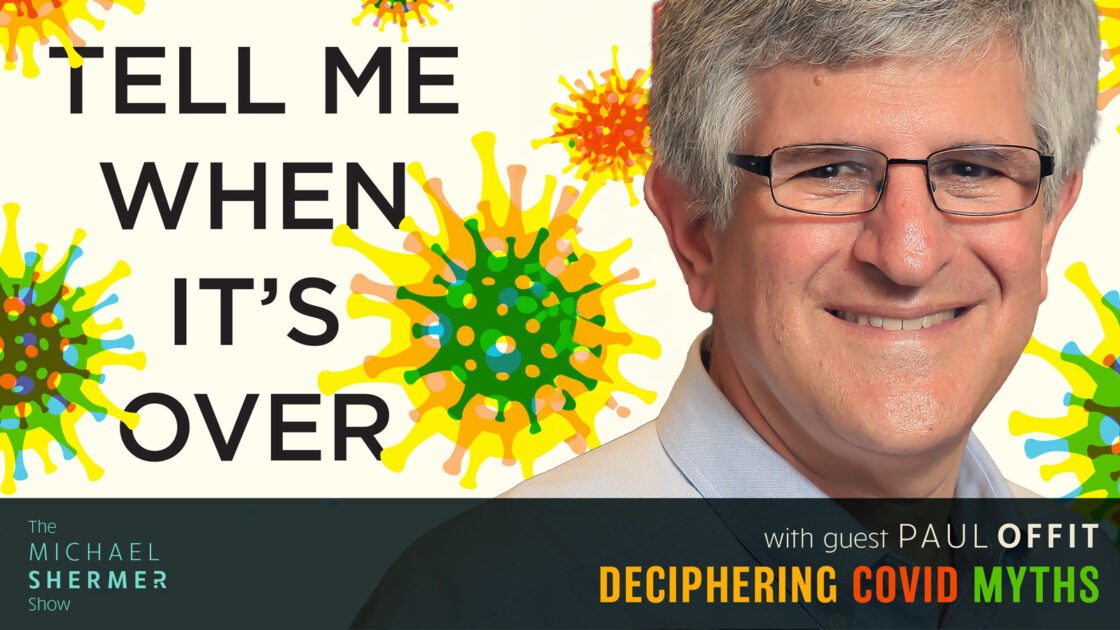
Shermer and Offit discuss: mRNA vaccines • science gone wrong or part of the long and risky history of medical innovation? • loss of trust in medical and scientific institutions • overall assessment of what went right and wrong • mandates vs. recommendations • economic costs • lab leak hypothesis vs. zoonomic hypothesis • debating anti-vaxxers • treatments • high risk vs. low risk groups • Robert Malone,Joe Rogan, RFKJ, Peter Hotez, Del Bigtree • Stanford professor Jay Bhattacharya censored for signing the…
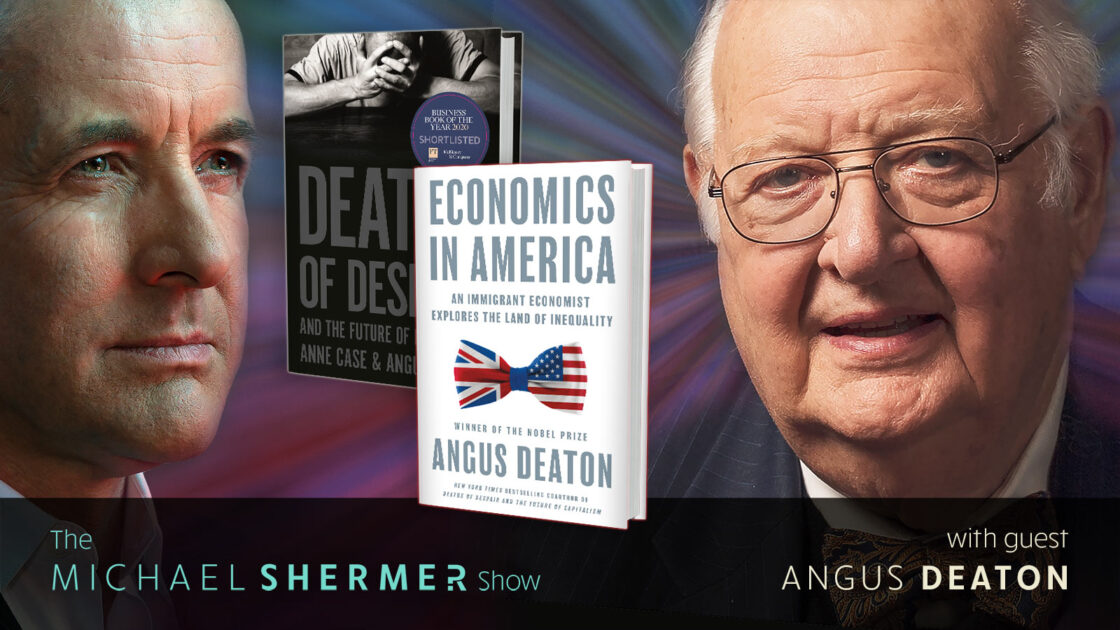
Shermer and Deaton discuss: the science of science is economics • winning a Nobel Prize • what economists do, and how they determine causality • Ludwig von Mises, Friedrich Hayek, Milton Friedman, Ayn Rand • why a college education matters • meritocracy and “Just World” theory • minimum wage • healthcare • poverty • inequality • opioid crisis, alcoholism, suicide • inflation and interest rates • modern monetary theory • think tanks.
Skeptic: How did you get interested in energy? Koonin: I was educated in New York City public schools and grew up in a middle-class household. I went to Caltech as an undergrad, MIT for my PhD, and then returned to Caltech as faculty for 30 years. I was the Provost for the last nine. I […]
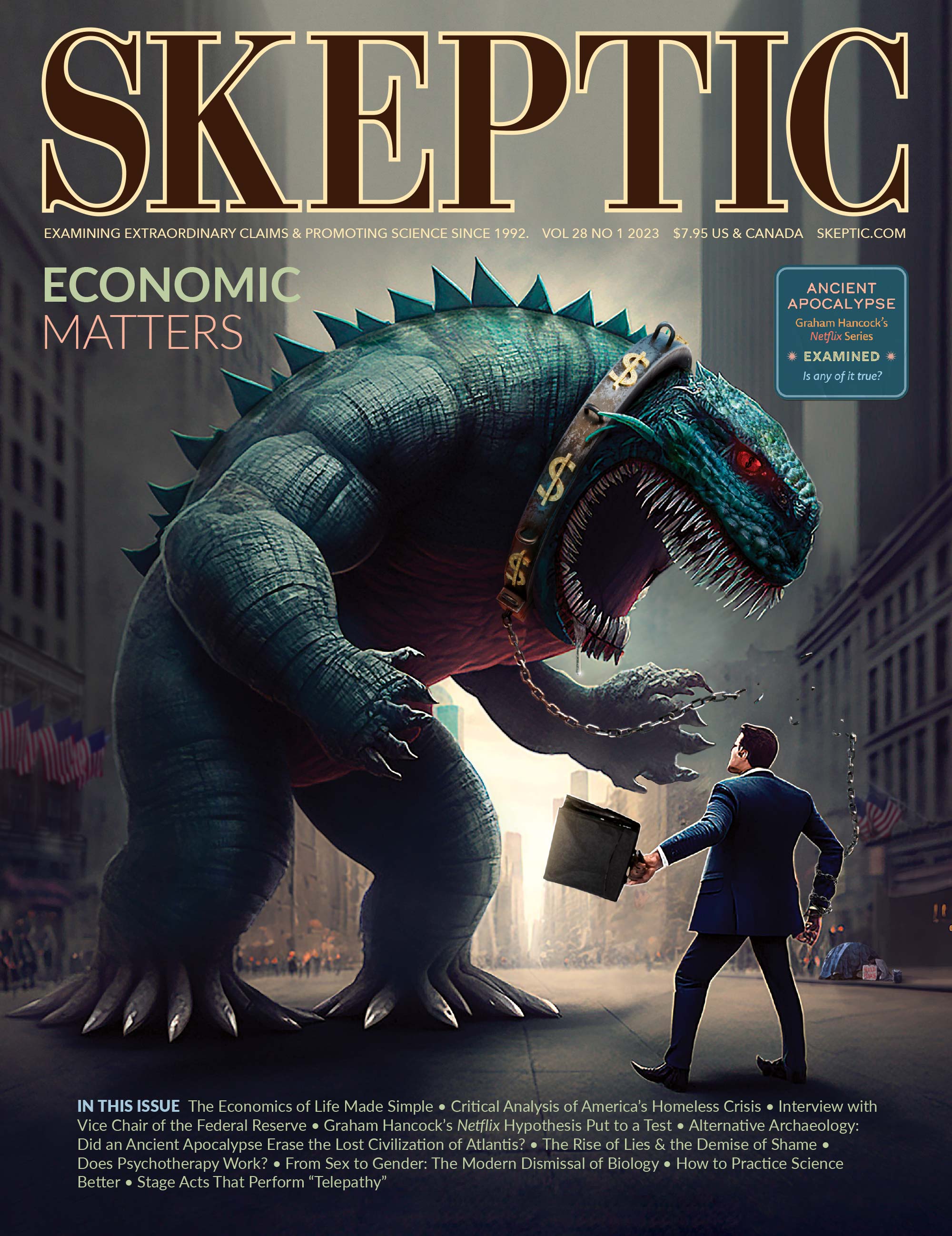
In this interview with Alan S. Blinder, one of the world’s most influential economists and one of the best writers in the field, the former Vice Chair of the Federal Reserve Board draws on his deep firsthand experience to share insights on “economic matters” with readers of Skeptic.
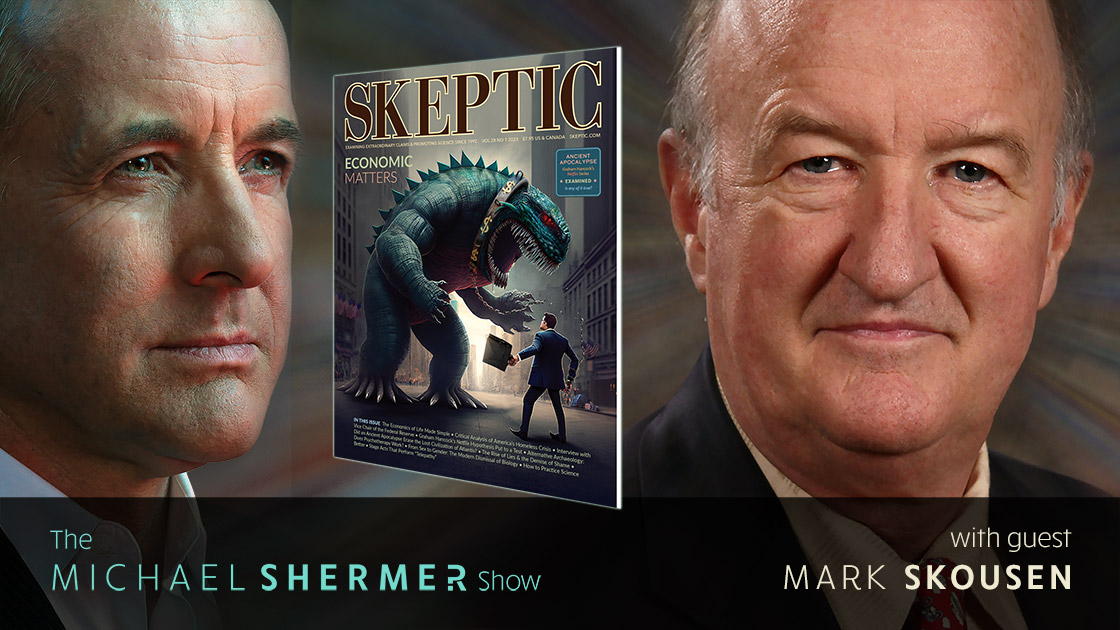
Shermer and Skousen discuss: whether economics is politicized • Adam Smith and what he really said • how the economy really works • fiat money vs. gold standard money • inflation and what to do about it • experimental economics • regulation on capitalism • what the Fed does (or should do) • Modern Monetary Theory • bitcoin/cryptocurrency • monopolies, duopolies, and market capture • antitrust, trustbusting • What’s wrong with free market capitalism? • money, happiness, and meaningfulness.
What is money, what is it based on without a gold standard, and can cryptocurrency ever replace it? Why are young people so attracted to democratic socialism, and is there a better alternative? Should valuable goods and services such as college education, medical services, and transportation be made available to the public for free? What is the secret to the success of capitalist nations? Do economists offer any solution to the global warming threat? “America’s Economist,” Mark Skousen, helps make…

In the early modern period, just before the rise of the modern nation-state, there were hundreds of political units in Europe. Now there are comparatively few. Some observers project that at some point in the future there will be just a handful of empires running the world, but others think the opposite might happen: that the nation-state as a concept will fall into disuse, and that city-states hold the future of politics. In this article Michael Shermer explores these themes.
Shermer and Kelly discuss: protopian progress • ChatGPT • artificial intelligence; an existential threat? • evolution • cultural progress • self-driving cars • innovation • social media • putting an end to war • compound interest and the long term effect of small changes • why you don’t want to be a billionaire • beliefs and reason • setting unreasonable goals • persistence as key to success • probabilities and statistics, not algebra and calculus • investing: buy and hold • how to fully become yourself.
Shermer and Oreskes discuss: the myth of market magic • market fundamentalism • market absolutism • market essentialism • capitalism and democracy • well-regulated vs. poorly regulated capitalism • U.S. Constitution and capitalism • what the founding fathers believed about markets • what Adam Smith really said about markets and capitalism and how economists rewrote Adam Smith • why markets need regulation in the same way sports need rules and referees • rhetorical fallacies of market fundamentalists • child labor…
Shermer and Magnuson discuss: corporations and what they are for • LLCs • Roman corporations • medieval economics • banks • guilds • Credit Mobilier scandal • Dutch and British East India Companies • stocks, bonds, joint stock companies • monopolies, duopolies • assembly lines • multinationals • raiders • private equity firms • start-ups • antitrust, trustbusting • bankruptcy • bitcoin, cryptocurrency • Adam Smith’s critique of corporations • profit and market efficiency • slavery and economics • unions.
Shermer and Blinder discuss: serving on Bill Clinton’s Council of Economic Advisers • being the Vice Chair of the Federal Reserve Board • What kind of science is economics? • how one’s political leanings influence cause-and-effect economic theories • the difference between monetary and fiscal policy • a Keynesian approach to economics • inflation, stagflation, recessions, depressions, Bull and Bear markets defined • interest rates • the Federal Reserve • the money supply • What makes money valuable without the…
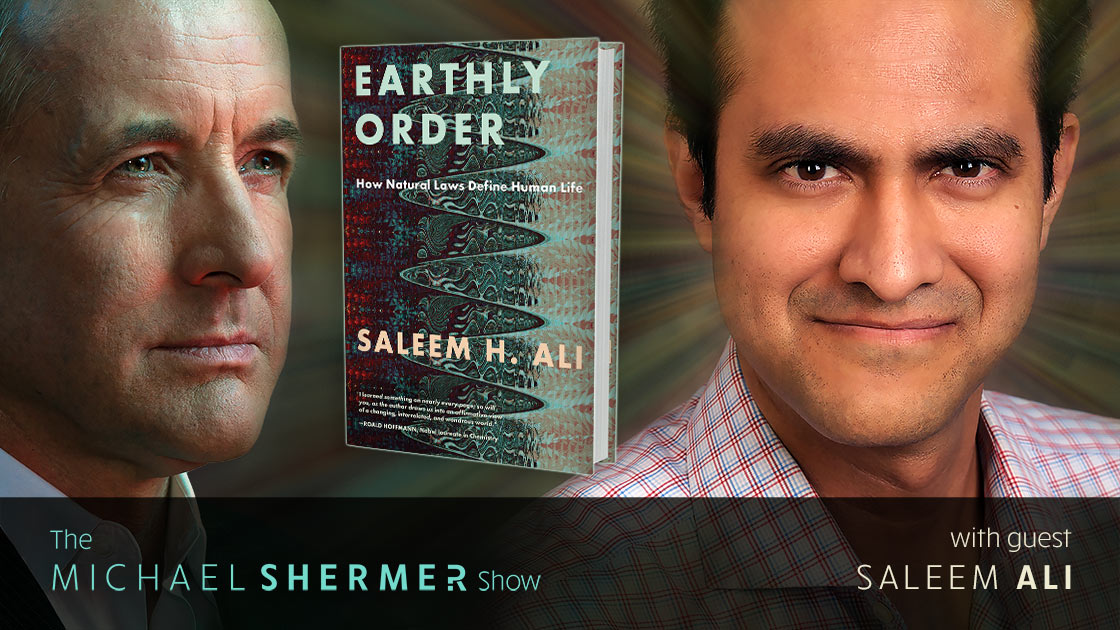
Shermer and Ali discuss: • the search for structure in nature • order and randomness • economic laws • natural laws • natural orders: molecular, quantum, crystals, carbonic, nuclear, magnetic • hydrological, organismic, Gaia and Medea • reductionism and holism • Islamic economics • the origin of wealth • Is there an optimal economic order? • how mining rights work in the U.S. and elsewhere • the voter’s paradox • Pareto optimality and why we can’t achieve it • resource…
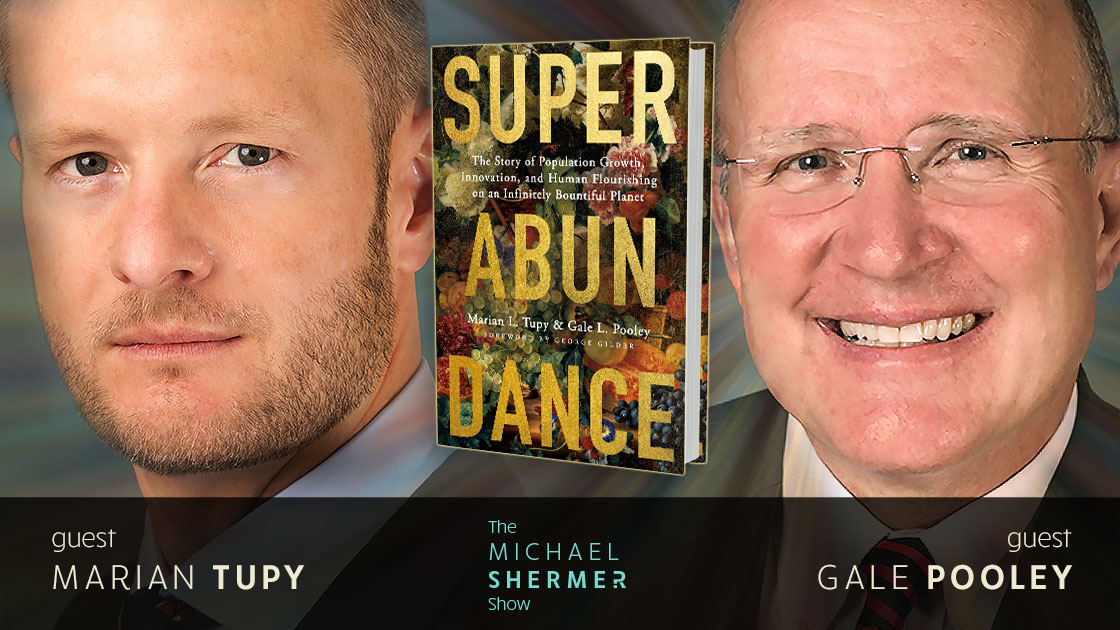
Shermer, Tupy, and Pooley discuss: why we long for the “good ol’ days” • the Malthusian trap • Ehrlich’s predictions on overpopulation • the birth dearth • the Simon Abundance Index • compound interest • What does it mean for the economy to grow 2–3% a year? • accumulating wealth • what poorer countries need to do to become richer countries • running out of fossil fuels • Obama’s “you didn’t build that” speech • inflation • electric vehicles •…
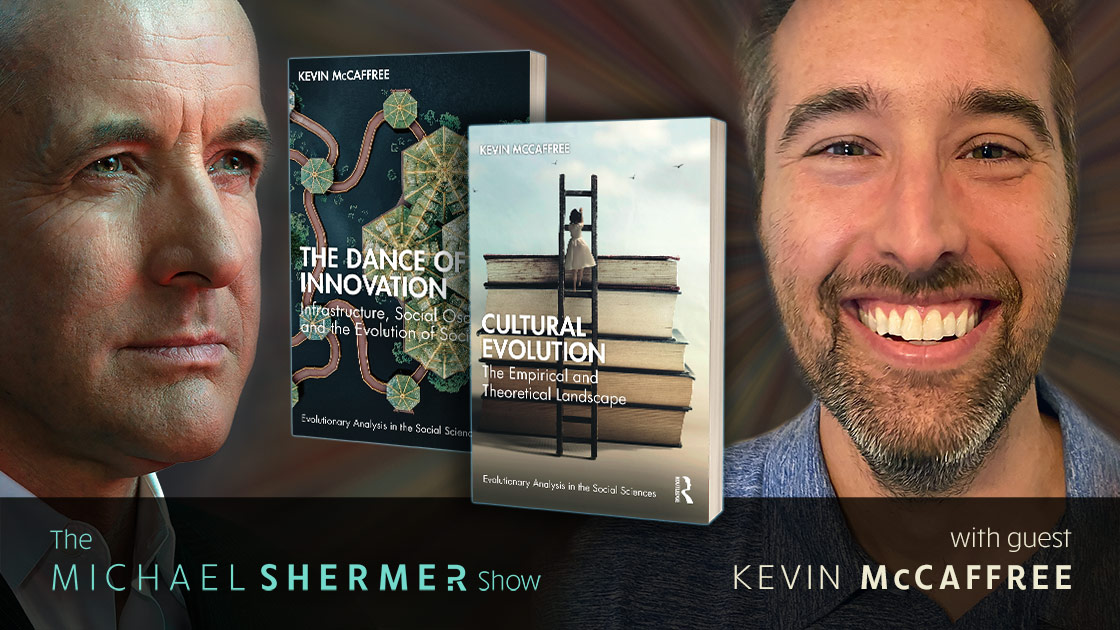
Since the dawn of social science, theorists have debated how and why societies appear to change, develop and evolve. Shermer speaks with sociologist Kevin McCaffree about: his research on crime and gun violence • diversity, equity, and inclusion • political polarization •cultural and biological evolution • horizontal/equalitarian vs. vertical/hierarchical societies • human selfishness and the problem of altruism, and what the future holds for humanity and society…

Moshe Hoffman is a research scientist at the Max Planck Institute for Evolutionary Biology whose research focuses on using game theory and models of learning. Erez Yoeli is a research scientist at MIT’s Sloan School of Management, whose research focuses on altruism: understanding how it works and how to promote it.

Michael Shermer speaks with political demographer, former demographics consultant to the United States Department of Defense, and author of The Future Faces of War, Jennifer Sciubba, about her new 8 Billion and Counting.
Shermer speaks with renowned Ohio State University political scientist John Mueller about the ongoing crisis in Ukraine and what we might expect from Putin’s Russia in the coming weeks, months, and years, along with Dr. Mueller’s outline for how to end the current conflict and compromise with Putin.
Political scientist and war historian John Mueller argues that Putin’s war in Ukraine could have been avoided and can still be stopped through compromise since NATO was not going to accept Ukraine as a member for decades anyway, and Crimea will be returned to Ukraine about the time Texas is returned to Mexico.
Shermer speaks with renowned Ohio State University political scientist John Mueller, author of The Stupidity of War, about the ongoing crisis in Ukraine and what we might expect from Putin’s Russia in the coming weeks, months, and years, along with Dr. Mueller’s outline for how to end the current conflict and compromise with Putin.

In episode 186 of Michael Shermer’s podcast, Michael speaks with Nobel Prize-winning pioneer in environmental economics, Dr. Nordhaus, about his book The Spirit of Green: The Economics of Collisions and Contagions in a Crowded World in which he explains how and why “green thinking” could cure many of the world’s most serious problems — from global warming to pandemics.
NEXT →