universe
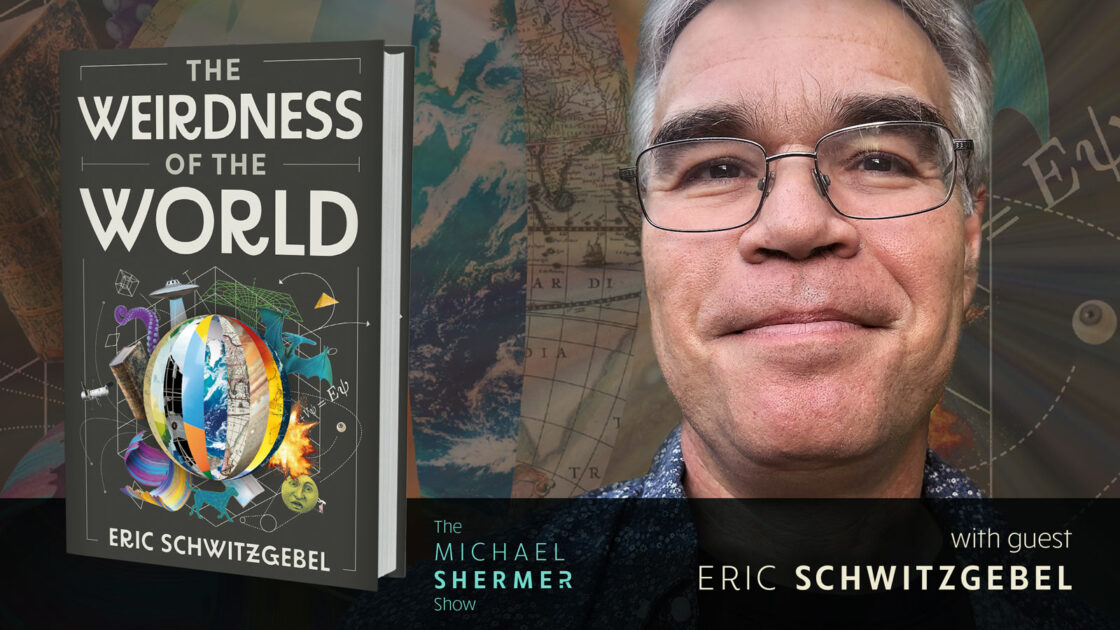
Shermer and Schwitzgebel discuss: bizarreness • skepticism • consciousness • virtual reality • AI, Turing Test, sentience, existential threat • idealism, materialism • ultimate nature of reality • solipsism • evidence for the existence of an external world • computer simulations hypothesis • mind-body problem • truths: external, internal, objective, subjective • mind-altering drugs • entropy • causality • infinity • immortality • multiverses • why there is something rather than nothing.
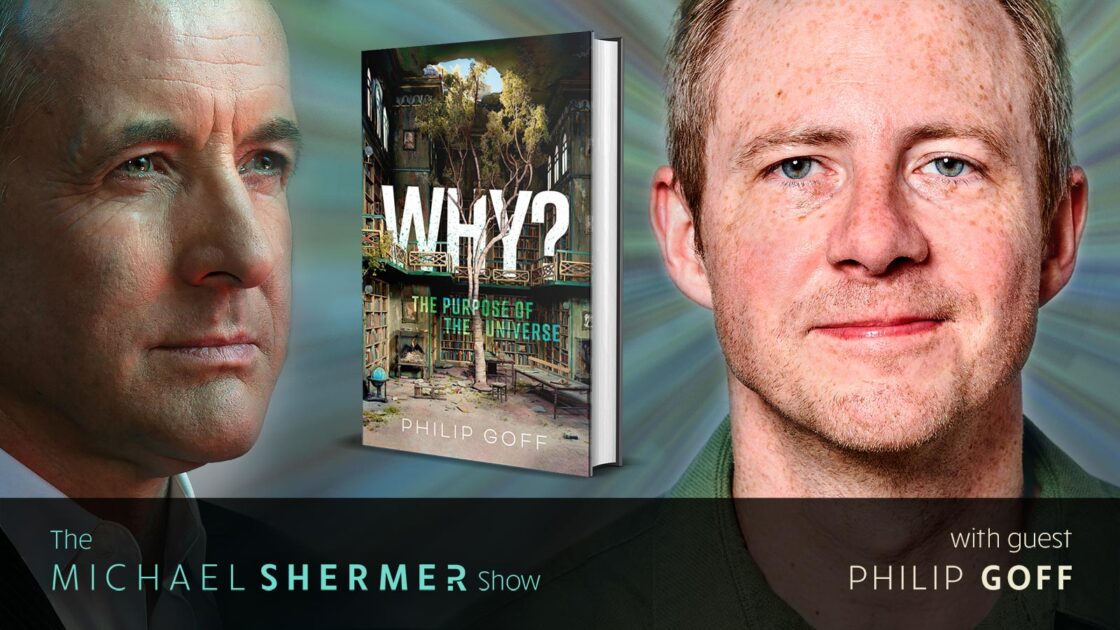
Shermer and Goff discuss: • living in a computer simulation • the universe itself as a conscious mind • cosmic purpose • fine-tuning • free will • consciousness (the ground of all being?) • morality and the Is-Ought Fallacy • What is my purpose in life? • religious vs. secular answers to the purpose question • awe and how to be spiritual but not religious.
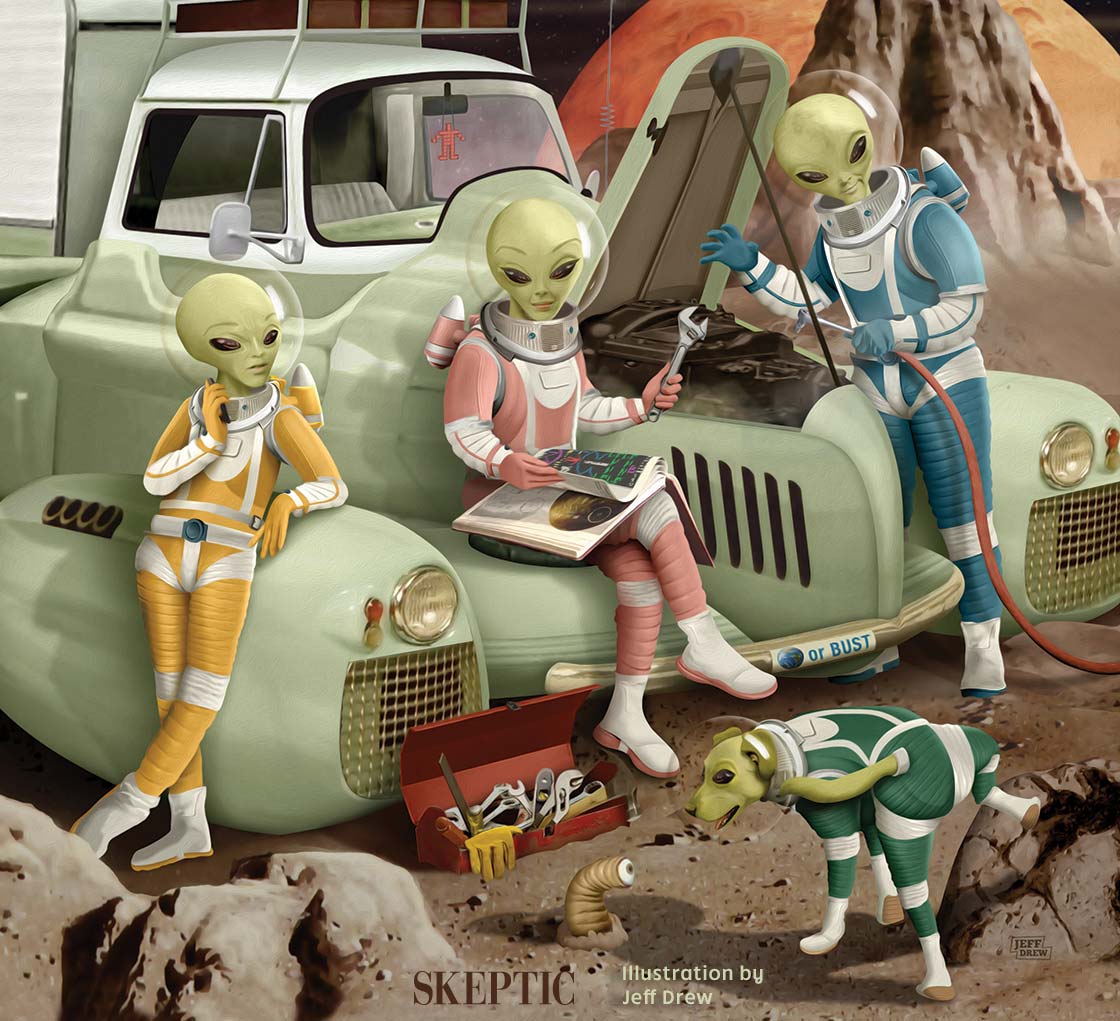
Despite much ballyhoo in the media, all efforts thus far have failed to provide substantive evidence that might link the appearance of UFOs, now called UAPs (unidentified aerial phenomena), with aliens from other planets. This failure results from limitations imposed by both biology and distance. As Morton Tavel explains, when these factors are combined, they render any such contacts virtually impossible.
Shermer and Alexander discuss: his journey from Trinidad to the Bronx to professor of physics • what it’s like being Black in a mostly White and Asian field of science • systemic racism and misogyny • how to be an outsider inside a science • how to tell the difference between revolutionary and worthless new ideas • how do laypeople understand whether something is good science or not? • the double-slit experiment • superposition • connections between quantum physics and…
What is time? Does the past still exist? How did the universe begin and how will it end? Do particles think? Was the universe made for us? Why doesn’t anyone ever get younger? Has physics ruled out free will? Will we ever have a theory of everything? To examine these ideas, Shermer speaks with Sabine Hossenfelder, a research fellow at the Frankfurt Institute for Advanced Studies, Germany. She has published more than eighty research articles about the foundations of physics,…
Shermer and Azarian discuss: laws of thermodynamics and directionality • how complexity formed after the Big Bang • laws of nature: discovered or created or both? • Stephen Jay Gould and contingency vs. necessitating laws of nature • convergent evolution and directionality in evolution • the left wall of simplicity • leading theories for the origin of life • complexity theory and emergence • consciousness, the self, and other minds • free will, determinism, compatibilism, panpsychism • Is there purpose…
Michael Shermer speaks with quantum physicist, Jim Al-Khalili, who reveals how 8 lessons from the heart of science can help us all get the most out of our lives.
Mark W. Moffett remind us that breakthroughs in science often come about by exploring points of similarity between things that are normally seen as very different. PLUS: Michael Shermer speaks with quantum physicist, Jim Al-Khalili, who reveals how 8 lessons from the heart of science can help us all get the most out of our lives. PLUS: In SRC Report PCIS-005, we take a look at Conspiracy Theory Endorsement by Generation.
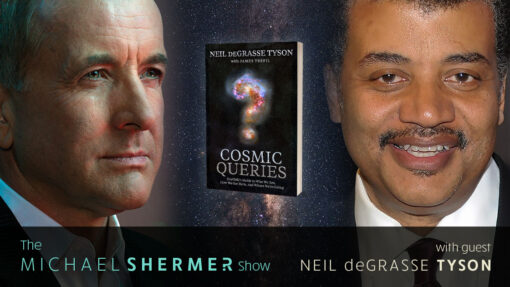
In episode 164 of The Michael Shermer Show, Dr. Shermer speaks with Neil deGrasse Tyson about his new book Cosmic Queries: StarTalk’s Guide to Who We Are, How We Got Here, and Where We’re Going. Enjoy this thought-provoking conversation on life, the universe, and everything, as Neil deGrasse Tyson tackles the world’s most important philosophical questions about the universe with wit, wisdom, and cutting-edge science.
In episode 164 of The Michael Shermer Show, Dr. Shermer speaks with Neil deGrasse Tyson about his new book Cosmic Queries: StarTalk’s Guide to Who We Are, How We Got Here, and Where We’re Going. Enjoy this thought-provoking conversation on life, the universe, and everything, as Neil deGrasse Tyson tackles the world’s most important philosophical questions about the universe with wit, wisdom, and cutting-edge science.
In Science Salon podcast # 135, Michael Shermer speaks with Paul Halpern about his new book Synchronicity: The Epic Quest to Understand the Quantum Nature of Cause and Effect.
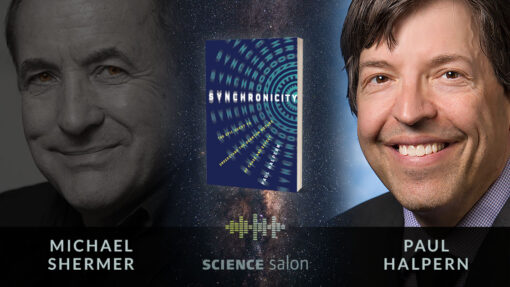
Does the universe have a speed limit? If not, some effects could happen at the same instant as the actions that caused them — and some effects, ludicrously, might even happen before their causes. Paul Halpern is a professor of physics at the University of the Sciences in Philadelphia and the author of sixteen popular science books.
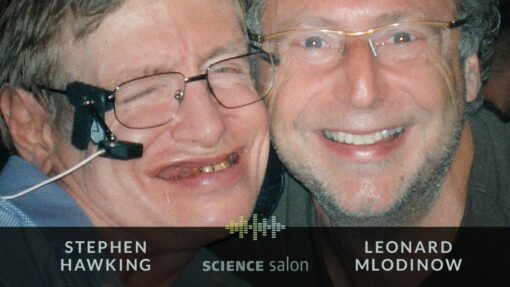
In Science Salon podcast # 132, Michael Shermer speaks with Leonard Mlodinow about his new book in which he recounts, in a unique and deeply personal portrayal, nearly two decades as Stephen Hawking’s collaborator and friend.
In Science Salon # 72, Michael Shermer speaks with visionary astronautical engineer Robert Zubrin where he lays out the plans for how humans can become a space faring, multi-planetary civilization; PLUS social psychologist Carol Tavris reminds us just how imperative it is that justice requires us to assess the evidence when public opinion and emotion are weighted heavily in favor of one side.
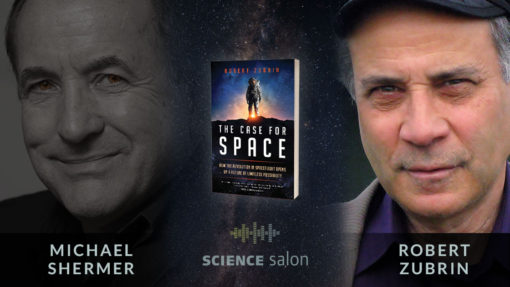
In Science Salon # 72, Michael Shermer speaks with visionary astronautical engineer Robert Zubrin where he lays out the plans for how humans can become a space faring, multi-planetary civilization.
In this issue: The latest issue of Skeptic magazine (24.2) launches today in print and digital editions; PLUS Science Salon # 70 with cosmologist and inventor of the BICEP (Background Imaging of Cosmic Extragalactic Polarization) experiment Dr. Brian Keating.
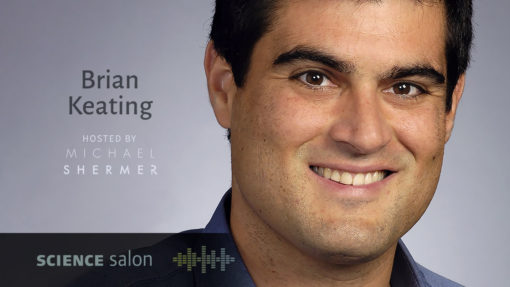
In Science Salon # 70, Dr. Michael Shermer speaks with cosmologist and inventor of the BICEP (Background Imaging of Cosmic Extragalactic Polarization) experiment Dr. Brian Keating.
In this wide-ranging dialogue Michael Shermer talks with Astronomer Royal Sir Martin Rees — a leading astrophysicist as well as a senior figure in UK science and a public intellectual in England and America.
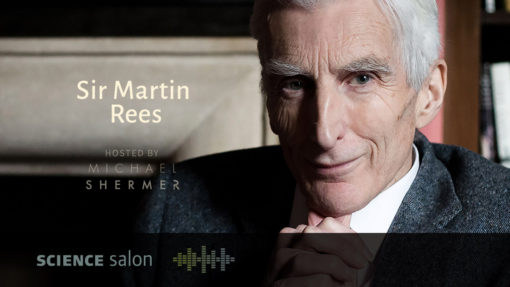
In this wide-ranging dialogue Michael Shermer talks with Astronomer Royal Sir Martin Rees — a leading astrophysicist as well as a senior figure in UK science and a public intellectual in England and America.
There have been many arguments for the existence of God. In this cover story from our just-released issue Skeptic magazine 23.4 (2018), Michael Shermer delves into the question that underlies all the arguments: Why is there something rather than nothing?
NEXT →